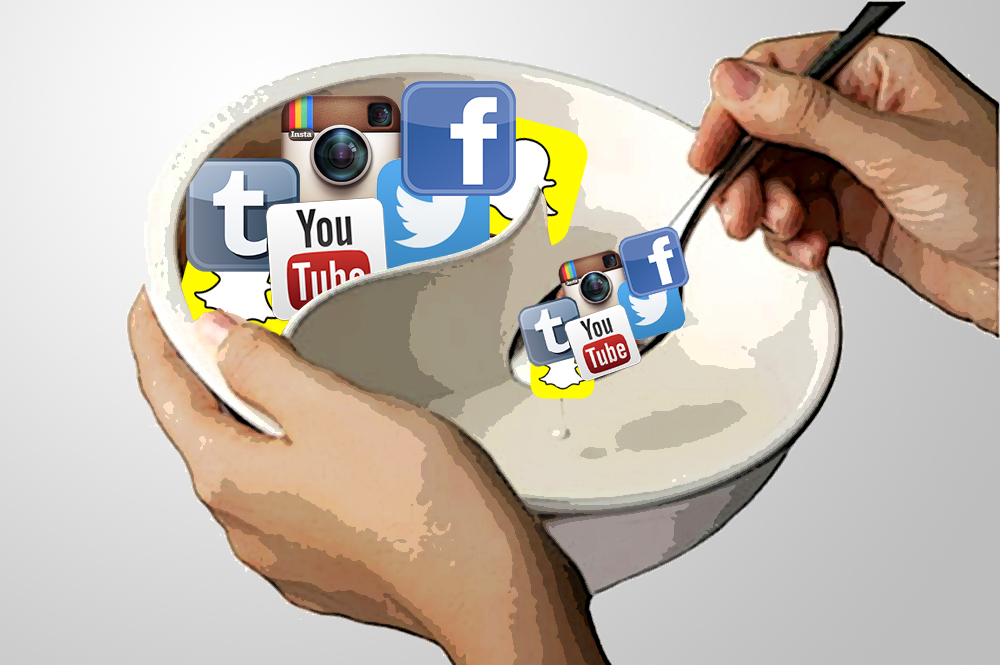
“Is this real life, or is this just a fantasy?” Social media wasn’t around when Freddy Mercury and Queen recorded Bohemian Rhapsody. Still, those words ring loud and clear some 35 years later. Has social media become prevalent enough to be considered “real life?” Or, is it still just a hobby and time-waster that shouldn’t be taken seriously?
According to a study found on Statista, over 70 percent of the US population uses social media. 70 percent is enough to win a two-thirds majority, would be a passing grade in school, and would make you feel comfortable that you wouldn’t have to plug in your iPhone for quite some time. The same site also posts a survey that found only 62 percent of the population was employed.
Aside from the overt data tracking and targeted advertising on all of the most popular platforms, the concept of social media on a grand scale is also still a very new idea. (Remember when Facebook at least TRIED to hide the fact that they were tracking you?)
As far as long-term implications are concerned, we have no idea what to expect. Some may consider it the grandest social experiment the world has ever known.
Statista also reports that the average time spent per day on social media is 145 minutes. The keyword there is average. So for two and a half hours a day, the average person scrolls other people’s feeds, shares news articles, looks at photos and videos, or creates status updates for their circle sphere of influence. But if you consider the “light users,” that means many people spend considerably more time a day doing those things.
Take a few liberties and assume an average workday of 8 hours and an average of 8 hours of sleep at night. That leaves 8 more hours each day to fill your time with other activities. Some of that would be spent eating, grooming, and doing the daily humdrum routines we are used to. But on average, 70% of the population use over 31% of their free time accessing social media.
Disclaimer: This is not a scientific study, just an observation based on loose assumptions. I also realize part of the workday could be spent on social media, and I have not accounted for weekends either.

So what does this mean? Well, for the 30% of the population that doesn’t use social media, it can’t be “real life,” right? And the light users who only use it sporadically would probably fit into that category as well. But, I would say it is very much “real life” to people who use it consistently. If this is true, then that means these different types of social media users will see and process the world entirely differently than each other. How does this affect the way they interact together? How has the world around us changed to cater to each different group? What can we expect in 20 years?
We’ll look at some of the questions and more in Part 2. Thanks for reading!
 Yelco State of Mind