Returning Is Not the Same as Going Back

Seconds before Céline Dion sang the first note of her first full concert in six years, the stage probably looked much like it always had. Lights. Musicians. A waiting crowd. A microphone in the place where a microphone belongs.

But six years were standing beside her.

Illness had interrupted the life she knew. The return required years of physical and vocal work, and the road was longer and rougher than she expected. When she finally began, she became so emotional that the audience had to help carry the opening song.

That’s the part the word “comeback” usually leaves out.

A singer stands beneath a spotlight in the silent moment before beginning a return concert.

Comeback is a clean word. It makes absence sound like an intermission. It suggests someone stepped away, handled a problem, and returned to the same stage as the same person, ready to pick up exactly where she left off.

Real life is seldom that tidy.

Illness changes the person inside the body. Grief changes the person who walks back into the house. Divorce changes the person who tries to trust again. Parenthood changes the person who returns to ambitions he once imagined pursuing without interruption.

Even good change has a cost. We don’t pass through six years—or six months, or one terrible week—and remain untouched.

For a long time, I thought rebuilding meant restoring. I imagined there was an earlier version of my life sitting somewhere intact, waiting for me to find the right road back to it. If I could recover the right habits, confidence, relationships, or sense of direction, perhaps everything would feel familiar again.

But rebuilding is not restoration when the original materials have changed.

A middle-aged Arkansas writer returns to an old manuscript at a desk shaped by years of family life and change.

When I returned to writing seriously, I was not retrieving some untouched version of myself who had merely been waiting for an available afternoon. I brought the years with me: work, fatherhood, disappointment, grief, mistakes, and questions I could not have written honestly before I had lived them.

Some of those experiences reduced me. They took confidence, energy, and certainty. I would not insult anyone’s pain by pretending every loss secretly arrives as a gift. Some things hurt because they are hard, and some absences remain absences.

Still, reduced capacity does not automatically mean a lesser life.

Sometimes the person who returns is better than the one who left—not because the suffering was good, but because he learned to stop wasting what is. He may be slower but more patient. Less certain but more honest. Less impressed by appearances and more grateful for ordinary days. He may finally know which promises deserve his strength and which expectations never did.

That is a better version, even if the measurements we usually celebrate cannot detect it.

The hard part is allowing the new person to build a life he can actually inhabit. We can exhaust ourselves trying to perform at an old pace, recreate an old relationship, recover an old identity, or prove the interruption did not change us. Sometimes healing begins when we quit treating change as evidence of failure.

A man enters a familiar room again, carrying the evidence of the life that changed him.

Returning may mean singing differently. Working differently. Parenting differently. Praying differently. It may require boundaries the former version of us never needed, gratitude he never understood, and the humility to accept help when the first note will not come.

A return is still worth celebrating. But not because it erased the years away.

It is worth celebrating because the person who lived through them stood in the light as he was—changed, grateful, uncertain, and willing to begin again.

You can return to the stage, the work, the faith, or the relationship—but you cannot return as the person who left.

Sometimes that is not the tragedy. It is the gift.
Inheriting Wisdom: The Power of Grandmother Sayings

My grandma used to tell me to be careful when I prayed for patience or courage. The Lord wasn’t likely to drop either one in my lap, according to her. He would give me opportunities to practice patience and put me in situations where they was required.

I understood the words when I was young, but I didn’t fully understand the warning. It sounded almost like she was telling me not to pray too hard. But what she meant was that character doesn’t arrive gift-wrapped. God may answer the prayer by handing you a hard person, a long wait, or a moment when doing the right thing makes your knees a little wobbly. That one little saying carried theology, realism, and a survival plan without ever turning into a sermon.

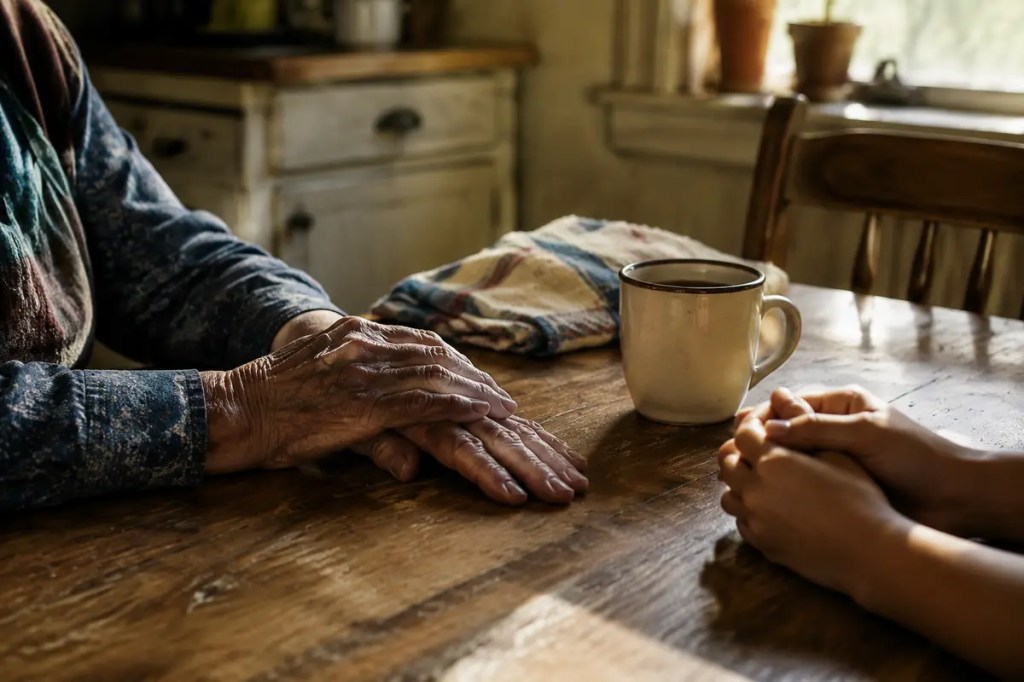
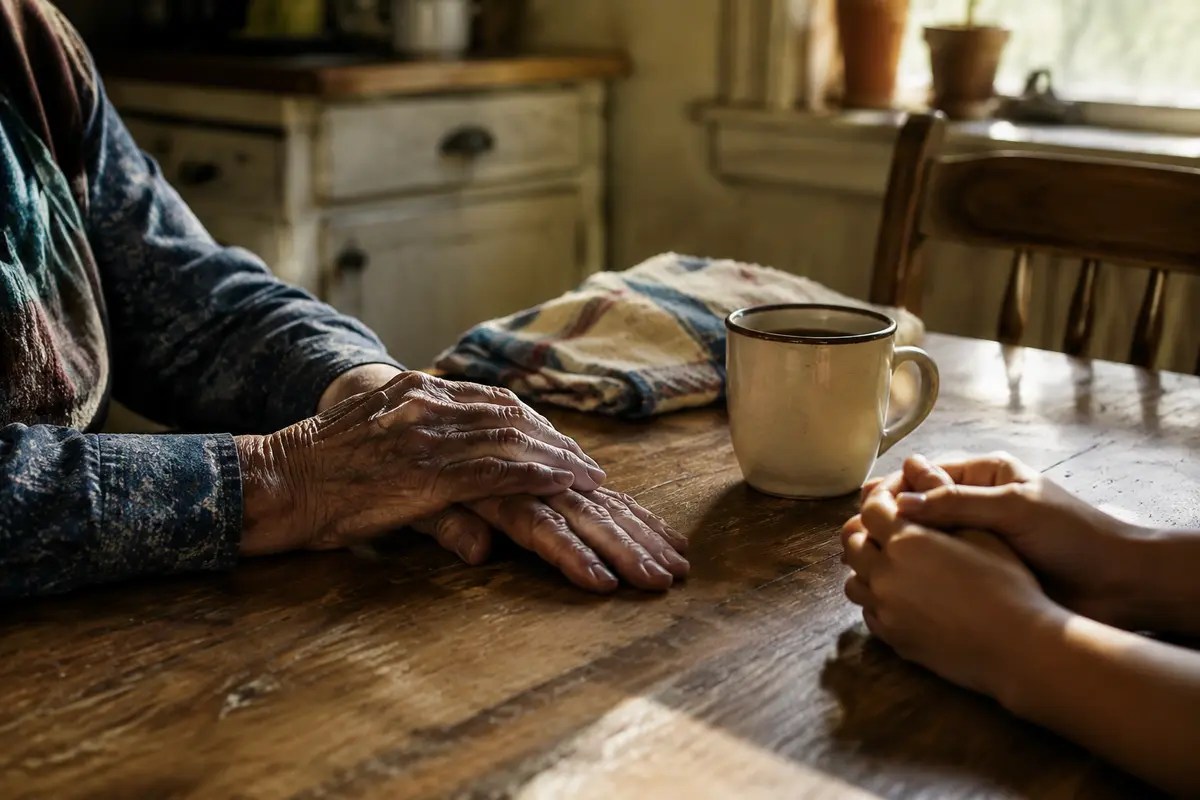
An older relative and a younger family member talking across a worn kitchen table.
The words matter. So does the voice that gave them weight.

I thought about her when I read an Upworthy collection of old grandmother sayings. One of them was, “Some days you’re the pigeon, and some days you’re the statue.” On the surface, it’s just funny. Underneath it, though, are crystal clear instructions: do not confuse a good day with permanent status, and do not mistake a bad day for your identity. Stay humble when you’re flying. Stay steady when you’re the statue.

Families around Dardanelle and Carden Bottoms didn’t always explain their worldview in essays. They packed it into warnings, teasing, Bible language, and comparisons that made sense if you had ever watched the river, worked a field, fixed a fence, or tried to stretch a dollar. A saying could correct foolishness without starting a fight. It could make bitter medicine go down with a laugh.

My grandmother grew up in the Bottoms in a large family that picked cotton. I can’t pretend to know every sentence that traveled through those fields or across that kitchen table. But I do know the kind of work that made concise wisdom useful. When your hands were busy, you didn’t need a lecture. You needed a line short enough to remember and strong enough to use the next time.

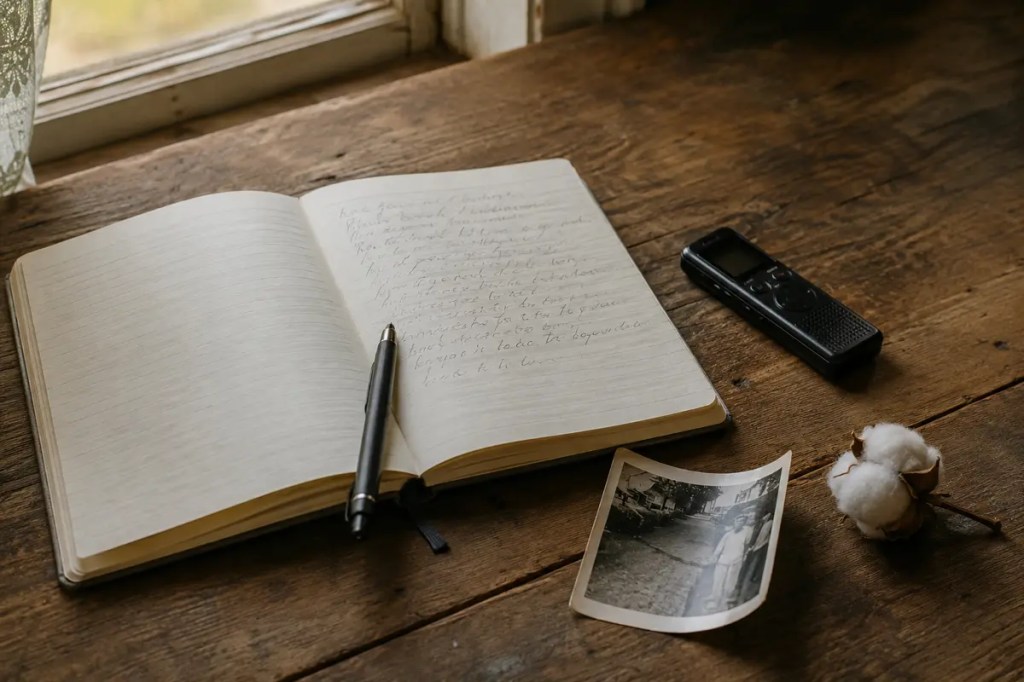
A notebook, recorder, family photograph, and cotton boll arranged to preserve a family story.
A phrase becomes an inheritance when the story around it is preserved.

That’s what makes these phrases more than colorful old speech. When a saying dies, the circumstance that produced it starts to disappear too. “What did you come for, a chunk of fire?” makes very little sense until someone explains the old stove, the borrowed coal, and the hurry involved. Once the story is attached, the phrase becomes a tiny doorway into a world. Without the story, it is just a strange collection of words.

As a father, I think about how easily my children have inherited names and photographs without inheriting voices. They may know where somebody lived and when they died, but not how they sounded when somebody got too big for their britches. They may recognize a face in a picture but never hear the phrase that could bring that person back into the room.

If I give my kids only the saying, I have handed them the shell. The story is the part that breathes. Who said it? What kind of trouble summoned it? Did everyone laugh? Was the lesson understood right then, or did it take twenty years to land? Those details aren’t decoration. They’re instructions.

The hard part is that some of the people I would like to ask are already gone. There are questions I can no longer ask them. That turns this from nostalgia into responsibility. Memory feels permanent right up until the last person carrying it is no longer here to answer the phone.

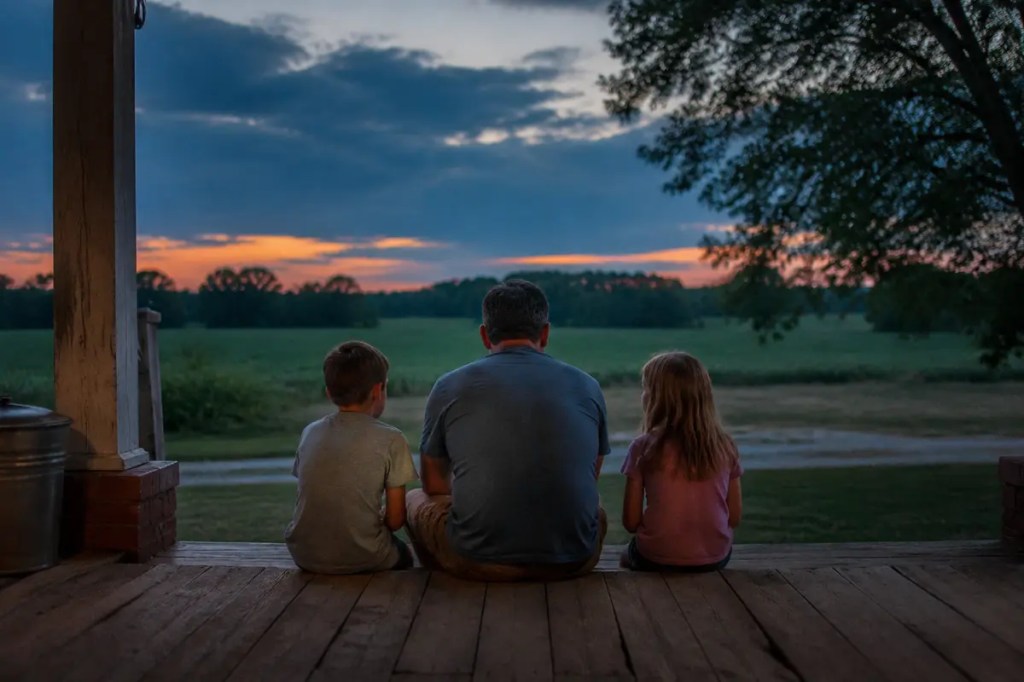
A father and two children sharing stories on a rural Arkansas porch at dusk.
Fatherhood turns memory into a responsibility to pass something on.

So here is a simple thing worth doing. Ask an older relative what sayings they remember. Don’t stop at making a list. Ask who said each one, when it came out, and what foolishness or hardship brought it out. Record the conversation on your phone or write it down while the voice and the details are still fresh. Then tell one of those stories to your children.

A family inheritance isn’t always land, money, a recipe, or a quilt. Sometimes it is one crooked sentence that kept people patient, cautious, humble, or laughing when life got heavy. It can vanish without anyone rejecting it. All it takes is for everybody to assume somebody else will remember.

This Christmas

This Christmas, some people will sit around the TV and watch sports while talking about how nice it is to have a break from work. But others will be going into the new year hoping to get a call back from one of places they left their resume. And some will be patrolling streets, fighting fires, working the counter at a gas station, pulling a double shift at the hospital, or making sure we keep the electricity turned on.

This Christmas, some people will be surrounded by loving family in a home filled with joy, laughter, and excitement. But some people will be sitting all alone with no one to enjoy it with. Or on the open highway because they can’t stand the feeling of an empty house. Some wives will be sitting next to abusive husbands, trying their best to hide their pain from everyone else. Some men will be watching their cheating wives pass presents around for the kids, wondering how long they can hold on to a marriage that’s failing.

This Christmas, some people will pick up their grandkids or play football with their cousins. But some people won’t be able to pick themselves up out of their wheelchairs. And others will have just received horrible news about an inoperable tumor. Some people will be spending their Christmas day hooked up to ventilators or IV drips, and others will stare at the walls in a nursing home, praying they had family to come visit them.

This Christmas, some parents will take pictures with their infant as they soak in the experience of a child’s first Christmas. But others will be mourning the first holiday season without their child. Some will know that this might be the last Christmas with an aging parent or loved one, while others will have to muddle through the season with a fresh loss hanging heavy over their heart. Chairs that have been filled for years will be empty and many familiar faces will be permanently absent.

This Christmas, most of us will have access to a warm house, running water, electricity, and edible food. But many others won’t have any of these things. Some parents will endure fatigue, hunger, and their own well-being just to put a smile on their childrens’ faces, even if only for a moment. And some won’t have the means to even be able to that.

This Christmas, some will slow down and take stock of all the blessings present in their lives. And others won’t realize what they have until they don’t have it anymore. And since we will never truly know the  full situation of our neighbors or strangers we may encounter, a little bit of empathy can go a long way.