The Real Difference: Charisma vs. Character

Some people can control a room beautifully but can’t be trusted alone with making a decision.

You’ve probably met one. They remember names, hold eye contact, tell a story at exactly the right moment, and make the people around them feel smarter and more hopeful than they did before they arrived. By the time the coffee cools, the room belongs to them.

That is a real ability. It’s also incomplete evidence.

Charisma answers one question: How do people feel while you are speaking? Character answers a harder one: What becomes true because they trusted you?

I’ve spent most of my adult life in sales and leadership, two places where charm has a scoreboard. Good communication matters. A customer should feel comfortable asking a question. An employee deserves a leader who can bring clarity and hope into a difficult day. Eye contact, timing, confidence, stories, and good questions can all be learned. Learning them is not dishonest. Warmth can be a genuine form of service.

But the appearance of care can be learned faster than responsibility.

A warmly lit automobile showroom where a man speaks to an attentive group.

A salesperson can make a customer feel understood and still disappear when the paperwork is signed. A manager can fire up a room on Monday and avoid the truth when Friday brings bad news. A person can speak beautifully about faith and still use influence carelessly when there is no microphone nearby.

The same danger exists in relationships. It’s possible to know how to make another person feel special without knowing how to be honest, consistent, or responsible for the effect you have on them.

But charisma is not always a disguise.

I once dated a woman who had an unusual gift. Whoever she was speaking to—regardless of title, money, or station in life—felt like the most important person in the world. She listened in a way that made it seem as if the room had emptied around you.

That could have been charm alone. What convinced me otherwise came later.

Long after our relationship ended, she would reach out from time to time to ask how I was and remind me that she was still in my corner, rooting for me. There was nothing left to win. No audience. No advantage. Her care had outlived its usefulness.

A woman sends a quiet check-in message from a café at dusk.

That doesn’t mean every relationship between two good people should continue. Goodness doesn’t erase incompatibility, history, or the need for boundaries. It simply means her warmth was not manufactured for a result. The attention she gave people was connected to something sturdier than technique.

Manufactured sincerity asks a question to find leverage. Genuine presence asks because the answer matters.

We should not become suspicious of every charismatic person. Cynicism can be as lazy as seduction. Some people are naturally gifted with presence; others work to communicate better. The skill itself is not the moral issue. Character decides what the skill serves.

The test usually comes after the impressive part is over. Was the promise kept? Was the bad news delivered honestly? Was the phone call returned when there was nothing else to sell? Did the leader protect the absent person, admit the expensive mistake, and restrain the power he could have used for himself?

Character leaves evidence outside the spotlight.

A manager has a quiet, honest conversation in an almost-empty dealership at dusk.

I know how easy it is to confuse a good response with proof of a good heart. A successful meeting, a relieved customer, an energized team, or a kind comment from a reader can all feel like confirmation. But being convincing and being worthy of belief are not the same accomplishment.

If I want to know what kind of person I am becoming, the better question is not whether people enjoyed hearing me speak. It’s whether my family, coworkers, customers, and friends are safer because I told them the truth and kept my word.

Charisma may open the door, but character decides what you do after you are invited inside.


Source note: Inspired by Deepstash Daily’s summary of Robert Greene’s The Art of Seduction.
How Small Time Blocks Can Create Big Changes

Two men live almost the same week.

Both wake up to an alarm, put on work clothes, answer messages before breakfast, get children where they need to go, and spend the day solving problems that didn’t exist when they left home. Both stop for groceries, help with homework, load the dishwasher, and collapse into bed carrying tomorrow in their heads.

If you watched their 112 waking hours from a distance, you might have trouble telling them apart.

But several times a week, after the house settles or before it wakes, one of them opens a document and writes. The other waits for a different season of life—one with fewer demands, more energy, and a clean stretch of time that nobody else needs.

Months later, one man has a manuscript. The other still has a reason.

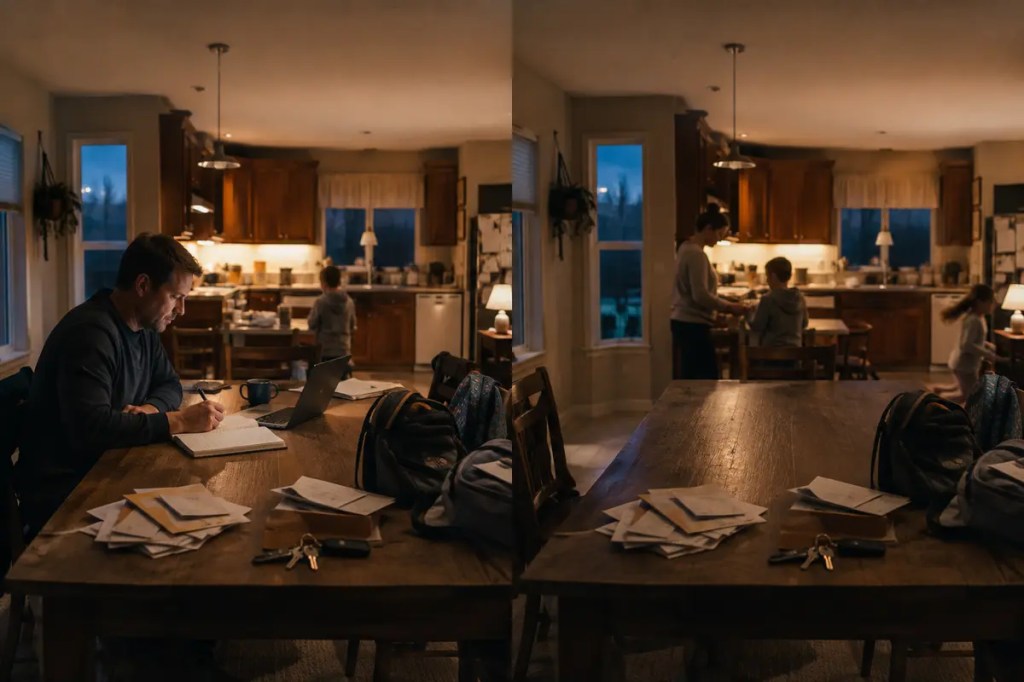
A split view of two similar family evenings, with a father writing at the kitchen table on one side and the table unused on the other.
Most of the week can look exactly the same. The difference is the hour one person protects.

In a recent 3-2-1 newsletter, James Clear shared an observation from writer and illustrator Tim Urban. Someone who writes three hours a day, five days a week, can have a book after forty weeks. The prolific writer and the person who never writes may spend six-sevenths of their waking lives almost identically. The life-changing difference is the fraction one of them defended.

We tend to imagine people who finish things as a different species. The writer wakes up inspired, lives in a quiet house, and spends whole days arranging beautiful sentences while coffee steams beside a sunlit window. That picture is convenient. If writing requires a monastery, then the rest of us are excused.

Most callings do not need your entire life. They need a part of it that the rest of your life is not allowed to take.

I wrote A Nobody’s Guide to Self-Help while managing a dealership and raising three children. That sentence makes the process sound much cleaner than it was. There was no cabin, no sabbatical, and very little evidence of genius. Some sessions produced pages I later cut. Some were spent repairing a paragraph that still wasn’t very good when I went to bed. Other times, I reread what I had written, changed three words, and wondered whether that counted.

It counted.

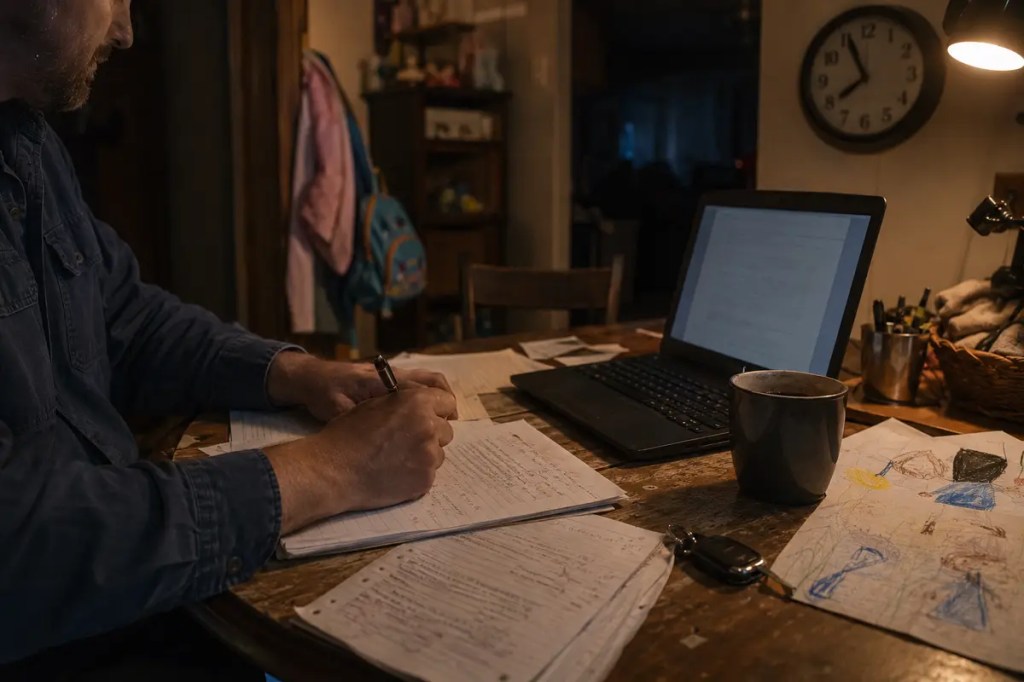
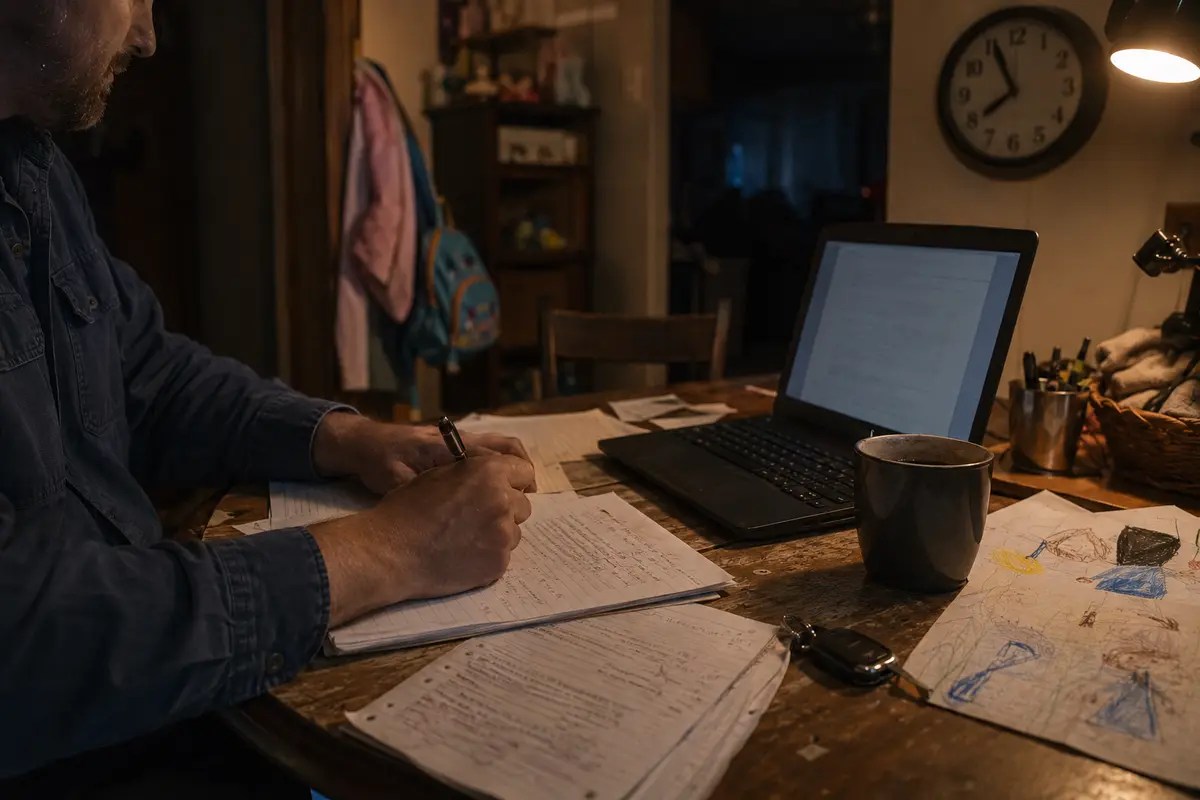
A tired father writing beside a laptop, cold coffee, work keys, and a child’s drawing late at night.
The sessions that build a book rarely feel important while they are happening.

The book was built during sessions that rarely felt important while they were happening. A child needed something. Work followed me home. My attention arrived late and left early. I didn’t usually feel like an author. I felt like a tired man trying to move one sentence a little closer to the truth.

This isn’t a victory lap. Finishing a book didn’t turn me into a model of discipline. If anything, it exposed how many other things I have postponed while waiting for the right mood or the right version of my life. We all have a small graveyard of intentions labeled “when things settle down.”

Things rarely settle down. They just change what they are loud about.

Fifteen hours a week isn’t easy when work is demanding and children are growing up in real time. And quantity does not guarantee quality. Consistency cannot replace judgment, revision, or honesty. It simply gives those things something to work on. Zero produces nothing to revise.

We often say we don’t have time when we mean we do not have time that arrives preapproved—free of guilt, interruption, or sacrifice. Protected time seldom presents itself. It has to be claimed from a phone, a television, another chore, or the endless appetite of other people’s urgency.

The goal isn’t to become consumed by the work. It’s to stop requiring the work to consume you before you take it seriously.

A finished manuscript resting among work keys and children’s school items on a kitchen table at sunrise.
A small, defended part of the week can eventually leave evidence.

At the end of one week, the protected fraction may look almost meaningless: a few hundred words, a rough page, one idea you aren’t sure you can use. At the end of forty weeks, it may be the only part of the year you can hold in your hands.

A life doesn’t always change because you found more time. Sometimes it changes because you stopped letting one small piece of it belong to everything else.

Invisible Work: The Backbone of Heroic Tales

Most of us carry roughly the same Viking around in our imagination.

He comes through the fog in a longship. He has a sword, a beard, and bad intentions. He raids a village, crosses an ocean, or takes something that didn’t belong to him. History remembers him because violence leaves a cleaner headline than winter preparation.

But the man holding the sword was surrounded—and sustained—by people doing work that rarely made it into the legend.

Farmers raised livestock and grew barley. Fishermen supplied food. Bakers made bread. Weavers produced clothing and sails. Blacksmiths made weapons, but they also made the tools required to build and survive. Leatherworkers, potters, jewelers, navigators, and shipbuilders kept ordinary life moving.

The raider may have held the sword. He didn’t grow the grain, bake the bread, weave the sail, forge the blade, and build the ship before breakfast.

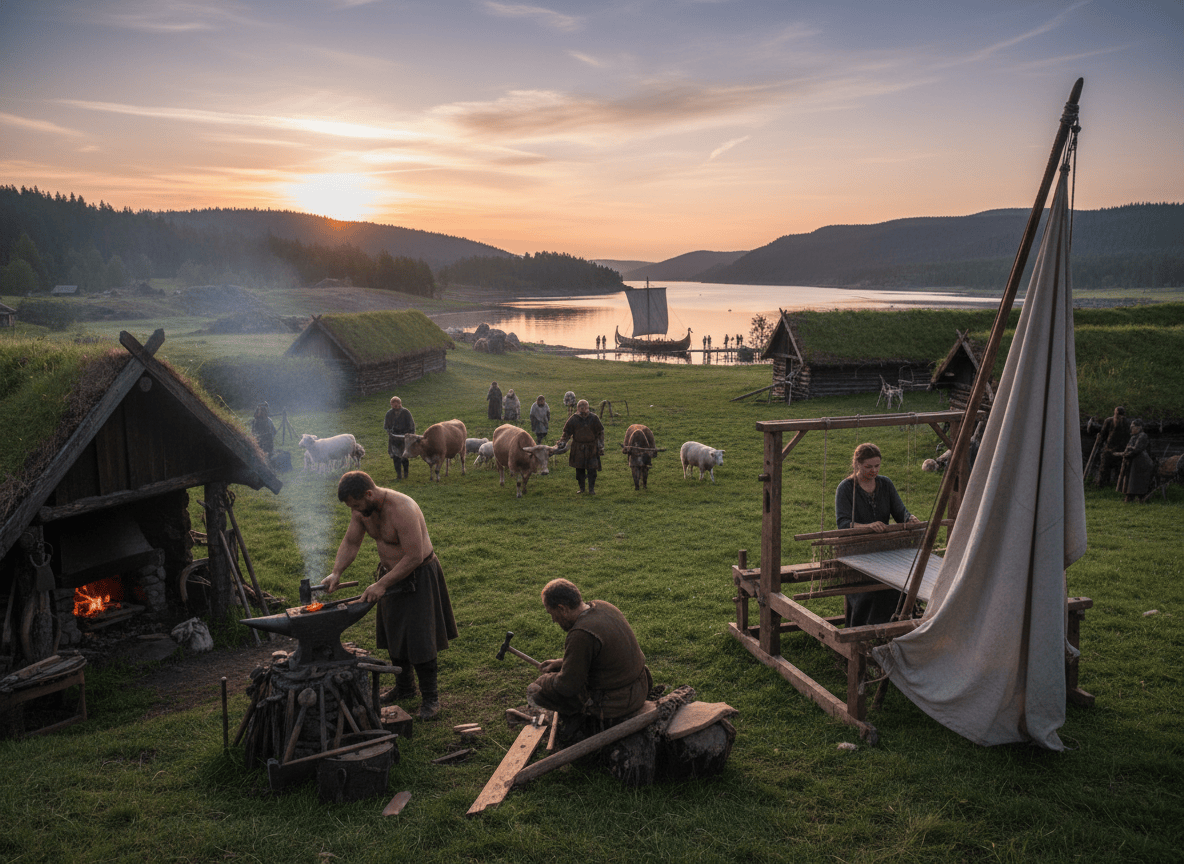
Viking-age farmers and craftspeople work in the foreground while a longship prepares to depart in the distance.

We mistake drama for importance because drama is easier to see.

A dealership has its own version of the longship arriving on shore. The customer takes a delivery photo. The salesperson hands over the keys. Everybody smiles beside the vehicle. It’s a good moment, and the salesperson deserves credit for getting there.

But the picture can’t show everything that made the picture possible.

Someone found the vehicle. Someone took the photographs, answered the phone, checked the trade, inspected the tires, cleaned the interior, corrected the paperwork, worked with the lender, handled the title, fueled the tank, and caught the small mistake before it became a large problem.

The deal closed in public. Much of it was built in private.

Dealership employees prepare a vehicle and complete paperwork while a delivery takes place in the background.

This is not an argument that visible people receive too much recognition. It is an argument that our field of vision is usually too narrow.

Good leadership notices the work that only becomes visible when it stops happening.

We tend to discover the value of preparation after nobody prepared. We appreciate the person who fixes paperwork after an error reaches the customer. We notice maintenance when the equipment breaks, safety when someone gets hurt, and trust when it has already been damaged.

Invisible work doesn’t become less important because it did not create a story.

Families run on the same arrangement.

We remember the birthday surprise, the winning hit, the Christmas morning, or the child walking across a stage. Those moments deserve to be remembered. But they were carried there by hundreds of acts too ordinary to photograph.

Lunches packed. Tires checked. Uniforms washed. Forms signed. Rides given. Medicine measured. Promises kept when nobody was in the mood to keep them.

A parent quietly prepares lunch and sports equipment in an Arkansas kitchen before sunrise.

Grand gestures become stories. Ordinary responsibility becomes the atmosphere a child grows up breathing.

That may be the deeper connection between heroes and the people behind them. Heroism is rarely a solo achievement. Sometimes a person does the brave thing because someone else taught him what bravery looked like. Sometimes she performs under pressure because somebody made sure she arrived prepared. Sometimes the person standing in the spotlight can stand there only because another person stayed late, woke up early, repaired what broke, or quietly said, “I’ve got you.”

Recognizing that does not diminish the hero. It widens the frame.

History has poor eyesight. It sees the ships on the horizon and misses the field that fed the crew. It remembers the battle and forgets the hands that stitched the sail. It records the name at the top and reduces everyone underneath to background.

Life is not obligated to make the same mistake.

We can thank the person who caught the error. Name the one who made the hard day easier. Teach our children that support is not lesser work. Remember that reliability is a form of love, even when it never becomes a dramatic scene.

The raider made the legend. The farmer made the winter survivable.

And behind almost every person history calls heroic is someone who never made the legend but made the legend possible.


Source note: Inspired by Paul Anthony Jones’s “10 Most Common Jobs in the Viking Age,” published by Mental Floss on September 12, 2026.

Don’t Let Your Child’s Dream Become Somebody Else’s Business Model

Eighty dollars once bought a season.

Eight thousand dollars now buys a year.

That was the contrast in a Morning Brew story about youth sports: one Florida parent remembered paying $80 for recreational sports during her childhood. She now spends about $8,000 each year on club baseball for her 12-year-old son.

Those aren’t identical experiences, of course. Recreational ball and club ball (or travel ball, round these parts) promise different things. That difference is where the business model lives.

Parents watch children play baseball beneath the lights of a modest small-town Arkansas ballfield.

I understand the parent’s side of it.

I am a father. I have watched my children play sports, and I know the desire to give them every honest chance. If one of them possesses real ability and the willingness to work, I don’t want money, geography, or my own hesitation to become the reason a door closes.

I also work in sales and marketing, so I know what happens when fear can be connected to a purchase.

Youth sports has found one of the most powerful fears a parent carries: What if my child could have become something, and I was the one who said no?

Once that fear takes hold, we are no longer buying a tournament, a private lesson, or another uniform. We’re buying protection from future blame. The next level always seems to sit behind another registration fee, another hotel weekend, another instructor, or another facility.

The Aspen Institute found that family spending on a child’s primary sport rose 46 percent from 2019 to 2024. Its researchers estimate that parents now spend more than $40 billion each year on youth sports. That does not include everything schools, municipalities, facilities, and sponsors spend around them.

There is too much money involved for parental anxiety to remain an accidental byproduct.

A parent watches a child train inside an expensive elite youth-sports facility filled with commercial signals.

This isn’t an argument against travel teams, serious coaching, or private instruction. Some children want the harder competition. Some coaches change lives. Good training can sharpen talent, build discipline, and introduce a child to opportunities that a small town can’t provide on its own.

The question is not whether the expensive option is always bad.

The question is who still owns the dream.

Is it the child who wants to play? Is it the parent who has invested enough money to need the sacrifice to mean something? Or is it the company promising that one more purchase will keep the future open?

The answer can change quietly.

A child begins with a glove, a ball, and the pleasure of getting better. Then adults add rankings, exposure, specialized training, highlight videos, travel calendars, and the language of scholarships. Eventually, a ten-year-old can feel responsible for producing a return on an investment he never asked anyone to make.

That’s too much weight for a game to carry.

Parents need to be honest about more than the bank account. We should notice whether our child still talks about playing or only about performing. We should ask whether the extra work belongs to his ambition or our anxiety. We should be willing to hear that a dream has changed without treating every dollar already spent as a contract he or she must keep honoring.

A father and child play catch alone on a simple local baseball field at sunset.

Supporting a dream sometimes costs real money. It also requires restraint. Every possible future cannot be purchased, and trying to buy them all can take something from the life the child is living now—rest, friendships, family time, freedom to try another sport, or the right to discover that this was something he loved but not something he wanted to become.

Aspiration is not the enemy. Neither is business. But when an industry profits from convincing parents that ordinary participation is failure, somebody has to protect the child from becoming the product.

A father’s job is not to purchase every possible future; it’s to keep the present game from being taken away from the child.

Sources: Morning Brew: “Youth Sports Brew”; Aspen Institute Project Play: Family spending rises 46%; Aspen Institute Project Play: Private equity and youth sports

Thursday Night Football and Shipping Containers

Months before the Los Angeles Rams crossed the Pacific, a shipping container was already making the trip.

Inside were game-day drinks, supplements, food, and supplies. The kind of things nobody in the stands would notice unless they are missing.

The NFL’s first regular-season game in Australia will be played under the lights at the Melbourne Cricket Ground. That is the part made for television: the uniforms, the crowd, the opening kick, and the announcer reminding us how far everybody traveled.

The less glamorous part began 218 days earlier.

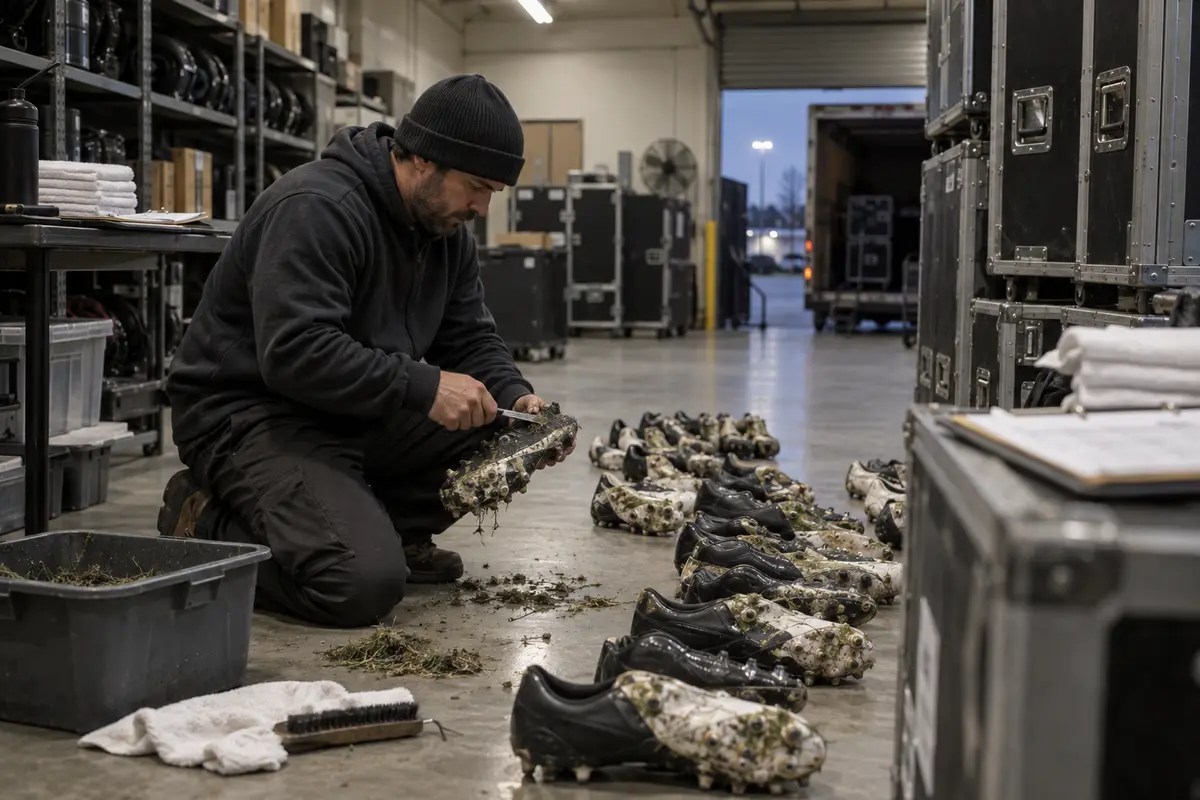
The Rams had to move roughly 25,000 pounds of equipment in 90 trunks. Every trunk needed a manifest listing what was inside, what it was worth, and where it came from. Australian biosecurity rules meant the cleats had to arrive free of dirt, seeds, and grass. Somewhere, while the players prepared to play football, an equipment manager was scraping yesterday’s practice field from the bottom of somebody else’s shoes.

A shipping container carrying game-day supplies crosses the Pacific months before kickoff.

That may be the most honest picture of leadership I have seen in a while.

We like the visible moment. We celebrate the touchdown, the sale, the finished book, the family picture, and the number at the bottom of the report. We rarely ask who made sure the right cord, form, meal, key, or backup plan was in the room when the moment arrived.

The game isn’t won in the shipping container. The players still have to play. Preparation can’t guarantee an outcome.

But a great many things can be lost there.

An equipment manager removes every trace of dirt and grass before the cleats can clear customs.

At a dealership, the customer sees the delivery photo. He sees the clean vehicle, the keys in his hand, and the smile that gets posted online. He doesn’t see the inventory checks, the trade appraisal, the lender calls, the paperwork corrections, the detail department, the fuel, the insurance verification, or the person who caught the missing signature before it became tomorrow’s problem.

When those pieces work, the final moment looks easy. That’s the strange reward of good preparation: it often removes the evidence that it was necessary.

Leadership is not only performing well when the pressure arrives. It’s reducing the number of emergencies everyone else will have to survive. Pressure may reveal preparation, but it rarely replaces it.

Before the doors open, a dealership manager prepares the paperwork, keys, and vehicle behind the delivery photo.

Fatherhood contains the same invisible work. Children see Christmas morning, not the calendar, sacrifice, and quiet worry behind it. They see the uniform ready for practice, not who remembered to wash it. They see that somebody showed up, not the rearranged day that made showing up possible.

That doesn’t mean children owe us applause. Love becomes something uglier when every sacrifice is presented as an invoice. The point is not to make people feel guilty for enjoying the moment. The point is to respect the work required to make good moments dependable.

Writing is no different. A reader sees the finished essay, not the notes carried around, the weak opening deleted, or the paragraph that had to be rebuilt because it sounded better than it was true. The published piece is kickoff. Most of the real contest happened when nobody was watching.

There’s a temptation in responsible lives to resent that invisibility. We want somebody to notice the early morning, the second check, or the problem prevented so completely that it never became a story. Sometimes they will. Often they won’t.

Do the work anyway.

The crowd will remember who caught the pass. The customer will remember the keys. The child will remember the morning. But somewhere before each visible moment was a person nobody applauded—the one who packed what everybody else would need before they knew they needed it.


Source note: Inspired by Morning Brew’s reporting on the Rams’ Australia game and Sports Illustrated’s inside account of the team’s 15,000-mile operation.

Dolly Parton’s Legacy of Books and Empowerment

We tend to talk about legacy as if it is something we build with our own two hands.

A business. A book. A name on a building. Enough money left behind that our children do not have to struggle the way we did. Then somebody leaves behind something larger than anything he could have built himself.

When Dolly Parton died on August 25, I learned something about her that I didn’t know. And it had nothing to do with rhinestones, pearls, and country music. It had everything to do with her father.

Robert Lee Parton could not read. Dolly called him the smartest man she had ever known. She also believed his inability to read kept him from fulfilling many of his dreams.

So she built the Imagination Library in his honor. What began in one Tennessee county grew into a worldwide program that mails a free book every month to more than three million children. Before he died, her father told her it was “probably the most important thing I had ever done.”

Not the songs. Not the awards. Not the money.

The books.

A boy traces a page in an open book while his father's hand rests beside him at a wooden kitchen table.

I think about that because one of my boys has had to learn that difficulty with traditional reading is not the same thing as a lack of intelligence. School can turn one narrow skill into a courtroom exhibit. A hard page starts to feel like evidence. A slow test starts to sound like a verdict.

It is not.

A child can struggle to pull meaning from a page and still understand people, patterns, consequences, machines, humor, or the quiet things happening in a room. Intelligence does not always arrive in the format a classroom finds easiest to grade.

That does not mean reading is unimportant. It means shame is a lousy teacher.

As a father, my job is not to pretend the hill is flat. The hill is real. There will be assignments, forms, instructions, applications, and a thousand other places where the written word matters.

My job is to keep him from believing the hill is the whole world and that he is responsible for crossing it the same way everyone else does.

That may be one of the hardest parts of parenting. We want to give our children confidence, but confidence cannot be built from lies. We cannot tell them everything will be easy. We can tell them that hard is not the same as impossible, and struggle is not the same as stupid.

Dolly’s father could not hand her literacy. He handed her intimate knowledge of what happens when a capable person is locked outside a door. She spent the rest of her life mailing keys.

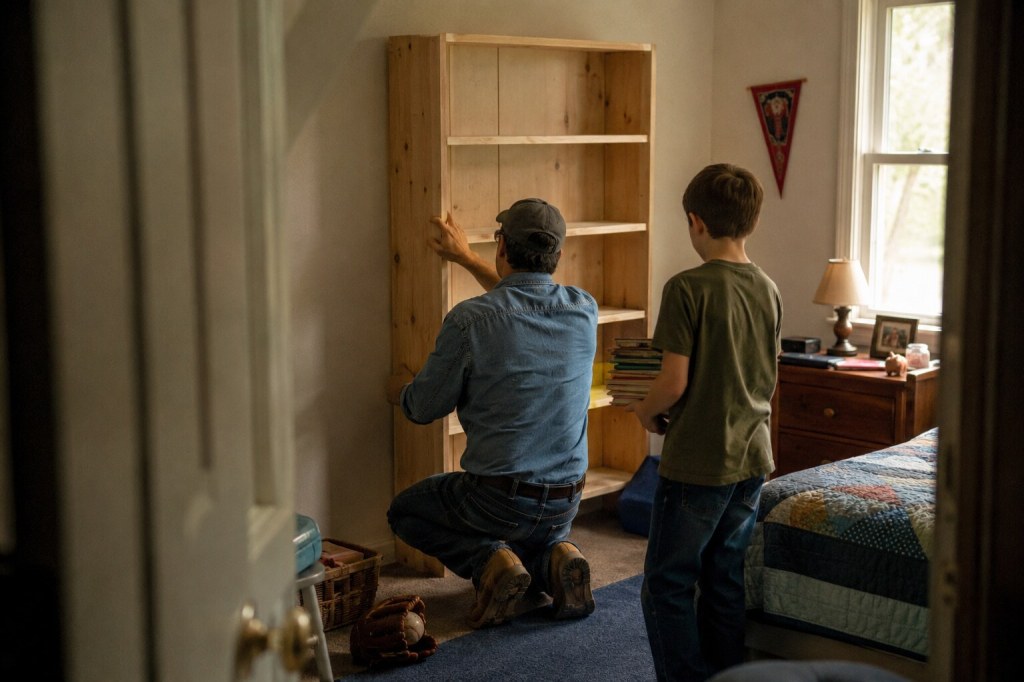
A father installs a wooden bookshelf in his son's bedroom while the boy waits with a stack of books.

We usually talk about what children inherit in visible terms: our eyes, our temper, our last name, our property, and, if genetics is feeling especially generous, the best of ourselves.

But children inherit our unfinished business too.

Sometimes they inherit the courage we modeled. Sometimes they inherit the wound we could not heal. Sometimes our limitation becomes the raw material they use to build something neither of us could have imagined.

That does not make the limitation good. It does not romanticize the hurt or excuse the world for failing to recognize somebody’s intelligence.

It simply means love can refuse to waste pain.

I don’t have to possess every gift my children will need. I won’t understand every way their minds work. I will not always know the right book, the right teacher, or the right sentence to say when frustration settles over the kitchen table.

But I can keep building shelves.

A father carrying boards and tools walks beside his son carrying a book near a rural roadside library at sunset.

I can protect curiosity while skill catches up. I can separate effort from worth. I can remind a boy that a page is something to work through, not something allowed to define him.

Maybe that is legacy.

Not proving that we had every answer, but making sure our children never confuse the answers we lacked with the limits of who they can become. A father does not have to possess every gift to help awaken it in his children.

The man who could not read helped build a library anyway.

Embracing Failure: Lessons from Ted Williams

I should be more consistent with writing. I don’t usually sit down and think of a particular topic to write about. Most of the time, it just comes to me. Just the other day, I was thinking about “failure.” I realized that many things I write about have failure as a central theme. I don’t consider myself an expert on anything, but if I were to bestow that title on myself in some regard, it would be “Master of Failing.”


To be honest, I’m not even mad about it. It took a while to learn, but once I figured out that failing was an important part of growing, I decided to embrace it. I’m not saying that I have never made the same mistake twice, but I feel like most of my failures are unique, and I use them to fuel growth and development.


I’ve been in the car business for almost 20 years. When you are a professional salesperson, failure is a constant factor. Even the best in the industry don’t sell to every customer they talk to. A GOOD salesperson should expect to close 30%- 35% of the customers they interact with. To put it in perspective, if a baseball player gets a hit one out of every three times he goes to the plate, he’s considered a Hall of Famer. Similarly, if a salesperson closes a sale with one out of every three customers, they’re doing exceptionally well.


That means that the best players in the game’s history fail two out of every three times they have an at-bat.


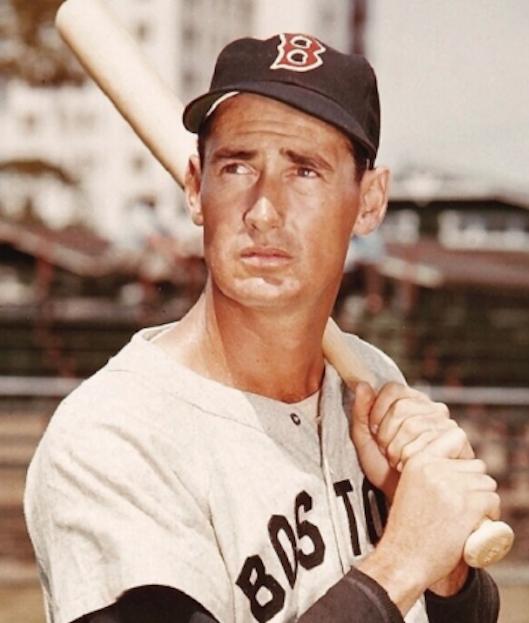
Today, I’m returning to 1941, when Ted Williams had arguably the best season at the plate in baseball history. He finished the ’41 season with a batting average of .406 with 37 home runs and 120 RBIs. To provide context, .200, the Mendoza line, is considered the low-end threshold for professional ball players. The average batting average of Hall of Famers is .303.


Williams played in 143 games that season and had 456 at-bats. But the breakdown of three particular stretches of that 1941 season interests me the most.


On April 30th, Williams entered the game hitting .462. Over the next four games, he hit .182, dropping his season average to .310.


By June 21st, he had battled his way back up to .415. But he only hit .318 over the next 21 games, dropping that average all the way down to .393.


His average peaked again at .413 during the heat of the pennant race in early September. But a .292 stretch over the next 17 games saw it drop right to the .400 mark near the end of the season. Entering the last day of the year, he was so close to the .400 mark that a bad day at the plate would have kept him from reaching that sacred number.


This is important because even though his season as a whole is considered extraordinary, not every day, or even week, was even considered average. But during those subpar stretches, Ted Williams didn’t panic. He didn’t change up his swing. He didn’t stay down in the dumps and stop coming to work. He showed up every day, stepped inside that chalk-outlined box, and did his job to the best of his abilities. And he let the chips fall where they may.


The most significant lesson I’ve learned about failure is that it’s interwoven into the fabric of success. It’s more about ‘fall, learn, grow’ than ‘pass or fail.’ These three unremarkable stretches of Ted Williams’ historic season wouldn’t impress anyone. But his resilience and determination during those times are just as, if not more, important than his successes.


We get so caught up in results that sometimes we lose focus on the processes. Instead of getting up and walking out of the pit of despair, we let ourselves get so deep that we can’t even climb out. We let our losses define us even though we may be on the cusp of a breakthrough. Our inactivity lets the tide sweep us back to the starting line when riding the wave will get us closer to our destination.


I used to tell kids when they’d ask me a question, “I wish I had it all figured out.” I don’t tell them that anymore because it isn’t true. I’m glad I don’t have it all figured out. My next failure is always right around the corner, and I’m excited to see what revelation it will lead to. I try (emphasis on “try” ) to be consistent and open-minded while keeping a positive attitude. In the words of the great poet Henry Longfellow: “Learn to labor and to wait.”


Show up. Stay the course. Keep your head high. Learn. Don’t quit. Don’t ever quit.

Clarity and the Responsibilities Which Come With It

As I sat in the pew every Sunday morning in church, I heard people pray for ‘clarity.’ As a kid, I didn’t understand what that meant. To me, life was simple—no responsibilities, no stakes. But as I grew older, I realized that clarity is one of life’s most sought-after yet elusive aspects. It’s what we crave when we’re faced with hard decisions and uncertain futures 

I’ve had many moments in my adult life where I did just that. All I wanted was a clear path to form before me. I’ve been faced with hard decisions and made tough choices without having enough information present. What I wouldn’t have given for an “eliminate the worst option” or “freeze time” card that could have helped me along the way. Or better yet, why can’t someone just make the RIGHT decision for me?

There is no proverbial light bulb that goes off. You don’t just scratch your head until you have your “aha” moment. Clarity comes when the tangled web of your experiences and your chaotic glimpse of the future magically line up. It’s when you know something must be done in a specific way or in a certain amount of time. In the sense I am writing about, clarity is seeing the best version of a particular part of your life and an actual path toward getting there.  It is more than just a moment of insight—it’s that instant when you know, without a doubt, what you need to do, whether it’s finally taking that job offer or walking away from a toxic relationship. 

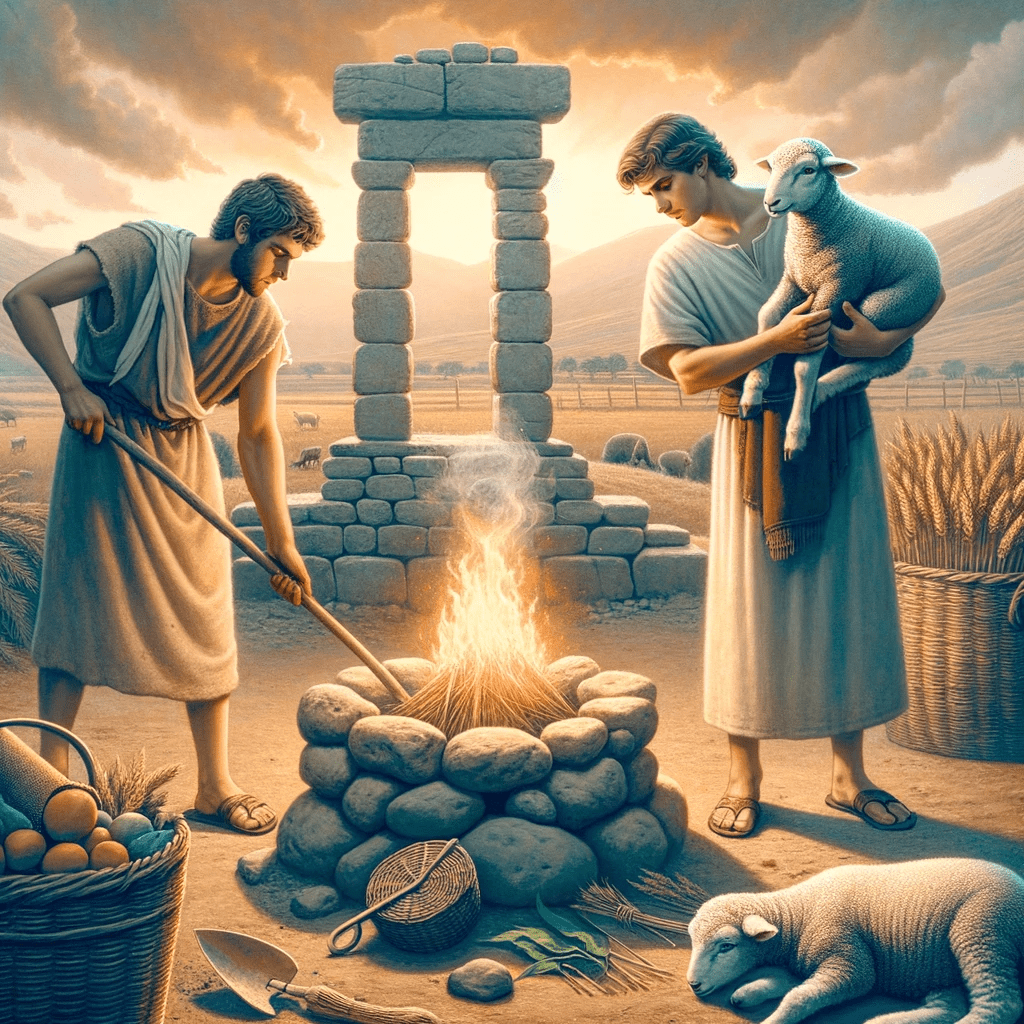
This struggle and the challenge of its brother, hindsight, are not new; they’re as old as time, as seen in the story of Cain and Abel. We all know the story, and I believe that, more than anything, it is a vital allegory about personal responsibility. When Cain sees his brother’s treatment for his hard work and sacrifice, he realizes that he would be getting the same treatment if he had willfully performed the duties asked of him. We’ve all been there to a certain extent.

Imagine finding yourself at the bad end of a situation and then realizing YOU are the one to blame. Everything on the test was covered in class, but YOU didn’t study it. Your transmission goes out in your truck, but YOU blew your money instead of saving it. Your boyfriend breaks up with you because YOU didn’t take the time to learn how he needed to be loved.

Hindsight is 20/20, but clarity happens when you learn these things before it’s too late. Unfortunately, it’s not always as easy as studying for a test or saving money. The problems of life come with layers and complexity.

My grandma always said to be careful when praying for patience or courage because the Lord won’t just give it to you. You’ll have to earn it. He’ll give you opportunities to practice patience and put you in situations that allow you to be courageous. Those aren’t always the most popular places or events to be involved in. I’ve learned the same thing about clarity.

There is a sense of comfort and security in the ambiguity of the future. If you can’t tell what you COULD become, COULD obtain, or the relationships you COULD cultivate, then missing out on them doesn’t hurt. You never saw them and can’t lose what you never had. You can blame outside circumstances, timing, or many other things that are not in your control. You can easily avoid blaming yourself.

Clarity puts the responsibility squarely on your shoulders. It forces your decisions and actions to align with a target. Missing that target has tangible consequences. It requires you to be the best version of yourself so you can be ready to accept the blessings when they start pouring in. It means making multiple sacrifices in the present for what you will obtain in the future. This can be a tireless and trying task. It’s not the carrot at the end of a stick. It’s what awaits you after navigating through the labyrinth.  

Clarity is a powerful gift, but it’s also a call to action. It demands that we face the truth of our choices and take responsibility for our future. Whether we embrace it as a blessing or shy away from it in fear, clarity offers us a chance to shape our destiny. Either way, it’s one hell of a thing to experience. The question is: will we rise to the challenge?

Blades of Potential

Disclaimer: I always need to reiterate that if I write and publish it, I believe it. How we all apply it to our lives is the hard part. As much as I relate to these ideas, implementing them has sometimes been challenging. If this life can be “figured out,” I haven’t done it yet. Writing gets it from my brain to a place where I can think more clearly. Blog posts like this are a way to keep steering in the right direction.

I subscribe to a fantastic newsletter from Farnam Street called Brain Food. Here is the link if you want to sign up : https://fs.blog/newsletter/ The whole idea behind Farnam Street is to help you master the things that other people have already figured out. The weekly newsletter is a catalog of articles around the internet that help you see things through a different lens. A few months back, one of the feature articles reported from MIT on a study in which scientists were trying to figure out why razor blades were so easily damaged by hair.

If you’re like me, you’ve probably not thought much about the disposable nature of razors. More than likely, you buy a new pack when the old razors get dull. But when you think about it, it really is a bit odd that something made of stainless steel is damaged by something as soft as human hair. The article even mentions hair is 50 times weaker than steel, yet only a single piece can cause the edge to chip. Once one initial chip or crack is present, it becomes susceptible to more chipping, eventually causing the entire edge to become dull.

At this point in the article, I had an idea of what could cause the problem, but I wanted to read more to be sure. All I could think about was how our lives can be turned upside down, flipped around, and tossed about by small things that turn into big things. Sure, you can take a hammer to a razor blade and destroy it in a heartbeat, but more often, they get worn down over time until they eventually can’t work to their full potential. That sounds an awful lot like our lives as humans.

Here is a link to the article. Long story short, the team found three reasons that a blade could become more prone to chipping:

· The microstructure of the steel is not uniform

· The blade’s approaching angle to a strand of hair

· The presence of defects in the steel’s microstructure

I believe there are similar reasons we can become prone to “chipping” as well.

· Our foundation and governing principles are not uniform

· Our approach angle to our mundane, everyday tasks

· The presence of defects in our foundation (blind spots)

Developing our foundation and governing principles starts before we have any control over their creation. It begins with our genetics and parents, and over the years, other people come into our lives that help shape them as well. Friends, teachers, coaches, mentors–all have a huge role to play in our development. Eventually, we mature to a point where we begin to think independently, but our past relationships and experiences affect us in ways we couldn’t control, even if we wanted to.
Having different opinions on different topics is normal, but the things that we believe on a foundational basis are rarely if ever, changed. And if they are, you can bet it is a challenging process. When these principles are at odds with each other, they cause a rift, which leaves us as a prime target for internal conflict. “No man can serve two masters: for either he will hate the one and love the other, or else he will hold to the one and despise the other.” — Matthew 6:24-26

To remedy this, we must do some soul-searching and figure out what we TRULY believe. We must know who we are and be conscious enough to understand that we can’t fool ourselves. If our actions don’t align with what we believe, then there is no uniformity in our microstructure, and it’s only a matter of time before our foundation starts to crumble.

Those actions are the second reason we don’t reach our potential. We get so caught up in the “big” parts of our lives that the daily tasks and how we perform them get lost in the shuffle. Martha Beck coined the phrase, “How you do anything is how you do everything.” If she’s right, that is one of the most profound statements I’ve ever read.

Our life really is a whole bunch of little things done over and over again and sprinkled with the occasional “big” thing. A 75-year-old man may take 50 family vacations over the years, but he has dinner with his wife 18,250 times over that same period. Which one of those is more important at the end of his life? Doing the little things right can be tedious and mundane, but how we approach and attack them can make all the difference in the world. 

Just like a blade can have defects in its microstructure, we, too, can have defects in our foundation. These blind spots can give us a false sense of how our world works. The great Persian poet Rumi said it best: “Yesterday I was clever, so I wanted to change the world. Today, I am wise, so I am changing myself”.
The most significant defect in our foundation is denying the prospect that we could be wrong about something—or everything. When we refuse to entertain the possibility that our ideas can be tested–and even changed– we reject the opportunity to grow into our full potential. 

Razor blades are disposable. It would make little sense to inspect each one at a microscopic level or study the effects of each shaving session on the edges of the blade. Our lives, though–they are anything but disposable. The great news is that if we create a strong foundation within ourselves, become open to learning and growing, and embrace the importance of the small things with passion, we can grow closer to unlocking our full potential. It may not make the pages of an MIT research magazine, but it will help make our small circle of influence exponentially better. 

Shoot for the Moon…or Anywhere–Just Shoot

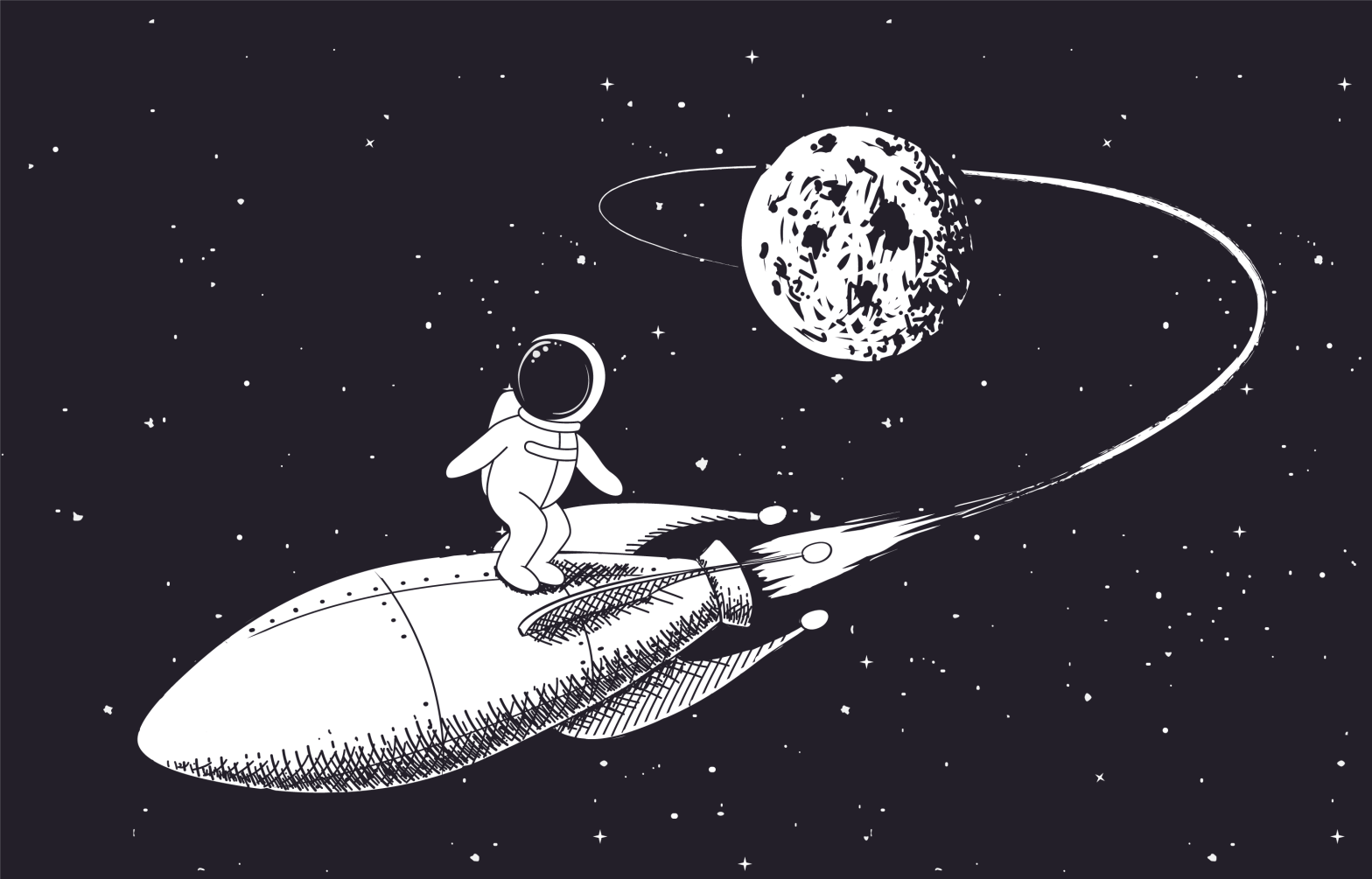
“Shoot for the moon. Even if you miss, you’ll land among the stars.” I think I heard that line a million times when I was growing up. If I’m not mistaken, it was actually the Senior motto of our graduating class (it “beat out,” another less appropriate phrase that everyone REALLY voted for). In practical terms, it means to set a goal, work towards it, and then let the results fall where they may. Assuming you work hard, you can be proud of whatever happens.

Okay. I get that. On the surface, it is a harmless little motivational whim that can make us all feel better about the randomness and injustices of life. But as I’ve gotten older (hopefully a little wiser), I’ve thought about this often. I’ve come to the conclusion that this quote is misguided. The problem is that no one ever talks about the how. What exactly does it mean to “work hard?” It shouldn’t be about the moon; it should be about the “shooting.”

The problem lies with the destination. If everyone is shooting at the same target, many people will definitely hit the mark. But how? Many variables are operating behind the scenes. Genetics, timing, upbringing, nationality, luck. Plenty will land on the moon in part or whole by inadvertently combining some of these factors, regardless of their work ethic or “shooting ability.”

On the flip side, many people who put in the time and effort to get there won’t. These same factors, and more, can be as big of a hindrance to them as it is helpful to someone else. Consider the haughty arrogance of someone who made it to the moon by chance. Now contrast that to the smothering defeat that could be felt by someone who “did everything right” but still fell short.

So if we can get to the moon by chance or, conversely, never get there despite our best efforts, then is the moon really a good thing to shoot for. I’d say yes. It provides a tangible goal to pursue—a prize to keep our eyes on. But I’d argue that the framework we put in place to get there is far more critical than that. As my boss has taught me over the years, “A goal without a plan is just a wish.”

Another cliché I’ve heard tossed about is, “It’s not about the destination, but the journey.” I like this one much better. The idea that the process along the way is more important than the actual destination appeals to me. It takes quite some time to get to the moon. What if your circumstance changes? What if something happens to the moon? What if you find something better to aim at?

The key is to take the time to develop a plan, tediously implement it, and hold yourself accountable for your effort daily. Even if you fall short of the moon, you’ll be better prepared to tackle your next trip than someone who arrived there by luck, chance, nepotism, et. You will continue building on the experience you’ve earned on your travels. In contrast, the latter person won’t be prepared to aim at their next target and will continue to depend on outside factors for their success. Or, they’ll decide to stay on the moon. It’s a big universe out there. Why stop there?

The beginning of a new year is the perfect time to sit down and figure out where you want to aim and set your trajectory. The moon is a popular destination, but another place could better serve our time, effort, and vision. How do we get there? That depends on way too many individual factors for me to be able to answer. But the plan, implementation, execution, and accountability will be the most essential factors in determining the quality of your journey. And if you can get those down, I promise it will be one hell of a trip…whatever you decide to shoot and wherever you happen to land.