A Social Idiot Analyzes Social Media: Part One

“Is this real life, or is this just a fantasy?” Social media wasn’t around when Freddy Mercury and Queen recorded Bohemian Rhapsody. Still, those words ring loud and clear some 35 years later. Has social media become prevalent enough to be considered “real life?” Or, is it still just a hobby and time-waster that shouldn’t be taken seriously?
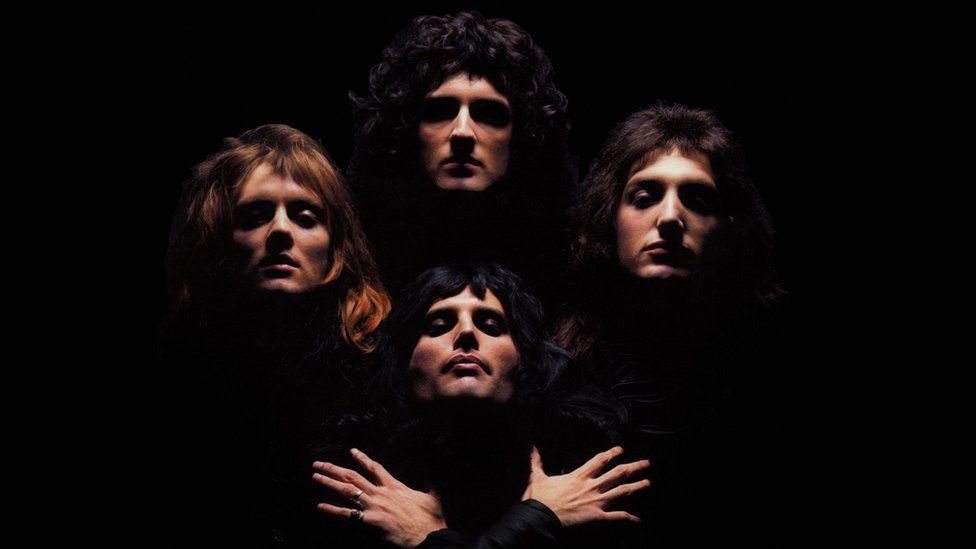
https://www.bbc.com/news/entertainment-arts-34651067

According to a study found on Statista, over 70 percent of the US population uses social media. 70 percent is enough to win a two-thirds majority, would be a passing grade in school, and would make you feel comfortable that you wouldn’t have to plug in your iPhone for quite some time. The same site also posts a survey that found only 62 percent of the population was employed.

Aside from the overt data tracking and targeted advertising on all of the most popular platforms, the concept of social media on a grand scale is also still a very new idea. (Remember when Facebook at least TRIED to hide the fact that they were tracking you?)
https://newstyledigital.com/is-facebook-spying-on-your-conversations/

As far as long-term implications are concerned, we have no idea what to expect. Some may consider it the grandest social experiment the world has ever known.

Statista also reports that the average time spent per day on social media is 145 minutes. The keyword there is average. So for two and a half hours a day, the average person scrolls other people’s feeds, shares news articles, looks at photos and videos, or creates status updates for their circle sphere of influence. But if you consider the “light users,” that means many people spend considerably more time a day doing those things.

Take a few liberties and assume an average workday of 8 hours and an average of 8 hours of sleep at night. That leaves 8 more hours each day to fill your time with other activities. Some of that would be spent eating, grooming, and doing the daily humdrum routines we are used to. But on average, 70% of the population use over 31% of their free time accessing social media.

Disclaimer: This is not a scientific study, just an observation based on loose assumptions. I also realize part of the workday could be spent on social media, and I have not accounted for weekends either.

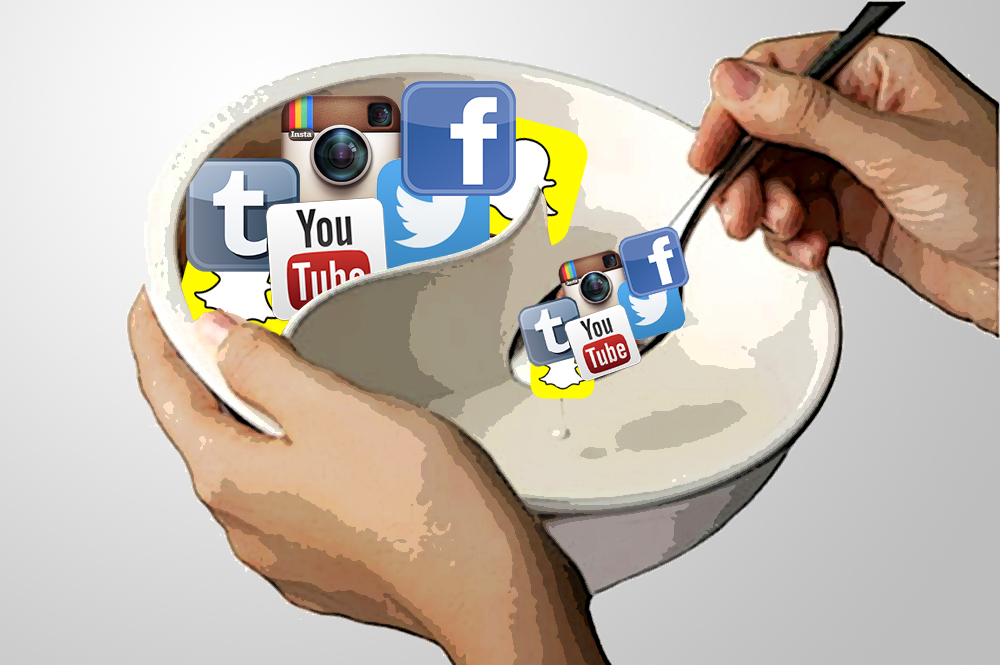
https://www.bcheights.com/2015/11/18/consuming-social-media-in-small-doses/

So what does this mean? Well, for the 30% of the population that doesn’t use social media, it can’t be “real life,” right? And the light users who only use it sporadically would probably fit into that category as well. But, I would say it is very much “real life” to people who use it consistently. If this is true, then that means these different types of social media users will see and process the world entirely differently than each other. How does this affect the way they interact together? How has the world around us changed to cater to each different group? What can we expect in 20 years?

We’ll look at some of the questions and more in Part 2. Thanks for reading!
The Two Paths of Decision-Making

There is an infinite number of rabbit holes a person can find while using the internet. Some are dark and creepy. Others are light-hearted and funny. Many of them will find you wishing you had the time spent back, and a few of them may help you be more productive. One of my recent rabbit hole dives led me to The Knowledge Project, a podcast hosted by Shane Parrish. From that podcast, I found his website, The Farnam Street Blog, which provides articles and exposes that center on how and why we handle the process of decision making.

There are some fascinating articles on the blog and some fantastic interviews on the podcast. I would suggest checking either or both of them out. But one theme that pops up now and then is the idea of making decisions based on the probable outcome. More specifically, do you make decisions based on the best possible ending or eliminating the worst-case scenario?

fs.blog

Most people would probably pick like me and say the former rather than the latter before they put a lot of thought into it. On the surface, who wouldn’t want the “best possible outcome?” But when you look back on your life and analyze some of your decisions, is that what you did? And if not, do you regret it? Will you change the way you make your decisions going forward? Let’s look at two different scenarios and then think about how you handled or will handle them in your life.

Love

If you could see fifty years into the future when choosing who you will spend your life with, how does your ideal scenario play out? For me, it would be a lifelong love affair with someone I connect with on the deepest level. It would be hills and valleys but having them right there by my side the whole time. They would be by my side for the suffering and the joy, and we would share our experiences every step of the way. I’m sure everyone’s answer is a little different, but that’s what it would look like for me. On the flip side, though, what kind of roadblocks would you have to stumble over if you made your choice like that? How much would you overlook, and how far would you let it go?

But what if I decided to eliminate the worst-case scenario? I would probably settle down with someone financially secure who had good genes to pass down to our children. And, we would take those pictures in the fall with the trees in the background (to make sure the grandparents were pleased). I would probably even sacrifice passion and attraction for security and acceptance.

Now I’m not saying that you can’t have both, by the way. And, I’m not saying you’re wrong if you choose to go with the more safe and secure path. I think it’s interesting how we shape our lives by eliminating some of the variables that could leave us vulnerable in the end–nothing more and nothing less.

Career

The best-case scenario in your career would be sticking to the adage, “Find something you love to do, and you’ll never work a day in your life.” If you can take a passion, skill, or gift and find a way to monetize it over the long term, you will probably end up very fulfilled and satisfied when it is time to retire. But there are apparent risks while traveling down this path. How long do you have to wait before your passion becomes lucrative? How many times do you have to fail until you get it right? How does that affect your health and your family?

In this situation, the worst-case scenario is finding yourself broke and not providing for your family. How do you eliminate that? Most people decide to find a place that will pay them regularly, and they trade out that paycheck for 40 hours or more a week. There’s not much risk involved as most jobs won’t require a financial investment. If you can handle the workload and hours, you will have some change in your pocket at the end of the week after making enough money to provide for your family.

Again, there is nothing wrong with either one of these options. One is more romantic and risky, and the other is safe and secure. It just goes to show you how our decision-making process can shape the way our lives play out. The examples I mentioned above would be considered “major choices” in the long run. Still, we make these same kinds of differentiation in almost every micro decision we make daily.

How did it affect your most recent car purchase? What about your interaction with the person in line in front of you at the bank? Even when picking out what music to listen to on the road home or where to pick up takeout, we are constantly weighing the option of “best possible outcome” or “eliminating the worst-case scenario.”

I believe the key to living a satisfying life is finding the harmonious balance between these two ways of making decisions. After all, we are only the sum of our choices. Choose wisely, my friends! Too much risk may find us in the shower biting our knees in agony, but not enough of it may leave us cold and unfilled.