Clarity and the Responsibilities Which Come With It

As I sat in the pew every Sunday morning in church, I heard people pray for ‘clarity.’ As a kid, I didn’t understand what that meant. To me, life was simple—no responsibilities, no stakes. But as I grew older, I realized that clarity is one of life’s most sought-after yet elusive aspects. It’s what we crave when we’re faced with hard decisions and uncertain futures 

I’ve had many moments in my adult life where I did just that. All I wanted was a clear path to form before me. I’ve been faced with hard decisions and made tough choices without having enough information present. What I wouldn’t have given for an “eliminate the worst option” or “freeze time” card that could have helped me along the way. Or better yet, why can’t someone just make the RIGHT decision for me?

There is no proverbial light bulb that goes off. You don’t just scratch your head until you have your “aha” moment. Clarity comes when the tangled web of your experiences and your chaotic glimpse of the future magically line up. It’s when you know something must be done in a specific way or in a certain amount of time. In the sense I am writing about, clarity is seeing the best version of a particular part of your life and an actual path toward getting there.  It is more than just a moment of insight—it’s that instant when you know, without a doubt, what you need to do, whether it’s finally taking that job offer or walking away from a toxic relationship. 
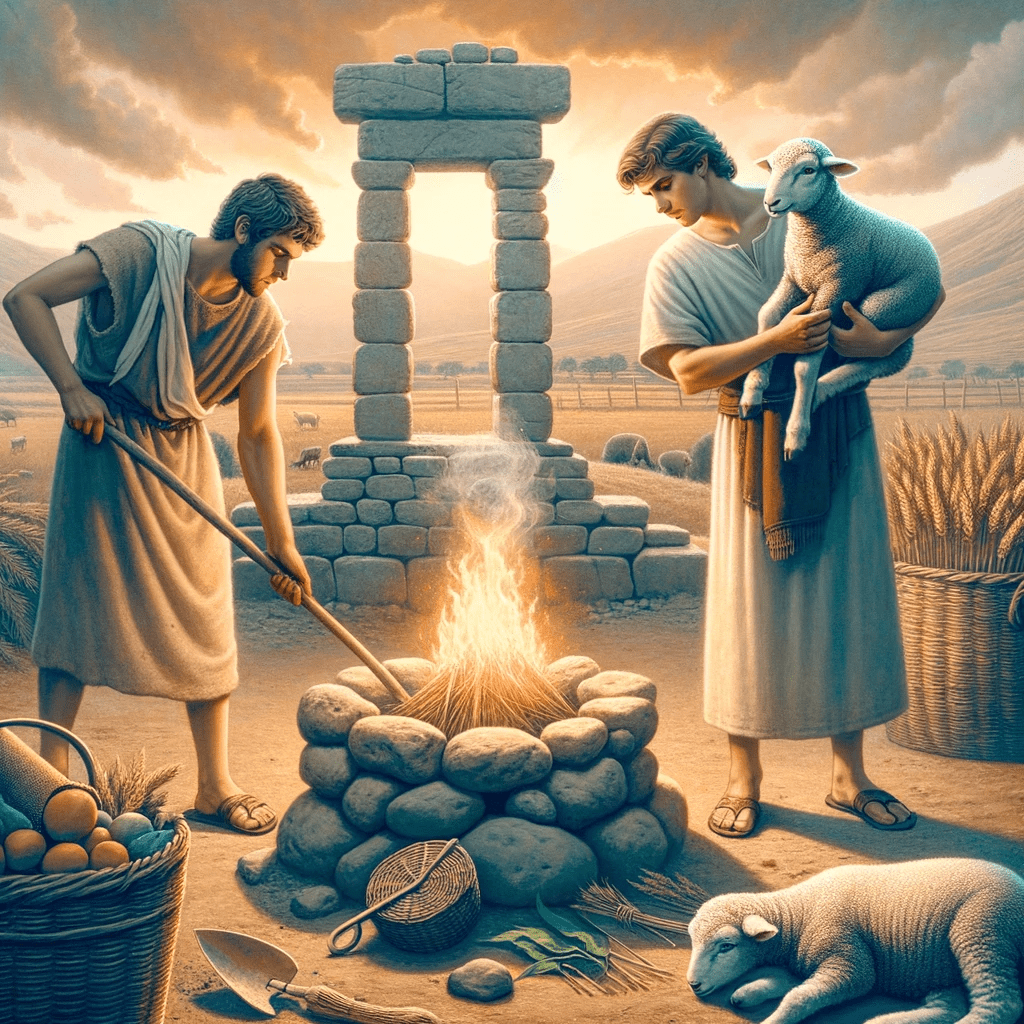
This struggle and the challenge of its brother, hindsight, are not new; they’re as old as time, as seen in the story of Cain and Abel. We all know the story, and I believe that, more than anything, it is a vital allegory about personal responsibility. When Cain sees his brother’s treatment for his hard work and sacrifice, he realizes that he would be getting the same treatment if he had willfully performed the duties asked of him. We’ve all been there to a certain extent.

Imagine finding yourself at the bad end of a situation and then realizing YOU are the one to blame. Everything on the test was covered in class, but YOU didn’t study it. Your transmission goes out in your truck, but YOU blew your money instead of saving it. Your boyfriend breaks up with you because YOU didn’t take the time to learn how he needed to be loved.

Hindsight is 20/20, but clarity happens when you learn these things before it’s too late. Unfortunately, it’s not always as easy as studying for a test or saving money. The problems of life come with layers and complexity.

My grandma always said to be careful when praying for patience or courage because the Lord won’t just give it to you. You’ll have to earn it. He’ll give you opportunities to practice patience and put you in situations that allow you to be courageous. Those aren’t always the most popular places or events to be involved in. I’ve learned the same thing about clarity.

There is a sense of comfort and security in the ambiguity of the future. If you can’t tell what you COULD become, COULD obtain, or the relationships you COULD cultivate, then missing out on them doesn’t hurt. You never saw them and can’t lose what you never had. You can blame outside circumstances, timing, or many other things that are not in your control. You can easily avoid blaming yourself.

Clarity puts the responsibility squarely on your shoulders. It forces your decisions and actions to align with a target. Missing that target has tangible consequences. It requires you to be the best version of yourself so you can be ready to accept the blessings when they start pouring in. It means making multiple sacrifices in the present for what you will obtain in the future. This can be a tireless and trying task. It’s not the carrot at the end of a stick. It’s what awaits you after navigating through the labyrinth.  

Clarity is a powerful gift, but it’s also a call to action. It demands that we face the truth of our choices and take responsibility for our future. Whether we embrace it as a blessing or shy away from it in fear, clarity offers us a chance to shape our destiny. Either way, it’s one hell of a thing to experience. The question is: will we rise to the challenge?
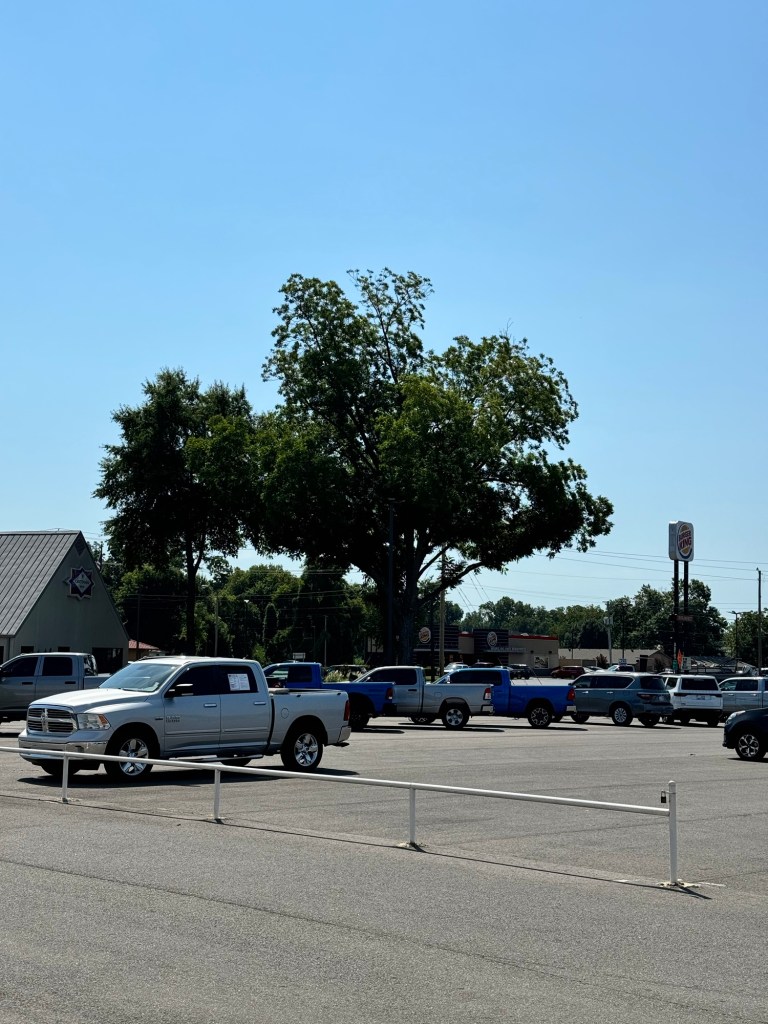
Strong Timber

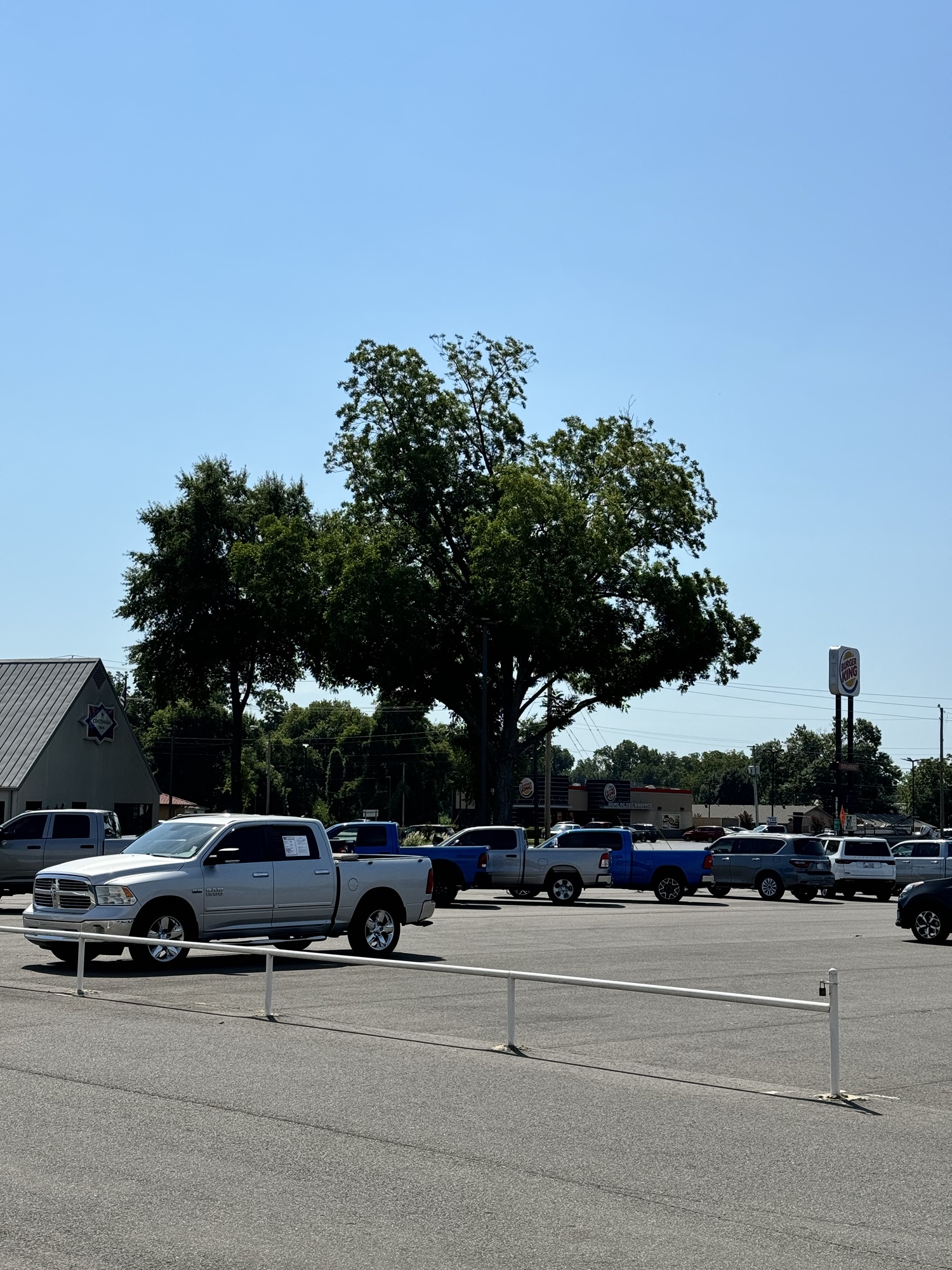
There is a tree at work that I watch throughout the year. It sits slightly off the road, between the bank and the car lot, but closer to the bank. I’m not sure what type of tree it is, but I’ve spent a fair amount of time looking at it when I’m outside. 

I’m no dendrologist (I definitely had to Google that one), but it’s probably 30 years old. Many trees in our little town are more giant and more beautiful. In fact, I’ve probably driven by this one for most of my life without noticing it. But I’ve learned that the older I get, the more I see the little things.

I enjoy the changes it makes throughout the different seasons, from complete and green to bare and rugged. One year, I even spotted some mistletoe high up in the branches. Trees have long served as a reminder to us to let go, start fresh, and flourish.

And grow.

If you watch a tree every day, you can’t see it grow. You may notice a difference if you only see it once a year. If you only see it every ten years, it won’t be the same tree you remember initially seeing. 

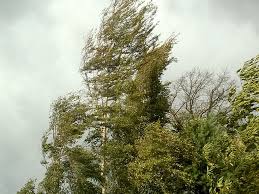
The other day, I was watching it and noticed the top swaying in the wind. It was the only portion of the tree moving, going back and forth briskly. I thought for a minute that it may even snap. The contrast it highlighted with the thick trunk and sturdy branches was noticeable. But then, it hit me.

Every other part of that tree had gone through a similar stage in its development. The rest of it was sturdy and stable because the wind and weather had tested it in the past. Either pass the test and become stronger, or let the weather snap you in two and prevent further growth. The biggest oaks and pines in the world are the ones that have weather the hardest, most frequent storms. 

And you can say the same thing about the strongest people. 

“Good timber does not grow with ease:

The stronger wind, the stronger trees;

The further sky, the greater length;

The more the storm, the more the strength.

By sun and cold, by rain and snow,

In trees and men good timbers grow.”

–Douglas Malloch

Blades of Potential

Disclaimer: I always need to reiterate that if I write and publish it, I believe it. How we all apply it to our lives is the hard part. As much as I relate to these ideas, implementing them has sometimes been challenging. If this life can be “figured out,” I haven’t done it yet. Writing gets it from my brain to a place where I can think more clearly. Blog posts like this are a way to keep steering in the right direction.

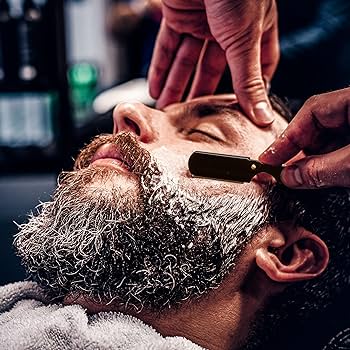
I subscribe to a fantastic newsletter from Farnam Street called Brain Food. Here is the link if you want to sign up : https://fs.blog/newsletter/ The whole idea behind Farnam Street is to help you master the things that other people have already figured out. The weekly newsletter is a catalog of articles around the internet that help you see things through a different lens. A few months back, one of the feature articles reported from MIT on a study in which scientists were trying to figure out why razor blades were so easily damaged by hair.

If you’re like me, you’ve probably not thought much about the disposable nature of razors. More than likely, you buy a new pack when the old razors get dull. But when you think about it, it really is a bit odd that something made of stainless steel is damaged by something as soft as human hair. The article even mentions hair is 50 times weaker than steel, yet only a single piece can cause the edge to chip. Once one initial chip or crack is present, it becomes susceptible to more chipping, eventually causing the entire edge to become dull.

At this point in the article, I had an idea of what could cause the problem, but I wanted to read more to be sure. All I could think about was how our lives can be turned upside down, flipped around, and tossed about by small things that turn into big things. Sure, you can take a hammer to a razor blade and destroy it in a heartbeat, but more often, they get worn down over time until they eventually can’t work to their full potential. That sounds an awful lot like our lives as humans.

Here is a link to the article. Long story short, the team found three reasons that a blade could become more prone to chipping:

· The microstructure of the steel is not uniform

· The blade’s approaching angle to a strand of hair

· The presence of defects in the steel’s microstructure

I believe there are similar reasons we can become prone to “chipping” as well.

· Our foundation and governing principles are not uniform

· Our approach angle to our mundane, everyday tasks

· The presence of defects in our foundation (blind spots)

Developing our foundation and governing principles starts before we have any control over their creation. It begins with our genetics and parents, and over the years, other people come into our lives that help shape them as well. Friends, teachers, coaches, mentors–all have a huge role to play in our development. Eventually, we mature to a point where we begin to think independently, but our past relationships and experiences affect us in ways we couldn’t control, even if we wanted to.

Having different opinions on different topics is normal, but the things that we believe on a foundational basis are rarely if ever, changed. And if they are, you can bet it is a challenging process. When these principles are at odds with each other, they cause a rift, which leaves us as a prime target for internal conflict. “No man can serve two masters: for either he will hate the one and love the other, or else he will hold to the one and despise the other.” — Matthew 6:24-26

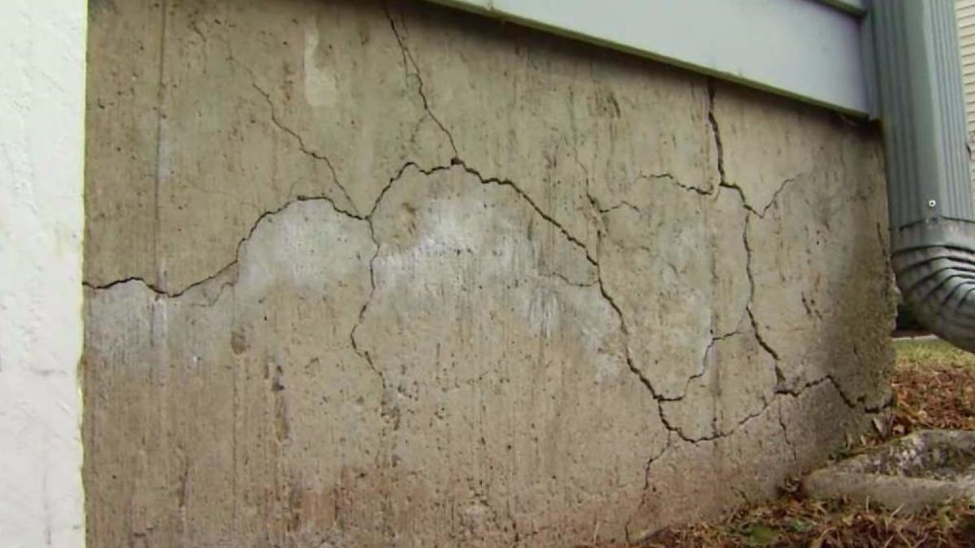
To remedy this, we must do some soul-searching and figure out what we TRULY believe. We must know who we are and be conscious enough to understand that we can’t fool ourselves. If our actions don’t align with what we believe, then there is no uniformity in our microstructure, and it’s only a matter of time before our foundation starts to crumble.

Those actions are the second reason we don’t reach our potential. We get so caught up in the “big” parts of our lives that the daily tasks and how we perform them get lost in the shuffle. Martha Beck coined the phrase, “How you do anything is how you do everything.” If she’s right, that is one of the most profound statements I’ve ever read.

Our life really is a whole bunch of little things done over and over again and sprinkled with the occasional “big” thing. A 75-year-old man may take 50 family vacations over the years, but he has dinner with his wife 18,250 times over that same period. Which one of those is more important at the end of his life? Doing the little things right can be tedious and mundane, but how we approach and attack them can make all the difference in the world. 

Just like a blade can have defects in its microstructure, we, too, can have defects in our foundation. These blind spots can give us a false sense of how our world works. The great Persian poet Rumi said it best: “Yesterday I was clever, so I wanted to change the world. Today, I am wise, so I am changing myself”.

The most significant defect in our foundation is denying the prospect that we could be wrong about something—or everything. When we refuse to entertain the possibility that our ideas can be tested–and even changed– we reject the opportunity to grow into our full potential. 

Razor blades are disposable. It would make little sense to inspect each one at a microscopic level or study the effects of each shaving session on the edges of the blade. Our lives, though–they are anything but disposable. The great news is that if we create a strong foundation within ourselves, become open to learning and growing, and embrace the importance of the small things with passion, we can grow closer to unlocking our full potential. It may not make the pages of an MIT research magazine, but it will help make our small circle of influence exponentially better. 

The Faith of Our Fathers (and Grandmas)

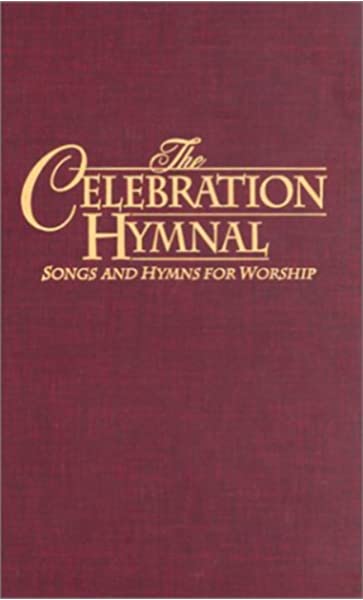
Every now and then I get an itch to listen to some good ole Southern Gospel music. It takes me back to when I was a child at the Assembly of God church in Dardanelle. Sometimes those old hymns can hit me in a place that modern music just can’t touch. Power in the Blood, Victory in Jesus, I Surrender All, Blessed Assurance–you know the ones.

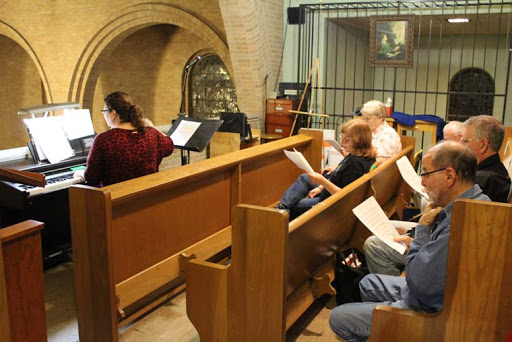
I spent a lot of time going through those old hymnals, but never while everyone was singing. I knew them all by heart at an early age and song time was spent humming or singing to myself while I played on, under, and on top and with the pews. My mom was the pianist, so I sat with my grandma and her crew during “song service.” When I was able to sit still I would watch the choir and the song leader. I’d hear John Parker say, “Page 106–Heaven’s Jubilee.” He’d step back away from the microphone and sing, moving his fingers in the air like he was directing the Tabernacle Choir.

But on this particular drive home, a song came on that struck me so hard I felt like I had been transported back in time to the mid 1980’s. I could see everything so vividly–the maroon carpet, the wooden pews, my grandma’s light blue dress, my mom sitting upright at the piano. I could smell the old church and the mix of perfumes that had been sprayed on before walking out the door. I could walk in that old building right now and tell you where nearly every person sat during service. That song was “Leaning on the Everlasting Arms.”

If you’ve never heard it and don’t want to watch the video, here are the lyrics:

What a fellowship, what a joy divine
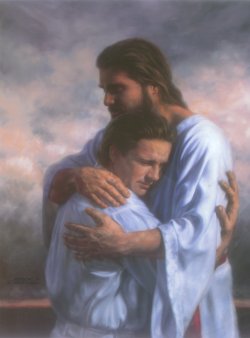
Leaning on the everlasting arms
What a blessedness, what a peace is mine
Leaning on the everlasting arms

Leaning, leaning
Safe and secure from all alarms
Leaning, leaning
Leaning on the everlasting arms

What have I to dread, what have I to fear
Leaning on the everlasting arms?
I have blessed peace with my Lord so near
Leaning on the everlasting arms

Leaning, leaning
Safe and secure from all alarms
Leaning, leaning
Leaning on the everlasting arms

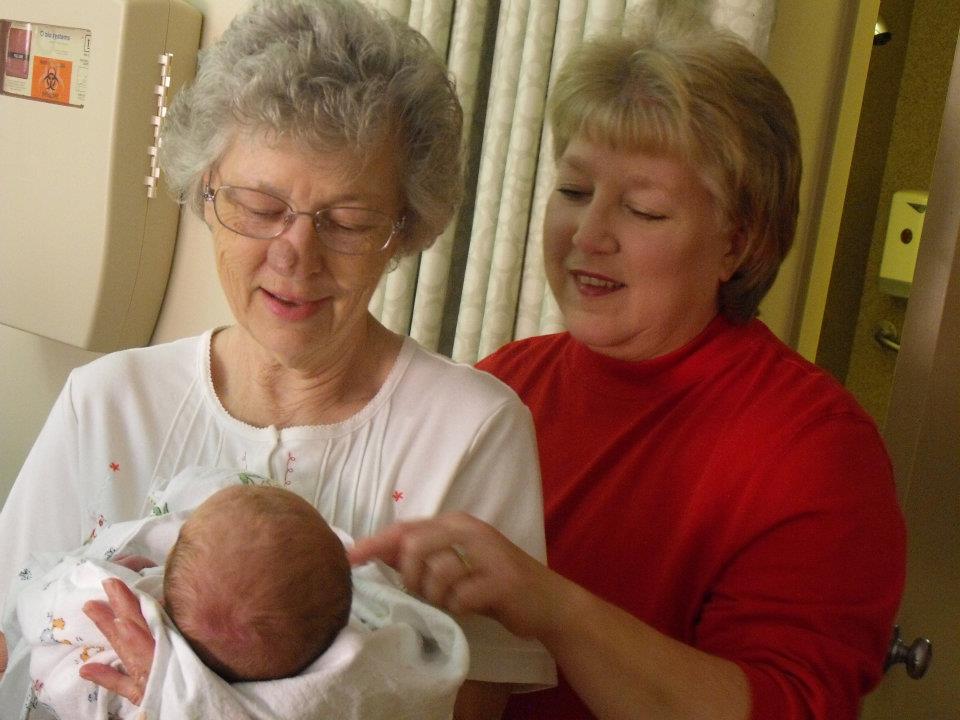
I’ve heard it a thousands times in my life, but I had only thought about the lyrics some of the time, and never since my grandma’s death. I could see her sweet face as clear as day–eyes closed, hands raised in the air, body swaying to the beat of the music, and hitting every word on cue. She wasn’t just singing that song, she believed every word.

And I don’t remember a time when she didn’t live every word. Good parents and grandparents don’t let their young children feel the stressors that the outside world bring down on them. When my mom and I had no place to go, they opened up their house to us. They weren’t well off, but she leaned on Jesus. When my grandpa quit going to church, she didn’t lose faith in him–she leaned on Jesus. She leaned on Jesus when their daycare couldn’t stay open any longer. She kept leaning when my grandpa got Alzheimer’s and couldn’t remember who she was. She leaned on Jesus through her own bout with that disease and never stopped until her life ended and he took her in his everlasting arms for good.

I know as we get older we idolize our parents and grandparents. Sometimes it takes too long for us to realize their worth. I know she wasn’t perfect, and I’m sure there are things she thought, said, or did that she regretted. But, like many others her age, she grew up picking cotton in the Bottoms before she was 10. Her mother died young, putting the burden of raising a large family on her older sister. Her husband lost an eye getting ready to fight in Vietnam. This life wasn’t particularly or uniquely hard, but it wasn’t a stroll down Easy Street either. There were plenty of times she could have abandoned her faith. I’m not sure she ever even questioned it.

Undoubtedly, there are thousands of other people who can tell the same stories. Many had exponentially tougher lives and maintained the faith. The ultimate example is the archetypical story of Job in the Old Testament. But, I’m thankful I have a personal example which I can cling to and remember. Even though my mom and dad have always remained faithful, it is my grandma that I always come back to when I stray away from the Lord. Her devotion and unwavering commitment to her God and her family have always been the anchor which keeps me from going too far.

The reason I am writing this blog post is so that I can unpack some of these feelings in my heart and mind. I don’t talk about it much, but those close to me know that I have always struggled with the concept of faith. If you remain steadfast and strong while trusting and believing in God, you give him praise when the “good things” happen. You do the same and explain it away as God’s will when the “bad things” happen (or the good things don’t). I’ve always felt that is a built in kill-switch. Things happen the way they happen whether you have faith or not.

That’s a post for another day. I’ve spent a lot of my adult life trying to figure out the why. It’s something we all think about from time to time. Why does an all loving God allow so many bad things to have? Why doesn’t an all powerful God use his power to keep people from suffering? What makes a relationship with God unique if every person can have it? I’ve stopped thinking about the why. “Farther along, we’ll know all about it.” What I’ve been struggling with lately is the how.

How do so many people rely completely on faith? When things are looking dark and dreary, how do you face those burdens and “let go and let God?” Our instinct is to pull ourselves up by the bootstraps and tread through problems when they come our way. We stress and worry but in the end we keep going. How do Christians face their problems head on and give God all the praise when things work out? How do they keep believing when God’s will seems to be continued suffering?

It may sound like I’m not a Believer, but that couldn’t be further from the truth. I’m a work in progress and I believe God’s grace and mercy allows for us to ask questions and try to make sense of his supernatural existence. I believe the unique relationship between us and our Savior doesn’t have to be rosy and tidy. I’m sure I’ll never find the answers to these questions as long as I’m on Earth, but I’m hoping to one day learn how to deal with the why.

If it wasn’t for the reckless and unbridled faith of a little lady named Betty Sue Adams, I would have lost all hope a long time ago. And for her, I am blessed and thankful.