Celebrating Unconventional Hobbies: The Hobby-Horse Phenomenon

The phrase “hobby-horse championship” practically arrives with its own smirk.

For an adult who has forgotten how seriously children can take play, the picture is easy: kids running around a gym with stuffed horse heads on sticks. Cute. Strange. Something to watch for thirty seconds before moving on.

But stay a little longer.

A young hobby-horse athlete clears a jump while fellow competitors and families watch inside an indoor arena.

This summer, 400 registered competitors gathered in Brighton, Michigan, for the U.S. Hobby Horse Championships. They ran jumping courses, performed dressage, and competed in rodeo-style events. Most were young girls. Many had designed and made their own horses and tack.

The championship itself began with four young athletes who met online in 2023. They didn’t wait for a school, league, or grown-up institution to decide their interest was legitimate. They built the competition they wished existed.

Stay long enough, and the smirk starts to lose its footing.

There is athleticism in the jump. Craftsmanship in the horse. Courage in performing something you love while knowing other people may laugh. There is friendship, practice, imagination, and the stubborn human need to find people who understand why a thing matters.
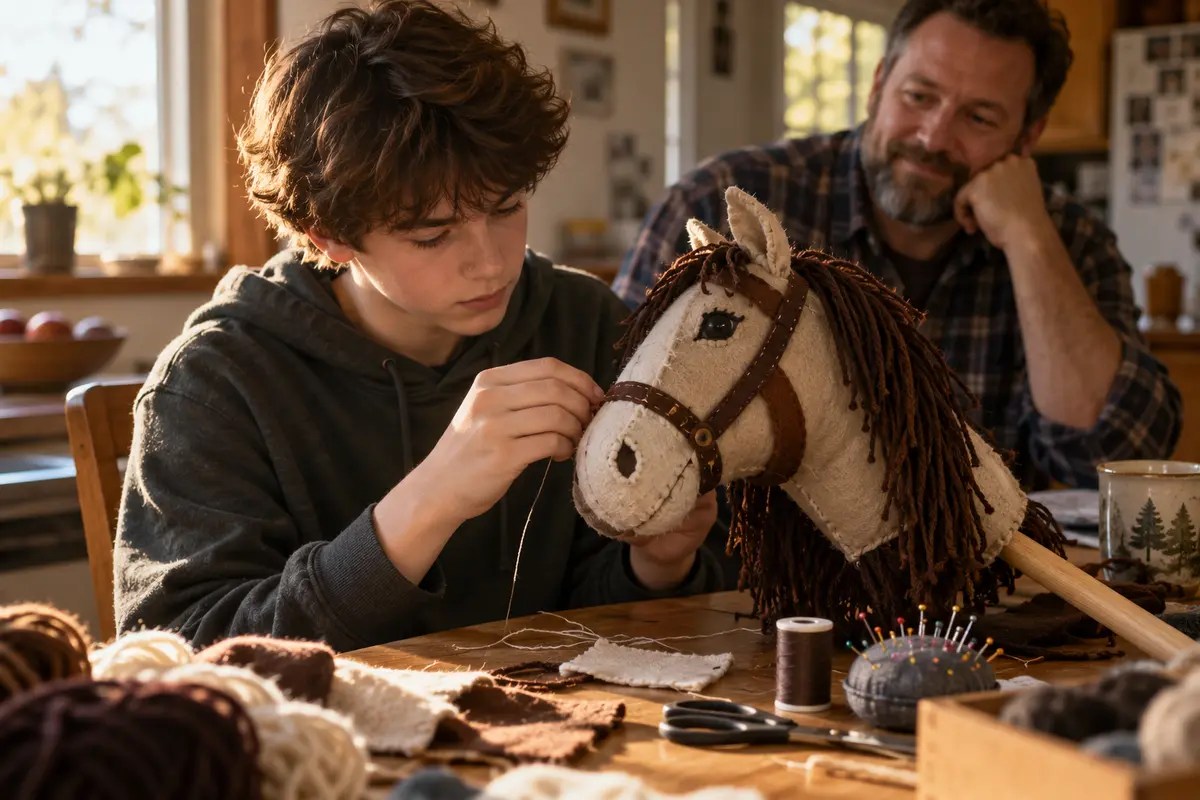
A young person carefully stitches a handmade hobby horse at a kitchen table while a parent watches nearby.

Adults are good at respecting a child’s interest after it becomes useful.

If it earns a scholarship, we call it dedication. If it makes money, we call it talent. If it fits neatly on a résumé, we call it well-rounded. But before any of that—especially when the interest looks odd—we often ask joy to explain itself.

Where is this going?

Can you make a living doing that?

What will people think?

We ask childhood to produce a business plan.

Fatherhood has shown me how easily anxiety can dress itself up as wisdom. We know the world can be cruel, so we try to protect our children from being embarrassed. Sometimes, though, our version of protection is to teach them embarrassment first. We offer the first small laugh. We suggest a more respectable interest. We make them feel foolish at home before somebody else can do it in public.

My children have brought me songs, drawings, games, sports, and ideas that did not arrive with a clear destination. Sometimes I understood the appeal immediately. Sometimes I had to resist grading the interest by whether I could picture it becoming a career.

That’s harder than it sounds.

We’ve been trained to look for proof. Yet some forms of intelligence announce themselves on report cards, while others appear when a child memorizes every detail of an imaginary world, edits the same song for the twentieth time, learns to stitch a bridle, or practices one jump until the body finally does what the mind can already see.

The child who seems ordinary inside an assigned format may come alive inside a chosen one.

That’s not a guarantee. It’s a clue.

Of course, honoring joy doesn’t mean funding every interest without limit or surrendering every boundary in the house. Parents still have to say no. Money is real. Time is real. Responsibilities are real. But there’s a difference between saying, “We cannot buy that,” and saying, “What you love is ridiculous.”

One sets a limit. The other turns a light down.
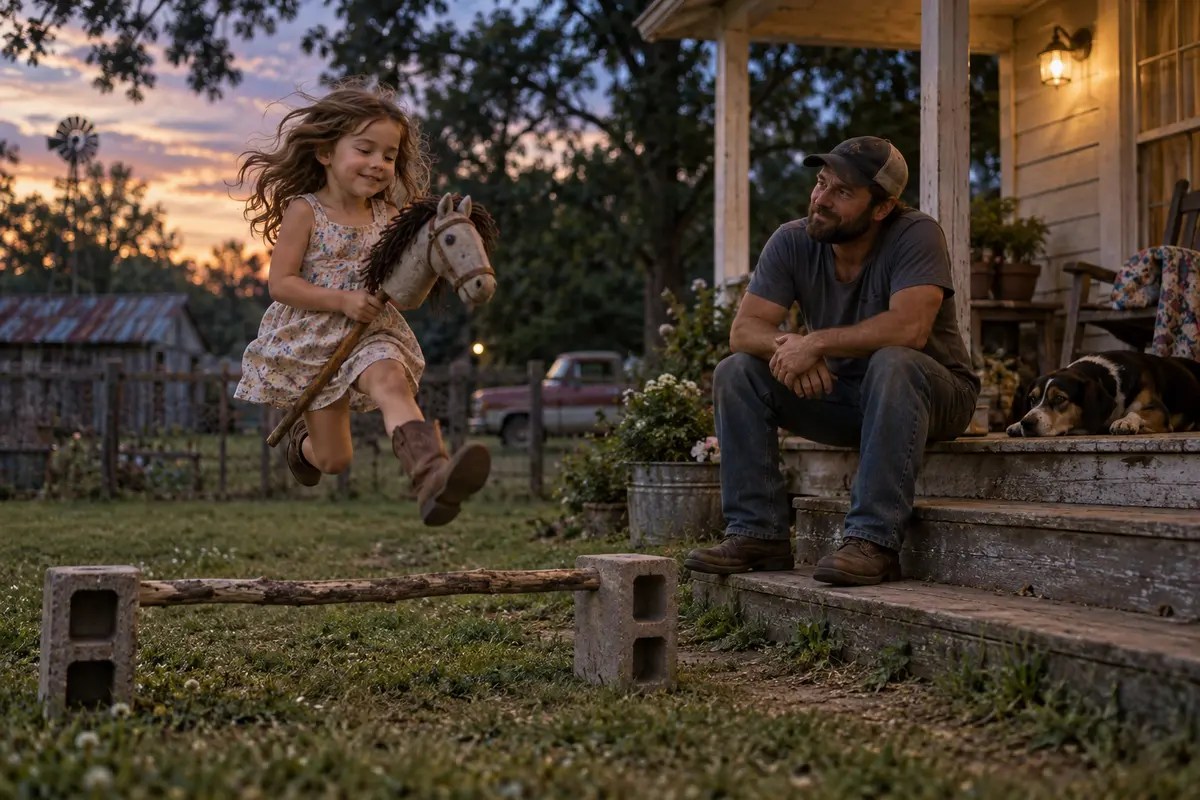
A father watches with quiet pride as his child practices a hobby-horse jump in a small-town Arkansas yard at dusk.

The interest may fade. Many do. The stick horse may end up in a closet beside some other season of childhood. That doesn’t make the joy wasted. A child may have learned to make something, practice something, risk being seen, and find a community. More importantly, the child might have learned whether the people at home made room for the parts of them the rest of the world hadn’t learned to value yet.

We don’t have to understand every enthusiasm our children bring us. We don’t have to pretend everything they make is excellent. Unconditional belonging is not the same as automatic approval.

But attention is not the same as approval either. Sometimes attention simply says: I see that this makes you more alive, and I will not make you ashamed of that.

A parent doesn’t have to understand the horse to recognize that the light in the child is real.

Sources: Morning Brew, “Youth Sports Brew” and Young Rider, “US Hobby Horse Championships Returns August 1, 2026 to Brighton, Michigan”.

Clarity and the Responsibilities Which Come With It

As I sat in the pew every Sunday morning in church, I heard people pray for ‘clarity.’ As a kid, I didn’t understand what that meant. To me, life was simple—no responsibilities, no stakes. But as I grew older, I realized that clarity is one of life’s most sought-after yet elusive aspects. It’s what we crave when we’re faced with hard decisions and uncertain futures 

I’ve had many moments in my adult life where I did just that. All I wanted was a clear path to form before me. I’ve been faced with hard decisions and made tough choices without having enough information present. What I wouldn’t have given for an “eliminate the worst option” or “freeze time” card that could have helped me along the way. Or better yet, why can’t someone just make the RIGHT decision for me?

There is no proverbial light bulb that goes off. You don’t just scratch your head until you have your “aha” moment. Clarity comes when the tangled web of your experiences and your chaotic glimpse of the future magically line up. It’s when you know something must be done in a specific way or in a certain amount of time. In the sense I am writing about, clarity is seeing the best version of a particular part of your life and an actual path toward getting there.  It is more than just a moment of insight—it’s that instant when you know, without a doubt, what you need to do, whether it’s finally taking that job offer or walking away from a toxic relationship. 

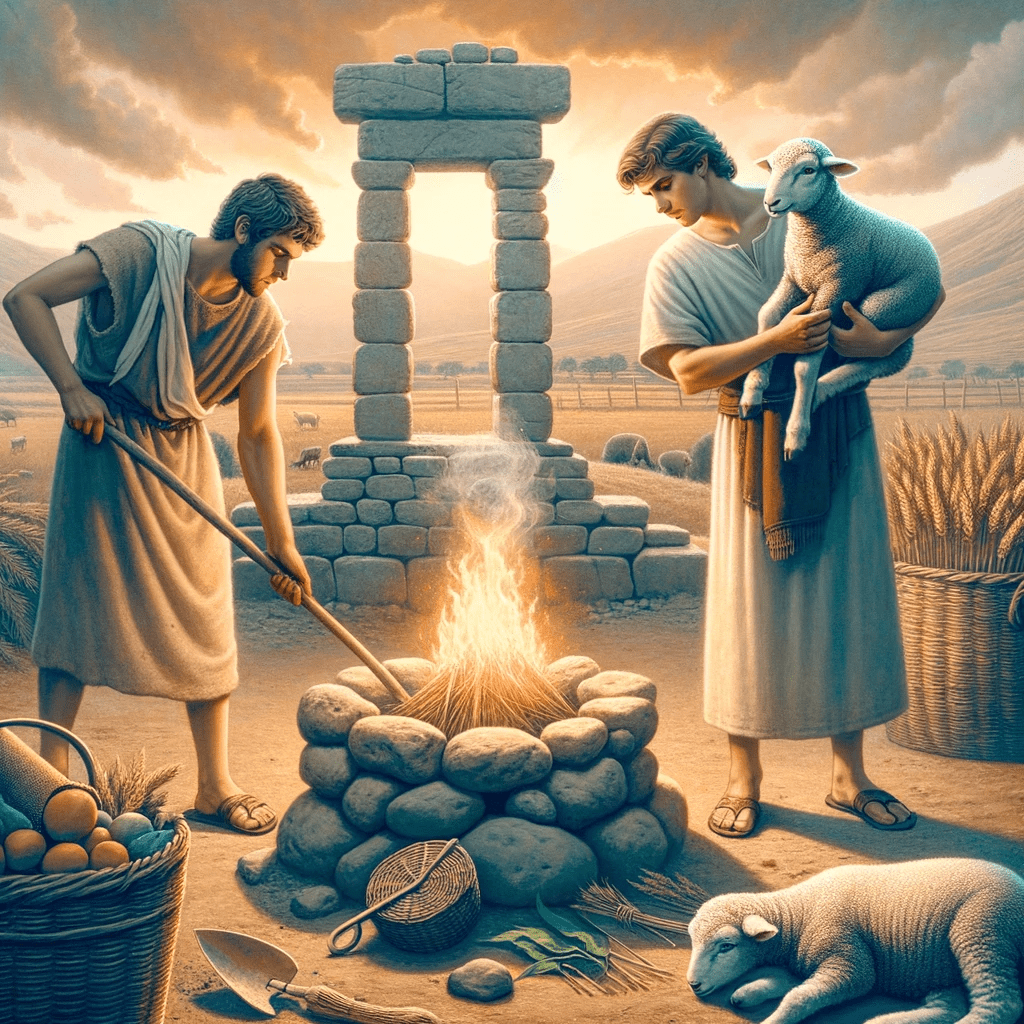
This struggle and the challenge of its brother, hindsight, are not new; they’re as old as time, as seen in the story of Cain and Abel. We all know the story, and I believe that, more than anything, it is a vital allegory about personal responsibility. When Cain sees his brother’s treatment for his hard work and sacrifice, he realizes that he would be getting the same treatment if he had willfully performed the duties asked of him. We’ve all been there to a certain extent.

Imagine finding yourself at the bad end of a situation and then realizing YOU are the one to blame. Everything on the test was covered in class, but YOU didn’t study it. Your transmission goes out in your truck, but YOU blew your money instead of saving it. Your boyfriend breaks up with you because YOU didn’t take the time to learn how he needed to be loved.

Hindsight is 20/20, but clarity happens when you learn these things before it’s too late. Unfortunately, it’s not always as easy as studying for a test or saving money. The problems of life come with layers and complexity.

My grandma always said to be careful when praying for patience or courage because the Lord won’t just give it to you. You’ll have to earn it. He’ll give you opportunities to practice patience and put you in situations that allow you to be courageous. Those aren’t always the most popular places or events to be involved in. I’ve learned the same thing about clarity.

There is a sense of comfort and security in the ambiguity of the future. If you can’t tell what you COULD become, COULD obtain, or the relationships you COULD cultivate, then missing out on them doesn’t hurt. You never saw them and can’t lose what you never had. You can blame outside circumstances, timing, or many other things that are not in your control. You can easily avoid blaming yourself.

Clarity puts the responsibility squarely on your shoulders. It forces your decisions and actions to align with a target. Missing that target has tangible consequences. It requires you to be the best version of yourself so you can be ready to accept the blessings when they start pouring in. It means making multiple sacrifices in the present for what you will obtain in the future. This can be a tireless and trying task. It’s not the carrot at the end of a stick. It’s what awaits you after navigating through the labyrinth.  

Clarity is a powerful gift, but it’s also a call to action. It demands that we face the truth of our choices and take responsibility for our future. Whether we embrace it as a blessing or shy away from it in fear, clarity offers us a chance to shape our destiny. Either way, it’s one hell of a thing to experience. The question is: will we rise to the challenge?

Seasons and Stages: Learning to Embrace Your Current Spot

Gradual changes over long periods of time have always been one of those things that just screws with my head. I remember being able to hold each of my kids in one arm and feeding them by bottle. Night after night I was not able to see them growing, but one day I wasn’t able to hold them like that anymore. When I look back on it, I can’t put my finger on the exact time in which it happened. But it certainly did happen.

As I have gotten older and experienced more people close to me dying, I’ve noticed that people who are old or sick seem to be at peace with leaving their earthly bodies. I’m convinced that when you get to a certain point in your journey, something in your soul changes and you just become okay with the prospect of death. Some people even seem to embrace it.

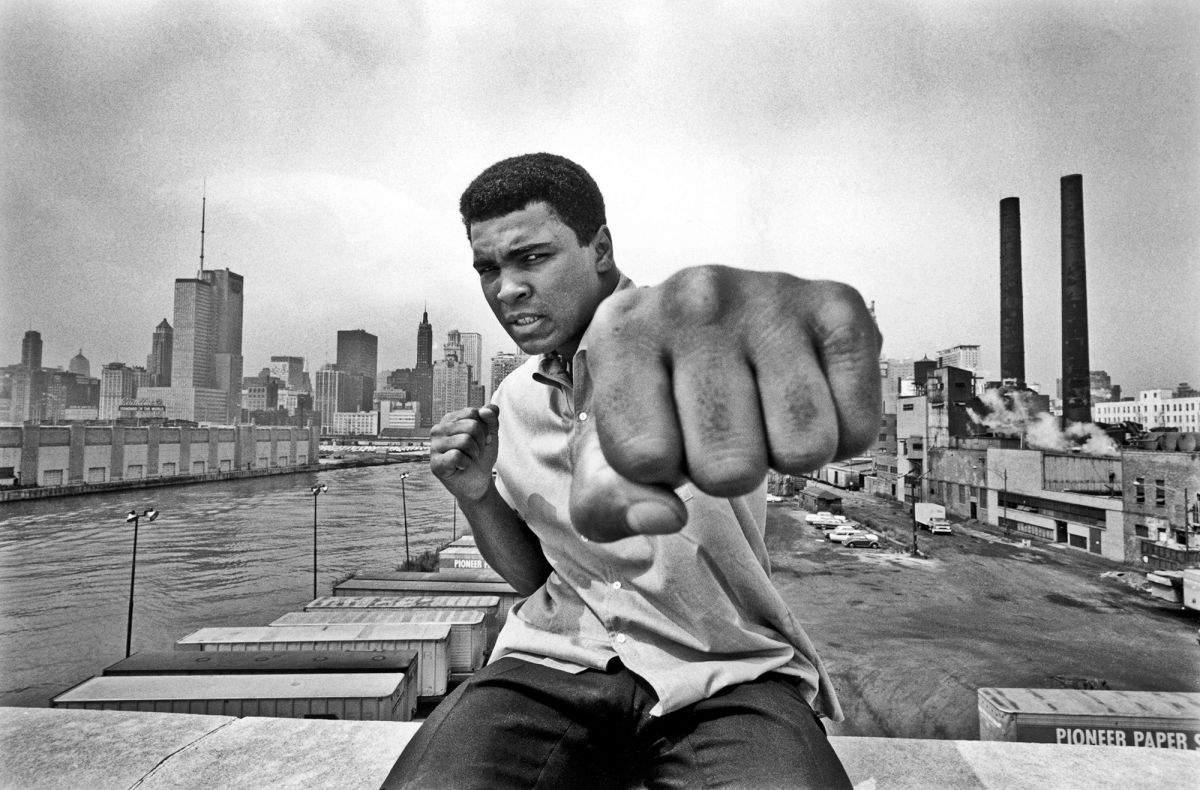
Muhammad Ali once said, “The man who views the world at 50 the same as he did at 20 has wasted 30 years of his life.” The first time I read that I thought it was kind of silly. Everyone always tells you that the secret to life is to never grow up. You must maintain that childlike spirit even as you age. If you do that, you will never get old.

But when I thought about how that applied to my life, it made total sense. I’ve just recently moved into a new “season” of my life. Just like feeding the babies, I can’t tell you exactly when it happened, but it hit me like a rock when it did. Ali wasn’t urging us to lose our youthful nature, but he was telling us that each stage of life Is unique and brings about its own challenges and joys.

I work with a couple of young guys who are just starting to build their stories. Their wives are pregnant with their first child and they are settling in with their first big purchases while anxiously waiting to see how their lives are going to be changed forever. I’ve been giving a ton of unsolicited advice and feel like some of the annoying older people who did the same thing to me all those years ago.

But more than anything, I have been reflecting on that previous season of my life. The glowing wife, the stack of bills, the unknown future, the restless delivery room, those first few months of terror and sleepless nights. My wife and I are not having anymore children, so I’ll never experience these things again. Every day my kids get a little bit further from their beginnings and closer to sprouting into their own skin.

My first emotion was a deep sadness. I don’t remember enjoying the lack of sleep on that sofa the nights our children were born. I remember some of the little things that use to be annoying realities of having a newborn. But all of a sudden, I was sad, and I missed those things. But I quickly realized that those things aren’t for us to experience forever. And now I understand what those annoying “old people” meant when the said, “Don’t blink, bud.”

So, I am embracing this new season in my life. I’m going to continue to help my kids develop into the best humans they can be, take steps to become a better husband to my wife, enjoy my time with loved ones while they are still here, and spew tons of advice to the younger kids while playing my part as the annoying old man.

With all the division we have in the world right now, it is comforting to know that for ages and ages, people really have always been about the same. Through war and famine and plague, the game keeps going on and on, even if the players shuffle positions every few years.