The Real Difference: Charisma vs. Character

Some people can control a room beautifully but can’t be trusted alone with making a decision.

You’ve probably met one. They remember names, hold eye contact, tell a story at exactly the right moment, and make the people around them feel smarter and more hopeful than they did before they arrived. By the time the coffee cools, the room belongs to them.

That is a real ability. It’s also incomplete evidence.

Charisma answers one question: How do people feel while you are speaking? Character answers a harder one: What becomes true because they trusted you?

I’ve spent most of my adult life in sales and leadership, two places where charm has a scoreboard. Good communication matters. A customer should feel comfortable asking a question. An employee deserves a leader who can bring clarity and hope into a difficult day. Eye contact, timing, confidence, stories, and good questions can all be learned. Learning them is not dishonest. Warmth can be a genuine form of service.

But the appearance of care can be learned faster than responsibility.

A warmly lit automobile showroom where a man speaks to an attentive group.

A salesperson can make a customer feel understood and still disappear when the paperwork is signed. A manager can fire up a room on Monday and avoid the truth when Friday brings bad news. A person can speak beautifully about faith and still use influence carelessly when there is no microphone nearby.

The same danger exists in relationships. It’s possible to know how to make another person feel special without knowing how to be honest, consistent, or responsible for the effect you have on them.

But charisma is not always a disguise.

I once dated a woman who had an unusual gift. Whoever she was speaking to—regardless of title, money, or station in life—felt like the most important person in the world. She listened in a way that made it seem as if the room had emptied around you.

That could have been charm alone. What convinced me otherwise came later.

Long after our relationship ended, she would reach out from time to time to ask how I was and remind me that she was still in my corner, rooting for me. There was nothing left to win. No audience. No advantage. Her care had outlived its usefulness.

A woman sends a quiet check-in message from a café at dusk.

That doesn’t mean every relationship between two good people should continue. Goodness doesn’t erase incompatibility, history, or the need for boundaries. It simply means her warmth was not manufactured for a result. The attention she gave people was connected to something sturdier than technique.

Manufactured sincerity asks a question to find leverage. Genuine presence asks because the answer matters.

We should not become suspicious of every charismatic person. Cynicism can be as lazy as seduction. Some people are naturally gifted with presence; others work to communicate better. The skill itself is not the moral issue. Character decides what the skill serves.

The test usually comes after the impressive part is over. Was the promise kept? Was the bad news delivered honestly? Was the phone call returned when there was nothing else to sell? Did the leader protect the absent person, admit the expensive mistake, and restrain the power he could have used for himself?

Character leaves evidence outside the spotlight.

A manager has a quiet, honest conversation in an almost-empty dealership at dusk.

I know how easy it is to confuse a good response with proof of a good heart. A successful meeting, a relieved customer, an energized team, or a kind comment from a reader can all feel like confirmation. But being convincing and being worthy of belief are not the same accomplishment.

If I want to know what kind of person I am becoming, the better question is not whether people enjoyed hearing me speak. It’s whether my family, coworkers, customers, and friends are safer because I told them the truth and kept my word.

Charisma may open the door, but character decides what you do after you are invited inside.


Source note: Inspired by Deepstash Daily’s summary of Robert Greene’s The Art of Seduction.
The Blitz Always Leaves Something Open

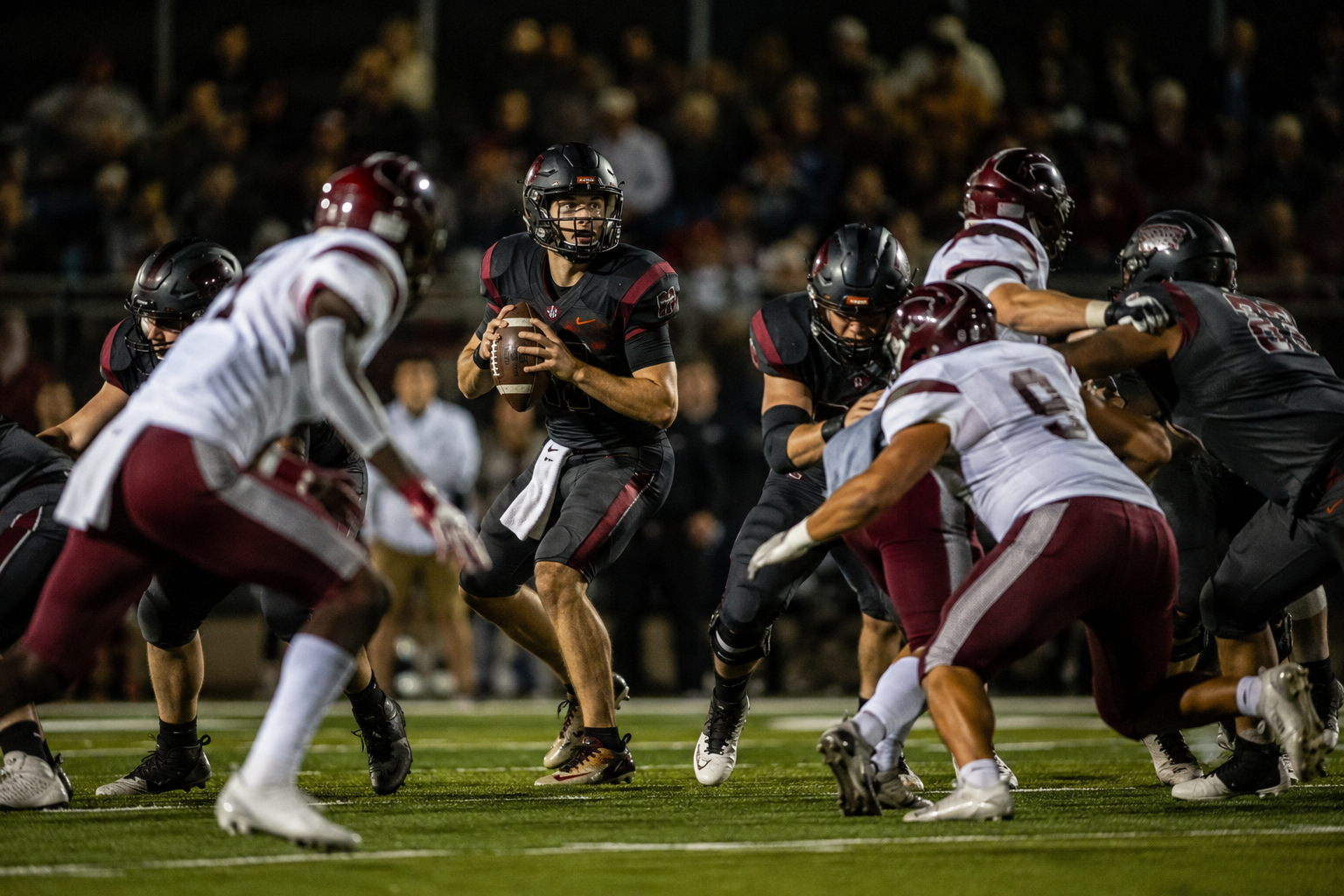
In football, if the quarterback has all afternoon to stand in the pocket, the defense has a problem.

He can look at one receiver, move to the next, check the safety, adjust his feet and wait for somebody to come open. So the defense changes the conditions.

It sends another player after him.

Blitz.

Now the quarterback has less time, less space and a large human being moving toward him with violent intentions. The play may be the same, but the environment is not. A comfortable decision became an urgent one in about half a second.

That is pressure.

The car business understands this too.

This incentive ends tonight. Someone else looked at the vehicle. The price is only good today. The manager needs an answer. Put a clock beside almost any decision and watch the decision change.

Pressure is powerful because it narrows the field. We stop evaluating every option and start searching for the fastest way to make the feeling go away.

That distinction has cost me before.

There have been times when I thought I was solving a problem but was really trying to escape the discomfort created by the problem. Those are not always the same thing.

The bill is due, so the credit card provides relief. Pressure reduced. Larger problem scheduled for later.

The argument is uncomfortable, so we say whatever ends it. Pressure reduced. Actual disagreement still sitting there, now with an additional layer of dishonesty.

The job feels unbearable, so walking out immediately feels like freedom. Maybe leaving is correct. But freedom becomes considerably less free when the next round of bills arrives and no plan came with it.

Immediate relief is seductive because it works immediately.

The problem is that a tourniquet and healing are not the same thing.

Here is the part of the football metaphor I find most useful: the extra defender has to come from somewhere.

If a linebacker charges the quarterback, he is no longer covering the same part of the field. Pressure creates danger, but it also creates exposure. Beat the blitz and there may be a receiver standing alone with open grass in front of him.

The quarterback can miss that because the threat is so obvious. Staring exclusively at the person trying to flatten you is an understandable response.

Life creates the same tunnel.

A money problem can make the entire world look like money. A relationship problem can consume every thought. A crisis at work can convince us nothing exists beyond the building. The pressure becomes the only thing on the field.

But the blitz always leaves something open.

A crisis at work may reveal the person who can lead when the usual leader is unavailable. Tight finances may finally expose spending that never mattered as much as it claimed. A relationship reaching its breaking point may force the honest conversation comfort allowed both people to avoid. Losing one option may create enough necessity to build another.

I am not recommending crisis as a personal-development strategy. Life distributes those freely enough.

I am saying pressure changes the field. Do not become so fixated on what is charging toward you that you fail to notice what moved.

One chapter in A Nobody’s Guide to Self-Help grew from this question: What does pressure do to me?

Some people become reckless. Some freeze. Some get angry. Some agree to anything. One of my defaults under certain kinds of emotional pressure has been escape. Leaving first can feel safer than staying long enough to discover how something ends.

Pressure rarely invents a completely new person. It usually reaches for the response we have practiced.

That is why the middle of a crisis is a terrible place to invent your values.

Decide some things before the snap.

What will you not sacrifice for a job? How much financial risk are you willing to carry? What boundary does not move simply because someone becomes upset? Who has earned the right to advise you? What deserves an immediate response, and what deserves a night of sleep?

Preparation does not remove pressure. It keeps pressure from introducing you to yourself for the first time.

If something is bearing down on you now, acknowledge it. The linebacker may be real. Ignoring him would be stupid.

But look across the rest of the field too.

Are you solving the problem or only trying to stop feeling it?

Is the clock real?

What changed when the pressure arrived?

And what did the blitz leave open?

The Power of Asking the Right Questions

Two people can stand in the same kitchen, speak plain English, and understand almost none of each other.

One says, “Fine.”

The other hears, “The problem is settled.”

The first person may have meant, “I’m tired,” “I don’t feel safe explaining this,” or “You have already decided.” Both people know what fine means. Neither one knows what just happened.

The words were translated correctly.

The person was missed.

Two people stand apart in the same kitchen after their words fail to reach each other.

An email from ChatGPT recently promoted the ability to translate text, voices, and photographs, then use follow-up questions so the answer fits the moment. That is remarkable technology. But some of the most consequential translation failures happen between people who share a language, a workplace, a home, or even a last name.

The dictionary is nearly useless with certain sentences.

A child says, “I don’t care.” That may be indifference. It may also be fear posing as indifference because trying and failing would hurt more than pretending the thing never mattered.

As a father, I have not always heard the difference.

Sometimes I’ve answered the sentence instead of the child. I heard attitude and responded with correction. I heard laziness and gave a speech about effort. Maybe the correction was needed. Maybe the speech was true. But truth delivered to the wrong meaning still misses its target.
The better response is often a second question:

“When you say you don’t care, what do you mean?”

A father sits beside his teenage son, leaving enough room for the second answer to arrive.

Leadership has its own false translations.

An employee says, “I understand.” A manager may hear agreement, commitment, and a clear next step. The employee may only mean, “I understand that you are finished listening.”

That’s why it isn’t enough to ask whether someone understands. Ask what they believe the next step is. Ask what part still feels unclear. Inspecting what you expect is not only about numbers in a CRM. Sometimes it means checking whether the same conversation happened on both sides of the desk.

Salespeople learn this lesson every day—or they should.

“I need to think about it” can mean price. It can mean trust. It can mean embarrassment about money, fear of making a mistake, or a polite no. A bad salesperson translates the phrase into an objection to defeat. A better one asks, “What part would you like to think through?”

Not to trap the customer. To stop guessing.

A dealership manager sets his work aside and listens carefully to what an employee is actually trying to say.

Relationships are full of words that carry more than their definition. Later can be a promise or an escape. Respect can mean obedience to one person and consideration to another. Effort can mean intention, visible action, consistency, or sacrifice. I’m good can mean exactly that—or it can mean, “I don’t know how to ask you to stay.”

The danger here is mind-reading.

We should not treat every simple answer as a code to crack. Sometimes “fine” means fine. “No” still means no. Curiosity does not give us permission to replace another person’s words with the story we prefer.

The distinction is simple: mind-reading assigns a hidden meaning. Curiosity asks whether there is more meaning to hear.

I’ve been guilty of translating people into versions that were easier to manage. The child became an attitude problem. The employee became resistant. The customer became an objection. The person I loved became unreasonable.

Those translations saved time.

They also cost connection.

The second question is rarely efficient. It may extend the meeting, slow the sale, complicate the discipline, or reopen the conversation you hoped “fine” had ended. But people are not sentences to process. Listening is not finished when every word has been recognized.

A dictionary can tell you what the words mean. Real listening begins when you ask what the person meant.

Source: OpenAI Help Center, “ChatGPT Capabilities Overview”.

When Every Price Looks the Same, Trust Becomes the Only Discount

A customer opens six browser tabs.

Each one contains a similar truck, photographed from a slightly different angle, with nearly the same advertised price. By the sixth tab, he’s no longer comparison shopping. He’s taking an eye exam.

For years, the easiest way for a dealership to earn that first click was to display the lowest number. Whether that number survived further investigation was sometimes another matter.

Beginning October 1, Stellantis will limit how low its dealers can publicly advertise new vehicles. The policy is meant partly to stop stores from promoting rock-bottom prices built from discounts that most customers can’t actually receive. It applies to the advertisement, not necessarily the final deal.

That may make the first number more honest. It may also make competing offers look nearly identical.

A vehicle shopper comparing several nearly identical pickup-truck listings on a laptop.

I’ve spent enough years in dealerships to know how much attention we give that first number. We study clicks, leads, calls, traffic, and every measurable step between somebody seeing a vehicle online and walking through the door.

Price matters. Pretending otherwise would be dishonest, especially when families are trying to fit a vehicle into an already crowded budget.

But when every advertised price begins to resemble the one beside it, the number loses some of its power to separate one business from another.

Then the customer starts comparing everything around the number.

Did somebody return the call?

Was the trade value explained, or merely announced like a weather warning?

Did the advertised offer still make sense once the customer arrived?

Did the salesperson listen well enough to avoid making the customer repeat the entire story when the deal reached the finance office?

Did the final paperwork contain a last-minute plot twist?

A customer and dealership manager calmly reviewing a trade appraisal across a desk.

A business can manufacture friendliness. We can teach eye contact, provide scripts, improve the coffee, and remind everyone to use the customer’s name.

The coffee may even be drinkable someday. Faith requires optimism.

But friendliness and trust are not the same thing.

Trust is built when each person in the process tells the same story. It grows when the website, the phone conversation, the showroom discussion, the trade evaluation, and the final contract agree with one another.

That kind of consistency is harder to advertise in large red numbers.

It’s also harder for a competitor to copy.

A price can be changed in software before lunch. Credibility requires hundreds of boring repetitions: returned calls, clear explanations, promises recorded correctly, clean handoffs, and bad news delivered before the customer discovers it independently.

This is where the pricing change becomes a leadership lesson.

Every organization has an easy advantage it depends on. It may be price, location, inventory, a talented employee, a popular product, or a market that temporarily forgives weak habits. As long as that advantage keeps working, the business can avoid asking harder questions about the experience it provides.

Then the advantage disappears.

A customer receiving vehicle keys after a calm dealership delivery handoff.

When nobody can shout the lowest number, culture becomes louder.

The company that has treated trust as decoration will scramble for another slogan. The company that has built trust into its process will finally see what that work was worth.

Trust doesn’t make the vehicle cheaper. It reduces a different kind of cost—the uncertainty of wondering whether the deal will change, whether the call will be returned, or whether agreeing to the next step will produce another surprise.

That reduction in uncertainty has value.

Customers rarely expect perfection. Vehicles, trades, lenders, incentives, and human beings provide too many moving parts for that. What people want is confidence that the business will remain recognizable from one step to the next.

The same is true in leadership and relationships. When charm, leverage, or convenience stops carrying the interaction, consistency is what remains.

Price may earn the first click. It may even open the door.

But consistency is what closes the distance between an advertisement and a relationship.

Invisible Work: The Backbone of Heroic Tales

Most of us carry roughly the same Viking around in our imagination.

He comes through the fog in a longship. He has a sword, a beard, and bad intentions. He raids a village, crosses an ocean, or takes something that didn’t belong to him. History remembers him because violence leaves a cleaner headline than winter preparation.

But the man holding the sword was surrounded—and sustained—by people doing work that rarely made it into the legend.

Farmers raised livestock and grew barley. Fishermen supplied food. Bakers made bread. Weavers produced clothing and sails. Blacksmiths made weapons, but they also made the tools required to build and survive. Leatherworkers, potters, jewelers, navigators, and shipbuilders kept ordinary life moving.

The raider may have held the sword. He didn’t grow the grain, bake the bread, weave the sail, forge the blade, and build the ship before breakfast.

Viking-age farmers and craftspeople work in the foreground while a longship prepares to depart in the distance.

We mistake drama for importance because drama is easier to see.

A dealership has its own version of the longship arriving on shore. The customer takes a delivery photo. The salesperson hands over the keys. Everybody smiles beside the vehicle. It’s a good moment, and the salesperson deserves credit for getting there.

But the picture can’t show everything that made the picture possible.

Someone found the vehicle. Someone took the photographs, answered the phone, checked the trade, inspected the tires, cleaned the interior, corrected the paperwork, worked with the lender, handled the title, fueled the tank, and caught the small mistake before it became a large problem.

The deal closed in public. Much of it was built in private.

Dealership employees prepare a vehicle and complete paperwork while a delivery takes place in the background.

This is not an argument that visible people receive too much recognition. It is an argument that our field of vision is usually too narrow.

Good leadership notices the work that only becomes visible when it stops happening.

We tend to discover the value of preparation after nobody prepared. We appreciate the person who fixes paperwork after an error reaches the customer. We notice maintenance when the equipment breaks, safety when someone gets hurt, and trust when it has already been damaged.

Invisible work doesn’t become less important because it did not create a story.

Families run on the same arrangement.

We remember the birthday surprise, the winning hit, the Christmas morning, or the child walking across a stage. Those moments deserve to be remembered. But they were carried there by hundreds of acts too ordinary to photograph.

Lunches packed. Tires checked. Uniforms washed. Forms signed. Rides given. Medicine measured. Promises kept when nobody was in the mood to keep them.

A parent quietly prepares lunch and sports equipment in an Arkansas kitchen before sunrise.

Grand gestures become stories. Ordinary responsibility becomes the atmosphere a child grows up breathing.

That may be the deeper connection between heroes and the people behind them. Heroism is rarely a solo achievement. Sometimes a person does the brave thing because someone else taught him what bravery looked like. Sometimes she performs under pressure because somebody made sure she arrived prepared. Sometimes the person standing in the spotlight can stand there only because another person stayed late, woke up early, repaired what broke, or quietly said, “I’ve got you.”

Recognizing that does not diminish the hero. It widens the frame.

History has poor eyesight. It sees the ships on the horizon and misses the field that fed the crew. It remembers the battle and forgets the hands that stitched the sail. It records the name at the top and reduces everyone underneath to background.

Life is not obligated to make the same mistake.

We can thank the person who caught the error. Name the one who made the hard day easier. Teach our children that support is not lesser work. Remember that reliability is a form of love, even when it never becomes a dramatic scene.

The raider made the legend. The farmer made the winter survivable.

And behind almost every person history calls heroic is someone who never made the legend but made the legend possible.


Source note: Inspired by Paul Anthony Jones’s “10 Most Common Jobs in the Viking Age,” published by Mental Floss on September 12, 2026.

Thursday Night Football and Shipping Containers

Months before the Los Angeles Rams crossed the Pacific, a shipping container was already making the trip.

Inside were game-day drinks, supplements, food, and supplies. The kind of things nobody in the stands would notice unless they are missing.

The NFL’s first regular-season game in Australia will be played under the lights at the Melbourne Cricket Ground. That is the part made for television: the uniforms, the crowd, the opening kick, and the announcer reminding us how far everybody traveled.

The less glamorous part began 218 days earlier.

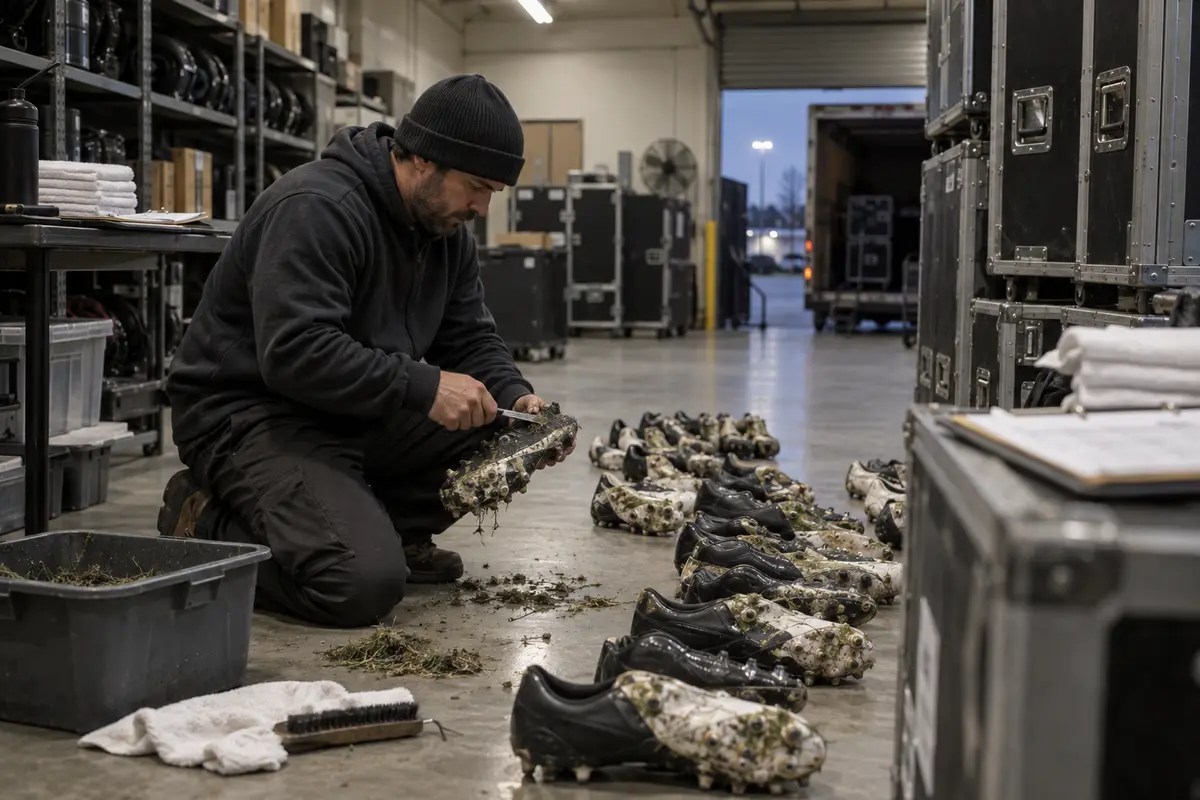
The Rams had to move roughly 25,000 pounds of equipment in 90 trunks. Every trunk needed a manifest listing what was inside, what it was worth, and where it came from. Australian biosecurity rules meant the cleats had to arrive free of dirt, seeds, and grass. Somewhere, while the players prepared to play football, an equipment manager was scraping yesterday’s practice field from the bottom of somebody else’s shoes.

A shipping container carrying game-day supplies crosses the Pacific months before kickoff.

That may be the most honest picture of leadership I have seen in a while.

We like the visible moment. We celebrate the touchdown, the sale, the finished book, the family picture, and the number at the bottom of the report. We rarely ask who made sure the right cord, form, meal, key, or backup plan was in the room when the moment arrived.

The game isn’t won in the shipping container. The players still have to play. Preparation can’t guarantee an outcome.

But a great many things can be lost there.

An equipment manager removes every trace of dirt and grass before the cleats can clear customs.

At a dealership, the customer sees the delivery photo. He sees the clean vehicle, the keys in his hand, and the smile that gets posted online. He doesn’t see the inventory checks, the trade appraisal, the lender calls, the paperwork corrections, the detail department, the fuel, the insurance verification, or the person who caught the missing signature before it became tomorrow’s problem.

When those pieces work, the final moment looks easy. That’s the strange reward of good preparation: it often removes the evidence that it was necessary.

Leadership is not only performing well when the pressure arrives. It’s reducing the number of emergencies everyone else will have to survive. Pressure may reveal preparation, but it rarely replaces it.

Before the doors open, a dealership manager prepares the paperwork, keys, and vehicle behind the delivery photo.

Fatherhood contains the same invisible work. Children see Christmas morning, not the calendar, sacrifice, and quiet worry behind it. They see the uniform ready for practice, not who remembered to wash it. They see that somebody showed up, not the rearranged day that made showing up possible.

That doesn’t mean children owe us applause. Love becomes something uglier when every sacrifice is presented as an invoice. The point is not to make people feel guilty for enjoying the moment. The point is to respect the work required to make good moments dependable.

Writing is no different. A reader sees the finished essay, not the notes carried around, the weak opening deleted, or the paragraph that had to be rebuilt because it sounded better than it was true. The published piece is kickoff. Most of the real contest happened when nobody was watching.

There’s a temptation in responsible lives to resent that invisibility. We want somebody to notice the early morning, the second check, or the problem prevented so completely that it never became a story. Sometimes they will. Often they won’t.

Do the work anyway.

The crowd will remember who caught the pass. The customer will remember the keys. The child will remember the morning. But somewhere before each visible moment was a person nobody applauded—the one who packed what everybody else would need before they knew they needed it.


Source note: Inspired by Morning Brew’s reporting on the Rams’ Australia game and Sports Illustrated’s inside account of the team’s 15,000-mile operation.

Clarity and the Responsibilities Which Come With It

As I sat in the pew every Sunday morning in church, I heard people pray for ‘clarity.’ As a kid, I didn’t understand what that meant. To me, life was simple—no responsibilities, no stakes. But as I grew older, I realized that clarity is one of life’s most sought-after yet elusive aspects. It’s what we crave when we’re faced with hard decisions and uncertain futures 

I’ve had many moments in my adult life where I did just that. All I wanted was a clear path to form before me. I’ve been faced with hard decisions and made tough choices without having enough information present. What I wouldn’t have given for an “eliminate the worst option” or “freeze time” card that could have helped me along the way. Or better yet, why can’t someone just make the RIGHT decision for me?

There is no proverbial light bulb that goes off. You don’t just scratch your head until you have your “aha” moment. Clarity comes when the tangled web of your experiences and your chaotic glimpse of the future magically line up. It’s when you know something must be done in a specific way or in a certain amount of time. In the sense I am writing about, clarity is seeing the best version of a particular part of your life and an actual path toward getting there.  It is more than just a moment of insight—it’s that instant when you know, without a doubt, what you need to do, whether it’s finally taking that job offer or walking away from a toxic relationship. 

This struggle and the challenge of its brother, hindsight, are not new; they’re as old as time, as seen in the story of Cain and Abel. We all know the story, and I believe that, more than anything, it is a vital allegory about personal responsibility. When Cain sees his brother’s treatment for his hard work and sacrifice, he realizes that he would be getting the same treatment if he had willfully performed the duties asked of him. We’ve all been there to a certain extent.

Imagine finding yourself at the bad end of a situation and then realizing YOU are the one to blame. Everything on the test was covered in class, but YOU didn’t study it. Your transmission goes out in your truck, but YOU blew your money instead of saving it. Your boyfriend breaks up with you because YOU didn’t take the time to learn how he needed to be loved.

Hindsight is 20/20, but clarity happens when you learn these things before it’s too late. Unfortunately, it’s not always as easy as studying for a test or saving money. The problems of life come with layers and complexity.

My grandma always said to be careful when praying for patience or courage because the Lord won’t just give it to you. You’ll have to earn it. He’ll give you opportunities to practice patience and put you in situations that allow you to be courageous. Those aren’t always the most popular places or events to be involved in. I’ve learned the same thing about clarity.

There is a sense of comfort and security in the ambiguity of the future. If you can’t tell what you COULD become, COULD obtain, or the relationships you COULD cultivate, then missing out on them doesn’t hurt. You never saw them and can’t lose what you never had. You can blame outside circumstances, timing, or many other things that are not in your control. You can easily avoid blaming yourself.

Clarity puts the responsibility squarely on your shoulders. It forces your decisions and actions to align with a target. Missing that target has tangible consequences. It requires you to be the best version of yourself so you can be ready to accept the blessings when they start pouring in. It means making multiple sacrifices in the present for what you will obtain in the future. This can be a tireless and trying task. It’s not the carrot at the end of a stick. It’s what awaits you after navigating through the labyrinth.  

Clarity is a powerful gift, but it’s also a call to action. It demands that we face the truth of our choices and take responsibility for our future. Whether we embrace it as a blessing or shy away from it in fear, clarity offers us a chance to shape our destiny. Either way, it’s one hell of a thing to experience. The question is: will we rise to the challenge?

Strong Timber

There is a tree at work that I watch throughout the year. It sits slightly off the road, between the bank and the car lot, but closer to the bank. I’m not sure what type of tree it is, but I’ve spent a fair amount of time looking at it when I’m outside. 

I’m no dendrologist (I definitely had to Google that one), but it’s probably 30 years old. Many trees in our little town are more giant and more beautiful. In fact, I’ve probably driven by this one for most of my life without noticing it. But I’ve learned that the older I get, the more I see the little things.

I enjoy the changes it makes throughout the different seasons, from complete and green to bare and rugged. One year, I even spotted some mistletoe high up in the branches. Trees have long served as a reminder to us to let go, start fresh, and flourish.

And grow.

If you watch a tree every day, you can’t see it grow. You may notice a difference if you only see it once a year. If you only see it every ten years, it won’t be the same tree you remember initially seeing. 

The other day, I was watching it and noticed the top swaying in the wind. It was the only portion of the tree moving, going back and forth briskly. I thought for a minute that it may even snap. The contrast it highlighted with the thick trunk and sturdy branches was noticeable. But then, it hit me.

Every other part of that tree had gone through a similar stage in its development. The rest of it was sturdy and stable because the wind and weather had tested it in the past. Either pass the test and become stronger, or let the weather snap you in two and prevent further growth. The biggest oaks and pines in the world are the ones that have weather the hardest, most frequent storms. 

And you can say the same thing about the strongest people. 

“Good timber does not grow with ease:

The stronger wind, the stronger trees;

The further sky, the greater length;

The more the storm, the more the strength.

By sun and cold, by rain and snow,

In trees and men good timbers grow.”

–Douglas Malloch

Marrying a Woman is Easy–Being a Husband Is Not

If you’re a man who just read this title expecting to find a shoulder to cry on because of your tough life then you are going to be in for a big disappointment. This is not a whine-fest. This is a reality check. Divorce rates are climbing at an alarming rate while family stability is falling even faster. A family doesn’t mean as much as it did 50 years ago. If you don’t believe me then just take a trip to Wal-Mart–back talking adolescents, half-naked teenage girls, abusive and angry young men. The downfall of the family doesn’t rest completely on the shoulders of men. However, if you think you are doing enough to keep your marriage together then you already have the wrong attitude.

impmarriage

The first couple of years of my marriage were some of the best times of my life. We were young, madly in love, and eager to start our little family and embark on the American dream. We used to have couples tell us, “I wish we could be like you guys. Y’all are so happy and love each other so much.” Maybe hearing those things got to my head. Maybe people applauding me for being a good dad fertilized my subconscious ego. Maybe working 60 hours a week made me feel like a hero. One thing is for sure–I took my wife for granted over and over and over again. It’s all so clear to me now, but it could be too late for me. If you are still reading this, PLEASE KEEP READING. While I am trying to save my marriage, maybe you can take something from this to use in your own.

The word selfishness is ugly. We can be quick to throw it around when talking about other people, but the thought of characterizing ourselves as such rarely crosses our mind. I’m guilty. Now that I can look back objectively on the past, I cringe at how selfish I really was. I’ve never been a bad husband, but I’ve never been a good one either. I’ve been a good person, but that isn’t enough. When my wife would beg for my affection I would think, “What the heck? I already do this and this and this.” Guess what–it’s not enough. And the fact that I was thinking like that just confirms how selfish I was. I work like a dog. I spend time with my children. This is what I’m supposed to do, right? Yes–along with a host of other things.

IMG_5884

An apple a day keeps the doctor away. But an apple a day can also keep your wife happy. She needs these things from you every single day. You owe them to her as her husband. There may be days that you can get away without selling out to this idea. Don’t risk it! Man-up and remember why you married her in the first place.

Adoration

Protection

Provision

Leadership

Emotion

Adoration. “Frequent and devoted love.” That doesn’t mean you love her every now and then–love her all the time. Unconditionally. Telling her every day is important, but showing her daily is the key. Words lose their meaning if they don’t mesh with your actions. Holding her hand in public tells everyone else she is yours. Holding her hand when no one is watching tells her she is yours. Hug her tight. Kiss her often. Go to bed when she does. Make love to her. Leave her notes. Surprise her with flowers. The list is endless, but the point is to never let her question how deep your love is.

adore wife

Protection. “Preservation from injury or harm.” Would you stand in front of that bullet for her? You should, but it goes further than just physical protection. She gave you her heart on her wedding day and it is your responsibility to safely keep it in your possession. Don’t let addictions grab hold and strangle your relationship. Don’t put yourself in situations in which you may do something you regret. Take care of your body and mind and don’t let anything endanger her or your kids’ physical or emotional security. Pledge to keep her safe until you breathe your final breath.

Provision. “The providing of something, especially of food or other necessities.” This one is important but don’t fall into the trap that I did. It is your duty to make sure your wife and family are housed, fed, and provided with the things they need to accomodate the quality of life you promised them. Go to work every day and use her as your inspiration to perform well. She deserves the fruits of your labor. If you are out of work, swallow your pride and do what is necessary to keep the family afloat. Even if she works, the ultimate responsibility lies on your shoulders to provide financially. 

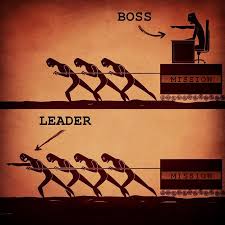
Leadership. “An act of leading; guidance; direction.” Did you notice there is nothing in that definition about being a boss? Guide your family and be the anchor that holds it steady through the rough times. Just as in providing, your wife has every right to share in the decision making process. As a husband you have the duty of establishing a concrete moral foundation for your family to stand on. Be strong and never waiver in the things in which you believe. Consult with her on everything and don’t shy away from making the tough decisions that are imminent over a long and healthy marriage. 

leader and boss

Emotion. “Any of the feelings of joy, sorrow, fear, hate, love, etc.” If you can’t be emotionally transparent with your wife, then you who can you share with the myriad of feelings that encompasses our lives. Laugh with her. Cry with her. Mourn, rejoice, and fume with her. Never let her have to question how or what you are feeling. Realize that she probably sees the world from a completely different angle than you do. Holding back your feelings and giving her nothing is one of the cruelest things you can do to someone you love. 

And here’s the kicker–you have to do all of these things. Every woman is different and you may have to focus more on one aspect than another. At some point, though, your wife is going to need all of these things from you. It’s a lot of work, but dang–is it not worth it? I’d give anything to retrace my steps and put these priciples into place. I never quit loving her but I did put my own satisfaction ahead of her happiness. Do you see the viscious cycle that causes? My short term happiness could potentially result in a lifetime of regret and unfulfillment.

regret

I can’t tell you how much better I feel about my life after I realizing how selfish I really was. If things don’t work out for me, at least I have made changes in my own life that will benefit me down the road. If the winds of fortune allow me another opportunity to prove my love, I will never, ever let it grasp through my hands. Please take the advice of a man whose whole life is hanging in the balance.