There is a tree at work that I watch throughout the year. It sits slightly off the road, between the bank and the car lot, but closer to the bank. I’m not sure what type of tree it is, but I’ve spent a fair amount of time looking at it when I’m outside.
I’m no dendrologist (I definitely had to Google that one), but it’s probably 30 years old. Many trees in our little town are more giant and more beautiful. In fact, I’ve probably driven by this one for most of my life without noticing it. But I’ve learned that the older I get, the more I see the little things.
I enjoy the changes it makes throughout the different seasons, from complete and green to bare and rugged. One year, I even spotted some mistletoe high up in the branches. Trees have long served as a reminder to us to let go, start fresh, and flourish.
And grow.
If you watch a tree every day, you can’t see it grow. You may notice a difference if you only see it once a year. If you only see it every ten years, it won’t be the same tree you remember initially seeing.
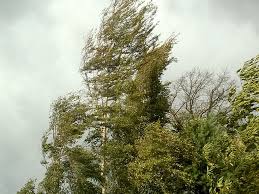
The other day, I was watching it and noticed the top swaying in the wind. It was the only portion of the tree moving, going back and forth briskly. I thought for a minute that it may even snap. The contrast it highlighted with the thick trunk and sturdy branches was noticeable. But then, it hit me.
Every other part of that tree had gone through a similar stage in its development. The rest of it was sturdy and stable because the wind and weather had tested it in the past. Either pass the test and become stronger, or let the weather snap you in two and prevent further growth. The biggest oaks and pines in the world are the ones that have weather the hardest, most frequent storms.
And you can say the same thing about the strongest people.
Disclaimer: I always need to reiterate that if I write and publish it, I believe it. How we all apply it to our lives is the hard part. As much as I relate to these ideas, implementing them has sometimes been challenging. If this life can be “figured out,” I haven’t done it yet. Writing gets it from my brain to a place where I can think more clearly. Blog posts like this are a way to keep steering in the right direction.
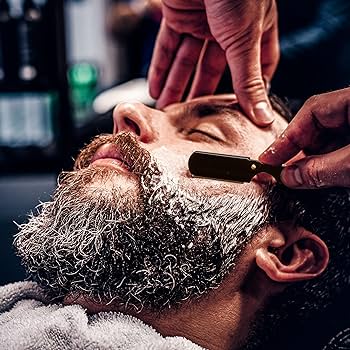
I subscribe to a fantastic newsletter from Farnam Street called Brain Food. Here is the link if you want to sign up : https://fs.blog/newsletter/ The whole idea behind Farnam Street is to help you master the things that other people have already figured out. The weekly newsletter is a catalog of articles around the internet that help you see things through a different lens. A few months back, one of the feature articles reported from MIT on a study in which scientists were trying to figure out why razor blades were so easily damaged by hair.
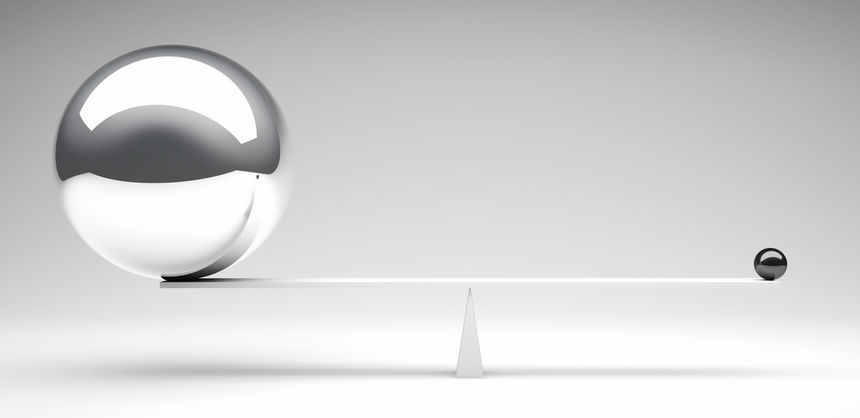
If you’re like me, you’ve probably not thought much about the disposable nature of razors. More than likely, you buy a new pack when the old razors get dull. But when you think about it, it really is a bit odd that something made of stainless steel is damaged by something as soft as human hair. The article even mentions hair is 50 times weaker than steel, yet only a single piece can cause the edge to chip. Once one initial chip or crack is present, it becomes susceptible to more chipping, eventually causing the entire edge to become dull.
At this point in the article, I had an idea of what could cause the problem, but I wanted to read more to be sure. All I could think about was how our lives can be turned upside down, flipped around, and tossed about by small things that turn into big things. Sure, you can take a hammer to a razor blade and destroy it in a heartbeat, but more often, they get worn down over time until they eventually can’t work to their full potential. That sounds an awful lot like our lives as humans.
Here is a link to the article. Long story short, the team found three reasons that a blade could become more prone to chipping:
· The microstructure of the steel is not uniform
· The blade’s approaching angle to a strand of hair
· The presence of defects in the steel’s microstructure
I believe there are similar reasons we can become prone to “chipping” as well.
· Our foundation and governing principles are not uniform
· Our approach angle to our mundane, everyday tasks
· The presence of defects in our foundation (blind spots)
Developing our foundation and governing principles starts before we have any control over their creation. It begins with our genetics and parents, and over the years, other people come into our lives that help shape them as well. Friends, teachers, coaches, mentors–all have a huge role to play in our development. Eventually, we mature to a point where we begin to think independently, but our past relationships and experiences affect us in ways we couldn’t control, even if we wanted to.
Having different opinions on different topics is normal, but the things that we believe on a foundational basis are rarely if ever, changed. And if they are, you can bet it is a challenging process. When these principles are at odds with each other, they cause a rift, which leaves us as a prime target for internal conflict. “No man can serve two masters: for either he will hate the one and love the other, or else he will hold to the one and despise the other.” — Matthew 6:24-26
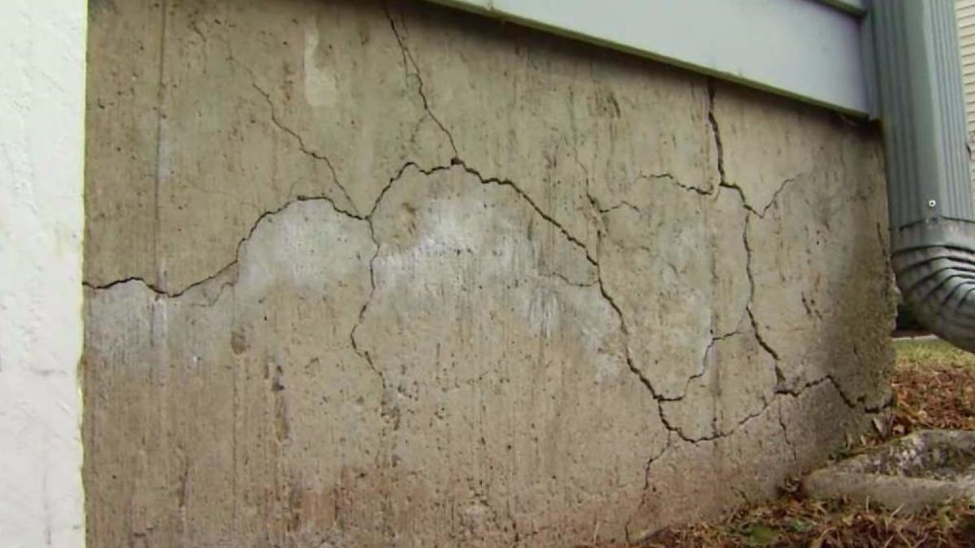
To remedy this, we must do some soul-searching and figure out what we TRULY believe. We must know who we are and be conscious enough to understand that we can’t fool ourselves. If our actions don’t align with what we believe, then there is no uniformity in our microstructure, and it’s only a matter of time before our foundation starts to crumble.
Those actions are the second reason we don’t reach our potential. We get so caught up in the “big” parts of our lives that the daily tasks and how we perform them get lost in the shuffle. Martha Beck coined the phrase, “How you do anything is how you do everything.” If she’s right, that is one of the most profound statements I’ve ever read.
Our life really is a whole bunch of little things done over and over again and sprinkled with the occasional “big” thing. A 75-year-old man may take 50 family vacations over the years, but he has dinner with his wife 18,250 times over that same period. Which one of those is more important at the end of his life? Doing the little things right can be tedious and mundane, but how we approach and attack them can make all the difference in the world.
Just like a blade can have defects in its microstructure, we, too, can have defects in our foundation. These blind spots can give us a false sense of how our world works. The great Persian poet Rumi said it best: “Yesterday I was clever, so I wanted to change the world. Today, I am wise, so I am changing myself”.
The most significant defect in our foundation is denying the prospect that we could be wrong about something—or everything. When we refuse to entertain the possibility that our ideas can be tested–and even changed– we reject the opportunity to grow into our full potential.
Razor blades are disposable. It would make little sense to inspect each one at a microscopic level or study the effects of each shaving session on the edges of the blade. Our lives, though–they are anything but disposable. The great news is that if we create a strong foundation within ourselves, become open to learning and growing, and embrace the importance of the small things with passion, we can grow closer to unlocking our full potential. It may not make the pages of an MIT research magazine, but it will help make our small circle of influence exponentially better.
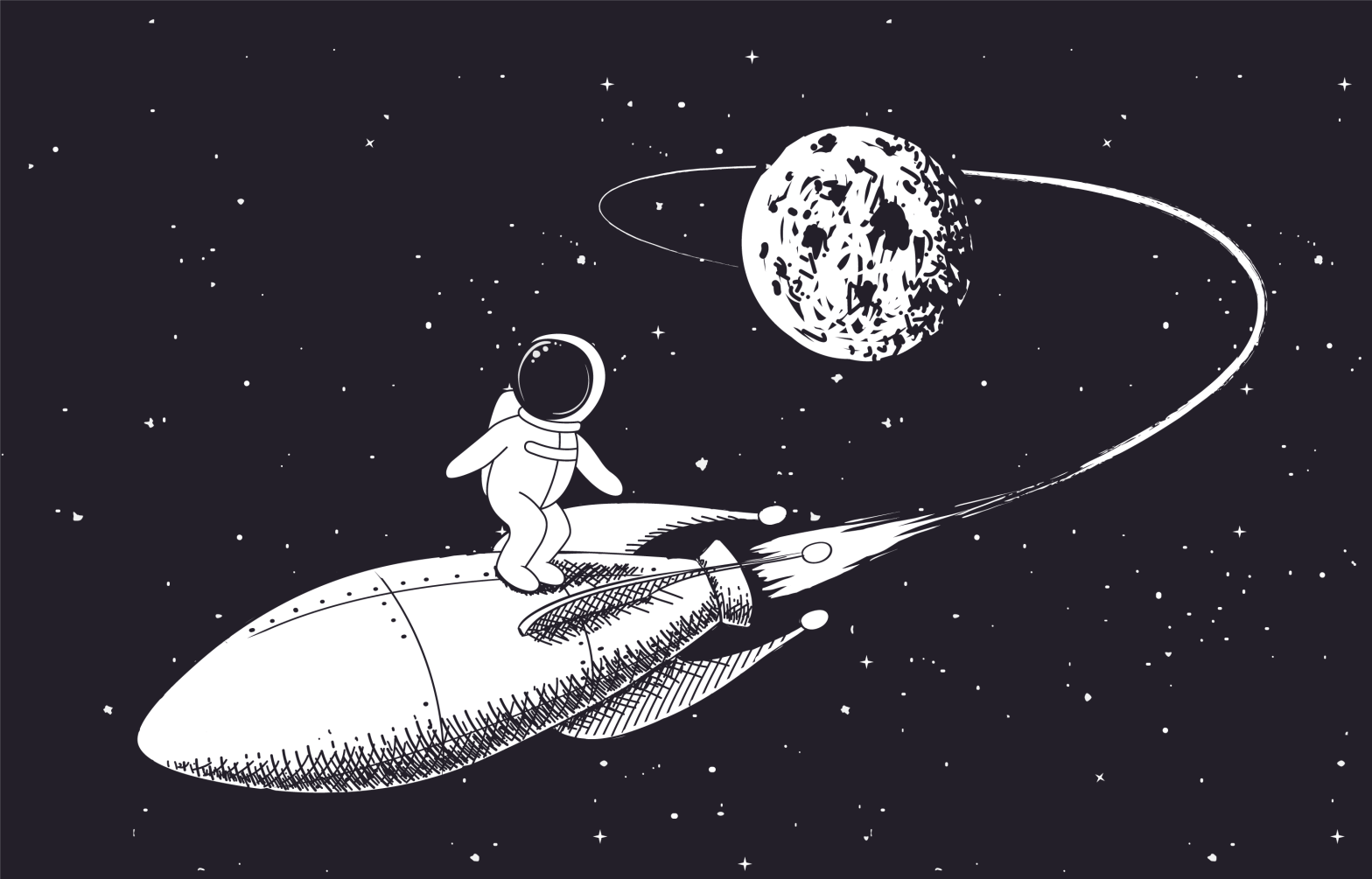
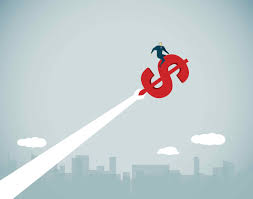
“Shoot for the moon. Even if you miss, you’ll land among the stars.” I think I heard that line a million times when I was growing up. If I’m not mistaken, it was actually the Senior motto of our graduating class (it “beat out,” another less appropriate phrase that everyone REALLY voted for). In practical terms, it means to set a goal, work towards it, and then let the results fall where they may. Assuming you work hard, you can be proud of whatever happens.
Okay. I get that. On the surface, it is a harmless little motivational whim that can make us all feel better about the randomness and injustices of life. But as I’ve gotten older (hopefully a little wiser), I’ve thought about this often. I’ve come to the conclusion that this quote is misguided. The problem is that no one ever talks about the how. What exactly does it mean to “work hard?” It shouldn’t be about the moon; it should be about the “shooting.”
The problem lies with the destination. If everyone is shooting at the same target, many people will definitely hit the mark. But how? Many variables are operating behind the scenes. Genetics, timing, upbringing, nationality, luck. Plenty will land on the moon in part or whole by inadvertently combining some of these factors, regardless of their work ethic or “shooting ability.”
On the flip side, many people who put in the time and effort to get there won’t. These same factors, and more, can be as big of a hindrance to them as it is helpful to someone else. Consider the haughty arrogance of someone who made it to the moon by chance. Now contrast that to the smothering defeat that could be felt by someone who “did everything right” but still fell short.
So if we can get to the moon by chance or, conversely, never get there despite our best efforts, then is the moon really a good thing to shoot for. I’d say yes. It provides a tangible goal to pursue—a prize to keep our eyes on. But I’d argue that the framework we put in place to get there is far more critical than that. As my boss has taught me over the years, “A goal without a plan is just a wish.”
Another cliché I’ve heard tossed about is, “It’s not about the destination, but the journey.” I like this one much better. The idea that the process along the way is more important than the actual destination appeals to me. It takes quite some time to get to the moon. What if your circumstance changes? What if something happens to the moon? What if you find something better to aim at?
The key is to take the time to develop a plan, tediously implement it, and hold yourself accountable for your effort daily. Even if you fall short of the moon, you’ll be better prepared to tackle your next trip than someone who arrived there by luck, chance, nepotism, et. You will continue building on the experience you’ve earned on your travels. In contrast, the latter person won’t be prepared to aim at their next target and will continue to depend on outside factors for their success. Or, they’ll decide to stay on the moon. It’s a big universe out there. Why stop there?
The beginning of a new year is the perfect time to sit down and figure out where you want to aim and set your trajectory. The moon is a popular destination, but another place could better serve our time, effort, and vision. How do we get there? That depends on way too many individual factors for me to be able to answer. But the plan, implementation, execution, and accountability will be the most essential factors in determining the quality of your journey. And if you can get those down, I promise it will be one hell of a trip…whatever you decide to shoot and wherever you happen to land.
“Low hanging fruit” is one of those southern terms that I have heard so many times over the years that I never really thought about what it meant. The other day, though, I talked to my son about something significant, and I used the phrase. He asked me what it meant, and I had to stop for a minute and think. I have these moments from time to time, and I never seem to be prepared for them. I listened to plenty of great parenting advice, but no one ever told me they would ask so many innocent questions that were so hard to answer. But, like it tends to happen, the answer I came up with probably helped me more than it helped him.
For context, this particular son has been the target of bullying at school. We talk about it a lot, and he knows he can confide in his mom and me. For the most part, the bullying has been verbal. But, it’s hard to grasp the concept of sticks and stones at that age. I know how kids, specifically boys, can act. If your parents get involved with this, it can make the situation a whole lot worse than it already is—especially when the adults aren’t looking. I also believe that protecting your kids from things like this can be more detrimental to them than helping them find the tools they need to deal with them and overcome them.
He has always been a little socially awkward and mouthy—a deadly combination and the recipe for an easy target. We’ve gone to great lengths to try to cultivate a little bit of self-awareness in him. As unfortunate as it is for someone his age, other kids notice how you dress, talk, carry yourself, interact with others, etc. Not only do they see these things, but they seem to care way more than he does (which is not at all).
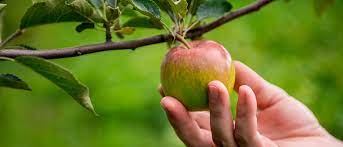
So, I explained that bullies like to go for the low-hanging fruit. “What does that mean, dad?” I stopped for a minute and thought about it. I first used the example of an apple tree. I asked him if he had to pick ten apples off of the tree, which ones would he choose. Of course, he said, the ones closest to the ground. “See, son, it’s just easier that way. The lower the fruit hangs, the easier it is to get it off of the tree, and bullies are always going to take the path of least resistance.” He gave me a slight nod and was hoping I would shut up. But, I didn’t—I thought about it some more.
I asked him if he thought the fruit at the top of the tree was more desirable, and I was surprised that he knew it was, and he even knew it was because they get more sunlight.
We talked about how apples were stuck on the tree and didn’t get to choose their positioning. But the great thing about our lives is that we can put ourselves in a position to receive more light. For my son, that means behaving in a way that makes adults and other students want to interact with him. More interactions mean more opportunities, which means more chances to learn and grow. Learning and growing continue to open more paths and avenues for further development.
Putting ourselves higher up on the tree not only gives us more sunlight but also prevents people from coming by and picking us off the limb. The longer we stay on the tree, the more we can remain green and continue to grow (credit my car business mentor for that one). If we fall off the tree before we are ready, we end up rotting on the ground or, even worse, food for farm animals.
Receiving extra sunlight and staying on the limb longer ultimately give us the chance to ripen on our terms. Instead of being plucked off by people looking for low-hanging fruit, we can continue to learn and grow until we are ready to fall off ourselves.
I only hope that my son got as much from this teaching moment as I did.
Fall is here, and with it comes the clichés of starting over, shedding baggage, and embracing change. I usually shudder when I see something like that, yet here I am, clutching the moment and coming to realizations that are a long time in the making. Maybe there actually is something unique to the archetypical, long-standing arrangement between the 4 seasons.
For as long as I can remember, I have always felt like an analytical person. I usually perform best in structured environments where I know what to expect. If A, then B. Give me a checklist and what you expect from me, and you can almost bet I’ll produce. I really liked Math in school—once you figure out how to do it, you can always arrive at the correct answer.
I realized a trend recently in my life. It seems as though I like the challenge of trying to figure out a way to apply structure and rigidity to things that don’t usually fit inside of a box. I tried this with the car business. No two people are the same, and no two car deals play out the same, either. I tried to eliminate all of the variables and create a process that worked the same every time. This isn’t a new thing in the industry, but I think I did it pretty well, and it was definitely my favorite aspect of the business.
I tried to do the same thing in my marriage. If I do this, this, and this, then surely that, that, and that will follow. It’s an excellent way to keep things predictable and stable for a short bit of time, but I don’t think that strategy would work in any marriage over the long haul.
This year I have had to let go quite a bit—more than any other year to date. And, like most other things I have encountered in life, I subconsciously tried to deal with it from a scientific, or analytical, frame of mind. What I’ve learned is that letting go is no science at all. It is the art of all arts.
I never will forget a conversation I had with my dad while my mom was dying. We were near the end of her stint in a long-term rehab center, and I was frustrated because no one was giving me answers. I tried to get the doctor to call me for days and kept getting the run around from the nurses. Dad had mentioned something about them recommending hospice care, and the tone of his voice made me realize that he had seen the writing on the wall. This was the first time I had considered that my mom could die and probably was dying. He later told me something along the lines of, “I was wondering when you were going to accept that she was dying.”
That only began the process of letting go of mom. I had spent months watching her health decline but always believed something would change and she would end up being okay. I always thought she would walk again. When we moved her to hospice, I had to change my whole frame of mind. A friend at work suggested that I “release her.” That I tell her that it’s okay for her to leave. So, I did.
The night before she died, I kissed her on her forehead and told her how much I loved her. I brought the kids in one by one to say goodbye. I prayed with her and played her favorite song on the phone. She knew about the problems I was having in my marriage, so I assured her that whatever happened, I would be fine. I let her go. And then she died the following day.
There was no scientific way to get there—just some advice from a good friend and a leap of faith. Letting her go lifted an emotional burden off my shoulders and I’m convinced it helped mom let go of her earthly body. It helped her end her suffering and enabled me to start the grieving process.
I felt like I had done everything on the checklist the right way. I thought I had killed all the baby dragons before they became big enough to come to burn down our home. I had sacrificed some happiness, emotional health, and a whole lot of time in exchange for stability and security. The only problem was I didn’t ask for any help when I made the checklist, and she had one of her own that I wasn’t taking care of.
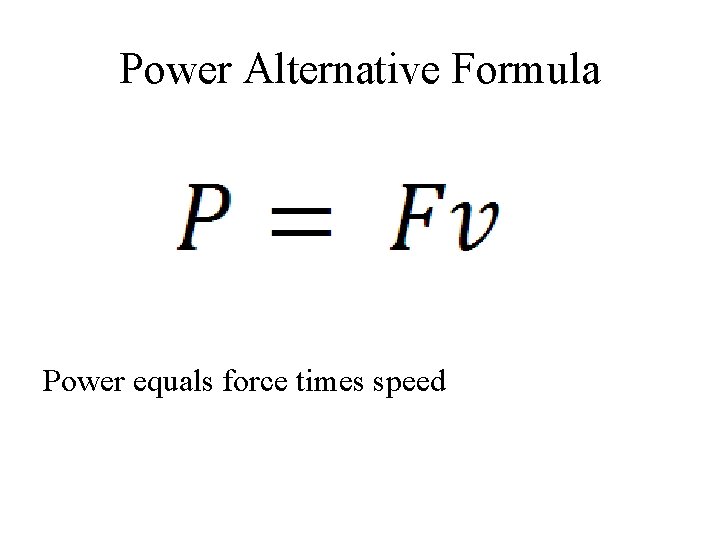
My analytical mind had told me that if I kept battling forward, eventually, the dam would break. Every time someone looking in from the outside told me that I needed to be done, it fueled me to keep trying that much harder. The harder I pushed, the further away from the prize I found myself. In the scientific world, force x speed = power. But in the realm of emotions, force x speed = distance created.
I fought for a long time, too, man. I fought so much that I’m pretty sure I actually lost focus of what I was fighting for. I held on to principles, memories, and images of what I had envisioned for my life. I battled and battled because I felt like the kids deserved for us to be together. If I had gotten what I wanted, odds are we wouldn’t have been able to make it work anyway. Regardless, I fought hard—even though it was too late. At some point, I realized that I was only fighting for the sake of fighting. And the moment that crossed my mind, I let go.
I don’t regret fighting. I can live with what happened, and the experiences learned will make me such a better partner the next time around. I left it all on the court, and even after the buzzer sounded, I stayed around and kept shooting. I was still there after the lights went out and the crowd emptied the building. It sharpened my skills and made me better, but eventually, you have to jump back into a new game.
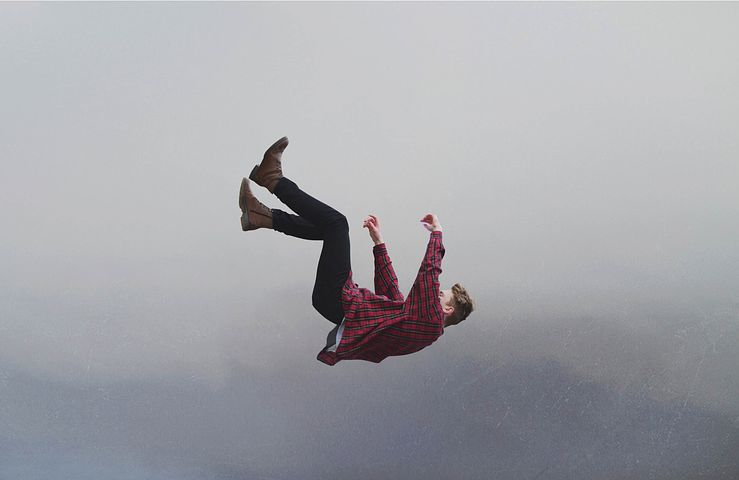
For 38 years, I viewed “letting go” as if I were hanging from the side of a cliff, and to “let go” would mean a plummet straight toward the ground. Letting go is hard, and if you look at it through that lens, it is also scary and intimidating—free falling to your imminent death.
But what I’ve learned this year, I hope everyone reading this will take away with them. Sometimes, what you are holding on to isn’t as sturdy as you think. When you let go, you take a burden off what you are holding on to—like my mom and my marriage. And sometimes, that fall doesn’t always mean certain death. While you’re falling, you can see the world around you from a different perspective. New possibilities bring themselves to light. New pathways provide highways for new journeys. You meet other people who have let go as well, and you can fall together. If you embrace the fall, it can become a beautiful experience.
And maybe, if you’re lucky, you’ll even land on your feet.
There is an infinite number of rabbit holes a person can find while using the internet. Some are dark and creepy. Others are light-hearted and funny. Many of them will find you wishing you had the time spent back, and a few of them may help you be more productive. One of my recent rabbit hole dives led me to The Knowledge Project, a podcast hosted by Shane Parrish. From that podcast, I found his website, The Farnam Street Blog, which provides articles and exposes that center on how and why we handle the process of decision making.
There are some fascinating articles on the blog and some fantastic interviews on the podcast. I would suggest checking either or both of them out. But one theme that pops up now and then is the idea of making decisions based on the probable outcome. More specifically, do you make decisions based on the best possible ending or eliminating the worst-case scenario?
Most people would probably pick like me and say the former rather than the latter before they put a lot of thought into it. On the surface, who wouldn’t want the “best possible outcome?” But when you look back on your life and analyze some of your decisions, is that what you did? And if not, do you regret it? Will you change the way you make your decisions going forward? Let’s look at two different scenarios and then think about how you handled or will handle them in your life.
Love
If you could see fifty years into the future when choosing who you will spend your life with, how does your ideal scenario play out? For me, it would be a lifelong love affair with someone I connect with on the deepest level. It would be hills and valleys but having them right there by my side the whole time. They would be by my side for the suffering and the joy, and we would share our experiences every step of the way. I’m sure everyone’s answer is a little different, but that’s what it would look like for me. On the flip side, though, what kind of roadblocks would you have to stumble over if you made your choice like that? How much would you overlook, and how far would you let it go?
But what if I decided to eliminate the worst-case scenario? I would probably settle down with someone financially secure who had good genes to pass down to our children. And, we would take those pictures in the fall with the trees in the background (to make sure the grandparents were pleased). I would probably even sacrifice passion and attraction for security and acceptance.
Now I’m not saying that you can’t have both, by the way. And, I’m not saying you’re wrong if you choose to go with the more safe and secure path. I think it’s interesting how we shape our lives by eliminating some of the variables that could leave us vulnerable in the end–nothing more and nothing less.
Career
The best-case scenario in your career would be sticking to the adage, “Find something you love to do, and you’ll never work a day in your life.” If you can take a passion, skill, or gift and find a way to monetize it over the long term, you will probably end up very fulfilled and satisfied when it is time to retire. But there are apparent risks while traveling down this path. How long do you have to wait before your passion becomes lucrative? How many times do you have to fail until you get it right? How does that affect your health and your family?
In this situation, the worst-case scenario is finding yourself broke and not providing for your family. How do you eliminate that? Most people decide to find a place that will pay them regularly, and they trade out that paycheck for 40 hours or more a week. There’s not much risk involved as most jobs won’t require a financial investment. If you can handle the workload and hours, you will have some change in your pocket at the end of the week after making enough money to provide for your family.
Again, there is nothing wrong with either one of these options. One is more romantic and risky, and the other is safe and secure. It just goes to show you how our decision-making process can shape the way our lives play out. The examples I mentioned above would be considered “major choices” in the long run. Still, we make these same kinds of differentiation in almost every micro decision we make daily.
How did it affect your most recent car purchase? What about your interaction with the person in line in front of you at the bank? Even when picking out what music to listen to on the road home or where to pick up takeout, we are constantly weighing the option of “best possible outcome” or “eliminating the worst-case scenario.”
I believe the key to living a satisfying life is finding the harmonious balance between these two ways of making decisions. After all, we are only the sum of our choices. Choose wisely, my friends! Too much risk may find us in the shower biting our knees in agony, but not enough of it may leave us cold and unfilled.
I like putting dictionary definitions in my blog posts. Sometimes I even look up familiar words on my own to get some bonus context from them. I’ll get these out of the way quickly:
resentment; noun the feeling of displeasure or indignation at some act, remark, person, etc.
indignation; noun strong displeasure at something considered unjust, offensive, insulting, or base
unjust; adjective not just; lacking in justice or fairness
My simplified definition of resentment would have to be “the feeling of displeasure at an unfair act or person.” Of all the emotions I have ever experienced, this is the one that seems to do the most damage to relationships. I’ve seen it happen to others and have also witnessed it within myself. When I try to visualize what resentment would look like, I see a monstrous beast that sets its hook-like appendages into your heart. Once those hooks get placed, it’s challenging to be set free from its grasp.
I think there are many causes for resentment, but I’m going to narrow it down to three for this blog post. These are solely based on my experience, and, like always, I should note that I am not an expert on the matter—just a guy who has experienced some things and likes to share. I’m going to list the prominent three causes of resentment and offer ways in which you may be able to free yourself from it.
Unrealistic Expectations Unless otherwise provoked, I believe most of us start any interaction with good intentions. My pastor, Mark Lykins, said something from the pulpit years ago that stuck—“Humans are bad judges by nature because we judge other people by their actions, but we judge ourselves by our intent.” I had never thought about it that way, but it makes a ton of logical sense. Removing our ego can help improve our interactions and relationships as well.
Try to imagine that everyone possesses a constantly changing hierarchical pyramid that controls their interactions. The tip of this pyramid would be the highest valued person, principle, or result at any given time. There may be scenarios in which you feel like your presence or your idea should be at the top of someone’s pyramid when something or someone supersedes it by no fault of their own. It would be arrogant for any of us to believe that we should be at the top of every pyramid all the time. But, if we feel like we should be a higher priority but get treated like we are not, resentment will almost surely set in.
So, how can we navigate this? Be aware of your ability to not live up to other people’s standards and make concessions for people who don’t live up to yours. Understand that life is complex and has many layers, and, as lovely as it would be, things don’t always line up in the way you want them to. Manage your expectations of others while demanding more of yourself.
Not Being Heard/Not Being Able to Speak
Have you ever been around a new mother when they hear their baby start to cry? Something innate in us causes us to cry out when we need something or feel unpleasant. There is also something deep inside that compels us to respond when we hear someone crying out. There are very few people who could walk away from a crying baby without batting an eye.
Most of us (hopefully) grow out of that stage where we wail at the top of our lungs until someone comes to our aid. But, that instinctual feeling to be heard never goes away. On the flip side, we tend to lose the empathetic nature we have for other people as they get older.
Babies aren’t emotionally mature enough to harbor resentment, but you don’t need me to tell you how damaging it can be to them when someone repeatedly ignores their cries. As we get older and develop our emotions and personalities, having someone shut you out can feel unjust and eventually strain relationships.
Similarly, feeling like you are unable to speak has the same effect. Maybe you don’t feel like you are qualified to vocalize your thoughts on a particular topic. Perhaps you are in an emotionally abusive relationship and feel like your opinion or idea doesn’t matter. Or maybe you are even paralyzed by the fear that what you say or how you say it may come across in an unintended manner. One thing is for sure—if you don’t say it, then they won’t hear it.
So how can you make sure these things don’t cause resentment to sink its ugly teeth in your heart? Firstly, you need to think about whether the things you are saying are essential enough to vocalize or if remaining silent may be a better option. A lot like managing your expectations, it can be arrogant to think that your voice holds more weight than anyone else’s. But, if you have decided that you must express your concern, then the pathway is simple—speak. If the other person refuses to hear you, firmly let them know that what you are saying is important and you need them to listen to you. It may be nerve-racking, but it beats the alternative.
Someone Taking Advantage of You
This one is tough for a couple of reasons. No one likes to be taken advantage of, especially when the person doing it is someone you care dear to you. It can be complicated to distinguish between someone consciously taking advantage of you and someone who may not realize they are doing anything at all. Either way, it is not a comfortable situation.
The unfortunate truth is that there are probably people in your circle who are so self-centered they will knowingly sacrifice their good relationship with you to further their agenda. I can’t speak for everyone, but I know I have dealt with those people in different parts of my life. Typically people like this are trained in the art of manipulation, and they can be hard to spot. Once spotted, though, it is usually an easy decision to create some distance between your life and theirs.
The other type is a lot harder to identify because they don’t even realize they are taking advantage of you and are ignorant of its impact on your relationship with them. It can also be intimidating when you think about confronting the person because often, they can be in your closest inner circle. And, if truth be told, part of the reason they get away with it is that you have enabled that kind of behavior for quite some time.
To me, this is the hardest of the bunch to nip in the bud before resentment takes hold. It is vital to voice your concerns to the other party, no matter how uncomfortable the situation may become. After all, most everyone would trade some minor discomfort to salvage a close relationship. After you speak to them about the issue, set some firm standards and boundaries for behavior that you feel is acceptable and not acceptable. Finally, make sure to be clear with the other party of the limits of your boundaries so you can both be on the same page.
When I make a post like this, I always feel the need to mention several times that I am not a professional. Please consult a therapist if you think resentment may be on the verge of costing you a special relationship. A year ago, I would have never dreamt that I would set foot in a psychiatrists’ office, but after many sessions, I can tell you that there is great value in talking to someone about your issues. The only thing I can tell you with certainty is that resentment and bitterness are hazardous emotions, and they can eat away at you from the inside out. It may start with the loss of a close friend or family member, but it has the potential to change your whole character and personality. I hope this helps someone!























 Yelco State of Mind