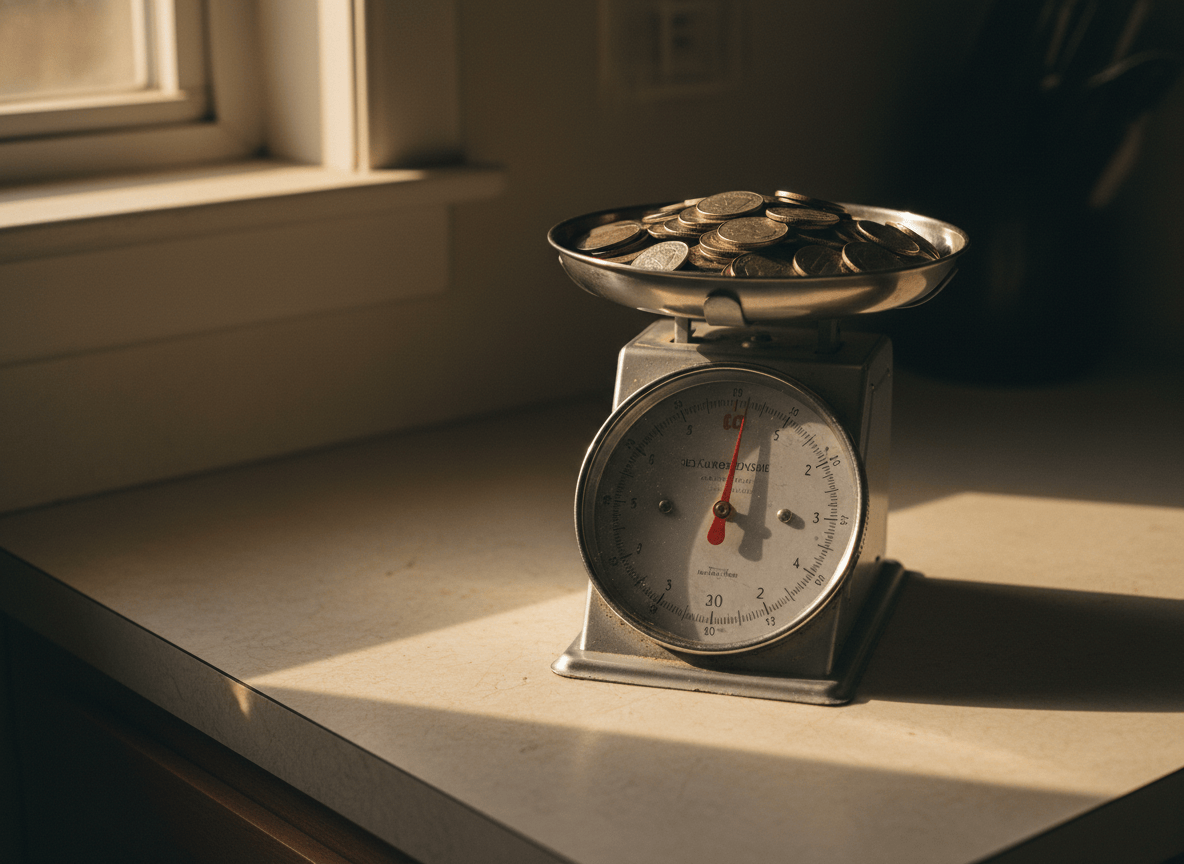
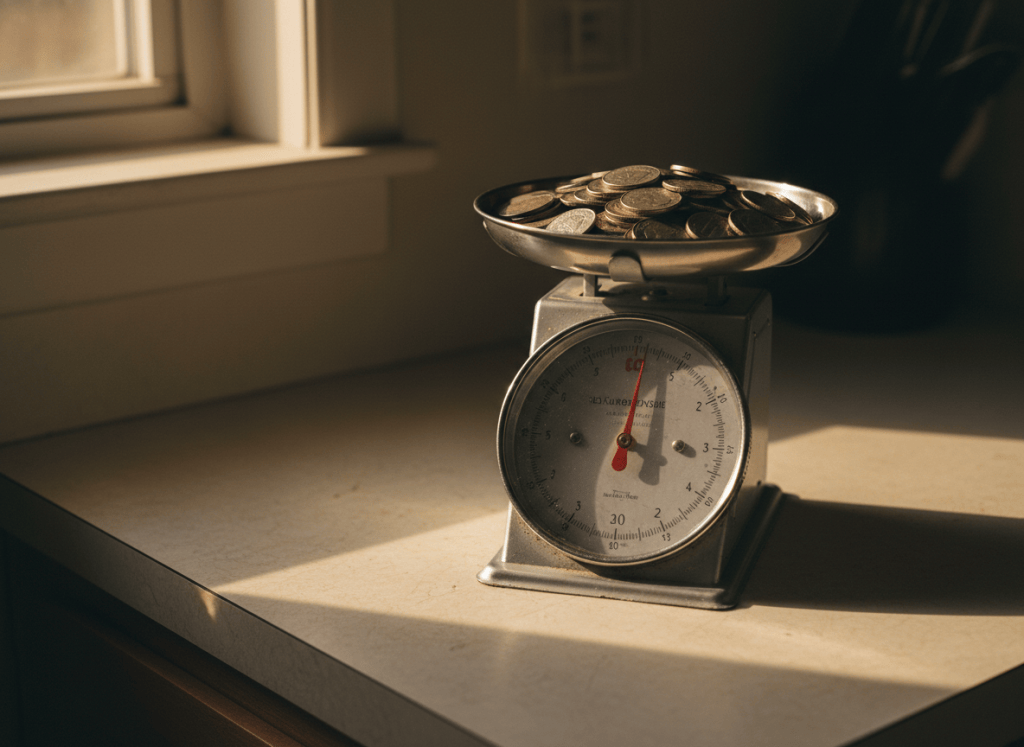
There is a bar bet hiding in the bottom of your change jar.
Pour any ordinary mixture of modern American dimes, quarters, and half dollars onto a kitchen scale. Do not count them. Don’t sort them. Just keep adding coins until the scale reaches one pound.
The pile will be worth approximately twenty dollars.
It sounds like a trick because the denominations are different. The dime is worth ten cents, the quarter twenty-five, and the half dollar fifty. But their weights rise in almost perfect proportion to their face values. A quarter weighs two and a half times as much as a dime. A half dollar weighs twice as much as a quarter. The faces change. The scale keeps arriving at essentially the same answer.
Fathers have our own way of assigning value, and I think we often get it backward.
We put a high price on the half-dollar moments: the vacation, the expensive Christmas gift, the perfectly planned Saturday, the speech we hope our child remembers for the rest of his life. We save for them, photograph them, and feel the pressure to make them count.
Those moments matter. I want my children to have adventures, celebrations, and stories big enough to retell. But most fatherhood does not arrive in half dollars.
It comes in dimes.
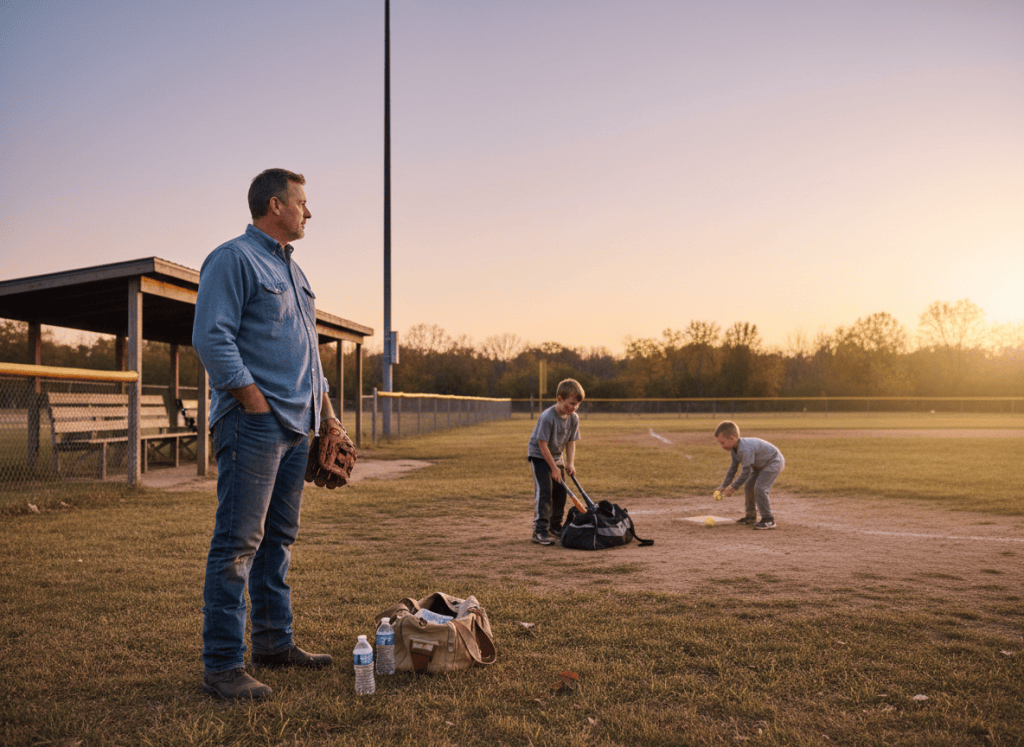
It’s listening to a story you’ve already heard. Sitting through another practice after a long day at work. Helping with an assignment that has frustrated both of you. Checking the weather before a game. Taking one more shot in the driveway. Looking up from the phone when a child says, “Watch this.” Saying goodnight, then showing up again tomorrow.
None of those moments feels large enough to become a legacy while it is happening.
Accumulated, they acquire weight.
I have three children, and there’s a temptation to judge my fatherhood by the days I can make impressive. Did we go somewhere memorable? Did I buy the right gift? Did I say something wise enough to survive adolescence?
Meanwhile, the ordinary chances keep passing through my hands.
A child may forget the restaurant but remember that Dad listened in the car. He may forget the score but remember looking toward the fence and finding me there. He may not remember the exact night we worked through the assignment, but he will remember whether confusion felt safe in my presence.
That’s how attention becomes a childhood. Not usually through one grand act, but through hundreds of small confirmations: You matter. I see you. I came back.
The coin comparison has limits. Not every act of parenting is equal, and family life is not an accounting system where enough small kindnesses erase a deep wound. A careless word can carry enormous weight. So can an apology. Presence without attention is not the same as being present.
The point is not arithmetic. It is accumulation.
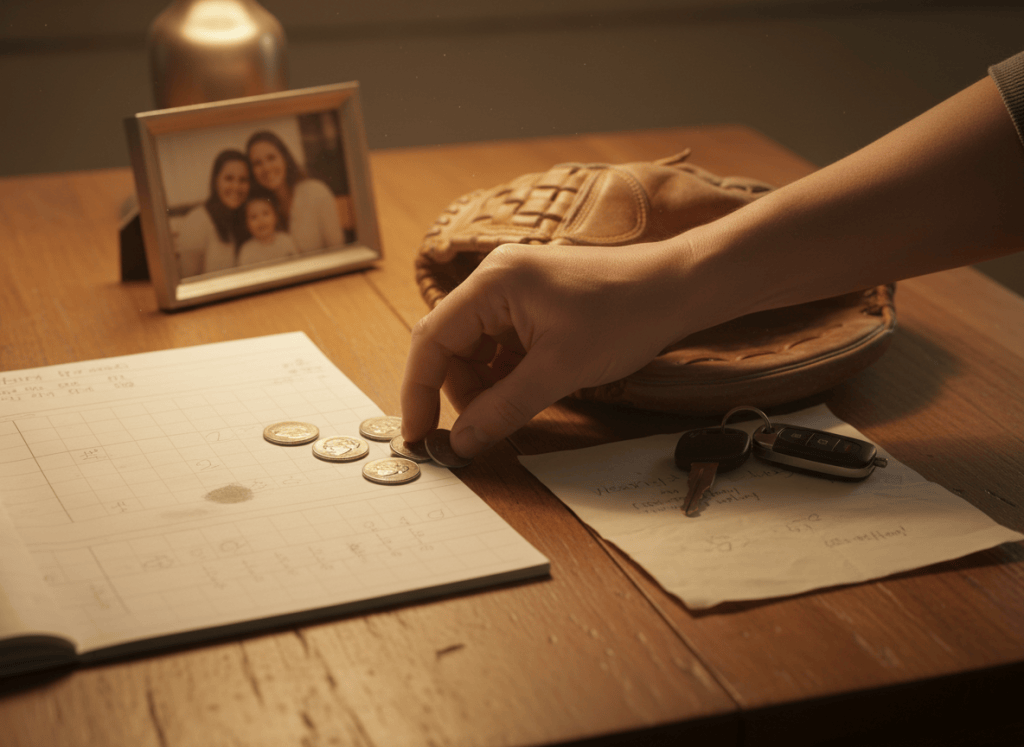
An occasional spectacle can’t do the work of consistently dependable love. The biggest vacation of the year can’t replace the ordinary Tuesday when a child needs ten unhurried minutes. The perfect fatherly speech can’t substitute for becoming the kind of father whose everyday conduct has already said the same thing.
Perhaps that should relieve some of the pressure.
We don’t have to manufacture a defining memory every weekend. We don’t have to purchase every experience or turn every family outing into proof that we’re doing fatherhood correctly. We can stop waiting for the grand opportunity and become more faithful with the small ones already in our pockets.
Tonight may offer nothing more dramatic than a ride, a question, a practice, a joke, or a story we’ve heard before.
Pick up the dime.
Your child may never remember its denomination, but he will remember the weight.


