When Labels Help—and When They Quietly Shrink a Person’s Story

We call it the funny bone, which is an impressive piece of false advertising. It’s not funny, and it’s not even a bone. The bolt of pain that shoots down your arm after you catch your elbow on a countertop comes from the ulnar nerve. Apparently, someone felt electricity reach two fingers and decided what the moment needed was whimsy.

Still, the name works well enough. A person grabs his elbow and says he hit his funny bone, and everybody understands. Nobody stops him in the kitchen to deliver an anatomy lecture. If they do, he’s allowed to hit them with the other arm.
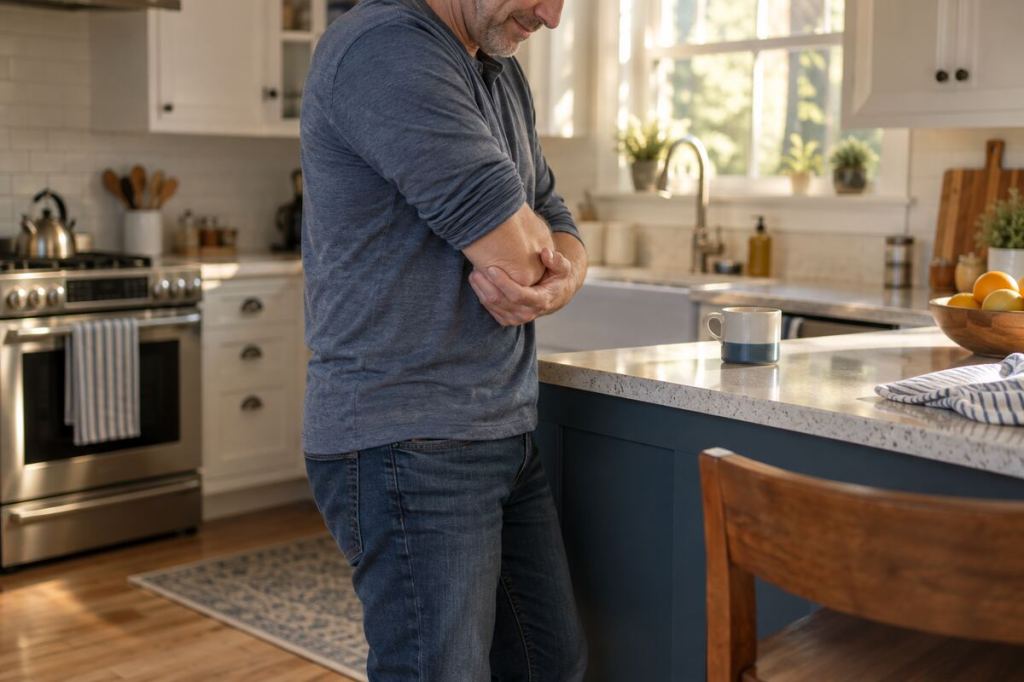
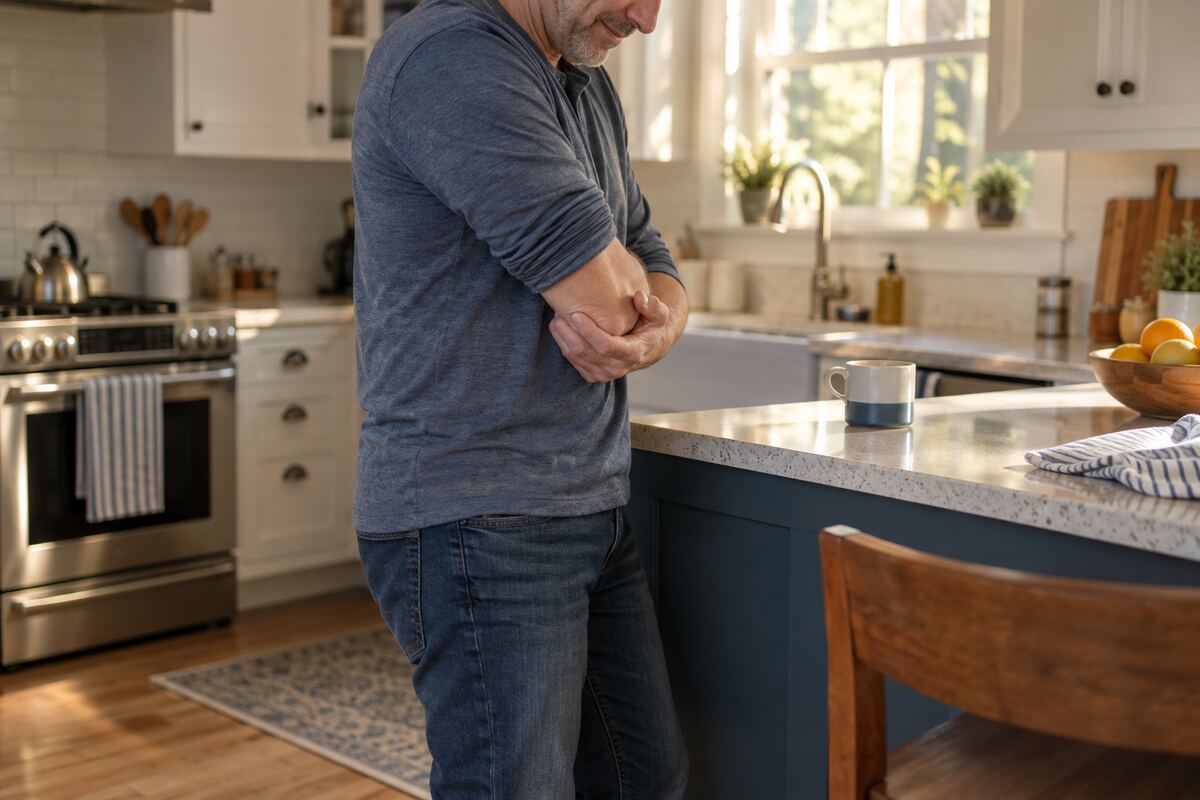
A man grips his elbow after bumping it against a kitchen counter.

That’s the usefulness of a label. It gives people a common place to begin.

Richard Feynman once described learning the difference between knowing the name of something and knowing something. We confuse those two kinds of knowledge more often than we realize—especially when the name belongs to another person’s pain.

Names matter. There was relief in finally having a name for what Ben had been fighting with reading. Dyslexia didn’t suddenly appear the day somebody wrote it in his file. He’d been climbing that hill for years. The diagnosis simply helped us understand why it was so steep.

It gave us better questions. Instead of asking why a capable child would avoid an assignment, we could ask what the assignment was demanding from his brain. It pointed toward a 504 plan, useful support, and tools better suited to the work in front of him. It replaced some confusion with direction.

But the word didn’t finish the story.

Dyslexia can help explain why reading requires more effort. But it can’t measure Ben’s loyalty, humor, stubbornness, compassion, or potential. It doesn’t complete his homework for him, erase his responsibility when he makes a poor choice, or establish a ceiling on what he can become. The label tells us something real about the hill. It does not tell us how far he can climb.

That distinction matters in fatherhood. A diagnosis should help me understand what my child needs, but it should never become a prediction I hand him about his future. There’s a fine line between protecting a child from shame and quietly teaching him to expect less from himself.
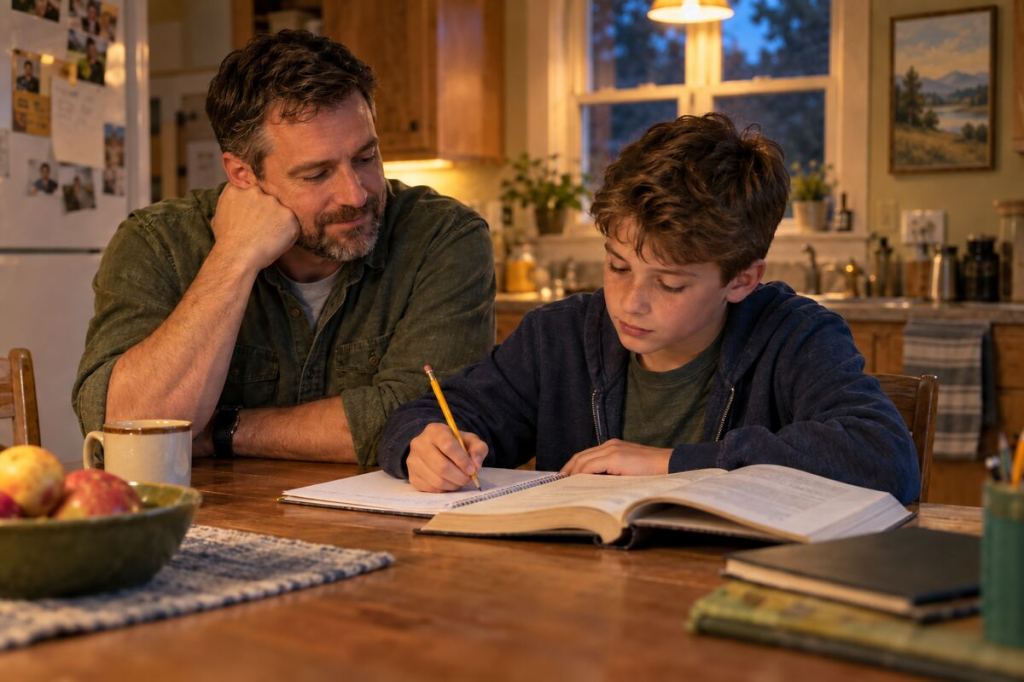
A father sits beside his son as the boy works through a reading assignment at the kitchen table.

Adults are just as easily reduced.

A medical diagnosis can explain something about my body, but it does not explain the father, writer, manager, Christian, or man trying to become more disciplined inside it. “Divorced” tells you something true about my paperwork and almost nothing about the relationship, the lessons, or the life that continued afterward. A job title can tell you where somebody spends his weekdays without telling you what he thinks about on the drive home.

A thoughtful man sits beyond medicine, car keys, family photographs and manuscript pages at a kitchen table.

We do this with mistakes too. One bad decision becomes the irresponsible employee. One failed relationship becomes the man who cannot commit. One season of exhaustion becomes the person who has lost his drive. The category saves us the trouble of staying curious.

Labels are especially dangerous when they contain enough truth to sound complete.

This doesn’t mean we should reject them. Refusing a diagnosis doesn’t make the struggle disappear. Pretending dyslexia, ADHD, grief, burnout, or illness is “just a label” can deny people the help the name was meant to unlock. The answer is not to throw away the map. It’s to remember that a map is not the territory.

The funny bone is a harmless reminder. We can use the wrong name and still recognize the pain. Human beings deserve more care than that. We should learn the name, make the accommodation, offer the treatment, hold the boundary, and then keep paying attention to the person who cannot be contained by any of them.

Feynman’s distinction remains the right one: knowing what something is called is not the same as knowing it. The name may tell us where to begin paying attention. It should never give us permission to stop.


Honoring Your Past Without Letting It Own Your Future

Kylian Mbappé was nine years old when Nike found him. At nine, most of us were still making major life decisions based on who had the best snacks. He was beginning a relationship with one of the biggest brands in sports—a relationship that would follow him from a promising child to one of the most recognizable athletes in the world.

That history matters. Nike believed in him before most of the world knew his name. There is something honorable about remembering who opened a door before there was a crowd waiting on the other side.

A young soccer player ties an unbranded cleat beside an empty field at sunrise.

But memory isn’t a contract with no ending.

After roughly two decades with Nike, Mbappé has signed with the younger Swiss company On. According to Reuters, the new agreement includes cash and equity as On prepares to enter soccer. The move appears to offer him more than another endorsement check. It gives him a stake in what comes next.

That’s where gratitude gets complicated.

We tend to believe that the people and places that recognized an earlier version of us have earned some permanent claim on every version that follows. The boss who gave you your first real opportunity. The town that raised you. The career that fed your family. The relationship that loved you when you had less to offer.

Those gifts are real. They deserve to be remembered honestly. But a gift is not a deed.

I’ve spent most of my adult life in the car business. It has provided for my children, introduced me to people I never would have known, and taught me how to read a room, listen beneath an objection, lead under pressure, and own a result. It also taught me that Saturday is apparently a workday with better football games happening somewhere else.

I’m grateful for that life. Gratitude doesn’t require me to pretend it must be the only life I ever build.

A dealership manager carries a notebook and work bag toward the showroom exit at dusk.

Writing a book didn’t erase the years behind a desk or on a sales floor. If anything, those years gave me something worth writing about. The next chapter does not have to insult the previous one in order to be legitimate. I can admit that a place shaped me without insisting it owns the shape I take next.

That’s the difference between loyalty and captivity.

Loyalty is chosen in the present. It’s mutual, honest, and awake to what the relationship has become. Captivity is yesterday’s favor turned into today’s veto. It says, “We believed in you then, so you owe us the right to decide who you become now.”

Sometimes staying is the responsible choice. Children need stability. Bills don’t become less due because you have discovered your calling; the electric company has never accepted personal growth as payment. Dreams need plans, savings, patience, and occasionally the humility to move slower than your ego would prefer.

But sometimes leaving is also responsible.

You can give notice instead of disappearing. You can train the next person, finish the work, keep your promises, and speak well of the people who helped you. You can leave without rewriting the past into a prison or a villain. A good departure can be evidence that the old place taught you something about character.

The same is true beyond work. A town can remain home without defining the boundary of your life. A relationship can have saved an earlier version of you without being entitled to govern the next one. A role can have been right for a season and still become too small for the person that season helped create.

Footprints cross an open wooden doorway and continue along a country path toward morning light.

Gratitude should make us honest about what we received. It should not make us dishonest about what we have become.

You can honor the door that opened for you without agreeing to spend your whole life standing in its frame.

Clean Sheets and Clear Notes: Small Acts of Real Responsibility

It is late when you finally get home.

The suitcase catches on the threshold. The house is dark except for the light above the stove, and you’re wearing the same clothes you put on several hundred miles and one airport sandwich ago. You’re too tired to unpack. You may be too tired to remove your shoes with any real dignity.

Then you walk into the bedroom and see the bed.

Clean sheets. Pillows arranged. Everything waiting.

It is not a miracle. You made the bed before you left. But for a moment, it feels as though an earlier version of you reached through the week and said, “I knew you would be tired. I took care of this.”

A tired traveler arrives home at night to find a clean, warmly lit bed waiting.

That may be one of the simplest definitions of responsibility I know: one version of us doing a favor for the version who comes next.

We usually discuss deliberate action with more drama. We picture bold decisions, five-year plans, and somebody writing goals on a whiteboard while inspirational music plays in the background. Sometimes deliberate action is washing the sheets before you leave town.

The future version of us is easy to treat like an irresponsible relative. We borrow his sleep, spend his time, leave his gas tank empty, and assign him the conversation we don’t want to have. We say, “I’ll deal with it tomorrow,” as if tomorrow is sending somebody else.

Then tomorrow arrives wearing our face.

I see this in dealership life. A manager leaves incomplete notes because he understands the situation and assumes he’ll remember it later. A salesperson promises to call a customer but doesn’t create the reminder. Somebody moves a problem to the next department without explaining what’s already happened.

The result may not appear until another person inherits the work.

Good documentation is not bureaucracy for its own sake. It’s consideration for the person who will open the file next—and that person may be you. If reconstructing the story requires a detective, three witnesses, and a corkboard covered in red string, the handoff could have been better.

A dealership manager leaves keys, paperwork, and a handoff note in order at the end of the day.

Fatherhood is filled with the same kind of quiet preparation. Setting out the medicine. Filling the tank before a long morning. Signing the form before it disappears into the archaeological site known as a child’s backpack.

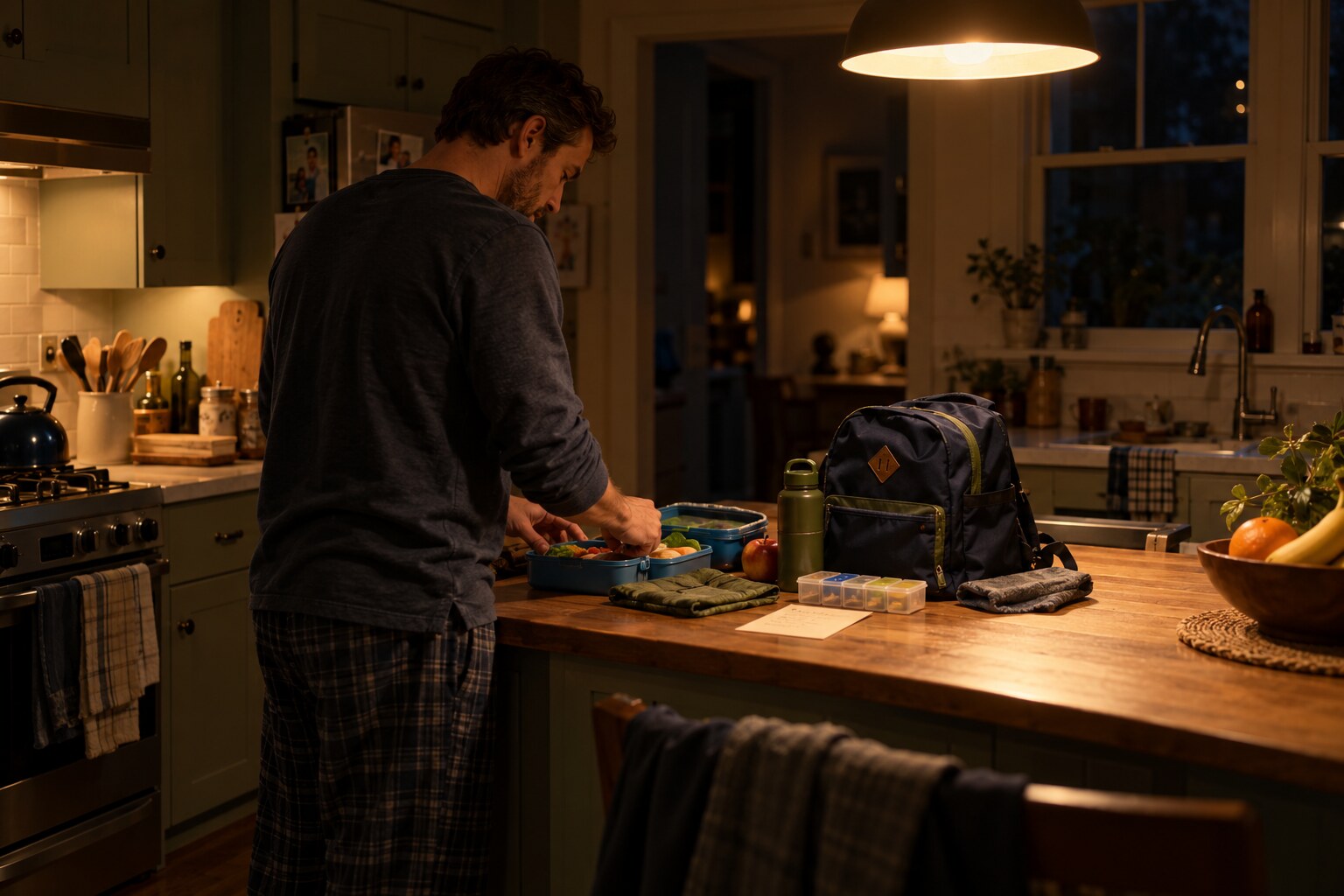
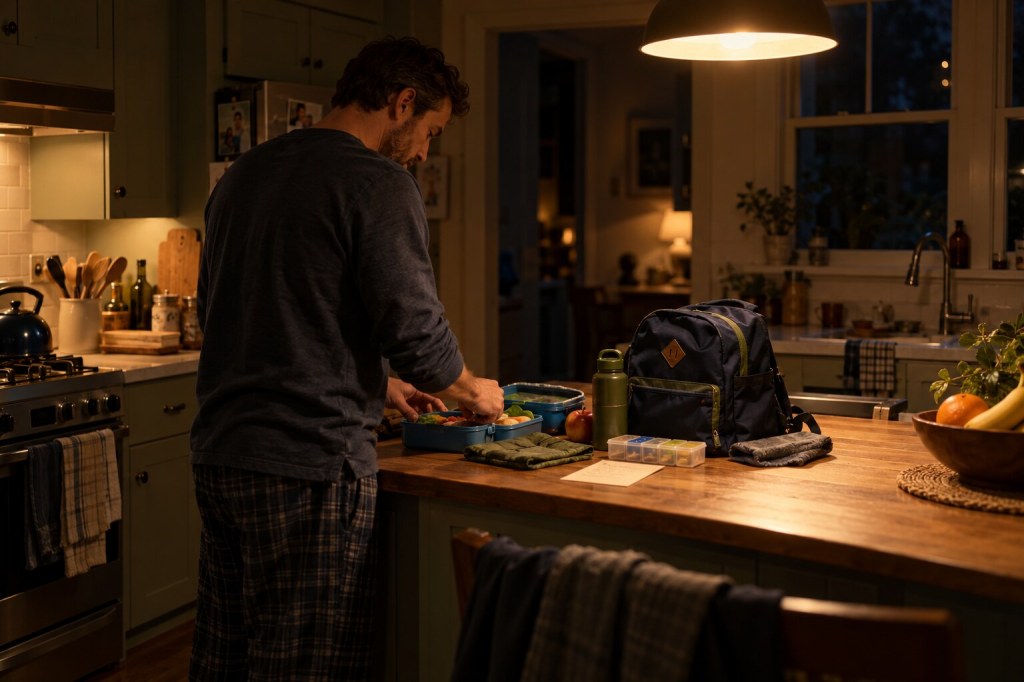
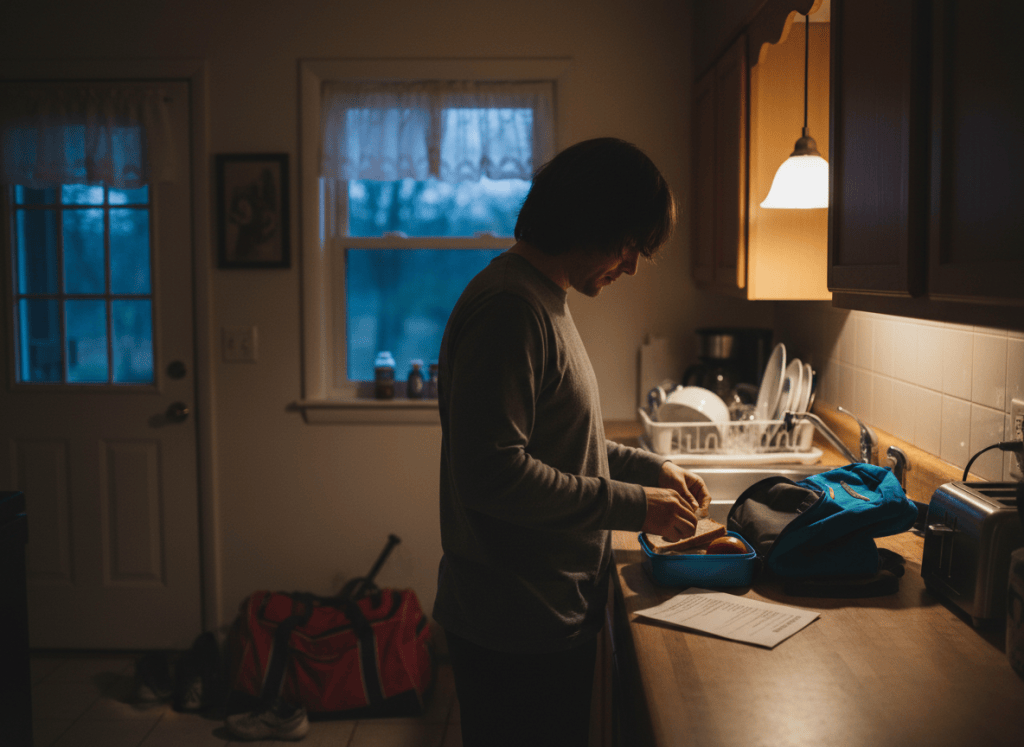
A father quietly prepares a lunchbox, backpack, medicine organizer, and note for the next morning.

But the more important unfinished business is not always practical.

Sometimes we need to apologize today because tomorrow shouldn’t have to work through another night of resentment. Sometimes we need to leave the note, make the call, or tell somebody where the important papers are. Sometimes responsibility means closing a loop while we still have the time and strength to close it.

Marriage and friendship depend on this more than we admit. The person we love should not always have to inherit the emotional mess we were capable of cleaning up ourselves. An unfinished conversation doesn’t remain suspended in the air. It settles somewhere, usually on the person least responsible for carrying it.

The same principle applies to writing. When I stop for the night, I can leave myself a sentence about what comes next. That small note saves tomorrow’s writer from staring at the page as though a stranger broke into the manuscript and abandoned it halfway through a thought.

This is not an argument for squeezing productivity from every spare minute. Rest can be a gift to the person who wakes up tomorrow, too. So can asking for help. So can deciding that a task doesn’t need to be done at all.

The point is not to remain endlessly busy. It’s to remember that our actions continue after the mood that produced them has passed. Somebody will live inside the conditions we create today.

The man who comes home will sleep in the bed the man who left prepared. The family will live with the words we spoke—or refused to speak. The next employee will inherit the process we documented or the confusion we abandoned. Tomorrow’s writer will face either a marked trail or an empty page.

We’re always leaving something behind for the person who comes next.

Self-respect is sometimes nothing more glamorous than refusing to make tomorrow clean up what today had time to finish.

Every Skyline Stands on Someone You Forgot to Thank

One World Trade Center gets photographed from almost every angle human beings can think of, including several we probably didn’t need. The glass catches the sky. The spire carries the symbolism. The height gets printed in guidebooks.

Underneath all that attention is enough concrete to pave more than 4,000 New York City blocks.

The concrete makes up the tower’s core, foundation, and floor slabs. It holds the building in place while the more photogenic parts collect compliments. Nobody visits Manhattan, points toward the ground, and says, “Look at that magnificent footing.”

Concrete is the second-most-used material on Earth after water, which is a remarkable career for something most of us notice only when we trip over it. John Wilson’s new film, The History of Concrete, considers the material beneath our buildings, sidewalks, garages, and roads—the substance carrying modern life while blending almost completely into the background.

One World Trade Center rises above the massive concrete structure supporting the skyline.

That made me think about Lorraine.

In A Love Song for Bobby Long, Lorraine Will never appears. We don’t hear her version of events. We don’t even get a photograph. Yet she may be the most important character in the movie. Pursy’s return, Bobby’s collapse, Lawson’s history, the house, the secrets, the resentment, and much of the love all exist in the shape of her absence.

She’s the concrete of the story. Everyone else gets the dialogue, but they are standing on what she left behind.

Real life is full of people like that.

At a dealership, the delivery photograph usually shows a smiling customer, a salesperson, and a clean vehicle. It can look as though the salesperson personally mined the metal, assembled the truck, arranged the financing, and buffed the tires with his own shirt.

Outside the frame are the people who stocked the vehicle, found the keys, corrected the paperwork, cleaned what somebody else missed, answered the phone, handled the title, fixed the warning light, and caught the mistake before it became the customer’s problem. Their best work often produces no story at all. The emergency never happens, so nobody knows who prevented it.

A dealership employee quietly prepares a pickup truck before a customer delivery.

Fatherhood can be invisible in the same way. Children remember the vacation, the birthday, or the Christmas gift. They may not remember who checked the tires before the trip, stayed awake listening for the door, kept the insurance paid, or carried private worry without making it the household weather.

Small towns are held together by similar people: the maintenance worker who arrives before the building opens, the church member who somehow knows where every folding table lives, the school secretary who can solve six problems before the rest of us finish explaining the first one. Their reliability becomes so familiar that we stop seeing it as labor.

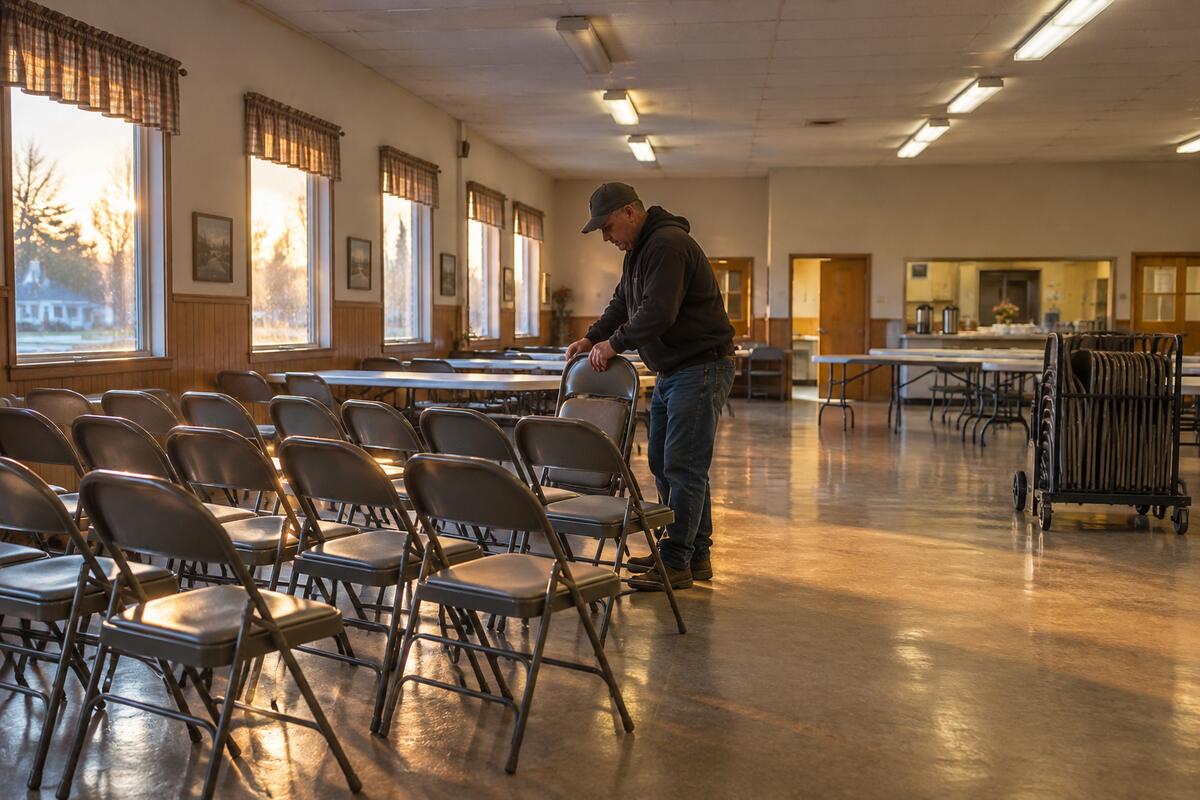
A maintenance worker arranges folding chairs in an empty small-town community hall.

That’s the strange penalty for making stability look ordinary.

This is not simply an argument that dependable people deserve more applause. Most foundations aren’t asking for a parade, and concrete would probably be uncomfortable with the attention. The deeper problem is that invisible support is often treated as unlimited support.

We keep adding floors because the building hasn’t fallen yet.

Then the dependable employee burns out. The quiet spouse stops compensating. The father who always handles it admits that he can’t. The institution everyone assumed would remain begins to crack. Only then do we study the structure and act surprised by how much weight it had been carrying.

Maybe appreciation matters most before the failure—not as praise, but as relief. Share the load. Learn the process. Notice what keeps working and ask who is making that possible. Foundations need inspection, maintenance, and occasionally somebody willing to stop building long enough to protect what is already holding the place up.

We photograph the skyline because it’s beautiful. We should.

But every skyline is standing on something it forgot to thank.

Short-Term Wins, Long-Term Damage: Rethinking ‘What Works’

An Australian bottlenose dolphin named Bubbles has developed a system for getting dinner.

He selects a bigeye trevally and pursues it until the fish regurgitates whatever it recently ate. Bubbles then collects the abandoned meal.

It’s not exactly table manners, but it is a system.

The method is inventive. It is repeatable. It saves Bubbles the trouble of finding the original prey himself. Judged strictly by the result—Bubbles wanted food and ended up with food—the process works.

Researchers describe the behavior as kleptoparasitism, which is a scientific word for acquiring lunch through somebody else’s terrible afternoon.

A bottlenose dolphin pursuing a school of bigeye trevallies over a coral reef.

Bubbles isn’t evil. Bubbles is a dolphin.

Human beings, unfortunately, have meetings, dashboards, spreadsheets, and the ability to ask who pays for our efficiency.

“It works” is one of the most dangerous compliments we give a system because it usually ends the evaluation too early. Once a process produces the number we wanted, we stop asking what else it produced.

A dealership can increase deliveries by pushing every customer through faster. The units show up on the board. The month looks healthy. Somebody may even send an email congratulating everyone on “executing the process,” which is corporate language for placing a trophy on the table before checking whether the table is on fire.

But speed can hide its bill.

A salesperson skips a step, and finance has to explain something the customer should have understood earlier. A promise gets made during the sale, and service inherits it afterward. Missing documents become somebody else’s urgent problem. One employee keeps staying late because that person is dependable enough to absorb what the system refuses to fix.

The process works—as long as the only measurement is the sale.

A dealership celebrates a vehicle delivery while an employee handles accumulated paperwork in the background.

Second-order thinking asks what happens after the first result.

The first-order question is simple: Did we close the deal?

The second-order questions take longer. What did the shortcut teach the employee? What expectation did it create for the customer? Which department inherited the unfinished work? Can we repeat this method for a year without grinding down the people responsible for making it appear successful?

The short game counts what it gains.

The long game also counts what the gain consumes.

This distinction reaches far beyond business. A family arrangement may keep the peace because one person has learned to swallow every objection. A manager may appear decisive because employees stopped bringing him bad news. A parent may produce obedient children by making honesty more dangerous than silence.

Those systems can look remarkably efficient.

There are fewer arguments. Fewer questions. Fewer uncomfortable meetings.

There may also be fewer people willing to tell the truth.

A leadership team reviews positive charts while an overburdened employee completes the hidden work nearby.

Playing the long game does not mean abandoning results or designing a workplace where nobody is ever uncomfortable. Good systems require standards, accountability, and consequences. Sometimes the right process is difficult precisely because it refuses to move the burden somewhere less visible.

But leaders should become suspicious whenever a method works only because the same people keep paying its hidden costs.

That cost may appear as rework, resentment, turnover, damaged trust, exhausted employees, or customers who complete one transaction and never return. None of those consequences may appear on this month’s scoreboard. The future has always been generous about letting us borrow from it before sending the invoice.

Bubbles doesn’t have to consider any of this. He doesn’t conduct employee surveys, calculate customer retention, or worry about the moral development of the trevally.

He eats.

We are supposed to be capable of more.

A good system does not merely produce the desired result. It produces that result without quietly consuming the people who keep it operating.

Every leader should ask two questions before praising a process:

Does it work?

And what does it do to the people inside it?

You Can Chase the Dream After Everyone Else Is Fed

“Sell your flock.”

It is the kind of advice that sounds brave because it fits neatly inside a sentence. Leave the familiar town. Give up the steady life. Trade security for possibility. If you want the dream badly enough, prove it by walking away from everything that keeps you comfortable.

That makes sense when the flock is only a metaphor for fear.

It gets more complicated when the flock has names.

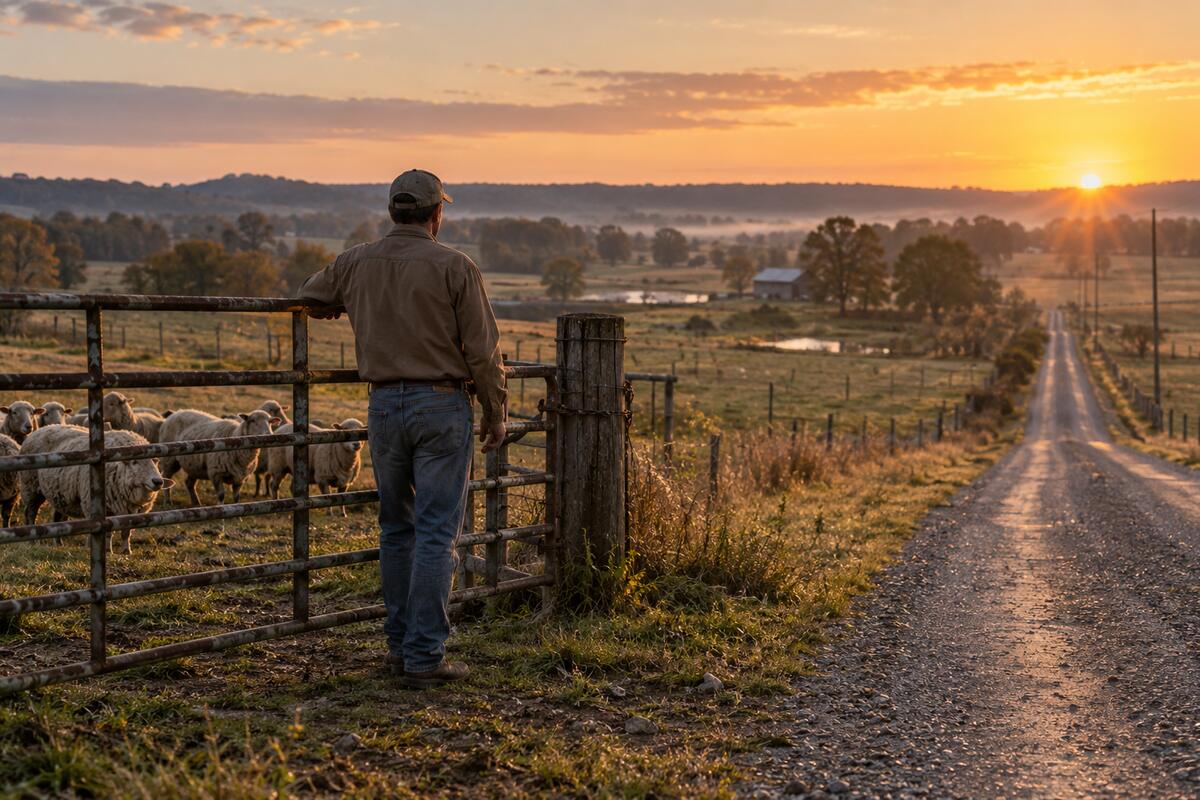
A working father stands beside a flock at a rural gate while an open road stretches toward the sunrise.

I have three children. There are groceries to buy, insurance to maintain, lights to keep on, and promises that can’t be suspended while I go looking for myself. Other people have built part of their lives around my dependability. Their needs are not evidence that I have surrendered my potential. They’re part of the life I am responsible for living well.

We have developed a strange habit of treating departure as the purest form of courage. The man who quits his job, sells everything, and bets on himself gets the dramatic story. The man who goes to work, comes home tired, helps with what needs helping, and returns to his dream after the house is quiet rarely gets a montage.

But the absence of spectacle does not mean the absence of bravery.

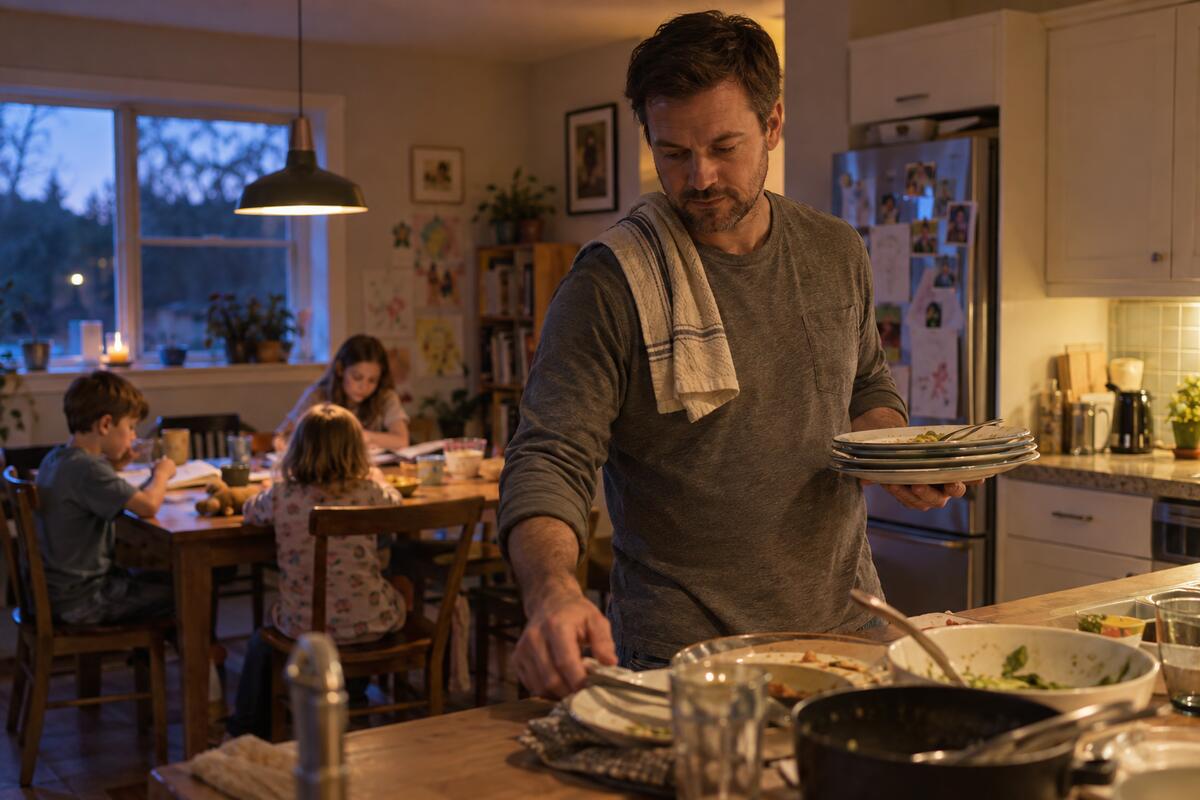
A father clears the family dinner table while his three children finish their evening nearby.

I wrote a book while working in the car business and raising three children. Most of the sessions didn’t feel heroic. They felt inconvenient. I wrote when the day had already spent most of what I had. I learned things I didn’t know how to do. I questioned whether the work was good enough and whether anyone would care. Then I went back to it.

The book was not produced by abandoning my responsibilities. It was built around them.

That doesn’t mean staying is always noble. A paycheck can become an excuse. Responsibility can be used as a respectable name for fear. Plenty of people say they are waiting for the right time when what they mean is that they hope desire will eventually stop asking anything of them.

Patience and surrender may look alike from across the room, but they leave different evidence.

Surrender says “someday” and makes no appointment. Patience puts an hour on the calendar. Surrender collects reasons. Patience collects pages. Surrender waits for life to become less demanding. Patience accepts that a meaningful life may always be demanding and learns to build anyway.

There may come a day when the responsible decision is to leave the secure job, change the plan, or give the dream more room. Courage may eventually require a larger risk. But quitting isn’t automatically courage, just as staying is not automatically cowardice. The question is not whether the choice looks bold from the outside. The question is whether it honors both the calling and the people entrusted to you.

I still intend to write fiction. That work matters to me. I don’t believe the dream has expired because I have not yet reorganized my entire life around it. The dream is alive every time I protect a small piece of the week from everything else. It is alive when I choose the page over another hour of distraction. It is alive when I keep a promise to the work without breaking promises to the people I love.

A father writes at a small desk after the household is asleep, surrounded by quiet signs of family life.

There is nothing romantic about neglect. A dream financed by hungry children, broken commitments, or people left carrying your share of the load is not freedom. It’s simply selfishness with better lighting.

So feed the flock. Pay what must be paid. Keep the promises that made your life larger than your own. Put the house to bed.

Then return to the manuscript.

Wisdom Watches the Door: Escaping the Trap of Everyday Cynicism

John Quincy Adams once wrote, “To believe all men honest would be folly. To believe none so is something worse.”

Those are the two errors available to us.

The first is naïveté. We ignore evidence, excuse patterns, and keep handing people access they have already misused. The second is cynicism. We decide the safest response to being fooled once is to make sure nobody ever gets the chance again.

Cynicism usually feels like the smarter choice.

A caution sign stands beside an open rural road continuing toward the sunrise.

It predicts the betrayal before it happens. It hears the excuse before anybody offers it. It keeps a person from being embarrassed by hope. When the worst finally occurs, the cynic gets to say, “I knew it,” as though correctly anticipating disappointment makes the disappointment less costly.

I’ve spent enough time in the car business to understand why suspicion develops. Customers don’t always tell the whole truth. Salespeople sometimes cut corners. Lenders make decisions that feel arbitrary. Managers promise support and then disappear when the problem becomes inconvenient.

Experience should teach us to verify.

But a manager who assumes every customer is lying, every salesperson is lazy, and every lender is acting in bad faith eventually changes the room. Customers become defensive. Employees stop bringing mistakes forward because they know guilt has already been assigned. Good people grow tired of being treated like the bad people the rules were written for.

Distrust does not merely observe a culture. Given enough authority, it creates one.

A dealership manager and salesperson calmly review paperwork together at a desk.

That’s the hidden danger of cynicism. It calls itself wisdom while making its own evidence. Treat people as though they cannot be trusted, and some will eventually decide there is no benefit in being trustworthy. Others will simply leave. Either way, the cynic looks around at the damage and feels confirmed.

Relationships can work the same way.

When somebody lies to you, abandons you, or makes you feel foolish for believing them, suspicion is not irrational. It’s the mind trying to keep the wound from happening twice. The problem begins when a necessary lesson becomes a universal law: this person hurt me, therefore people hurt me; this promise failed, therefore promises are camouflage; I missed the warning signs once, therefore I must treat every unknown as a warning sign.

I know how tempting it is to call that maturity. Sometimes it’s only pain that has learned a more respectable vocabulary.

None of this means reopening every closed door. Forgiveness does not require restored access. A boundary is not bitterness, and trust should not be returned simply because somebody asks for it. Patterns matter. Character matters. Evidence matters.

Earned trust begins small. It gives a person enough room to show who they are without handing them the power to destroy what you are responsible for protecting. Then it watches what happens. A promise kept earns another promise. The truth told when a lie would have been easier earns more weight. Consistency expands the room.

That is not naïveté. It is judgment without despair.

A sturdy weathered door with a secure latch remains open toward warm morning light.

Wisdom leaves room for revision. It can admit that a person has changed, that an employee deserves another chance, or that the new relationship should not be sentenced for what happened in the old one. Cynicism can’t do that because its identity depends on never being surprised by goodness.

The goal is not to believe everyone. It’s to remain capable of believing someone.

Wisdom watches the door. Cynicism boards it shut.

When Responsibility Is Really Pride in Disguise

We have a strange rule about asking for help: smoke should be visible first.

The account should be nearly empty. The workload should be breaking us. The marriage should be in crisis. The deadline should have already passed, preferably while making a dramatic whistle overhead.

Apparently, only then are we permitted to admit that another pair of hands might be useful.

Until that moment, asking feels excessive. Why call the fire department when the curtains are only warm?

Dan Lewis recently did something quieter. After sixteen years of sending readers a curious story most weekdays through Now I Know, he asked them to contribute financially. But he made an important distinction. The newsletter was not about to disappear. Reader support would make the work stronger, more sustainable, and less dependent on advertising.

He wasn’t asking readers to pull him from a burning house.

He was asking whether they might help reinforce the structure while it was still standing.

A homeowner and carpenter reinforcing the foundation of a sturdy Arkansas house before an emergency.

That shouldn’t sound unusual, but it does.

We understand maintenance when it involves roofs, vehicles, and air conditioners. Nobody waits for the engine to fall onto Highway 7 before admitting the oil probably should have been changed. Yet we routinely demand more obvious damage from our finances, relationships, health, faith, and emotional lives before treating support as justified.

I have done this in nearly every role I have held.

As a manager, I can convince myself that carrying the pressure alone protects everyone else. As a father, I can mistake being dependable for never appearing burdened. As a writer, I can keep adding work to the calendar because admitting I need time, encouragement, attention, or support feels suspiciously close to complaining.

Pride is clever that way. It rarely introduces itself as pride.

It calls itself responsibility.

A dealership manager working alone after closing with paperwork and empty desks around him.

Responsible people can become especially good at waiting too long. We absorb another task, cover another expense, postpone another conversation, and reassure everyone that we have it handled.

Sometimes we do have it handled.

That doesn’t mean handling it alone is wise.

The danger is not merely exhaustion. When we refuse help early, we often increase the eventual cost for everybody nearby. The employee who never delegates eventually leaves behind a system nobody else understands. The spouse who never voices a need eventually speaks from resentment. The father who hides every struggle may believe he is giving his children security while accidentally teaching them that adulthood means suffering privately until something breaks.

Even prayer can become something we postpone until desperation makes it feel respectable. We wait until we have exhausted our own wisdom before asking God, a pastor, or a trusted friend to help us see what pride has hidden.

Asking earlier doesn’t guarantee an answer. Other people are allowed to say no. A reader doesn’t owe a writer money. A friend can’t carry every burden. A team should not be asked to compensate forever for poor leadership.

But a clear request made while choices still exist is different from an emergency handed to someone after every other option has been consumed.

Neighbors arriving with tools to help maintain a sturdy Arkansas home before serious damage occurs.

There is courage in saying, “Nothing is collapsing today, but I can see what will happen if I continue this way.”

That may mean hiring help before the workload becomes impossible. Having the financial conversation before the late notice arrives. Seeking counseling before every exchange becomes evidence in an imaginary trial. Telling a friend the truth while the problem is still small enough to describe without a timeline and supporting documents.

Help is most useful when it still has room to be help instead of rescue.

The strongest structures aren’t the ones that never needed reinforcement. They’re the ones somebody cared enough to inspect before the weakness became visible from the road.

Asking for help while the house is still standing isn’t weakness.

It is stewardship.

Accumulating Love: The Dimes of Fatherhood

There is a bar bet hiding in the bottom of your change jar.

Pour any ordinary mixture of modern American dimes, quarters, and half dollars onto a kitchen scale. Do not count them. Don’t sort them. Just keep adding coins until the scale reaches one pound.

The pile will be worth approximately twenty dollars.

It sounds like a trick because the denominations are different. The dime is worth ten cents, the quarter twenty-five, and the half dollar fifty. But their weights rise in almost perfect proportion to their face values. A quarter weighs two and a half times as much as a dime. A half dollar weighs twice as much as a quarter. The faces change. The scale keeps arriving at essentially the same answer.

Modern dimes, quarters, and half dollars rest together on a kitchen scale.

Fathers have our own way of assigning value, and I think we often get it backward.

We put a high price on the half-dollar moments: the vacation, the expensive Christmas gift, the perfectly planned Saturday, the speech we hope our child remembers for the rest of his life. We save for them, photograph them, and feel the pressure to make them count.

Those moments matter. I want my children to have adventures, celebrations, and stories big enough to retell. But most fatherhood does not arrive in half dollars.

It comes in dimes.

It’s listening to a story you’ve already heard. Sitting through another practice after a long day at work. Helping with an assignment that has frustrated both of you. Checking the weather before a game. Taking one more shot in the driveway. Looking up from the phone when a child says, “Watch this.” Saying goodnight, then showing up again tomorrow.

None of those moments feels large enough to become a legacy while it is happening.

Accumulated, they acquire weight.

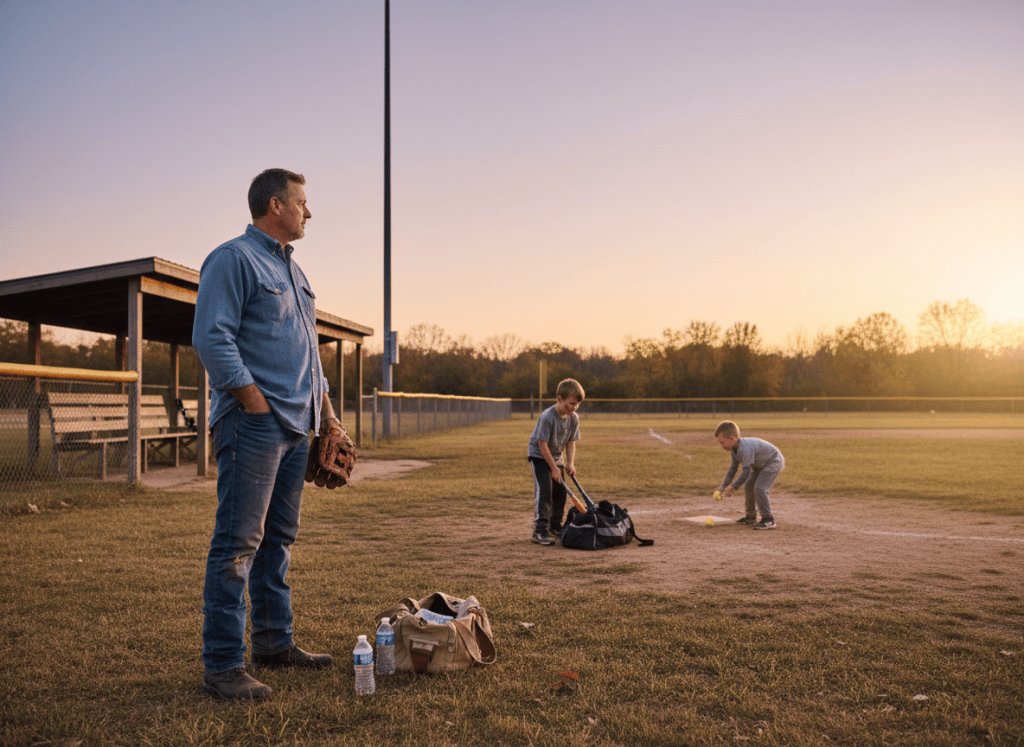
A father waits beside a quiet ballfield after practice while his children gather their things.

I have three children, and there’s a temptation to judge my fatherhood by the days I can make impressive. Did we go somewhere memorable? Did I buy the right gift? Did I say something wise enough to survive adolescence?

Meanwhile, the ordinary chances keep passing through my hands.

A child may forget the restaurant but remember that Dad listened in the car. He may forget the score but remember looking toward the fence and finding me there. He may not remember the exact night we worked through the assignment, but he will remember whether confusion felt safe in my presence.

That’s how attention becomes a childhood. Not usually through one grand act, but through hundreds of small confirmations: You matter. I see you. I came back.

The coin comparison has limits. Not every act of parenting is equal, and family life is not an accounting system where enough small kindnesses erase a deep wound. A careless word can carry enormous weight. So can an apology. Presence without attention is not the same as being present.

The point is not arithmetic. It is accumulation.

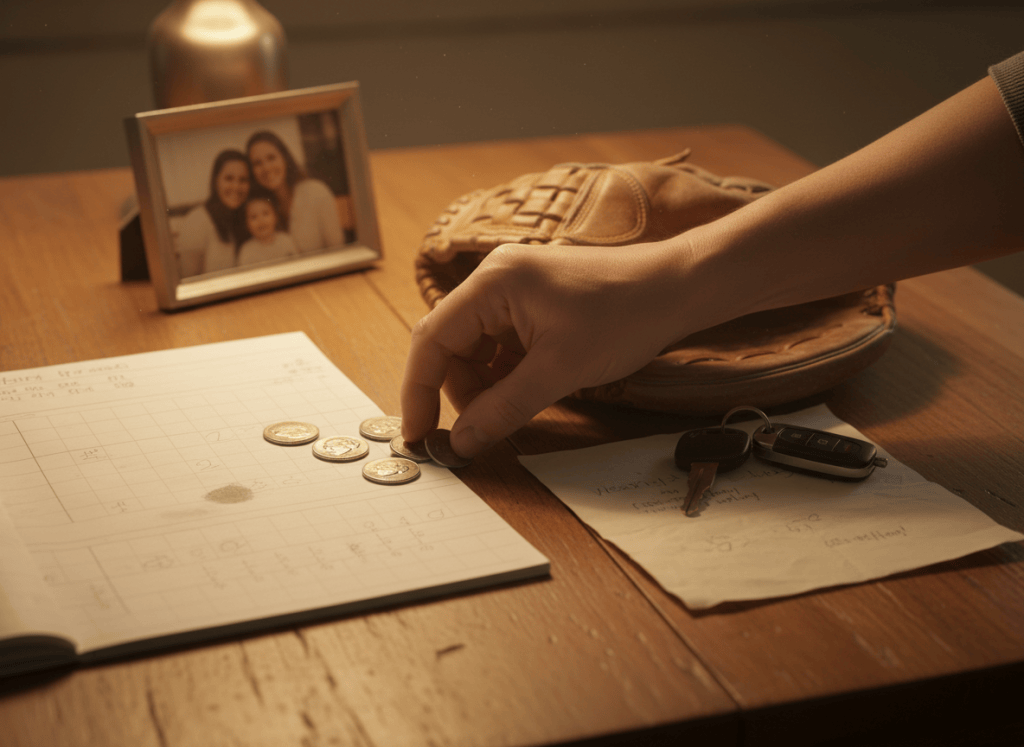
A handful of dimes lies beside homework, a baseball glove, and car keys on a family kitchen table.

An occasional spectacle can’t do the work of consistently dependable love. The biggest vacation of the year can’t replace the ordinary Tuesday when a child needs ten unhurried minutes. The perfect fatherly speech can’t substitute for becoming the kind of father whose everyday conduct has already said the same thing.

Perhaps that should relieve some of the pressure.

We don’t have to manufacture a defining memory every weekend. We don’t have to purchase every experience or turn every family outing into proof that we’re doing fatherhood correctly. We can stop waiting for the grand opportunity and become more faithful with the small ones already in our pockets.

Tonight may offer nothing more dramatic than a ride, a question, a practice, a joke, or a story we’ve heard before.

Pick up the dime.

Your child may never remember its denomination, but he will remember the weight.

Invisible Work: The Backbone of Heroic Tales

Most of us carry roughly the same Viking around in our imagination.

He comes through the fog in a longship. He has a sword, a beard, and bad intentions. He raids a village, crosses an ocean, or takes something that didn’t belong to him. History remembers him because violence leaves a cleaner headline than winter preparation.

But the man holding the sword was surrounded—and sustained—by people doing work that rarely made it into the legend.

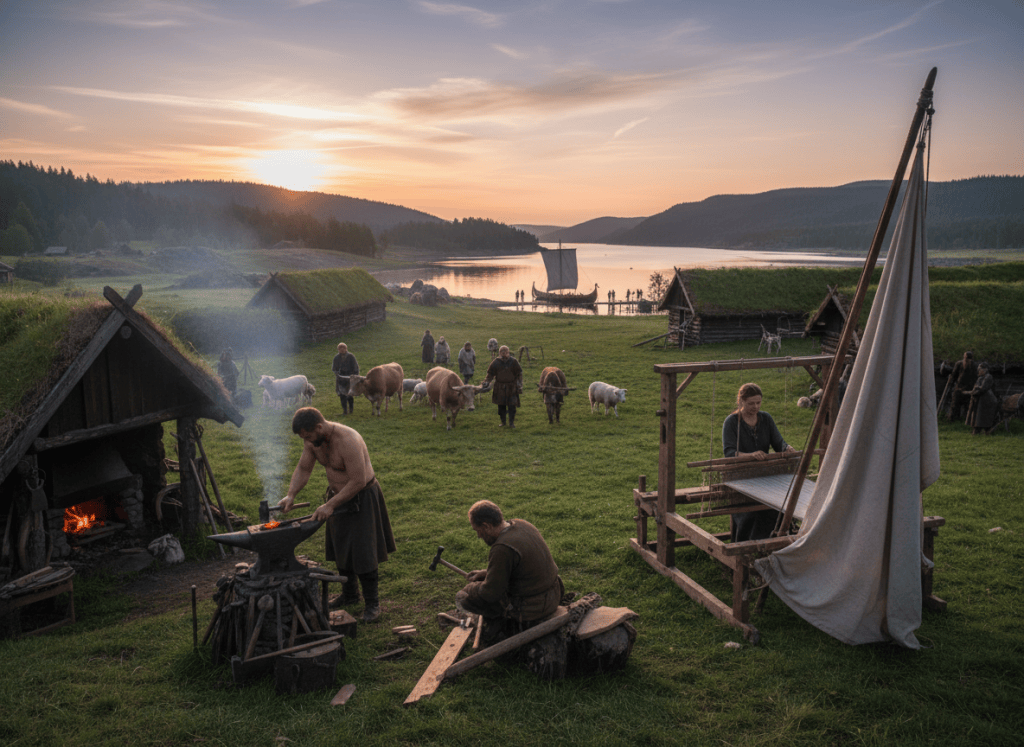
Farmers raised livestock and grew barley. Fishermen supplied food. Bakers made bread. Weavers produced clothing and sails. Blacksmiths made weapons, but they also made the tools required to build and survive. Leatherworkers, potters, jewelers, navigators, and shipbuilders kept ordinary life moving.

The raider may have held the sword. He didn’t grow the grain, bake the bread, weave the sail, forge the blade, and build the ship before breakfast.

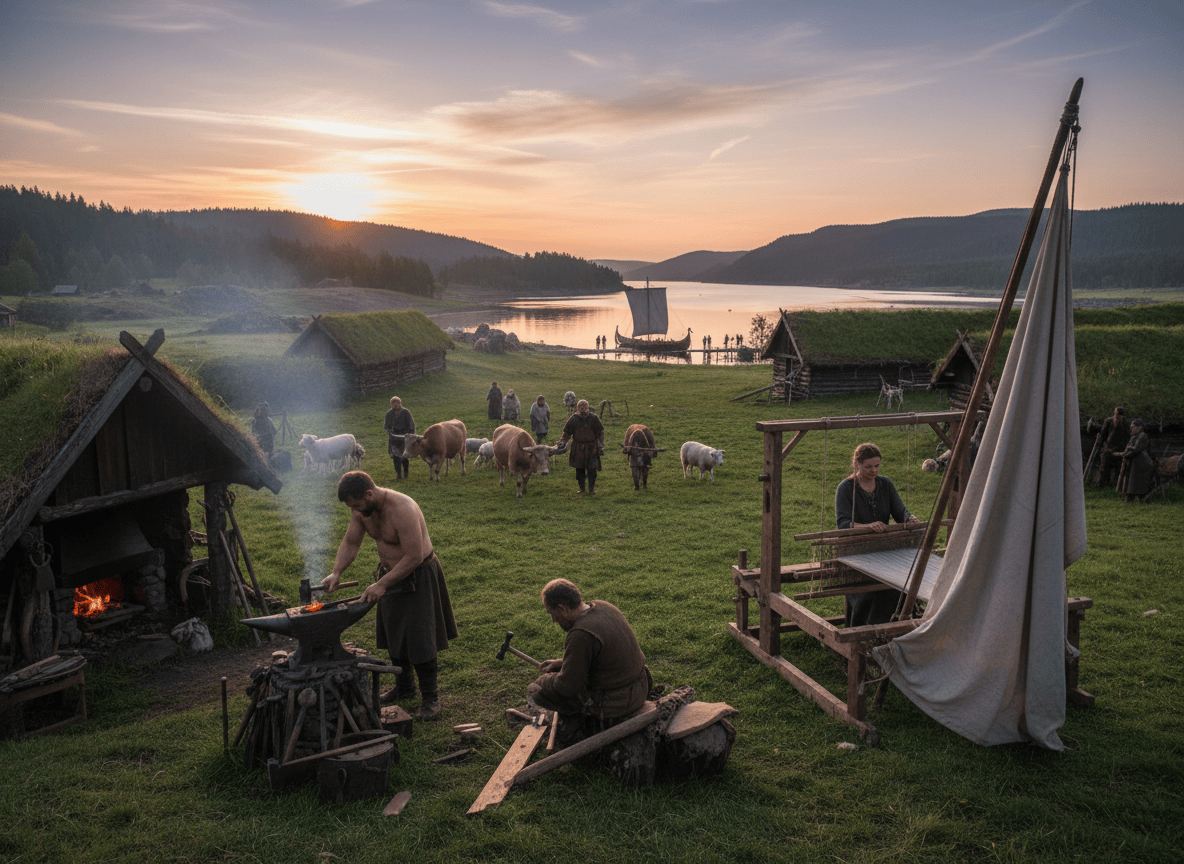
Viking-age farmers and craftspeople work in the foreground while a longship prepares to depart in the distance.

We mistake drama for importance because drama is easier to see.

A dealership has its own version of the longship arriving on shore. The customer takes a delivery photo. The salesperson hands over the keys. Everybody smiles beside the vehicle. It’s a good moment, and the salesperson deserves credit for getting there.

But the picture can’t show everything that made the picture possible.

Someone found the vehicle. Someone took the photographs, answered the phone, checked the trade, inspected the tires, cleaned the interior, corrected the paperwork, worked with the lender, handled the title, fueled the tank, and caught the small mistake before it became a large problem.

The deal closed in public. Much of it was built in private.

Dealership employees prepare a vehicle and complete paperwork while a delivery takes place in the background.

This is not an argument that visible people receive too much recognition. It is an argument that our field of vision is usually too narrow.

Good leadership notices the work that only becomes visible when it stops happening.

We tend to discover the value of preparation after nobody prepared. We appreciate the person who fixes paperwork after an error reaches the customer. We notice maintenance when the equipment breaks, safety when someone gets hurt, and trust when it has already been damaged.

Invisible work doesn’t become less important because it did not create a story.

Families run on the same arrangement.

We remember the birthday surprise, the winning hit, the Christmas morning, or the child walking across a stage. Those moments deserve to be remembered. But they were carried there by hundreds of acts too ordinary to photograph.

Lunches packed. Tires checked. Uniforms washed. Forms signed. Rides given. Medicine measured. Promises kept when nobody was in the mood to keep them.

A parent quietly prepares lunch and sports equipment in an Arkansas kitchen before sunrise.

Grand gestures become stories. Ordinary responsibility becomes the atmosphere a child grows up breathing.

That may be the deeper connection between heroes and the people behind them. Heroism is rarely a solo achievement. Sometimes a person does the brave thing because someone else taught him what bravery looked like. Sometimes she performs under pressure because somebody made sure she arrived prepared. Sometimes the person standing in the spotlight can stand there only because another person stayed late, woke up early, repaired what broke, or quietly said, “I’ve got you.”

Recognizing that does not diminish the hero. It widens the frame.

History has poor eyesight. It sees the ships on the horizon and misses the field that fed the crew. It remembers the battle and forgets the hands that stitched the sail. It records the name at the top and reduces everyone underneath to background.

Life is not obligated to make the same mistake.

We can thank the person who caught the error. Name the one who made the hard day easier. Teach our children that support is not lesser work. Remember that reliability is a form of love, even when it never becomes a dramatic scene.

The raider made the legend. The farmer made the winter survivable.

And behind almost every person history calls heroic is someone who never made the legend but made the legend possible.


Source note: Inspired by Paul Anthony Jones’s “10 Most Common Jobs in the Viking Age,” published by Mental Floss on September 12, 2026.