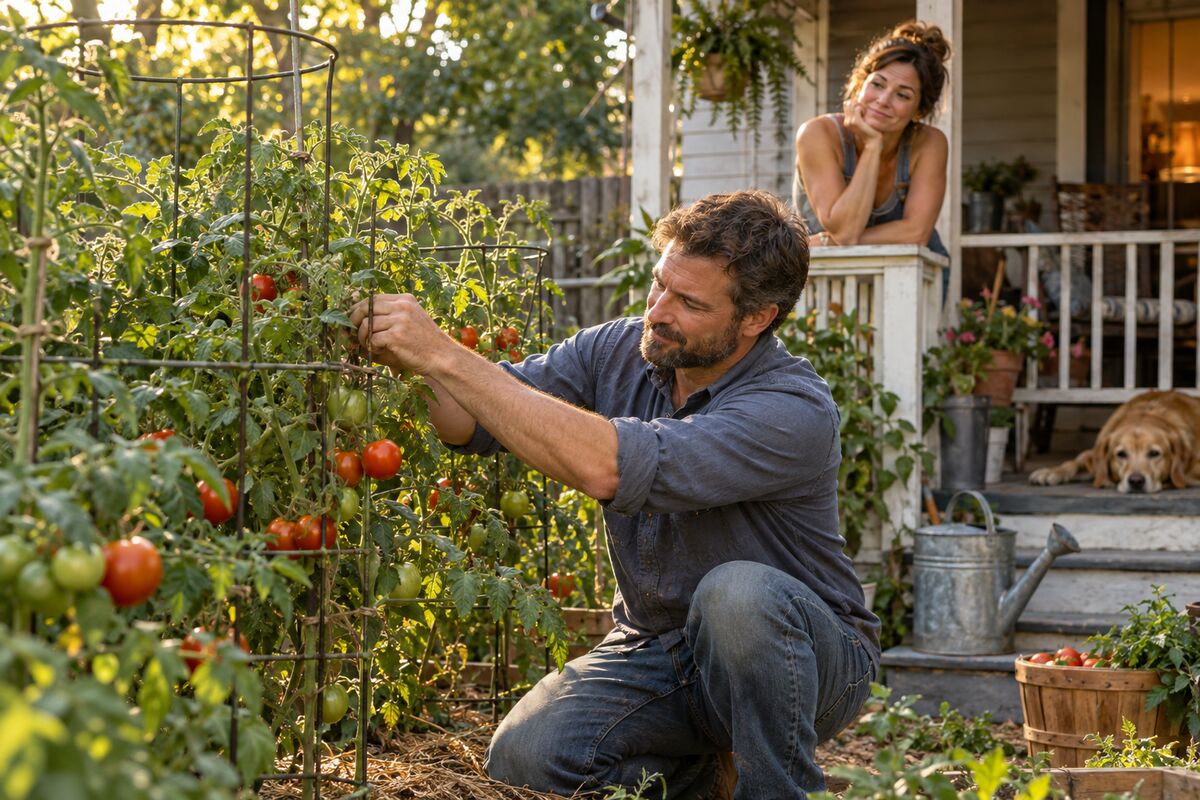
“Your girlfriends are doing well.”
The words float across a backyard crowded with tomato cages.
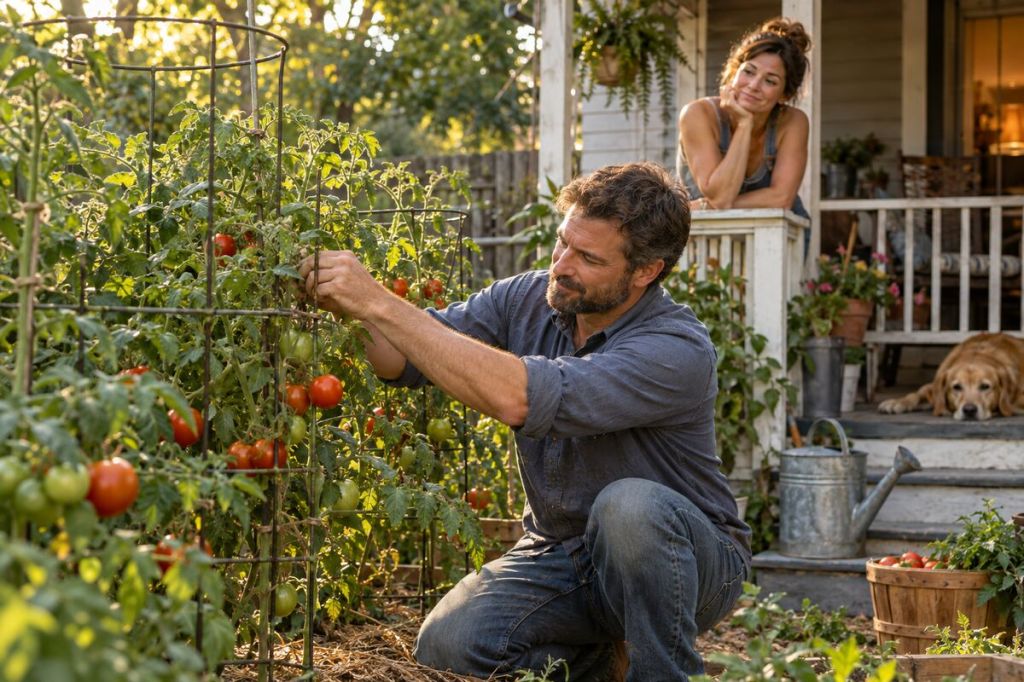
A husband is inspecting leaves, tying vines, checking the soil, and speaking about heirloom varieties with the emotional intensity most people reserve for SEC football or minor surgery. His wife calls the plants “his girlfriends.”
It’s funny because it’s absurd.
It may also be funny because it’s true enough to sting.
Private jokes often carry two messages at once. The first says, “I know you, and I can tease you about this.” The second sometimes says, “I need you to notice what I am not quite ready to complain about.”
Humor lets us say a dangerous truth at a safer volume.
That doesn’t mean every joke is a coded emergency. Sometimes a tomato is just a tomato, although gardeners rarely believe this. To them, it’s a responsibility, a science experiment, and apparently a personality test.
But teasing can function like a relationship’s smoke alarm. It doesn’t always mean the house is burning. It does mean we should probably check before removing the batteries.
The nickname matters because it gives the passion a role in the relationship.
The garden is no longer only a garden. The manuscript is no longer only a manuscript. The career, business, training plan, book launch, or side project has become another presence—one that receives attention, creates obligations, interrupts plans, and follows us into rooms where it wasn’t invited.
I understand how that happens.
Writing can begin as the part of life that makes everything else more meaningful. Then a deadline approaches, an idea finally starts working, or a book needs one more revision, and the work begins claiming territory. Dinner becomes inconvenient. A conversation gets postponed. The people we love receive the distracted version of us because the focused version has already been promised to the page.
The work may be worthy.
That does not make every demand it places on us reasonable.

We like to imagine neglect arriving through obviously selfish pursuits. It would be easier if every threat to a relationship wore a black hat and introduced itself properly.
More often, the competition is something good.
A person works late because people depend on him. He trains because health matters. She serves at church because the need is real. He tends the garden because he finds peace there. I write because there are things I believe I’m supposed to say.
None of those explanations is dishonest.
They can still become alibis.
Passion is not guilty merely because it requires time. The people who love us should understand that meaningful work sometimes demands sacrifice. But passion isn’t automatically innocent merely because the work matters.
Someone still absorbs the sacrifice.
That’s the part ambition prefers not to itemize.
The clearest warning may not be an argument. It may be the same small joke repeated often enough that everyone learns their line. “You love that truck more than me.” “Go spend time with your computer.” “Your customers see you more than we do.” “How are the girlfriends?”
The first response is usually a defense.
“That isn’t fair.”
“I’m doing this for us.”
“You know how important this is.”
All three statements may be accurate. None of them answers what the other person is trying to say.

Listening doesn’t require surrendering the calling.
The tomato grower doesn’t need to rip up the garden and begin dividing custody of the Better Boys. The writer doesn’t need to close the laptop forever. The manager doesn’t need to stop caring whether the business succeeds.
The correction may be smaller and harder.
Put the phone away while she’s talking. Protect time with the same seriousness given to deadlines. Let a child interrupt without making him feel like an obstacle. Ask whether the people closest to us experience the purpose we talk about—or only the absence it creates.
Sometimes the best response to the joke is not another joke.
It’s an invitation.
Come sit with me. Tell me what I’ve been missing. Help me understand when this started feeling like competition.
He doesn’t have to tear up the garden.
He may simply need to invite his wife back into a life from which the garden has begun excluding her.


