You Can Chase the Dream After Everyone Else Is Fed

“Sell your flock.”

It is the kind of advice that sounds brave because it fits neatly inside a sentence. Leave the familiar town. Give up the steady life. Trade security for possibility. If you want the dream badly enough, prove it by walking away from everything that keeps you comfortable.

That makes sense when the flock is only a metaphor for fear.

It gets more complicated when the flock has names.
A working father stands beside a flock at a rural gate while an open road stretches toward the sunrise.

I have three children. There are groceries to buy, insurance to maintain, lights to keep on, and promises that can’t be suspended while I go looking for myself. Other people have built part of their lives around my dependability. Their needs are not evidence that I have surrendered my potential. They’re part of the life I am responsible for living well.

We have developed a strange habit of treating departure as the purest form of courage. The man who quits his job, sells everything, and bets on himself gets the dramatic story. The man who goes to work, comes home tired, helps with what needs helping, and returns to his dream after the house is quiet rarely gets a montage.

But the absence of spectacle does not mean the absence of bravery.
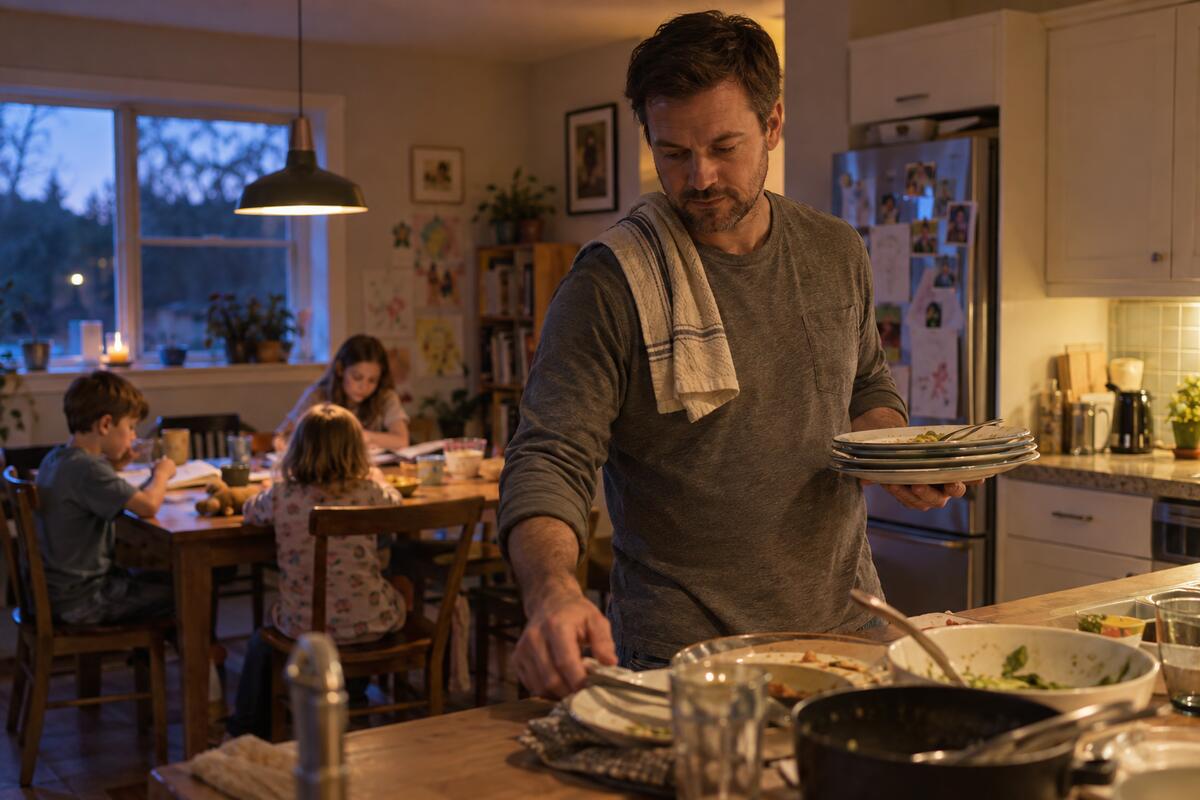
A father clears the family dinner table while his three children finish their evening nearby.

I wrote a book while working in the car business and raising three children. Most of the sessions didn’t feel heroic. They felt inconvenient. I wrote when the day had already spent most of what I had. I learned things I didn’t know how to do. I questioned whether the work was good enough and whether anyone would care. Then I went back to it.

The book was not produced by abandoning my responsibilities. It was built around them.

That doesn’t mean staying is always noble. A paycheck can become an excuse. Responsibility can be used as a respectable name for fear. Plenty of people say they are waiting for the right time when what they mean is that they hope desire will eventually stop asking anything of them.

Patience and surrender may look alike from across the room, but they leave different evidence.

Surrender says “someday” and makes no appointment. Patience puts an hour on the calendar. Surrender collects reasons. Patience collects pages. Surrender waits for life to become less demanding. Patience accepts that a meaningful life may always be demanding and learns to build anyway.

There may come a day when the responsible decision is to leave the secure job, change the plan, or give the dream more room. Courage may eventually require a larger risk. But quitting isn’t automatically courage, just as staying is not automatically cowardice. The question is not whether the choice looks bold from the outside. The question is whether it honors both the calling and the people entrusted to you.

I still intend to write fiction. That work matters to me. I don’t believe the dream has expired because I have not yet reorganized my entire life around it. The dream is alive every time I protect a small piece of the week from everything else. It is alive when I choose the page over another hour of distraction. It is alive when I keep a promise to the work without breaking promises to the people I love.

A father writes at a small desk after the household is asleep, surrounded by quiet signs of family life.

There is nothing romantic about neglect. A dream financed by hungry children, broken commitments, or people left carrying your share of the load is not freedom. It’s simply selfishness with better lighting.

So feed the flock. Pay what must be paid. Keep the promises that made your life larger than your own. Put the house to bed.

Then return to the manuscript.
When Passion Becomes Competition in Your Relationship

“Your girlfriends are doing well.”

The words float across a backyard crowded with tomato cages.

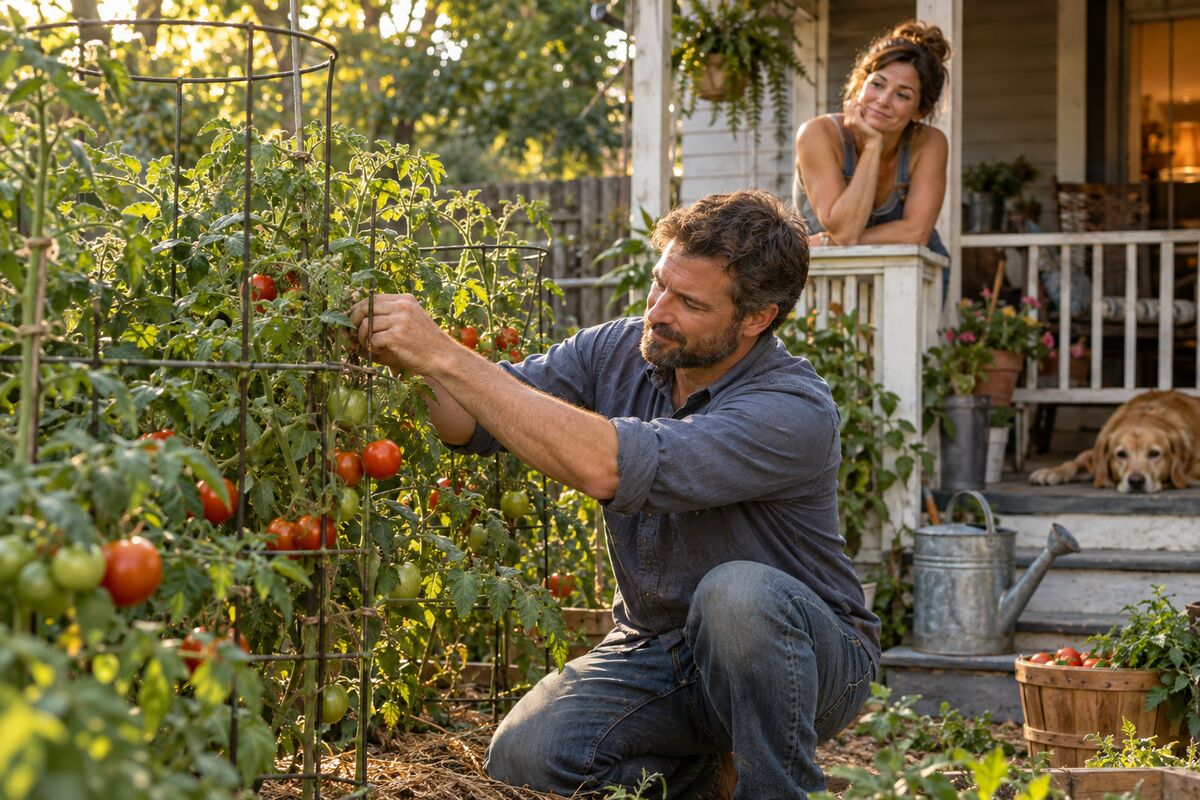
A husband is inspecting leaves, tying vines, checking the soil, and speaking about heirloom varieties with the emotional intensity most people reserve for SEC football or minor surgery. His wife calls the plants “his girlfriends.”

It’s funny because it’s absurd.

It may also be funny because it’s true enough to sting.

Private jokes often carry two messages at once. The first says, “I know you, and I can tease you about this.” The second sometimes says, “I need you to notice what I am not quite ready to complain about.”

Humor lets us say a dangerous truth at a safer volume.

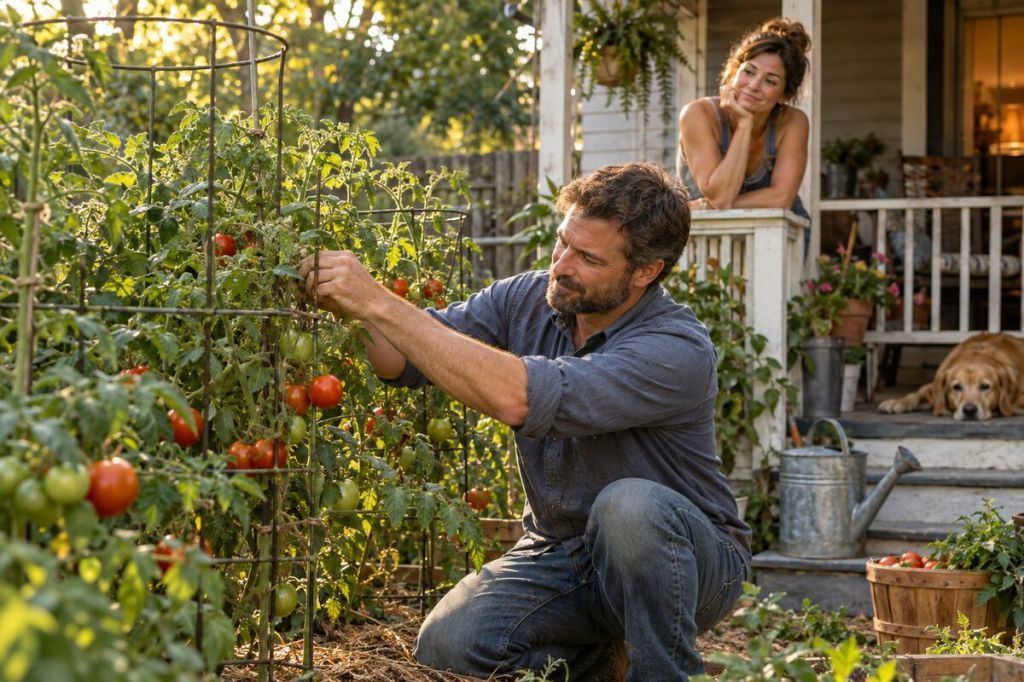
A husband tending an elaborate tomato garden while his wife watches from the porch.

That doesn’t mean every joke is a coded emergency. Sometimes a tomato is just a tomato, although gardeners rarely believe this. To them, it’s a responsibility, a science experiment, and apparently a personality test.

But teasing can function like a relationship’s smoke alarm. It doesn’t always mean the house is burning. It does mean we should probably check before removing the batteries.

The nickname matters because it gives the passion a role in the relationship.

The garden is no longer only a garden. The manuscript is no longer only a manuscript. The career, business, training plan, book launch, or side project has become another presence—one that receives attention, creates obligations, interrupts plans, and follows us into rooms where it wasn’t invited.

I understand how that happens.

Writing can begin as the part of life that makes everything else more meaningful. Then a deadline approaches, an idea finally starts working, or a book needs one more revision, and the work begins claiming territory. Dinner becomes inconvenient. A conversation gets postponed. The people we love receive the distracted version of us because the focused version has already been promised to the page.

The work may be worthy.

That does not make every demand it places on us reasonable.

A writer absorbed in a manuscript while his wife waits beside two cups of coffee.

We like to imagine neglect arriving through obviously selfish pursuits. It would be easier if every threat to a relationship wore a black hat and introduced itself properly.

More often, the competition is something good.

A person works late because people depend on him. He trains because health matters. She serves at church because the need is real. He tends the garden because he finds peace there. I write because there are things I believe I’m supposed to say.

None of those explanations is dishonest.

They can still become alibis.

Passion is not guilty merely because it requires time. The people who love us should understand that meaningful work sometimes demands sacrifice. But passion isn’t automatically innocent merely because the work matters.

Someone still absorbs the sacrifice.

That’s the part ambition prefers not to itemize.

The clearest warning may not be an argument. It may be the same small joke repeated often enough that everyone learns their line. “You love that truck more than me.” “Go spend time with your computer.” “Your customers see you more than we do.” “How are the girlfriends?”

The first response is usually a defense.

“That isn’t fair.”

“I’m doing this for us.”

“You know how important this is.”

All three statements may be accurate. None of them answers what the other person is trying to say.

A married couple harvesting ripe tomatoes together in the evening light.

Listening doesn’t require surrendering the calling.

The tomato grower doesn’t need to rip up the garden and begin dividing custody of the Better Boys. The writer doesn’t need to close the laptop forever. The manager doesn’t need to stop caring whether the business succeeds.

The correction may be smaller and harder.

Put the phone away while she’s talking. Protect time with the same seriousness given to deadlines. Let a child interrupt without making him feel like an obstacle. Ask whether the people closest to us experience the purpose we talk about—or only the absence it creates.

Sometimes the best response to the joke is not another joke.

It’s an invitation.

Come sit with me. Tell me what I’ve been missing. Help me understand when this started feeling like competition.

He doesn’t have to tear up the garden.

He may simply need to invite his wife back into a life from which the garden has begun excluding her.