The Spotify Wrapped Setting Parents Need—and Might Not Use

Spotify Wrapped arrives each year like a personality test administered by an algorithm.

Here are the artists you loved. Here are the genres that define you. Here is the song you played so many times that perhaps you should speak with someone.

Then you open yours and discover that your carefully cultivated musical identity has been defeated by the same song your child requested 47 times from the back seat.

You thought you were building the profile of a thoughtful, emotionally complicated adult. Spotify thinks you are a nine-year-old girl preparing for a dance recital.

Parents finally have an escape. Spotify now offers a setting that excludes children’s and family music from the taste profile used to create Discover Weekly, Daily Mix, and Wrapped. It even works retroactively, removing earlier children’s listening from the picture.

To be fair, the setting makes sense. A parent may not want animated princesses controlling every future recommendation. Taylor Swift, K-pop, and the songs Jaxson records himself would not necessarily qualify as children’s music anyway. The button has limits.

But one phrase in Spotify’s announcement caught me: the change is supposed to keep Spotify “more you.”

A father looks at a colorful year-end music summary on his phone while children wait in the back seat.

I understand what the algorithm means. It’s trying to identify what I would choose if no one else were in the car.

Fatherhood has made that a harder question to answer.

Naomi brings Taylor Swift and K-pop into the rotation. Jaxson doesn’t merely listen to music; he makes his own. Ben can take control of the stereo and introduce a selection I would never have found—or chosen—on my own. Some of those songs become tolerable. A few become good. Others remain evidence that love occasionally requires endurance.

None of them may represent my solitary taste. All of them represent my actual life.

That’s where an algorithm and a family measure identity differently. The algorithm tries to isolate the individual by removing outside interference. Family life works in the opposite direction. It continually interferes. It changes what you hear, where you go, how you spend your time, and eventually who you understand yourself to be.

A father drives through Arkansas while his three children sing and choose music together.

Parents are often tempted to protect a private, uncontaminated version of themselves. We want proof that beneath the practices, school schedules, cartoon phases, and commandeered car stereos, the original person is still in there somewhere.

He is.

But he isn’t the whole truth anymore.

The songs my children choose may not tell you what I would play alone. They can tell you who rode beside me that year. They can remember a drive to practice, an argument over the next song, a chorus everybody knew, or one of Jaxson’s tracks played while I tried not to look too impressed.

A clean profile might describe my preferences more accurately while describing my life less honestly.

I’m not arguing that parents should never use the feature. Sometimes a recommendation is only a recommendation, and nobody needs six months of cartoon soundtracks following him through adulthood. This isn’t really about a Spotify setting.

It is about the parts of parenthood we are tempted to edit out because they don’t feel sufficiently ours.

A father drives alone at dusk with the empty passenger seats visible behind him.

One day, none of my children will ask for control of the music.

It will happen without an announcement. There will be no final ceremonial handoff of the phone. The requests will become less frequent. Someone will start driving a separate car. Someone will leave home. Eventually, my recommendations may become perfectly accurate again.

The drives will also become quieter.

That’s the bargain hidden inside so many parental annoyances. The interruption ends. The evidence goes with it.

So let the children bend the algorithm for a while. Let Naomi leave some glitter in the data. Let Ben confuse the recommendations. Let Jaxson put something on the record that no other parent’s listening history contains.

The profile doesn’t have to describe who I would have been without them. I already know that man existed.

I’m more interested in the one their music helped create.

If your children ruined your Wrapped, they may have told the truth about your year.
Crafting Your Legacy: Stories Over Resumes

Some time after my funeral, a friend of mine will sit across from someone who never knew me.

The flowers will be gone. The formal praise will be over. Nobody will be standing behind a podium trying to summarize an entire life before the next song begins. The stranger will ask a simple question.

“What was Scottie like?”

My friend won’t recite my résumé. He won’t list the years I spent in the car business, the titles I held, the number of vehicles I sold, or the book I managed to finish. He’ll tell a story.

Maybe it will be about a phone call I returned when it would have been easier not to. Maybe an apology that came without an excuse attached. Maybe a night I stayed when leaving would have been more convenient.

It’ll be something small enough to tell across a table and true enough to carry the weight of my name.

That’s how a life outlives a body—not as a thesis, but as a scene.

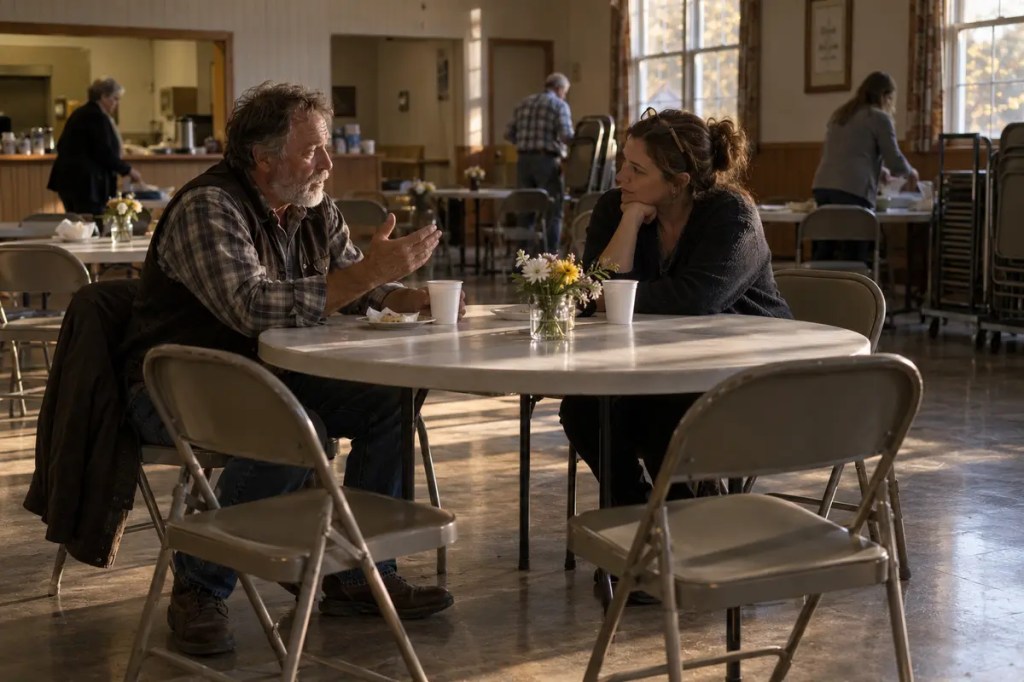
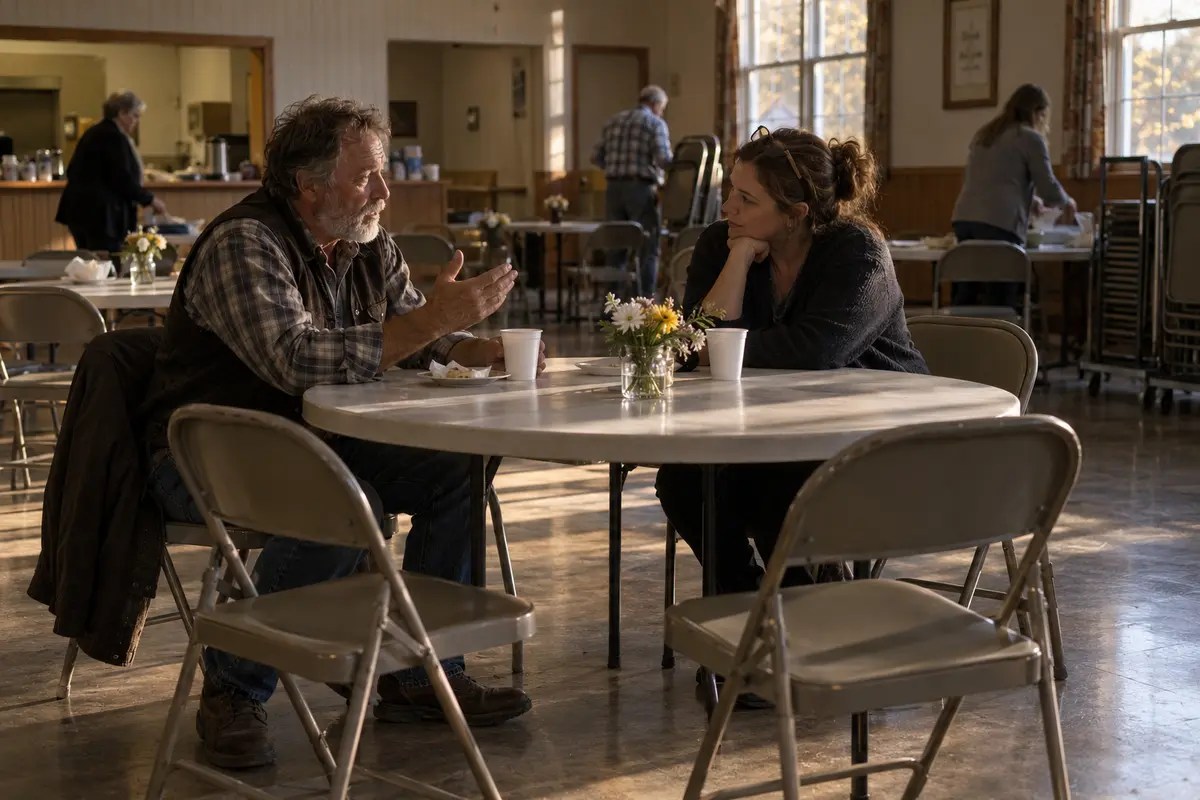
Two people remain in a quiet church fellowship hall after a memorial gathering, sharing a story across a table.

A résumé is written in nouns. Memory is told in verbs.

We’re remembered for what we did when someone needed us, what we said when the truth cost something, and whether our stated values survived an inconvenient Tuesday. Accomplishments may introduce us, but conduct explains us.

I’ve spent enough time writing A Nobody’s Guide to Self-Help to know how tempting it is to treat legacy as a publishing problem. Put the right ideas into a book and maybe the best part of you will survive.

But words only testify. The people who lived beside us get to cross-examine them.

I can write about patience and still hurry a child who is trying to tell me something. I can write about responsibility and protect my ego when an apology is due. I can write about mortality, then spend an ordinary Tuesday as if I have an unlimited supply of them.

Near the beginning of the book, I used seven words from an obituary: “There are no services planned at this time.” They felt cold and final, like somebody had closed a book. I kept returning to death because it’s the one deadline none of us can negotiate.

But the point was never to stare at the closed book. It was to notice that this page is still open.

A manager takes responsibility in front of his team during a quiet dealership meeting.

My children won’t remember every lesson I tried to teach them. They will remember patterns. What repeatedly received my time? Was home safe enough for the truth? Did work always win? Did I listen only when the timing was convenient?

An employee may forget the speech but remember the day a leader took responsibility in front of everyone. A friend may not remember the advice but remember that the phone was answered. Someone we love may forget the argument and keep the apology.

Faith quietly teaches me that life is stewardship, not ownership. I don’t control the number of pages. But I am responsible for what I place on this one.

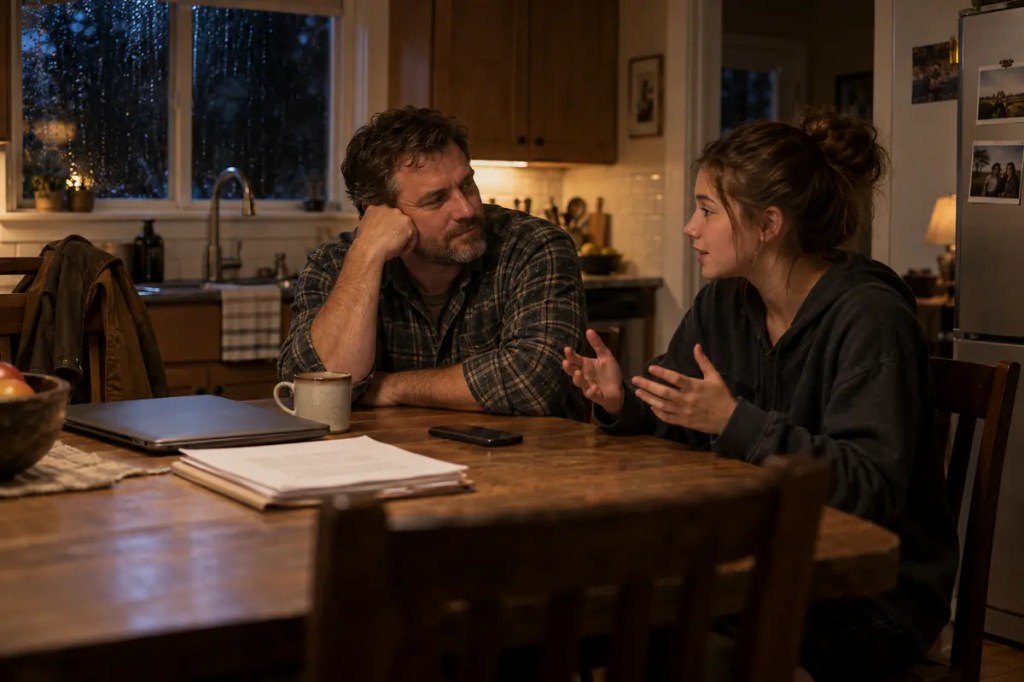
A father stays at the kitchen table late at night and listens while his child talks.

This isn’t a call to manufacture cinematic moments. Most legacy looks ordinary while it is happening. Return the call. Tell the truth before you are caught. Sit for ten more minutes. Put the phone down. Apologize without turning it into a courtroom defense.

I can’t control every story people will tell about me. Memory is imperfect, and so am I. But I can give the people around me better material.

Someday my name will need an introduction. Someone who loved me, worked with me, or survived me will choose one small scene to explain who I was.

Live one story today that would still be worth telling when your name needs an introduction.


Source note: Inspired by The School of Life newsletter, “Lessons In Living Before Dying.” This essay also revisits themes from A Nobody’s Guide to Self-Help.

Accumulating Love: The Dimes of Fatherhood

There is a bar bet hiding in the bottom of your change jar.

Pour any ordinary mixture of modern American dimes, quarters, and half dollars onto a kitchen scale. Do not count them. Don’t sort them. Just keep adding coins until the scale reaches one pound.

The pile will be worth approximately twenty dollars.

It sounds like a trick because the denominations are different. The dime is worth ten cents, the quarter twenty-five, and the half dollar fifty. But their weights rise in almost perfect proportion to their face values. A quarter weighs two and a half times as much as a dime. A half dollar weighs twice as much as a quarter. The faces change. The scale keeps arriving at essentially the same answer.

Modern dimes, quarters, and half dollars rest together on a kitchen scale.

Fathers have our own way of assigning value, and I think we often get it backward.

We put a high price on the half-dollar moments: the vacation, the expensive Christmas gift, the perfectly planned Saturday, the speech we hope our child remembers for the rest of his life. We save for them, photograph them, and feel the pressure to make them count.

Those moments matter. I want my children to have adventures, celebrations, and stories big enough to retell. But most fatherhood does not arrive in half dollars.

It comes in dimes.

It’s listening to a story you’ve already heard. Sitting through another practice after a long day at work. Helping with an assignment that has frustrated both of you. Checking the weather before a game. Taking one more shot in the driveway. Looking up from the phone when a child says, “Watch this.” Saying goodnight, then showing up again tomorrow.

None of those moments feels large enough to become a legacy while it is happening.

Accumulated, they acquire weight.

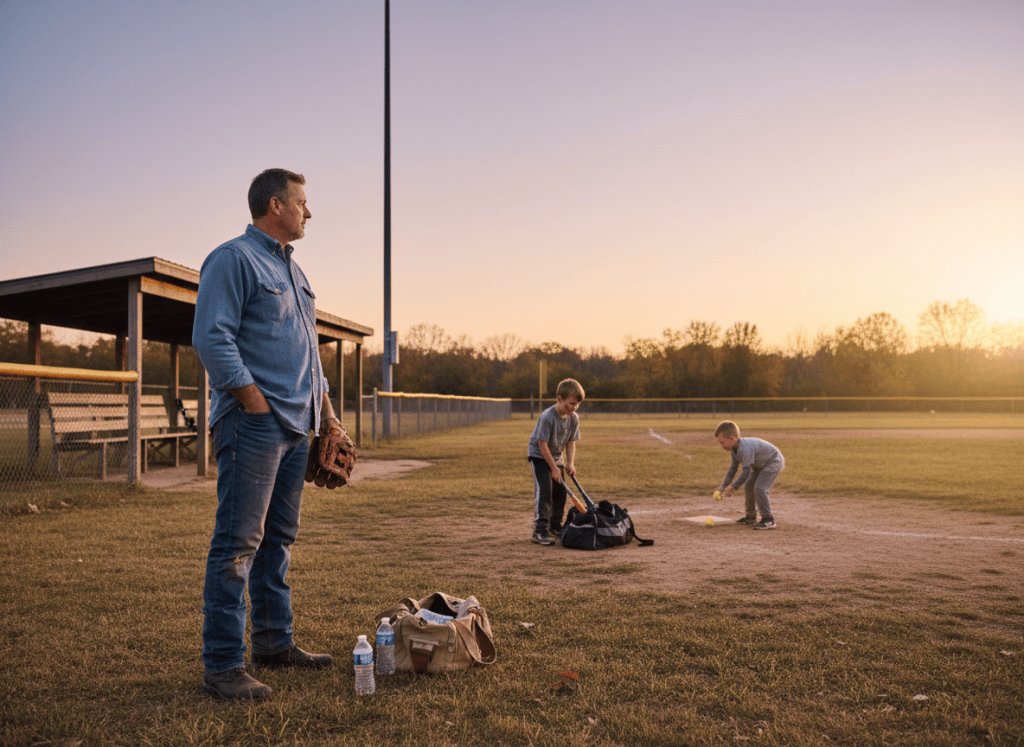
A father waits beside a quiet ballfield after practice while his children gather their things.

I have three children, and there’s a temptation to judge my fatherhood by the days I can make impressive. Did we go somewhere memorable? Did I buy the right gift? Did I say something wise enough to survive adolescence?

Meanwhile, the ordinary chances keep passing through my hands.

A child may forget the restaurant but remember that Dad listened in the car. He may forget the score but remember looking toward the fence and finding me there. He may not remember the exact night we worked through the assignment, but he will remember whether confusion felt safe in my presence.

That’s how attention becomes a childhood. Not usually through one grand act, but through hundreds of small confirmations: You matter. I see you. I came back.

The coin comparison has limits. Not every act of parenting is equal, and family life is not an accounting system where enough small kindnesses erase a deep wound. A careless word can carry enormous weight. So can an apology. Presence without attention is not the same as being present.

The point is not arithmetic. It is accumulation.

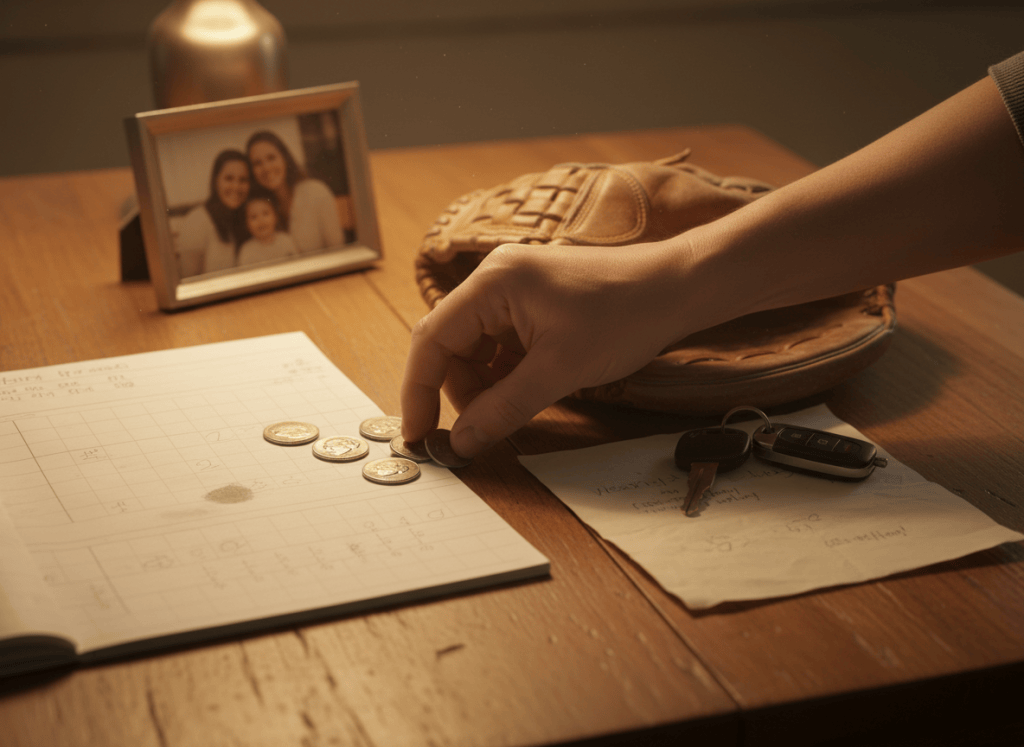
A handful of dimes lies beside homework, a baseball glove, and car keys on a family kitchen table.

An occasional spectacle can’t do the work of consistently dependable love. The biggest vacation of the year can’t replace the ordinary Tuesday when a child needs ten unhurried minutes. The perfect fatherly speech can’t substitute for becoming the kind of father whose everyday conduct has already said the same thing.

Perhaps that should relieve some of the pressure.

We don’t have to manufacture a defining memory every weekend. We don’t have to purchase every experience or turn every family outing into proof that we’re doing fatherhood correctly. We can stop waiting for the grand opportunity and become more faithful with the small ones already in our pockets.

Tonight may offer nothing more dramatic than a ride, a question, a practice, a joke, or a story we’ve heard before.

Pick up the dime.

Your child may never remember its denomination, but he will remember the weight.

When Passion Becomes Competition in Your Relationship

“Your girlfriends are doing well.”

The words float across a backyard crowded with tomato cages.

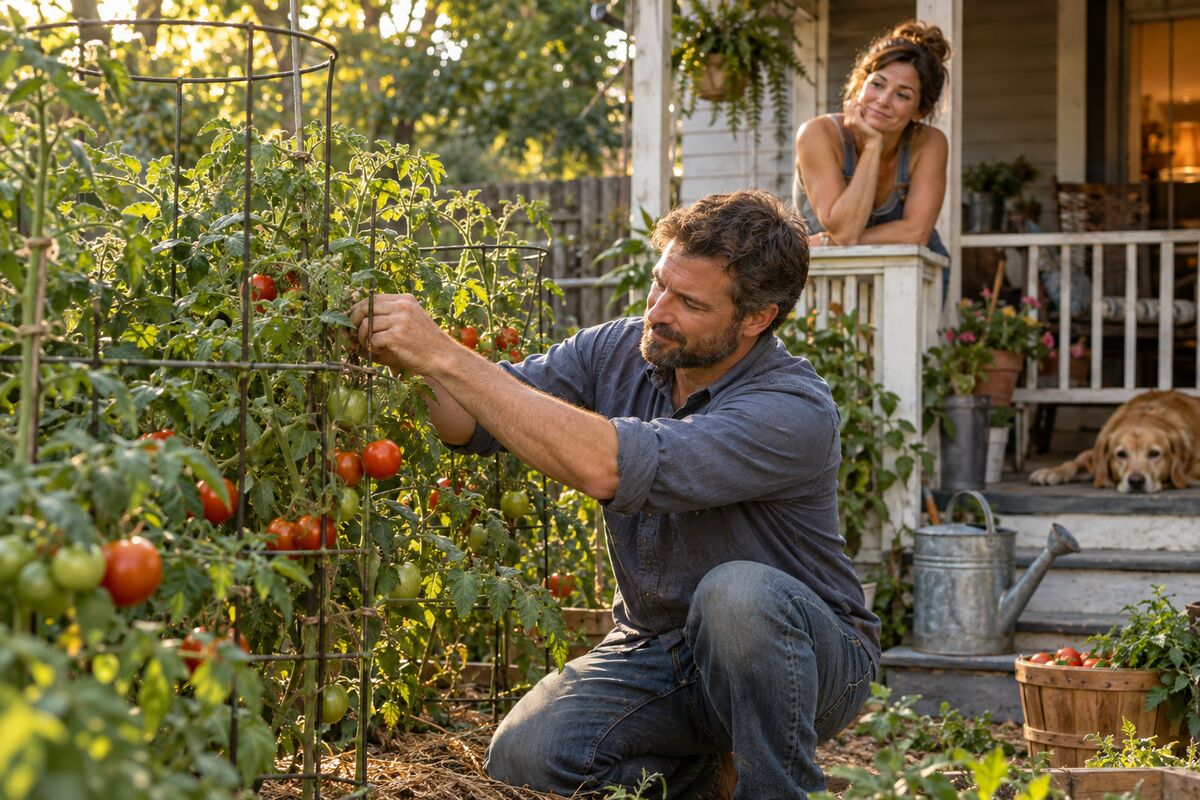
A husband is inspecting leaves, tying vines, checking the soil, and speaking about heirloom varieties with the emotional intensity most people reserve for SEC football or minor surgery. His wife calls the plants “his girlfriends.”

It’s funny because it’s absurd.

It may also be funny because it’s true enough to sting.

Private jokes often carry two messages at once. The first says, “I know you, and I can tease you about this.” The second sometimes says, “I need you to notice what I am not quite ready to complain about.”

Humor lets us say a dangerous truth at a safer volume.

A husband tending an elaborate tomato garden while his wife watches from the porch.

That doesn’t mean every joke is a coded emergency. Sometimes a tomato is just a tomato, although gardeners rarely believe this. To them, it’s a responsibility, a science experiment, and apparently a personality test.

But teasing can function like a relationship’s smoke alarm. It doesn’t always mean the house is burning. It does mean we should probably check before removing the batteries.

The nickname matters because it gives the passion a role in the relationship.

The garden is no longer only a garden. The manuscript is no longer only a manuscript. The career, business, training plan, book launch, or side project has become another presence—one that receives attention, creates obligations, interrupts plans, and follows us into rooms where it wasn’t invited.

I understand how that happens.

Writing can begin as the part of life that makes everything else more meaningful. Then a deadline approaches, an idea finally starts working, or a book needs one more revision, and the work begins claiming territory. Dinner becomes inconvenient. A conversation gets postponed. The people we love receive the distracted version of us because the focused version has already been promised to the page.

The work may be worthy.

That does not make every demand it places on us reasonable.

A writer absorbed in a manuscript while his wife waits beside two cups of coffee.

We like to imagine neglect arriving through obviously selfish pursuits. It would be easier if every threat to a relationship wore a black hat and introduced itself properly.

More often, the competition is something good.

A person works late because people depend on him. He trains because health matters. She serves at church because the need is real. He tends the garden because he finds peace there. I write because there are things I believe I’m supposed to say.

None of those explanations is dishonest.

They can still become alibis.

Passion is not guilty merely because it requires time. The people who love us should understand that meaningful work sometimes demands sacrifice. But passion isn’t automatically innocent merely because the work matters.

Someone still absorbs the sacrifice.

That’s the part ambition prefers not to itemize.

The clearest warning may not be an argument. It may be the same small joke repeated often enough that everyone learns their line. “You love that truck more than me.” “Go spend time with your computer.” “Your customers see you more than we do.” “How are the girlfriends?”

The first response is usually a defense.

“That isn’t fair.”

“I’m doing this for us.”

“You know how important this is.”

All three statements may be accurate. None of them answers what the other person is trying to say.

A married couple harvesting ripe tomatoes together in the evening light.

Listening doesn’t require surrendering the calling.

The tomato grower doesn’t need to rip up the garden and begin dividing custody of the Better Boys. The writer doesn’t need to close the laptop forever. The manager doesn’t need to stop caring whether the business succeeds.

The correction may be smaller and harder.

Put the phone away while she’s talking. Protect time with the same seriousness given to deadlines. Let a child interrupt without making him feel like an obstacle. Ask whether the people closest to us experience the purpose we talk about—or only the absence it creates.

Sometimes the best response to the joke is not another joke.

It’s an invitation.

Come sit with me. Tell me what I’ve been missing. Help me understand when this started feeling like competition.

He doesn’t have to tear up the garden.

He may simply need to invite his wife back into a life from which the garden has begun excluding her.

Returning Is Not the Same as Going Back

Seconds before Céline Dion sang the first note of her first full concert in six years, the stage probably looked much like it always had. Lights. Musicians. A waiting crowd. A microphone in the place where a microphone belongs.

But six years were standing beside her.

Illness had interrupted the life she knew. The return required years of physical and vocal work, and the road was longer and rougher than she expected. When she finally began, she became so emotional that the audience had to help carry the opening song.

That’s the part the word “comeback” usually leaves out.

A singer stands beneath a spotlight in the silent moment before beginning a return concert.

Comeback is a clean word. It makes absence sound like an intermission. It suggests someone stepped away, handled a problem, and returned to the same stage as the same person, ready to pick up exactly where she left off.

Real life is seldom that tidy.

Illness changes the person inside the body. Grief changes the person who walks back into the house. Divorce changes the person who tries to trust again. Parenthood changes the person who returns to ambitions he once imagined pursuing without interruption.

Even good change has a cost. We don’t pass through six years—or six months, or one terrible week—and remain untouched.

For a long time, I thought rebuilding meant restoring. I imagined there was an earlier version of my life sitting somewhere intact, waiting for me to find the right road back to it. If I could recover the right habits, confidence, relationships, or sense of direction, perhaps everything would feel familiar again.

But rebuilding is not restoration when the original materials have changed.

A middle-aged Arkansas writer returns to an old manuscript at a desk shaped by years of family life and change.

When I returned to writing seriously, I was not retrieving some untouched version of myself who had merely been waiting for an available afternoon. I brought the years with me: work, fatherhood, disappointment, grief, mistakes, and questions I could not have written honestly before I had lived them.

Some of those experiences reduced me. They took confidence, energy, and certainty. I would not insult anyone’s pain by pretending every loss secretly arrives as a gift. Some things hurt because they are hard, and some absences remain absences.

Still, reduced capacity does not automatically mean a lesser life.

Sometimes the person who returns is better than the one who left—not because the suffering was good, but because he learned to stop wasting what is. He may be slower but more patient. Less certain but more honest. Less impressed by appearances and more grateful for ordinary days. He may finally know which promises deserve his strength and which expectations never did.

That is a better version, even if the measurements we usually celebrate cannot detect it.

The hard part is allowing the new person to build a life he can actually inhabit. We can exhaust ourselves trying to perform at an old pace, recreate an old relationship, recover an old identity, or prove the interruption did not change us. Sometimes healing begins when we quit treating change as evidence of failure.

A man enters a familiar room again, carrying the evidence of the life that changed him.

Returning may mean singing differently. Working differently. Parenting differently. Praying differently. It may require boundaries the former version of us never needed, gratitude he never understood, and the humility to accept help when the first note will not come.

A return is still worth celebrating. But not because it erased the years away.

It is worth celebrating because the person who lived through them stood in the light as he was—changed, grateful, uncertain, and willing to begin again.

You can return to the stage, the work, the faith, or the relationship—but you cannot return as the person who left.

Sometimes that is not the tragedy. It is the gift.

The Power of Asking the Right Questions

Two people can stand in the same kitchen, speak plain English, and understand almost none of each other.

One says, “Fine.”

The other hears, “The problem is settled.”

The first person may have meant, “I’m tired,” “I don’t feel safe explaining this,” or “You have already decided.” Both people know what fine means. Neither one knows what just happened.

The words were translated correctly.

The person was missed.

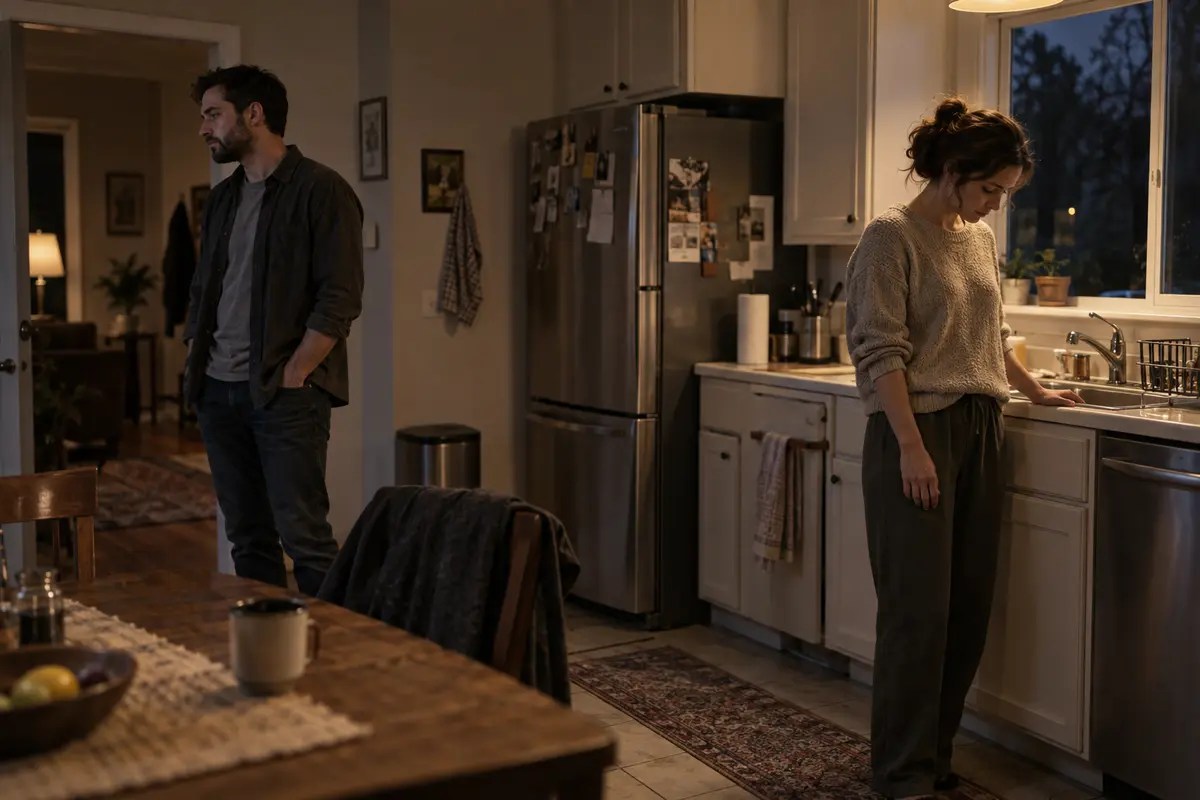
Two people stand apart in the same kitchen after their words fail to reach each other.

An email from ChatGPT recently promoted the ability to translate text, voices, and photographs, then use follow-up questions so the answer fits the moment. That is remarkable technology. But some of the most consequential translation failures happen between people who share a language, a workplace, a home, or even a last name.

The dictionary is nearly useless with certain sentences.

A child says, “I don’t care.” That may be indifference. It may also be fear posing as indifference because trying and failing would hurt more than pretending the thing never mattered.

As a father, I have not always heard the difference.

Sometimes I’ve answered the sentence instead of the child. I heard attitude and responded with correction. I heard laziness and gave a speech about effort. Maybe the correction was needed. Maybe the speech was true. But truth delivered to the wrong meaning still misses its target.

The better response is often a second question:

“When you say you don’t care, what do you mean?”

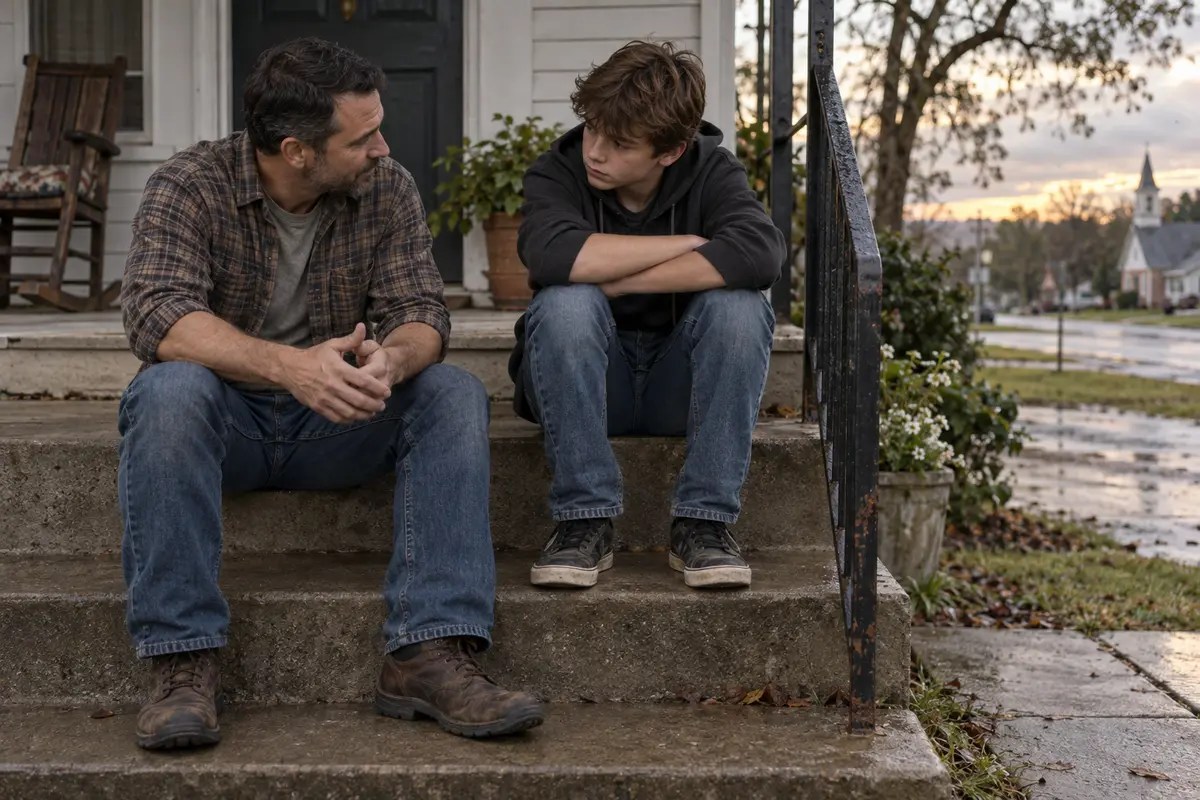
A father sits beside his teenage son, leaving enough room for the second answer to arrive.

Leadership has its own false translations.

An employee says, “I understand.” A manager may hear agreement, commitment, and a clear next step. The employee may only mean, “I understand that you are finished listening.”

That’s why it isn’t enough to ask whether someone understands. Ask what they believe the next step is. Ask what part still feels unclear. Inspecting what you expect is not only about numbers in a CRM. Sometimes it means checking whether the same conversation happened on both sides of the desk.

Salespeople learn this lesson every day—or they should.

“I need to think about it” can mean price. It can mean trust. It can mean embarrassment about money, fear of making a mistake, or a polite no. A bad salesperson translates the phrase into an objection to defeat. A better one asks, “What part would you like to think through?”

Not to trap the customer. To stop guessing.

A dealership manager sets his work aside and listens carefully to what an employee is actually trying to say.

Relationships are full of words that carry more than their definition. Later can be a promise or an escape. Respect can mean obedience to one person and consideration to another. Effort can mean intention, visible action, consistency, or sacrifice. I’m good can mean exactly that—or it can mean, “I don’t know how to ask you to stay.”

The danger here is mind-reading.

We should not treat every simple answer as a code to crack. Sometimes “fine” means fine. “No” still means no. Curiosity does not give us permission to replace another person’s words with the story we prefer.

The distinction is simple: mind-reading assigns a hidden meaning. Curiosity asks whether there is more meaning to hear.

I’ve been guilty of translating people into versions that were easier to manage. The child became an attitude problem. The employee became resistant. The customer became an objection. The person I loved became unreasonable.

Those translations saved time.

They also cost connection.

The second question is rarely efficient. It may extend the meeting, slow the sale, complicate the discipline, or reopen the conversation you hoped “fine” had ended. But people are not sentences to process. Listening is not finished when every word has been recognized.

A dictionary can tell you what the words mean. Real listening begins when you ask what the person meant.

Source: OpenAI Help Center, “ChatGPT Capabilities Overview”.

Celebrating Unconventional Hobbies: The Hobby-Horse Phenomenon

The phrase “hobby-horse championship” practically arrives with its own smirk.

For an adult who has forgotten how seriously children can take play, the picture is easy: kids running around a gym with stuffed horse heads on sticks. Cute. Strange. Something to watch for thirty seconds before moving on.

But stay a little longer.

A young hobby-horse athlete clears a jump while fellow competitors and families watch inside an indoor arena.

This summer, 400 registered competitors gathered in Brighton, Michigan, for the U.S. Hobby Horse Championships. They ran jumping courses, performed dressage, and competed in rodeo-style events. Most were young girls. Many had designed and made their own horses and tack.

The championship itself began with four young athletes who met online in 2023. They didn’t wait for a school, league, or grown-up institution to decide their interest was legitimate. They built the competition they wished existed.

Stay long enough, and the smirk starts to lose its footing.

There is athleticism in the jump. Craftsmanship in the horse. Courage in performing something you love while knowing other people may laugh. There is friendship, practice, imagination, and the stubborn human need to find people who understand why a thing matters.

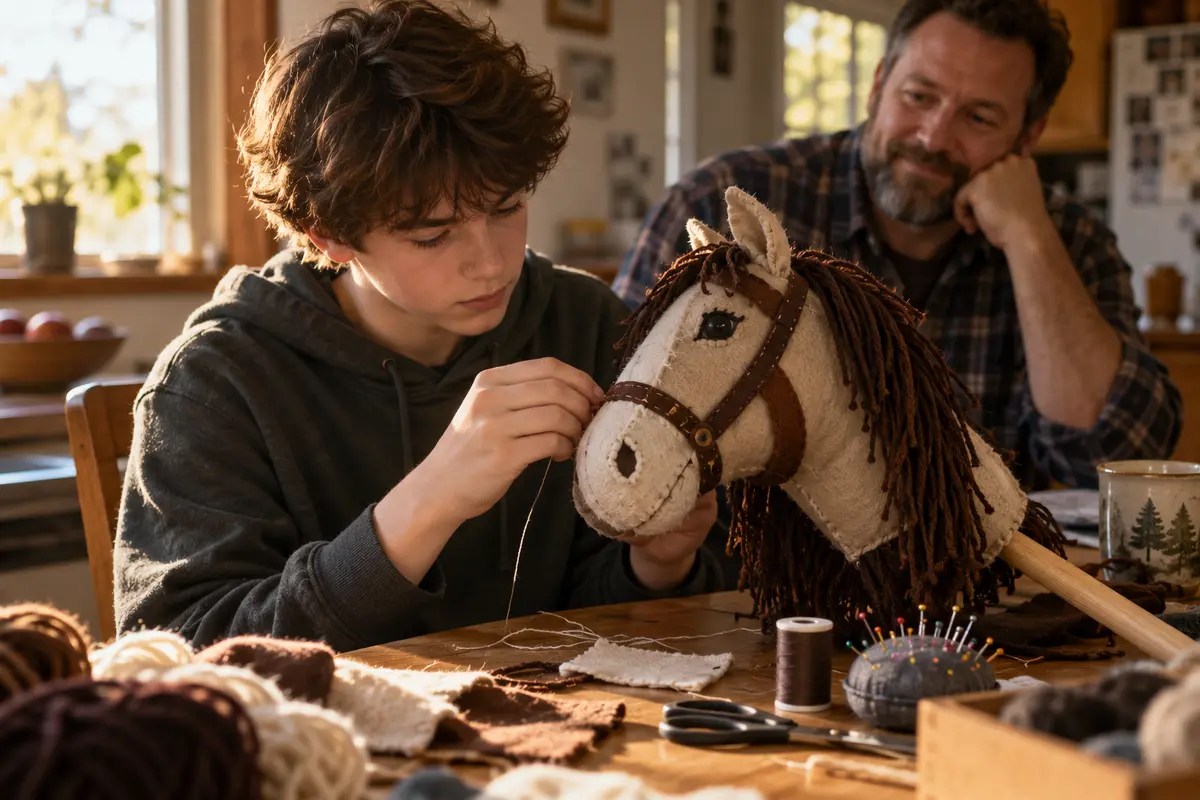
A young person carefully stitches a handmade hobby horse at a kitchen table while a parent watches nearby.

Adults are good at respecting a child’s interest after it becomes useful.

If it earns a scholarship, we call it dedication. If it makes money, we call it talent. If it fits neatly on a résumé, we call it well-rounded. But before any of that—especially when the interest looks odd—we often ask joy to explain itself.

Where is this going?

Can you make a living doing that?

What will people think?

We ask childhood to produce a business plan.

Fatherhood has shown me how easily anxiety can dress itself up as wisdom. We know the world can be cruel, so we try to protect our children from being embarrassed. Sometimes, though, our version of protection is to teach them embarrassment first. We offer the first small laugh. We suggest a more respectable interest. We make them feel foolish at home before somebody else can do it in public.

My children have brought me songs, drawings, games, sports, and ideas that did not arrive with a clear destination. Sometimes I understood the appeal immediately. Sometimes I had to resist grading the interest by whether I could picture it becoming a career.

That’s harder than it sounds.

We’ve been trained to look for proof. Yet some forms of intelligence announce themselves on report cards, while others appear when a child memorizes every detail of an imaginary world, edits the same song for the twentieth time, learns to stitch a bridle, or practices one jump until the body finally does what the mind can already see.

The child who seems ordinary inside an assigned format may come alive inside a chosen one.

That’s not a guarantee. It’s a clue.

Of course, honoring joy doesn’t mean funding every interest without limit or surrendering every boundary in the house. Parents still have to say no. Money is real. Time is real. Responsibilities are real. But there’s a difference between saying, “We cannot buy that,” and saying, “What you love is ridiculous.”

One sets a limit. The other turns a light down.

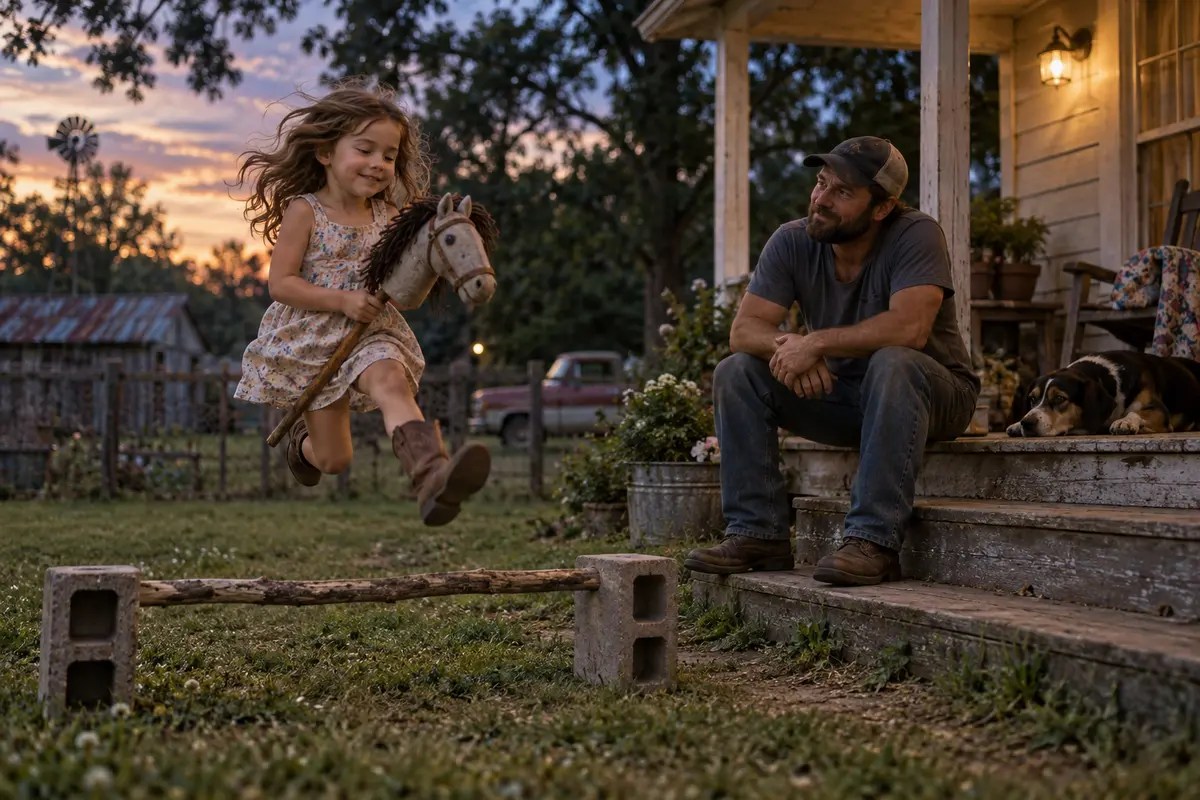
A father watches with quiet pride as his child practices a hobby-horse jump in a small-town Arkansas yard at dusk.

The interest may fade. Many do. The stick horse may end up in a closet beside some other season of childhood. That doesn’t make the joy wasted. A child may have learned to make something, practice something, risk being seen, and find a community. More importantly, the child might have learned whether the people at home made room for the parts of them the rest of the world hadn’t learned to value yet.

We don’t have to understand every enthusiasm our children bring us. We don’t have to pretend everything they make is excellent. Unconditional belonging is not the same as automatic approval.

But attention is not the same as approval either. Sometimes attention simply says: I see that this makes you more alive, and I will not make you ashamed of that.

A parent doesn’t have to understand the horse to recognize that the light in the child is real.

Sources: Morning Brew, “Youth Sports Brew” and Young Rider, “US Hobby Horse Championships Returns August 1, 2026 to Brighton, Michigan”.

The River Keeps What We Throw Away

After the water level falls, a riverbank can look like a drawer somebody pulled open and forgot to close.

Mud gives back pieces of bottles, rusted metal, buttons, tools, fishing line, and things too worn to name. Some were lost. Some were thrown away. Most entered the water without ceremony because the person holding them had no reason to imagine a stranger studying them generations later.

Time changes the category.

An object can spend two hundred years as trash and become history the moment another hand lifts it from the mud.

A mudlarker searches the exposed Thames shoreline and lifts a small weathered object from the mud.

The Wall Street Journal recently reported that roughly 10,000 people are waiting for permits to search the River Thames. At low tide, mudlarks move through layers of ordinary London life accumulated across centuries. Roman pottery may rest near a modern vape. A coin, buckle, pipe stem, or broken piece of tableware becomes evidence that somebody once stood there, worked there, ate there, or dropped something he assumed was gone.

The river did not preserve any of it because it understood its importance.

A river doesn’t curate. It doesn’t separate heirloom from garbage, tragedy from routine, or the final possession of a dead man from something tossed aside after lunch. It carries, buries, breaks, and exposes. Some debris is only debris. Some of it poisons the water. The river remains indifferent to every meaning we eventually place upon it.

That may be what makes the lesson honest.

The Arkansas River moves past Dardanelle without announcing which parts of our lives will matter later. History is happening in kitchens, fields, sheds, boats, church foyers, and front seats while everyone involved still calls it an ordinary day.

Low water exposes mud, driftwood, and fragments of ordinary life along the Arkansas River near Dardanelle.

We are poor judges of what an absence will make valuable.

My mother died at sixty. Grief changed the weight of ordinary things. An old photograph could knock the breath out of me, not because the paper had changed, but because the world around it had. The image became a place where someone could still be found.

That happens with more than photographs.

A phrase repeated so often that nobody bothered to record it can become the sentence everyone strains to remember. A tool is just a tool until the hands that used it are gone. A familiar drive, an unnoticed laugh, or an afternoon spent doing nothing special can become precious only after repetition is no longer possible.

We usually preserve the ceremonies. We photograph birthdays, graduations, weddings, and holidays. We assume Tuesday will take care of itself.

But much of what grief asks us to recover was hidden inside Tuesdays.

This is also the problem facing anyone who tries to preserve family or local history. We search for the dramatic story and overlook the ordinary instructions packed inside a saying, the name written on the back of a picture, the reason a certain road was avoided, or the small object nobody has thrown away because it still feels connected to a person.

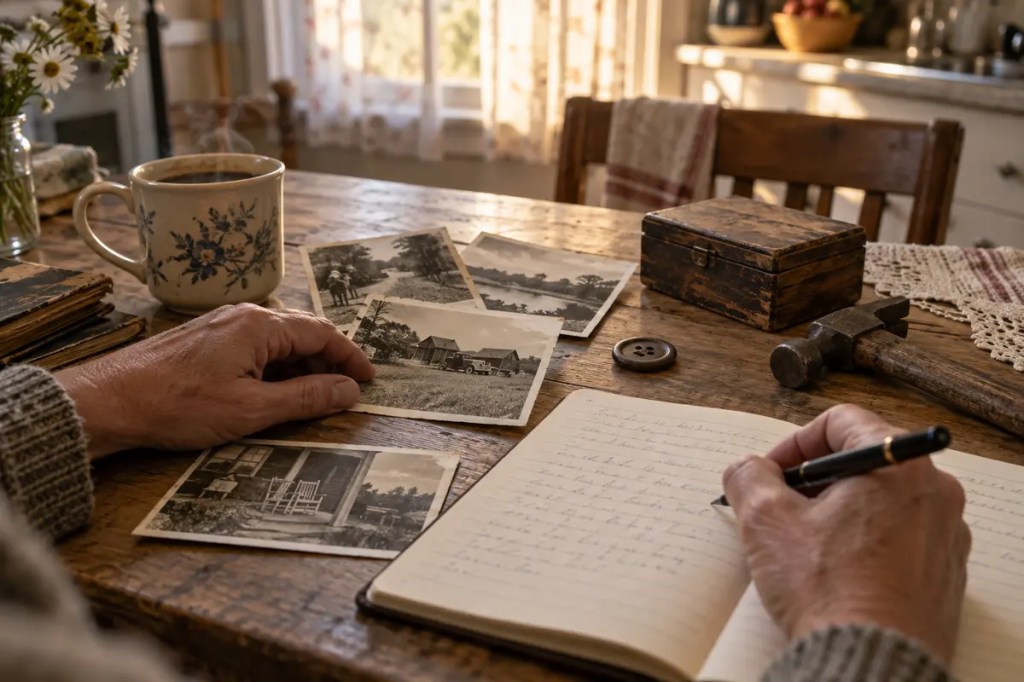
Family photographs, a worn button, and an old hand tool rest on a kitchen table while someone records their stories.

We cannot save everything. We shouldn’t even try. A life can’t become a storage unit where every receipt and broken object demands reverence. Attention is not the same as accumulation.

Still, we could become better witnesses to the life in front of us. We could ask the question while the person who knows the answer is still sitting nearby. We could write the name on the photograph. We could listen once more to the story we think we already know.

The mudlark looks at what another person discarded and sees evidence. Grief often does the same thing. It teaches us, too late, that the mundane was carrying more life than we noticed.

Maybe what we call history is often the present, rescued too late from our inattention.

Sources: Wall Street Journal: “Why 10K People Are Waiting to Search the Thames”; Wall Street Journal: “Why 10,000 People Are Clamoring to Dig in London Mud”