Dolly Parton’s Legacy of Books and Empowerment

We tend to talk about legacy as if it is something we build with our own two hands.

A business. A book. A name on a building. Enough money left behind that our children do not have to struggle the way we did. Then somebody leaves behind something larger than anything he could have built himself.

When Dolly Parton died on August 25, I learned something about her that I didn’t know. And it had nothing to do with rhinestones, pearls, and country music. It had everything to do with her father.

Robert Lee Parton could not read. Dolly called him the smartest man she had ever known. She also believed his inability to read kept him from fulfilling many of his dreams.

So she built the Imagination Library in his honor. What began in one Tennessee county grew into a worldwide program that mails a free book every month to more than three million children. Before he died, her father told her it was “probably the most important thing I had ever done.”

Not the songs. Not the awards. Not the money.

The books.
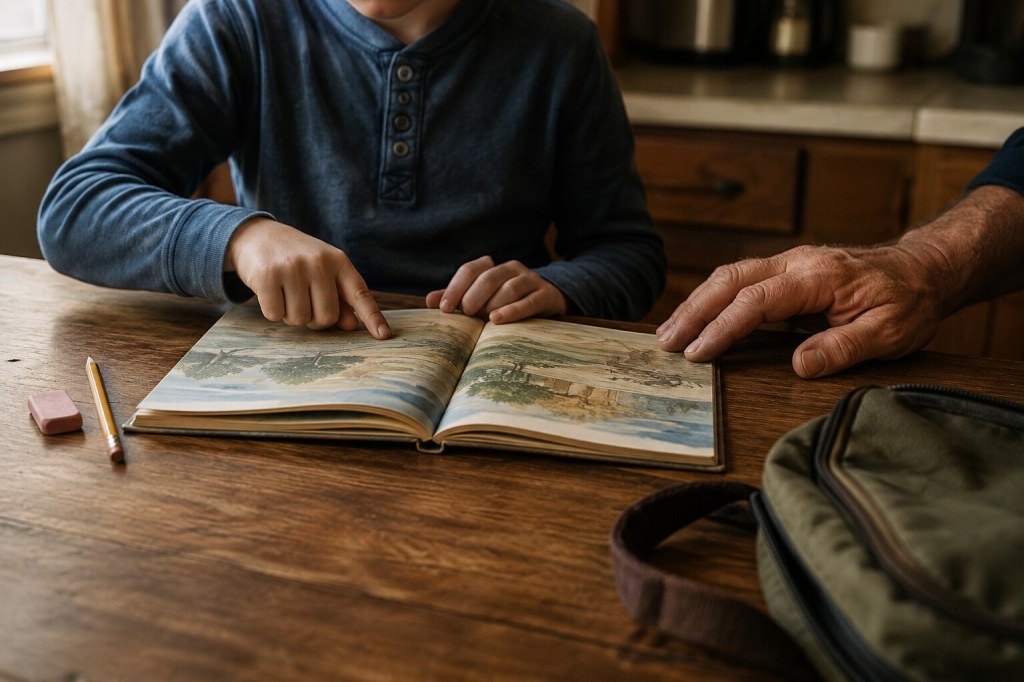
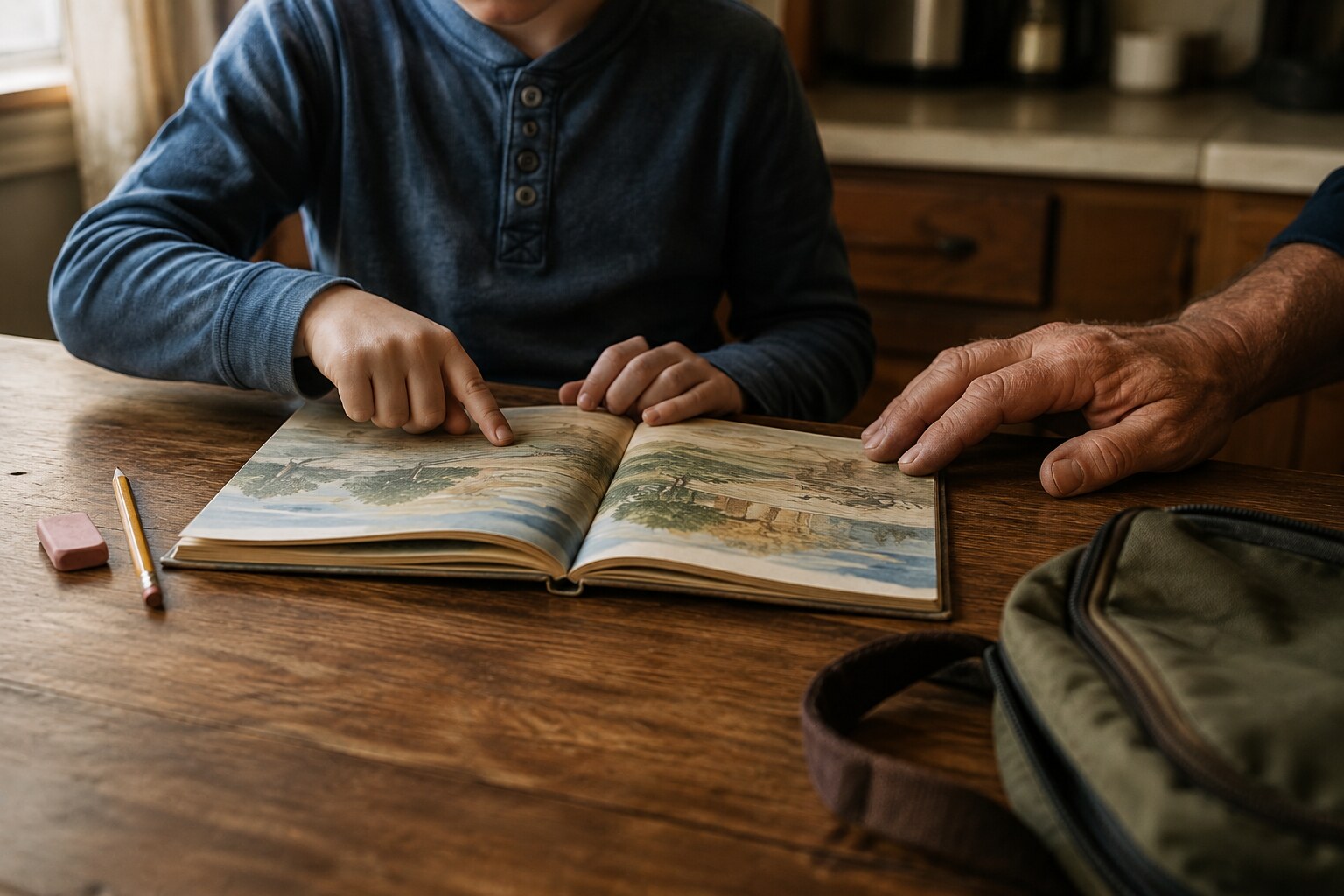
A boy traces a page in an open book while his father's hand rests beside him at a wooden kitchen table.

I think about that because one of my boys has had to learn that difficulty with traditional reading is not the same thing as a lack of intelligence. School can turn one narrow skill into a courtroom exhibit. A hard page starts to feel like evidence. A slow test starts to sound like a verdict.

It is not.

A child can struggle to pull meaning from a page and still understand people, patterns, consequences, machines, humor, or the quiet things happening in a room. Intelligence does not always arrive in the format a classroom finds easiest to grade.

That does not mean reading is unimportant. It means shame is a lousy teacher.

As a father, my job is not to pretend the hill is flat. The hill is real. There will be assignments, forms, instructions, applications, and a thousand other places where the written word matters.

My job is to keep him from believing the hill is the whole world and that he is responsible for crossing it the same way everyone else does.

That may be one of the hardest parts of parenting. We want to give our children confidence, but confidence cannot be built from lies. We cannot tell them everything will be easy. We can tell them that hard is not the same as impossible, and struggle is not the same as stupid.

Dolly’s father could not hand her literacy. He handed her intimate knowledge of what happens when a capable person is locked outside a door. She spent the rest of her life mailing keys.
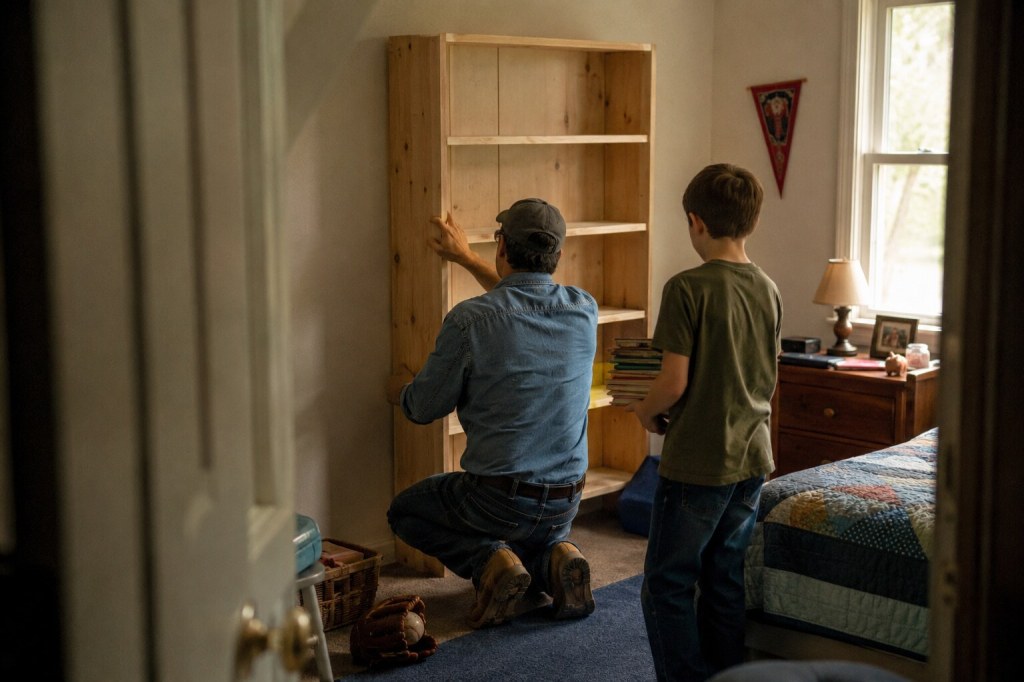
A father installs a wooden bookshelf in his son's bedroom while the boy waits with a stack of books.

We usually talk about what children inherit in visible terms: our eyes, our temper, our last name, our property, and, if genetics is feeling especially generous, the best of ourselves.

But children inherit our unfinished business too.

Sometimes they inherit the courage we modeled. Sometimes they inherit the wound we could not heal. Sometimes our limitation becomes the raw material they use to build something neither of us could have imagined.

That does not make the limitation good. It does not romanticize the hurt or excuse the world for failing to recognize somebody’s intelligence.

It simply means love can refuse to waste pain.

I don’t have to possess every gift my children will need. I won’t understand every way their minds work. I will not always know the right book, the right teacher, or the right sentence to say when frustration settles over the kitchen table.

But I can keep building shelves.
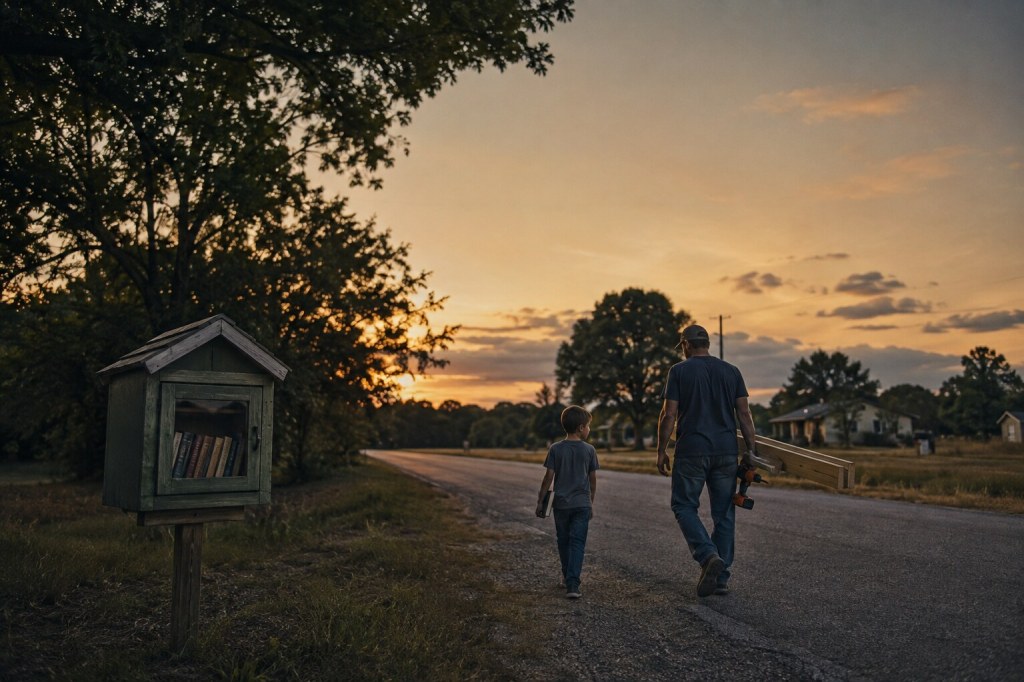
A father carrying boards and tools walks beside his son carrying a book near a rural roadside library at sunset.

I can protect curiosity while skill catches up. I can separate effort from worth. I can remind a boy that a page is something to work through, not something allowed to define him.

Maybe that is legacy.

Not proving that we had every answer, but making sure our children never confuse the answers we lacked with the limits of who they can become. A father does not have to possess every gift to help awaken it in his children.

The man who could not read helped build a library anyway.

Mitakpa, Five Years Later: The Life I Kept Meaning to Live

Five years ago, I wrote about a Tibetan word I had discovered while reading The Comfort Crisis. The word was mitakpa, and it roughly translates to impermanence.

The idea was simple enough: everything born is subject to death and decay. We are all walking toward the edge of a cliff. We can pretend the cliff is not there and act surprised when it appears, or we can acknowledge it and allow the destination to change how we travel.

At the time, that idea hit me like a truck.

My mother had just died. She was sixty years old, which had always sounded like an old age right up until my mother reached it. Then it sounded impossibly young. Grief had made death real in a way that books, sermons and funeral-home visitations never had. The cliff was no longer a philosophical exercise. I had watched someone I loved reach it.

I wrote that making peace with the destination could change the course we chart toward it. I thought about who was walking beside me, what we were doing along the way and how many flowers I might regret passing without ever stopping to smell.

I still believe every word of that.

What I did not understand was how easy it is to see the cliff clearly and still stand in the same place.

Awareness is not action. Clarity is not courage. Knowing that time is limited does not automatically stop us from wasting it. Sometimes it only makes us feel more sophisticated while we continue doing exactly what we were doing before.

I have spent portions of the last five years thinking deeply about time while using it poorly.

I have told myself I needed to be more present with my children, then caught myself looking at a phone while one of them was talking. I have known that certain relationships deserved more attention while continuing to give them whatever energy was left after work. I have thought about books I wanted to write, changes I needed to make and conversations I should have, then stored them all in that enormous warehouse called later.

Meanwhile, the children kept growing.

The little boys I once carried in one arm became young men with their own opinions, schedules and worlds. My daughter stopped being the tiny child in so many of my favorite photographs and became a person who notices more than I would sometimes prefer. The changes happened gradually enough that I could miss them from one day to the next, but quickly enough that an old picture could knock the breath out of me.

That may be the cruelest trick time plays. It moves too slowly to frighten us today and too quickly to forgive us tomorrow.

The original lesson I took from mitakpa was to appreciate life because it ends. Five years later, I think the harder lesson is that appreciation without action can become another comfortable idea.

It is possible to love your children and still fail to give them your attention.

It is possible to value your health and continue neglecting it.

It is possible to believe a dream matters and never risk making it real.

It is possible to know where the road ends and keep driving as if we have unlimited gas.

I do not say that as someone who has solved the problem. I say it as someone who has become increasingly suspicious of his own ability to turn insight into a substitute for movement.

Recently, I finished writing a book I had been meaning to write in one form or another for years. Finishing it did not transform me. Angels did not descend. My bank account did not suddenly develop a six-pack.

But the file exists.

It can be read. It can be disliked. It can fail.

That matters because the imaginary version could do none of those things. It was protected by someday. The real one had to enter time with the rest of us.

Maybe that is what I missed five years ago. The cliff does not merely ask whether we appreciate the walk. It asks whether we are actually walking.

I still do not think about death three times a day. I am not trying to turn every Tuesday morning into a funeral meditation. Life is heavy enough without manufacturing dread before breakfast.

But every so often, I try to remember that the page will close.

Not to scare myself.

To interrupt myself.

To put down the phone. Make the call. Write the paragraph. Sit in the bleachers. Say the thing while the person can still hear it. Stop saving the life I claim to want for a future version of me who may never arrive.

Five years ago, I made peace with the existence of the cliff.

Now I am trying to become more deliberate about the road.

What part of your life have you been meaning to live later?