I have no credentials that qualify me to write a self-help book.
That is partly why I wrote one.

There are books written by billionaires, championship coaches, Navy SEALs, monks, neuroscientists and people who apparently wake up at four every morning voluntarily. They can explain how they conquered the world before breakfast.
I am more qualified to explain what happens when the world punches you in the mouth while you are looking in another direction.
I am a father and a longtime car guy from Arkansas. I have built things and lost things. Made money and lost money. Been married and divorced. Started over in places I never expected to visit once, much less furnish.
I have made good decisions for bad reasons and bad decisions for reasons that sounded pretty damn good at the time. I have loved people well and loved people poorly. Blamed others for problems I helped create and blamed myself for things that were never completely mine to carry.
That is the resume.
Please form an orderly line for autographs.
The book is called A Nobody’s Guide to Self-Help: 15 Lessons for Anyone Who Thought Life Would Look Different by Now.
I did not write it because I figured life out. Sweet Jesus, no.
I wrote it because I woke up in my forties old enough to recognize some patterns and young enough—hopefully—to do something with them. I could look backward and see where I had stepped into the same holes more than once. I could look forward and recognize that the road did not continue forever.
That does not make me a guru.
It makes me a man who has paid considerable tuition at the University of Doing Things the Hard Way.
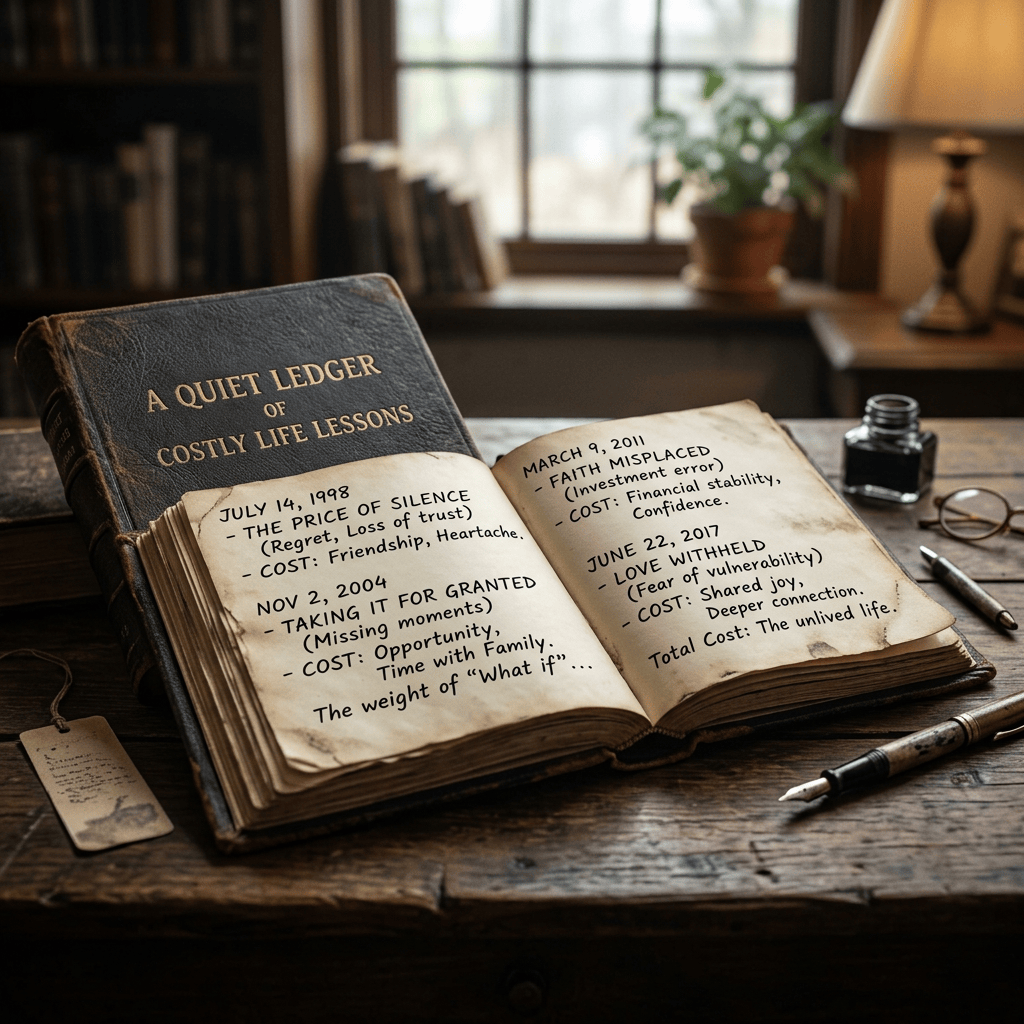
Some lessons cost money. Some cost time. Some cost relationships, pride or years I cannot recover. If someone can learn one of them a little cheaper than I did, maybe the tuition was not completely wasted.
That is the promise of the book.
Not transformation in fifteen easy steps.
Not a secret morning routine.
Not a declaration that positive thinking can overpower grief, illness, unfairness or another person’s choices.
The book cannot tell you which road to take. It can point toward a few landmarks.
This scoreboard may be measuring the wrong game.
That pressure may be doing your thinking for you.
The choice you keep postponing is still producing an outcome.
The thing you are gripping may already be pulling you over the edge.
The past can remain true without remaining in charge.
The page is still open.
Those ideas did not arrive together. Some began here on Yelco State of Mind. Others came from car lots, basketball gyms, funerals, old photographs, arguments, failures and the strange wisdom that occasionally arrives ten minutes after it would have been useful.
For years, I could be someone who might write a meaningful book someday.
That identity was safe. The imaginary book could not be criticized, ignored or misunderstood. It was always brilliant because nobody had to read it.
Then I ruined that beautiful potential by writing the thing.

Sentence by sentence, the book became real enough to fail.
I am proud of that.
Not because finishing proves the book is good. Readers get to decide whether it is useful. I do not write the reviews. I only write the source material.
I am proud because the blank page no longer gets to protect me.
The person I had in mind while writing was not broken and did not need saving. He or she was simply standing in the gap between the expected life and the actual one, wondering whether there was still time to revise anything.
Maybe a career went sideways.
Maybe a relationship ended.
Maybe grief changed the landscape.
Maybe the years accumulated while the important thing remained stored in later.
Maybe life does not look the way it was supposed to look.
Mine does not either.
That does not mean every loss becomes a gift or every chapter secretly happened for a reason. Some chapters are simply painful. Some pages cannot be revised.
But a chapter is not necessarily the book.
What still belongs to us is the next honest sentence.
I cannot promise the best part is ahead. Nobody can. I cannot promise that effort produces the outcome we want, that forgiveness restores the relationship or that taking the shot means it goes in.
I can offer something smaller and, I think, more honest.
You are not dead yet.
Neither am I.
There is still room.
I am not standing on a mountaintop shouting directions. I am somewhere on the trail, occasionally walking confidently in the wrong direction. What I can do is point toward a hole and say, “I stepped in that.” At another place I can say, “That helped.”
And sometimes I can admit, “I have absolutely no idea. What do you think?”
Not a map.
A few landmarks.
The road remains yours.
That is why a nobody wrote a self-help book.
I hope you will read it.