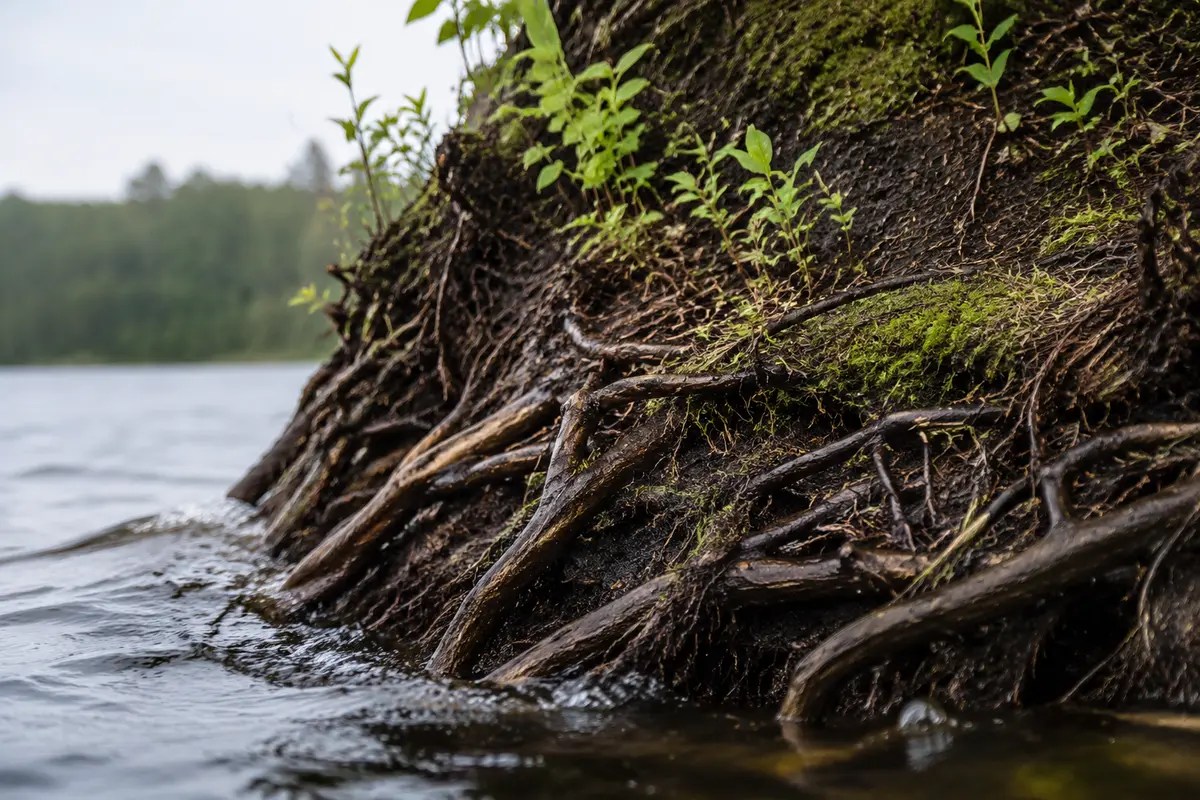
Nearly one hundred trees crossed a lake without ceasing to be a forest.
That sentence sounds like the beginning of a fable, but it happened on Williston Lake in British Columbia. A densely wooded island—roughly 500 feet long and 250 feet wide—appeared where no island was marked on any map. Then it vanished. Days later, it surfaced nearly twenty miles away.
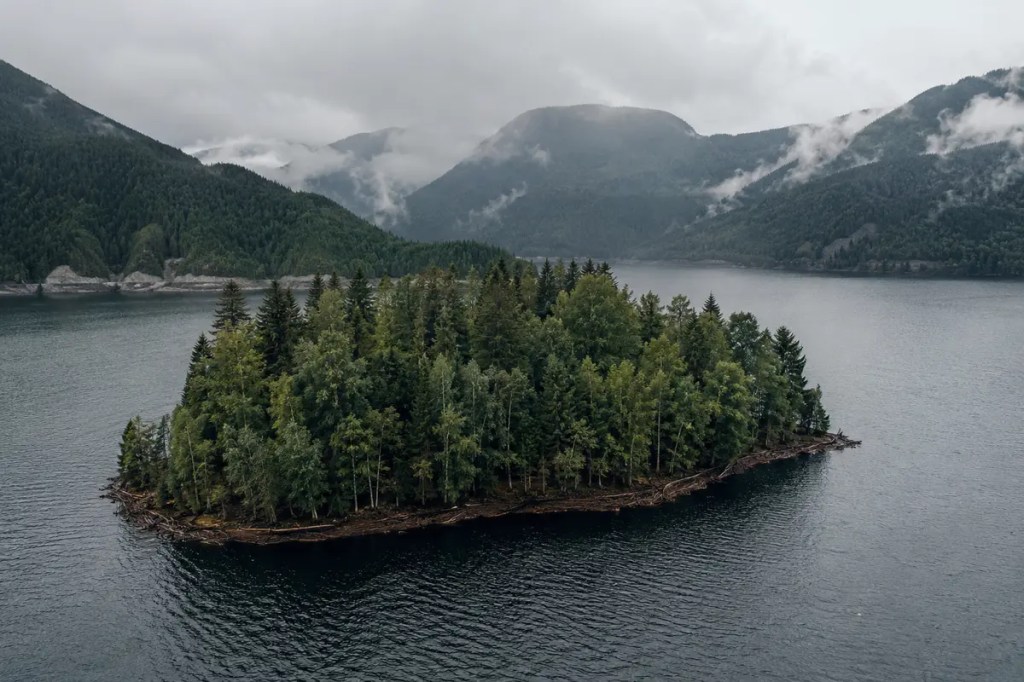
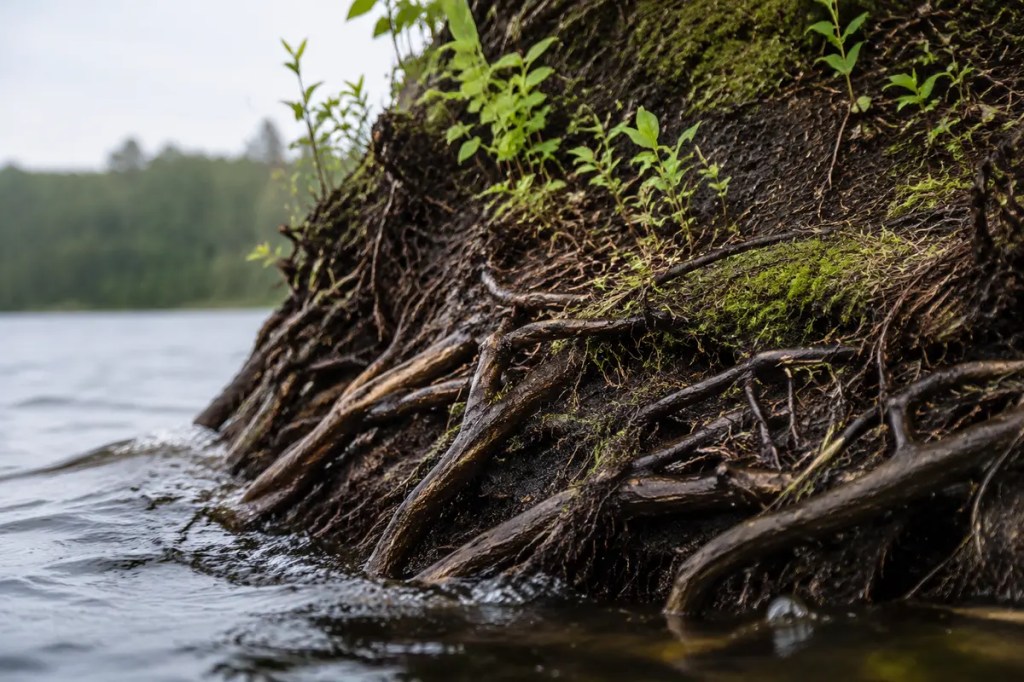
According to reporting from The Guardian, the mass likely formed over years as plants and trees grew through layers of woody debris along the shoreline. Their roots became intertwined. When unusually high water lifted the whole thing loose, the island didn’t immediately fall apart. It moved as a community.
The trees were still rooted. They just weren’t stationary.
I think we confuse those two ideas more often than we realize, especially in small towns. We talk about being rooted as though it means staying in the same job, the same role, the same relationship, or the same patch of ground forever. Remaining becomes proof of character. Leaving begins to resemble betrayal.
I’m guilty of this notion. One of my favorite things to tell people is, “My family has been scattered up and down Highway 22 for over two hundred years.”
But roots have more than one purpose. Some anchor a tree to the soil. Others hold soil together. Sometimes they do both. On that island, the same roots that once attached the trees to a shoreline became the thing that allowed an entire living world to survive after the shoreline let go.
That distinction matters to me.
I was shaped by Dardanelle, by Carden Bottoms, by family stories, church language, hometown traditions, and the kind of people who believe showing up matters even when nobody applauds it. None of that disappears if my life changes shape. I can leave a position without abandoning the people who taught me how to work. I can enter a new chapter without pretending the earlier chapters were wasted.
Gratitude for where you have been does not require a lifetime contract with who you have been there with.
Still, movement is not painless. The island on Williston Lake is not gliding across the water like some peaceful little vacation spot. Its edges are thin and shaky. Mature trees sway in the chop. It is exposed to wind, current, and forces it did not choose. Nobody knows exactly where it will settle or whether it will remain intact.
That sounds more like change as I know it.
We like to tell stories about brave departures after we already know they worked out. From the safe side of the outcome, every hard choice looks like courage. In the middle of it, movement often feels like instability. It can make a person question his judgment, his loyalty, and even his identity. The old ground may have been limiting, but at least it was ground.
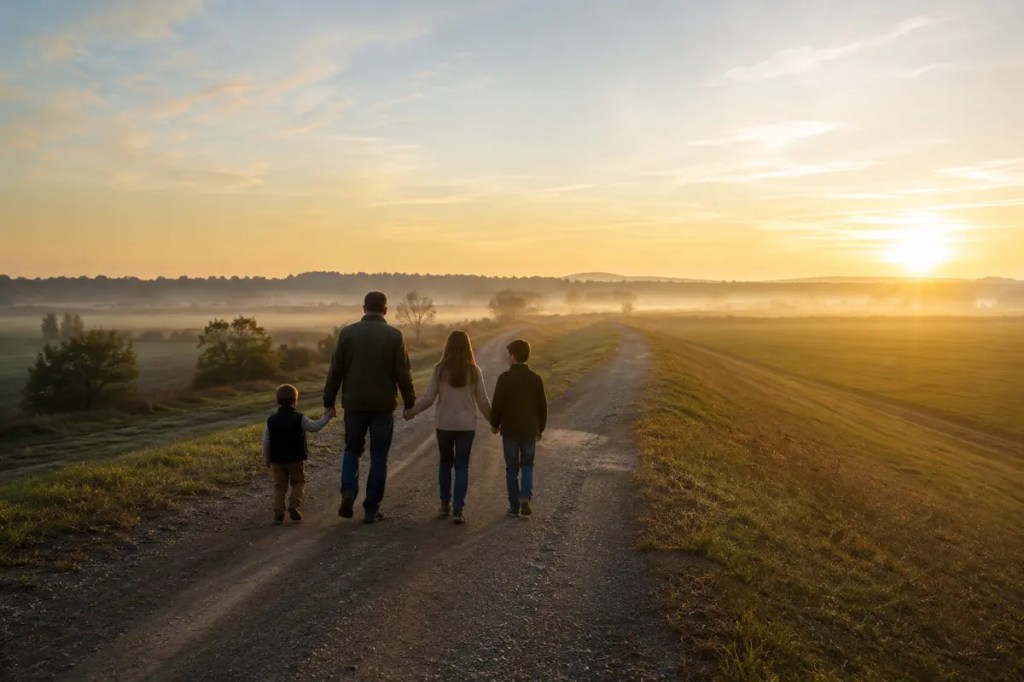
Fatherhood has taught me another version of this. We spend years trying to give our children roots, knowing that healthy roots are supposed to help them grow beyond us. The goal is not to make them stationary. It’s to give them something portable: a work ethic, a faith, a family story, a way of treating people, and a clear path home. A child can move forward without leaving the family behind because the family has already traveled inside him.
Towns can travel that way too. Dardanelle goes with me in the phrases I use, the stories I tell, the way I measure a person, and the instinct to notice who showed up when things got hard. Carden Bottoms is not only a location on a map. It is a memory carried inside of many people.
Faith, at its best, understands this. It does not always promise that the shoreline will remain beneath us. Sometimes it asks us to trust that what has been formed in us can survive a change in geography, title, season, or circumstance. The destination may be uncertain without the movement being wrong.
Maybe being rooted has less to do with refusing to move and more to do with knowing what must move with you. Your values. Your people. Your stories. Your faith. The pieces that keep you recognizable when the landscape changes.
Some roots hold you to a place. Others hold you together while you move.


