
In Liliana Colanzi’s essay “Tropical UFOs,” her mother and uncle agree that something extraordinary happened above a river in Bolivia. A spaceship came down. Strange light covered the witnesses. Then it disappeared toward the trees.
They disagree about almost everything that should be easier to remember.
Her uncle says they were children. Her mother remembers being married and returning from a funeral with several relatives. He remembers an abduction. She remembers an object hovering above them.
The other witnesses are dead.
That means the argument will never be settled—not because the event was too strange, but because the people who could compare the stories are gone.

The UFO is almost beside the point. Families lose track of ordinary facts all the time.
Someone I know grew up believing she was descended from a Cherokee chief. That was the story her mother had given her. Not merely Cherokee, either. A chief. Family legends rarely suffer from a lack of promotion.
Years later, the subject came up at a family reunion. Her aunt had heard a different genealogical story. The branches didn’t connect the same way. The confidence remained; the facts had started moving.
Eventually she took a consumer DNA test. The ancestry estimate came back entirely European.
Somewhere between her mother’s story, her aunt’s version, and the laboratory, the Cherokee chief quietly left the family tree.
A DNA estimate can’t perfectly reconstruct every person who ever contributed to a family. But it made one thing difficult to deny: the story she inherited as fact was not nearly as settled as it had sounded.
That doesn’t necessarily mean her mother lied. More likely, her mother repeated what somebody had once told her. Sincere people can pass along inaccurate stories with tremendous confidence. Family history often travels farther on certainty than it does on evidence.
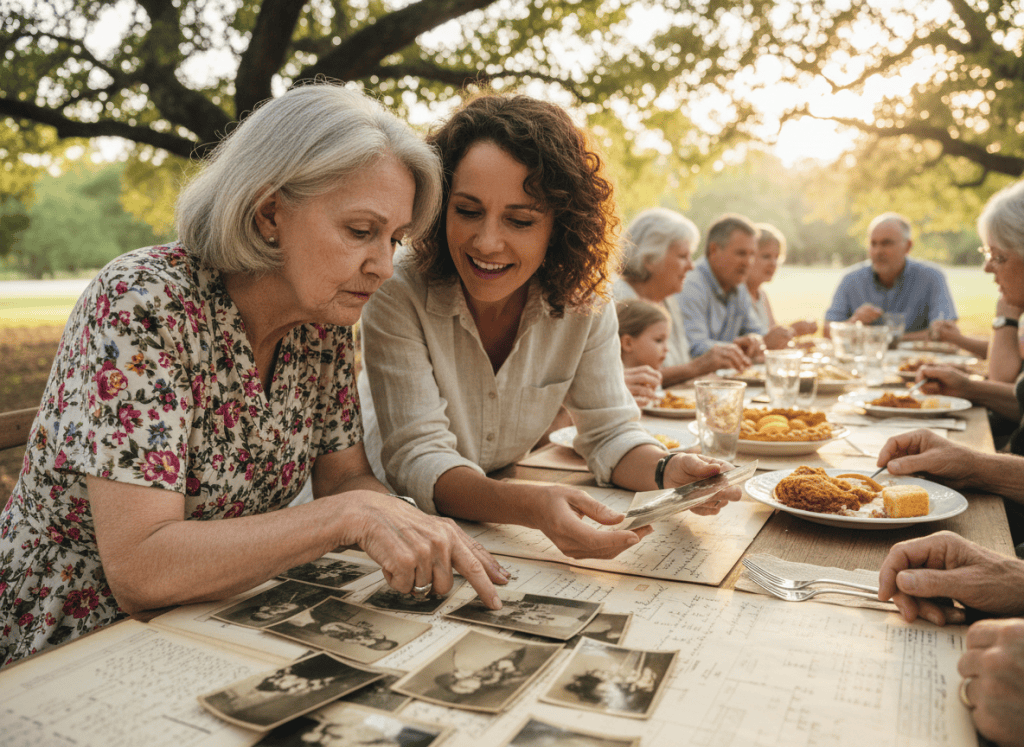
That’s part of what makes writing about small towns and family history both important and dangerous.
Places changed by water, time, and people leaving do not preserve themselves in clean transcripts. They survive in kitchens, church foyers, old photographs, property lines, and stories told by people who assume everyone already knows the names.
One person remembers the year. Another remembers the weather. Somebody insists the truck was blue. Somebody else is equally certain it was green. The event may be real while the details refuse to stand still.
Writers feel pressure to fix that.
Readers prefer a date. They want one truck, one route, one version of what happened. Uncertainty can look like weak research, so the temptation is to choose the account that sounds best and sand away the disagreement.
But making the past neater does not make it truer.
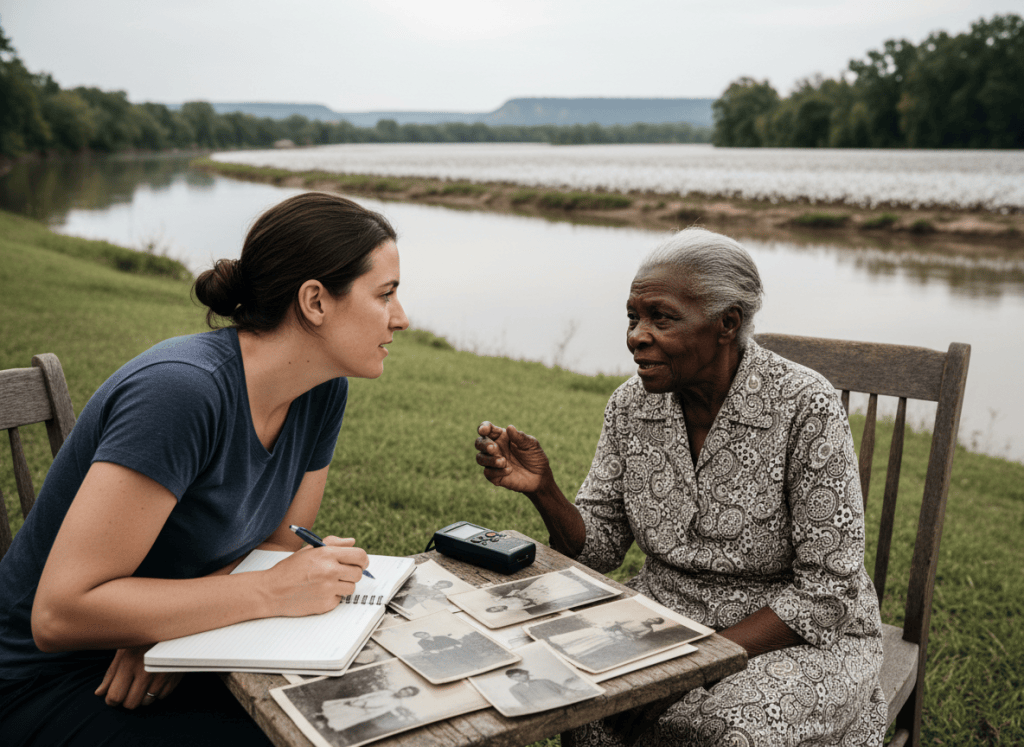
Sometimes the disagreement is the history.
The honest version may be: She remembered it this way. Her brother remembered it differently. No one is left who can tell us which one was right.
That sentence preserves more than doubt. It preserves two people. Their memories. Their loyalties. The different meanings the same event gathered as they carried it through life.
The work, then, is not only collecting stories. It’s collecting the edges around them. Who told you? Were you there? What part do you know, and what part did you hear? Did anyone else remember it differently?
Ask while someone can still answer.
Record the pause before the answer too.
Because when the last witness dies, we don’t simply lose another version. We lose the chance to measure one memory against another. What remains may still be beautiful, useful, and worth passing down. It just should not be dressed in a certainty it no longer possesses.
Sometimes “I don’t know exactly” is not a failure of storytelling.
It is the last truthful sentence available before silence.
Source note: Inspired by Liliana Colanzi’s “Tropical UFOs,” translated by Chris Andrews and published by Southwest Review.

 Yelco State of Mind
Parenting wisdom that endures is always valuable. Traditional family practices contain deeper lessons about connection and resilience that modern research is now validating.
LikeLike
Agreed! I don’t know how you can quantify a well-earned lesson from a parent or grandparent. It’s the closest thing to “priceless” that exists, in my opinion.
LikeLike