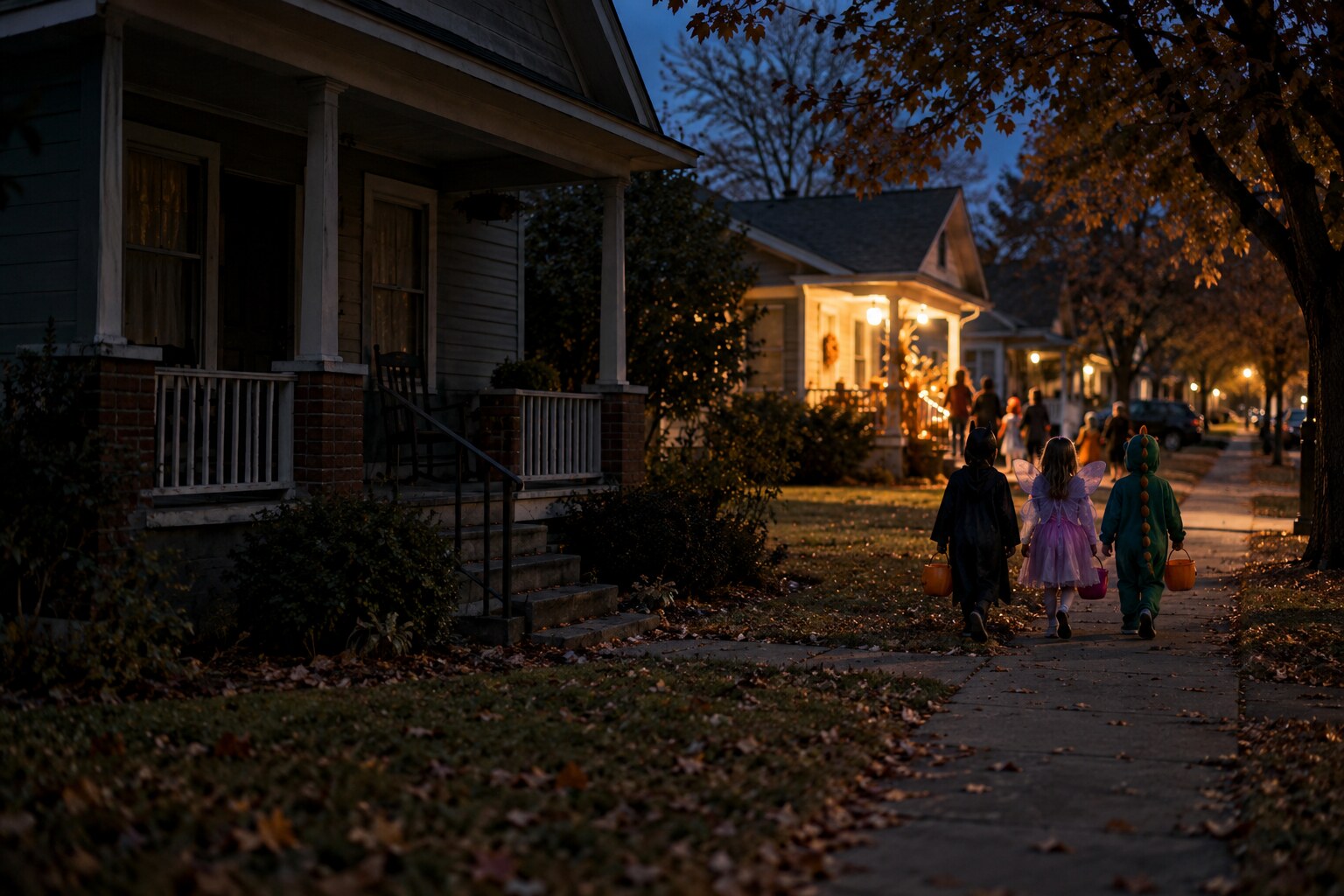
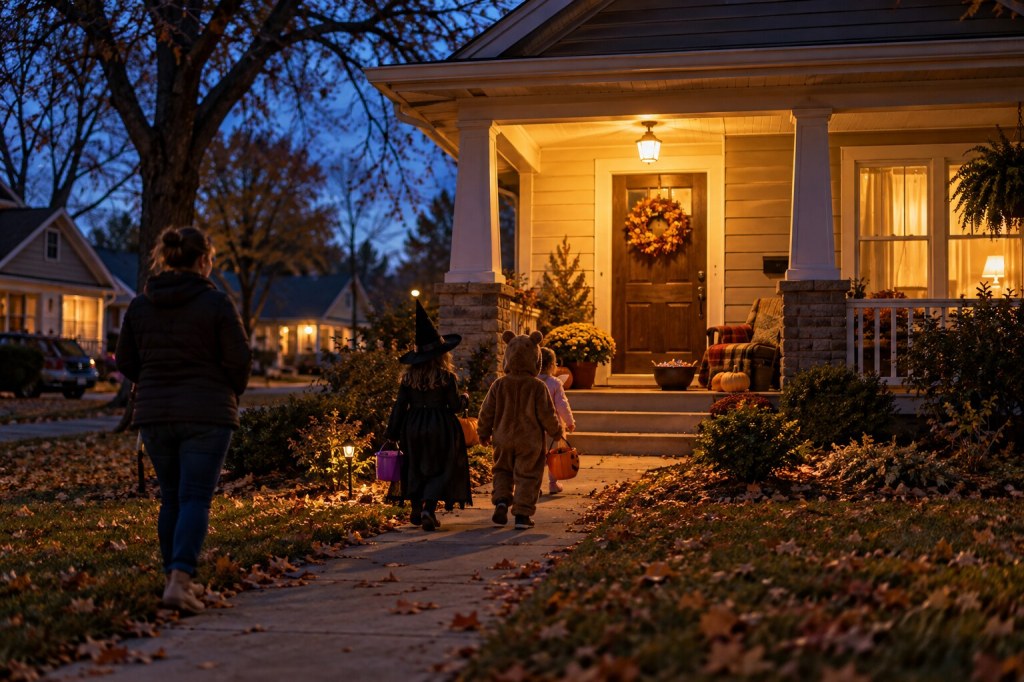
By seven o’clock on Halloween night, a porch lights in Dardanelle and small towns all over the county become legal documents.
Light on means come up the driveway, ring the bell, display the costume, and receive candy. Light off means keep moving.
The agreement is so widely understood that children who have ignored their parents for most of the evening can suddenly interpret a boundary with constitutional precision. Nobody has to explain it. Nobody knocks on the dark house for twenty minutes because the people inside may secretly want company.
They trust the signal.
Adults are not always as honest with one another.
We say we want closer relationships while making ourselves difficult to reach. We say our door is always open while answering every interruption with a sigh. We tell our children they can talk to us about anything, then begin correcting them before they finish the first sentence.
The words say welcome.
The porch is dark.
I know something about living that way. After enough disappointment, distance begins to feel like wisdom. If nobody gets close, nobody can leave a hole when they go. You can call it independence, caution, maturity, or peace.
Sometimes it is just loneliness with excellent security.
I’ve wanted people to notice I was inside while doing everything possible to make the house look empty. I’ve hoped someone would knock while giving them every reasonable indication that knocking would be unwelcome.
Then I’ve wondered why the evening was quiet.
The people around us read more than what we say.
Children study our faces when they bring home a mistake. Employees watch what happens to the first person who delivers bad news. Friends remember whether their last honest confession became ammunition. A person may hear “You can tell me anything,” but he believes what happened the last time he tried.
That doesn’t mean everyone is entitled to unlimited access.
A porch light is not an unlocked front door. It doesn’t give every passing stranger the right to walk into the living room, eat dinner, and leave with the entire bowl of Reese’s Cups. Welcome and access are not the same thing.
Boundaries still matter. Some people belong at the curb. Some conversations need to happen at a better time. Some relationships have earned a locked door.
The light simply says an approach will not be punished.
That distinction matters in fatherhood. A child doesn’t need a father without standards. He needs one whose standards don’t make honesty dangerous. If every mistake produces anger before understanding, the child may not improve his behavior. He may simply improve his hiding.
It matters in leadership too.
An open-door policy means very little if the manager’s expression says, “You’ve made a serious error by walking through it.” Employees usually bring small problems before they bring large ones. How the small problem is received helps determine whether the large one arrives while it can still be solved.
The porch light is built through repetition.
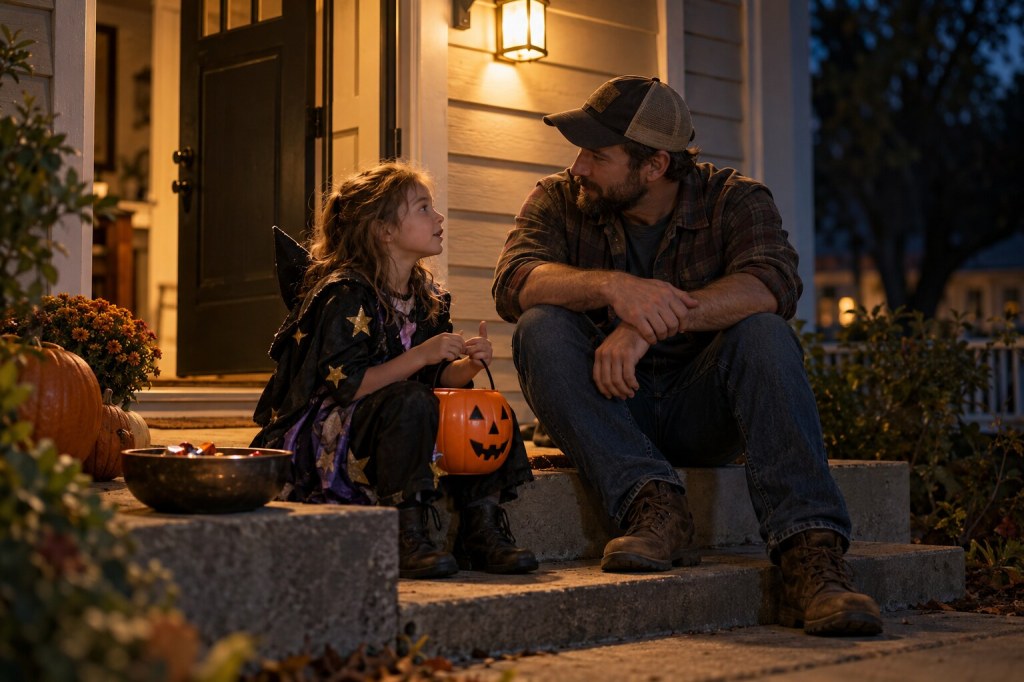
It’s the phone placed facedown when someone starts talking. It’s the question asked without rushing toward an answer. It’s the apology that proves pride does not own the house. It’s responding to an inconvenient truth in a way that makes another truth possible later.
None of this guarantees that anyone will come.
That’s the difficult part.
You can become more available and still spend an evening alone. People may not trust the light yet. They may remember when it was dark. They may have learned another route home. Invitation is not control, and vulnerability doesn’t create a debt somebody else must repay.
But we are responsible for the signal we send.
On Halloween night, children don’t examine the intentions of the people sitting behind closed curtains. They look at the house. The light is either on or it isn’t, and they make their decision from the road.
The people we love often do the same.
The porch light can’t make anyone knock. It can only keep the darkness from answering for you.


