
“Sell your flock.”
It is the kind of advice that sounds brave because it fits neatly inside a sentence. Leave the familiar town. Give up the steady life. Trade security for possibility. If you want the dream badly enough, prove it by walking away from everything that keeps you comfortable.
That makes sense when the flock is only a metaphor for fear.
It gets more complicated when the flock has names.
I have three children. There are groceries to buy, insurance to maintain, lights to keep on, and promises that can’t be suspended while I go looking for myself. Other people have built part of their lives around my dependability. Their needs are not evidence that I have surrendered my potential. They’re part of the life I am responsible for living well.
We have developed a strange habit of treating departure as the purest form of courage. The man who quits his job, sells everything, and bets on himself gets the dramatic story. The man who goes to work, comes home tired, helps with what needs helping, and returns to his dream after the house is quiet rarely gets a montage.
But the absence of spectacle does not mean the absence of bravery.
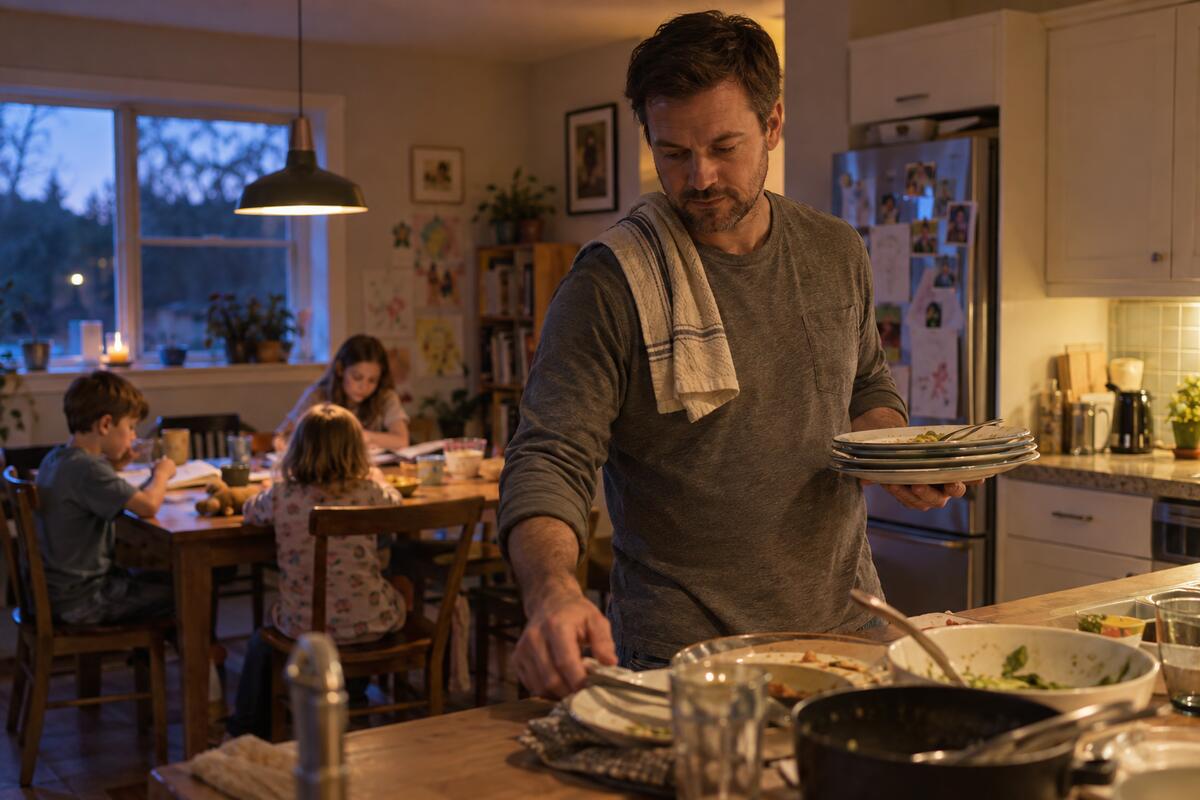
I wrote a book while working in the car business and raising three children. Most of the sessions didn’t feel heroic. They felt inconvenient. I wrote when the day had already spent most of what I had. I learned things I didn’t know how to do. I questioned whether the work was good enough and whether anyone would care. Then I went back to it.
The book was not produced by abandoning my responsibilities. It was built around them.
That doesn’t mean staying is always noble. A paycheck can become an excuse. Responsibility can be used as a respectable name for fear. Plenty of people say they are waiting for the right time when what they mean is that they hope desire will eventually stop asking anything of them.
Patience and surrender may look alike from across the room, but they leave different evidence.
Surrender says “someday” and makes no appointment. Patience puts an hour on the calendar. Surrender collects reasons. Patience collects pages. Surrender waits for life to become less demanding. Patience accepts that a meaningful life may always be demanding and learns to build anyway.
There may come a day when the responsible decision is to leave the secure job, change the plan, or give the dream more room. Courage may eventually require a larger risk. But quitting isn’t automatically courage, just as staying is not automatically cowardice. The question is not whether the choice looks bold from the outside. The question is whether it honors both the calling and the people entrusted to you.
I still intend to write fiction. That work matters to me. I don’t believe the dream has expired because I have not yet reorganized my entire life around it. The dream is alive every time I protect a small piece of the week from everything else. It is alive when I choose the page over another hour of distraction. It is alive when I keep a promise to the work without breaking promises to the people I love.

There is nothing romantic about neglect. A dream financed by hungry children, broken commitments, or people left carrying your share of the load is not freedom. It’s simply selfishness with better lighting.
So feed the flock. Pay what must be paid. Keep the promises that made your life larger than your own. Put the house to bed.
Then return to the manuscript.


