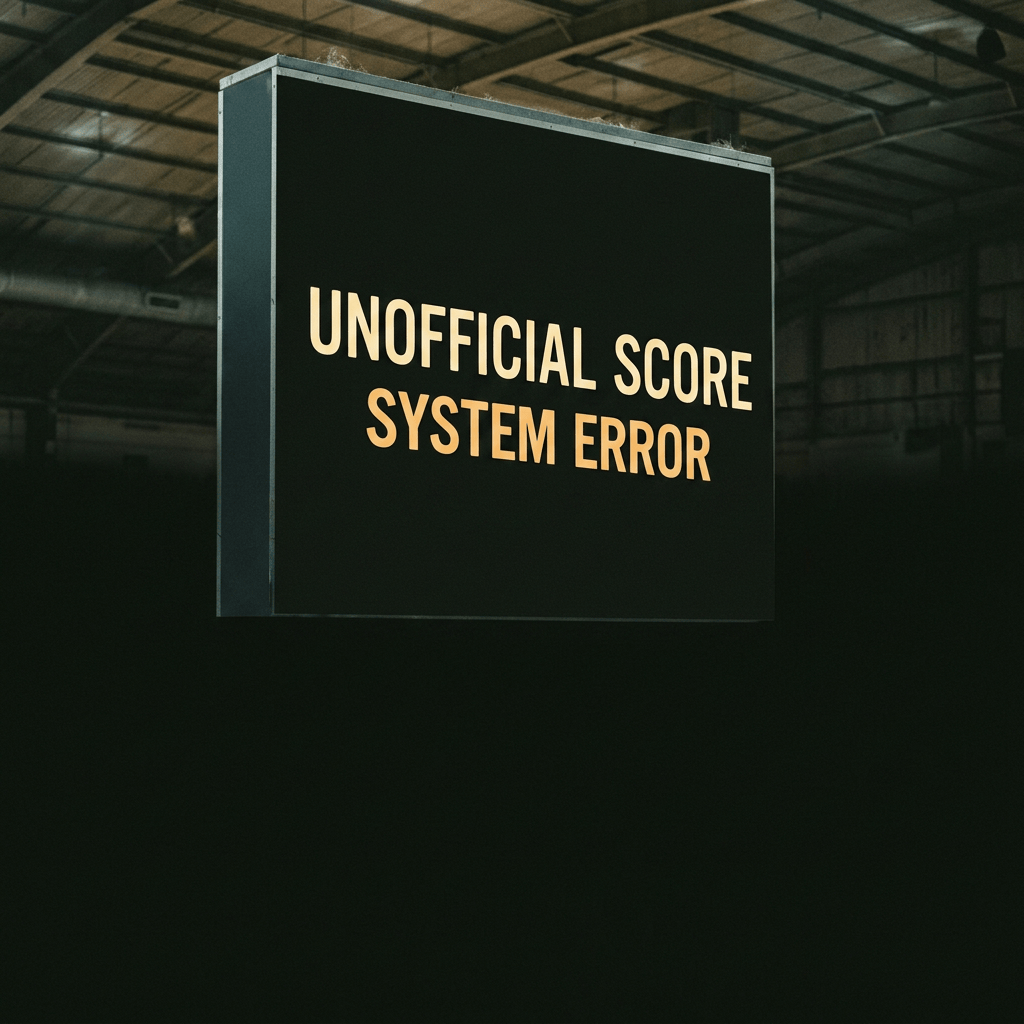
The car business loves a scoreboard.

Units sold. Gross profit. Closing percentage. Calls made. Appointments set. Products sold. Month-to-date pace. Yesterday’s number sits beside today’s goal, and every morning the board tells us whether we are ahead, behind or in need of a very uncomfortable meeting.
I understand the appeal. A scoreboard is clean. If the goal is thirty and the total is twenty-eight, nobody needs a committee to determine whether you reached it.
Numbers are useful. I have spent most of my adult life looking at them, managing by them and occasionally trying to explain why a particular one should not be interpreted too harshly until at least next Tuesday.
The problem begins when a useful measurement becomes a complete verdict.
A salesperson has a bad month and starts believing he is bad at his job. A manager misses a goal and carries the failure home like it belongs at the dinner table. A strong month produces the opposite illusion: the number is high, so everything must be working.
Then the calendar turns over.
The scoreboard resets to zero and begins demanding proof again.
Life has scoreboards too, although they are considerably less honest about who installed them.
Income. Job title. House. Relationship status. Weight. Followers. Children’s accomplishments. The age by which we believe we should have achieved something. We collect measurements from family, culture, social media and people we barely like, then act surprised when winning their game does not feel like winning ours.
I have done this repeatedly.
There have been months when work went well and I felt ten feet tall. There have been months when I questioned decisions stretching all the way back to the first job application I ever filled out. I have looked at money and felt successful, then looked at less money and wondered whether the earlier version of me had been a fraud. I have treated relationship status like a grade on my ability to love and career progress like an official ruling on my potential.
The score kept changing because I kept asking one number to measure an entire life.
That is too much work for any number.
Money matters. Anyone who says it does not has probably never tried to figure out which bill can wait until Friday. Career matters. Health matters. Relationships matter. Goals matter.
But none of them, by itself, gets to announce the final score.
A person can earn more money while becoming someone his children barely know. He can lose a job and become more present, more creative and more alive. A marriage can end without proving every year inside it was meaningless. A child can struggle without becoming evidence of a parent’s failure. A body can change while the person living inside it grows wiser.

Sometimes the number is telling the truth about the category and lying about the person.
Twenty-eight is still short of thirty. Pretending otherwise does not help anybody. But “we missed the goal” and “we are failures” are not the same sentence.
One gives us information.
The other gives the information authority it never earned.
While writing A Nobody’s Guide to Self-Help, I kept returning to the gap between the life we expected and the one we are actually living. Most of the pain in that gap is real. Some of it comes from loss, mistakes and roads that genuinely closed.
But some comes from standing beneath a scoreboard we did not build, losing a game we never consciously agreed to play.
So I have started asking different questions.
Not only: How much did I earn?
Also: What did earning it cost?
Not only: Did I reach the goal?
Also: Did the pursuit make me more disciplined, honest and useful?
Not only: Does my life look successful from the outside?
Also: Do the people I love experience me as someone who shows up?
Those questions do not eliminate measurable goals. They put them back in their proper place.
A scoreboard should help you understand the game. It should not be allowed to tell you whether your life is worth playing.
Look at the number currently deciding how you feel about yourself.
What is it actually qualified to measure?
And what have you allowed it to say that it never had the authority to decide?


 Yelco State of Mind