Wisdom Watches the Door: Escaping the Trap of Everyday Cynicism

John Quincy Adams once wrote, “To believe all men honest would be folly. To believe none so is something worse.”

Those are the two errors available to us.

The first is naïveté. We ignore evidence, excuse patterns, and keep handing people access they have already misused. The second is cynicism. We decide the safest response to being fooled once is to make sure nobody ever gets the chance again.

Cynicism usually feels like the smarter choice.

A caution sign stands beside an open rural road continuing toward the sunrise.

It predicts the betrayal before it happens. It hears the excuse before anybody offers it. It keeps a person from being embarrassed by hope. When the worst finally occurs, the cynic gets to say, “I knew it,” as though correctly anticipating disappointment makes the disappointment less costly.

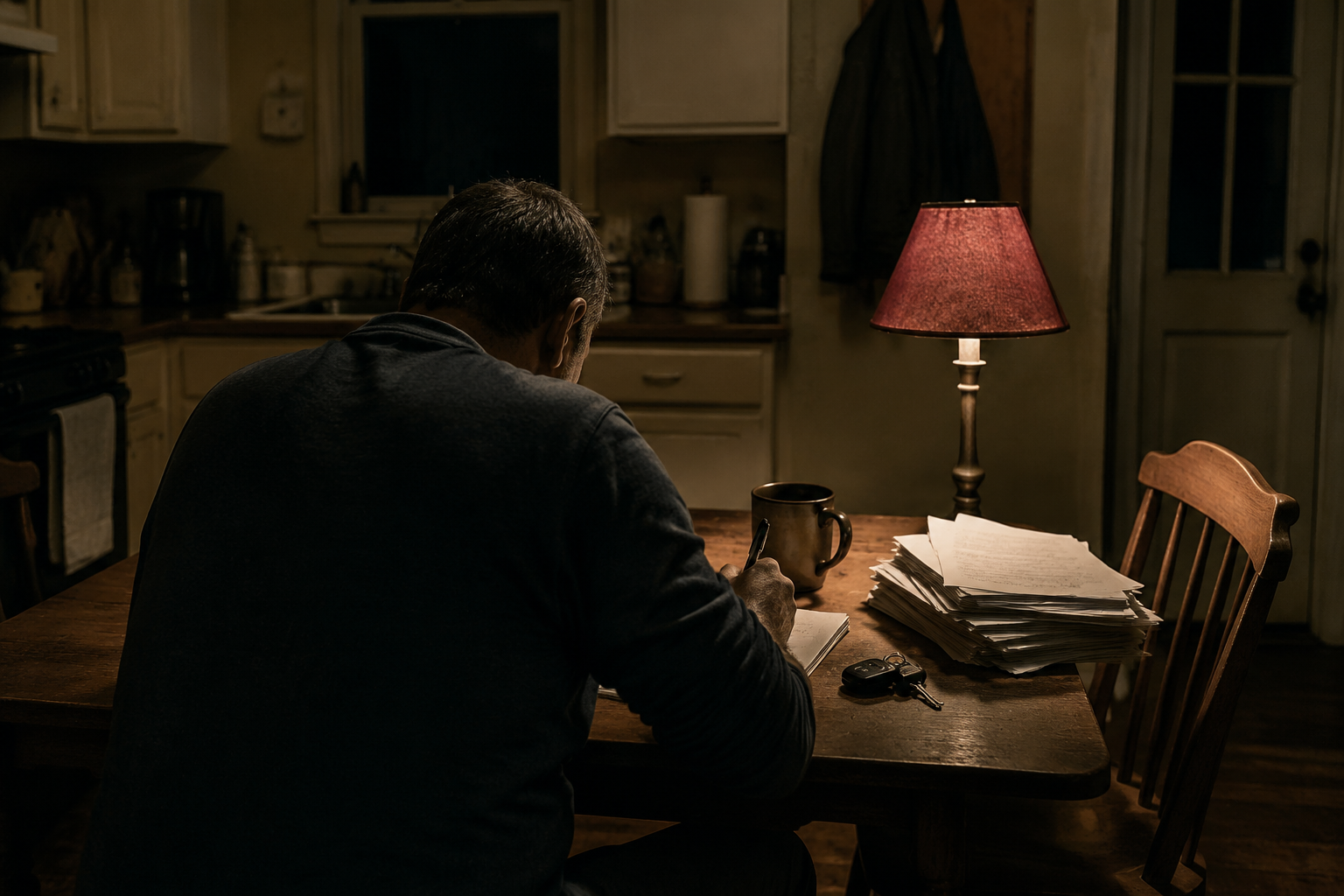
I’ve spent enough time in the car business to understand why suspicion develops. Customers don’t always tell the whole truth. Salespeople sometimes cut corners. Lenders make decisions that feel arbitrary. Managers promise support and then disappear when the problem becomes inconvenient.

Experience should teach us to verify.

But a manager who assumes every customer is lying, every salesperson is lazy, and every lender is acting in bad faith eventually changes the room. Customers become defensive. Employees stop bringing mistakes forward because they know guilt has already been assigned. Good people grow tired of being treated like the bad people the rules were written for.

Distrust does not merely observe a culture. Given enough authority, it creates one.

A dealership manager and salesperson calmly review paperwork together at a desk.

That’s the hidden danger of cynicism. It calls itself wisdom while making its own evidence. Treat people as though they cannot be trusted, and some will eventually decide there is no benefit in being trustworthy. Others will simply leave. Either way, the cynic looks around at the damage and feels confirmed.

Relationships can work the same way.

When somebody lies to you, abandons you, or makes you feel foolish for believing them, suspicion is not irrational. It’s the mind trying to keep the wound from happening twice. The problem begins when a necessary lesson becomes a universal law: this person hurt me, therefore people hurt me; this promise failed, therefore promises are camouflage; I missed the warning signs once, therefore I must treat every unknown as a warning sign.

I know how tempting it is to call that maturity. Sometimes it’s only pain that has learned a more respectable vocabulary.

None of this means reopening every closed door. Forgiveness does not require restored access. A boundary is not bitterness, and trust should not be returned simply because somebody asks for it. Patterns matter. Character matters. Evidence matters.

Earned trust begins small. It gives a person enough room to show who they are without handing them the power to destroy what you are responsible for protecting. Then it watches what happens. A promise kept earns another promise. The truth told when a lie would have been easier earns more weight. Consistency expands the room.

That is not naïveté. It is judgment without despair.
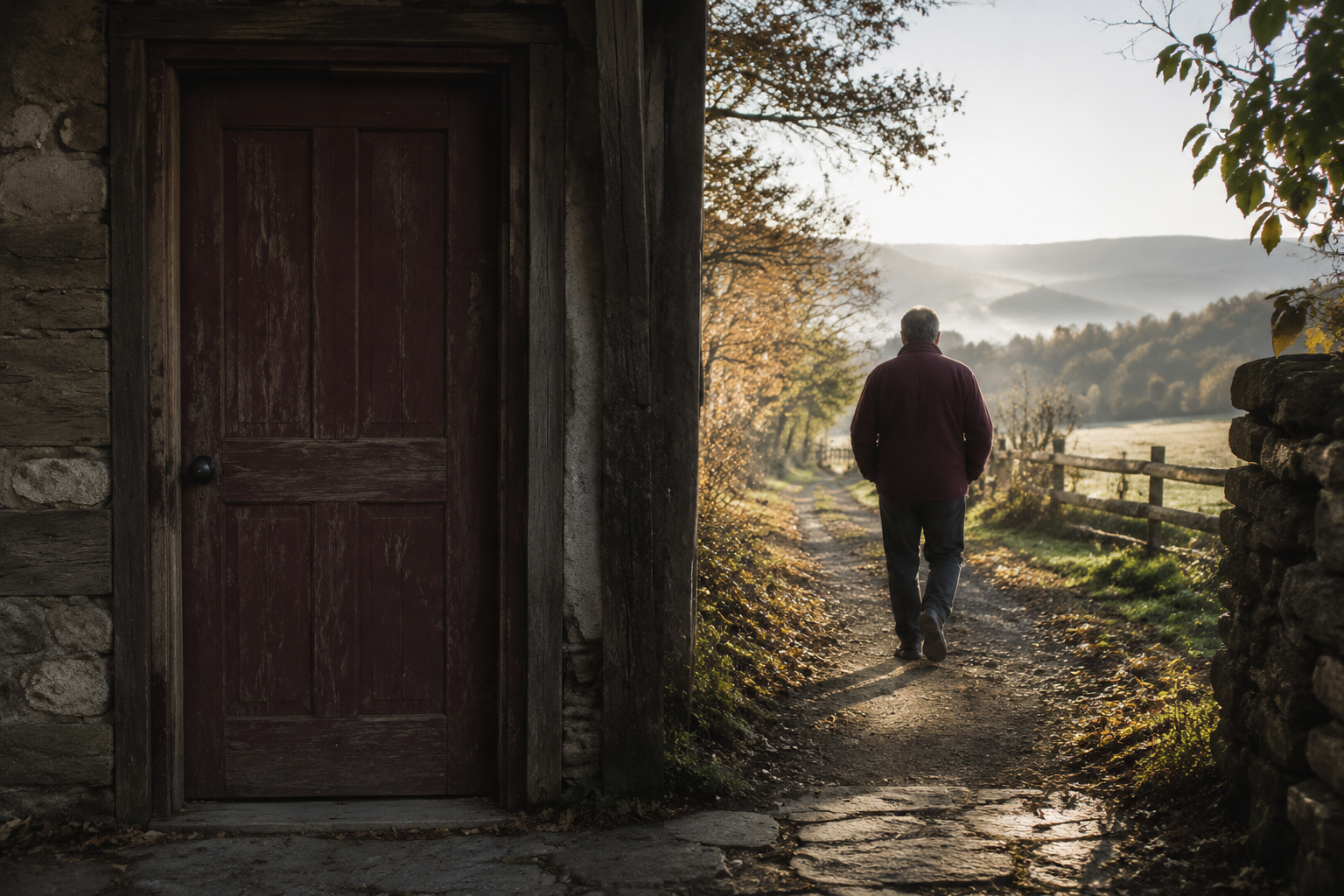
A sturdy weathered door with a secure latch remains open toward warm morning light.

Wisdom leaves room for revision. It can admit that a person has changed, that an employee deserves another chance, or that the new relationship should not be sentenced for what happened in the old one. Cynicism can’t do that because its identity depends on never being surprised by goodness.

The goal is not to believe everyone. It’s to remain capable of believing someone.

Wisdom watches the door. Cynicism boards it shut.
Is Your Porch Light On? Halloween, Boundaries, and Belonging

By seven o’clock on Halloween night, a porch lights in Dardanelle and small towns all over the county become legal documents.

Light on means come up the driveway, ring the bell, display the costume, and receive candy. Light off means keep moving.

The agreement is so widely understood that children who have ignored their parents for most of the evening can suddenly interpret a boundary with constitutional precision. Nobody has to explain it. Nobody knocks on the dark house for twenty minutes because the people inside may secretly want company.

They trust the signal.

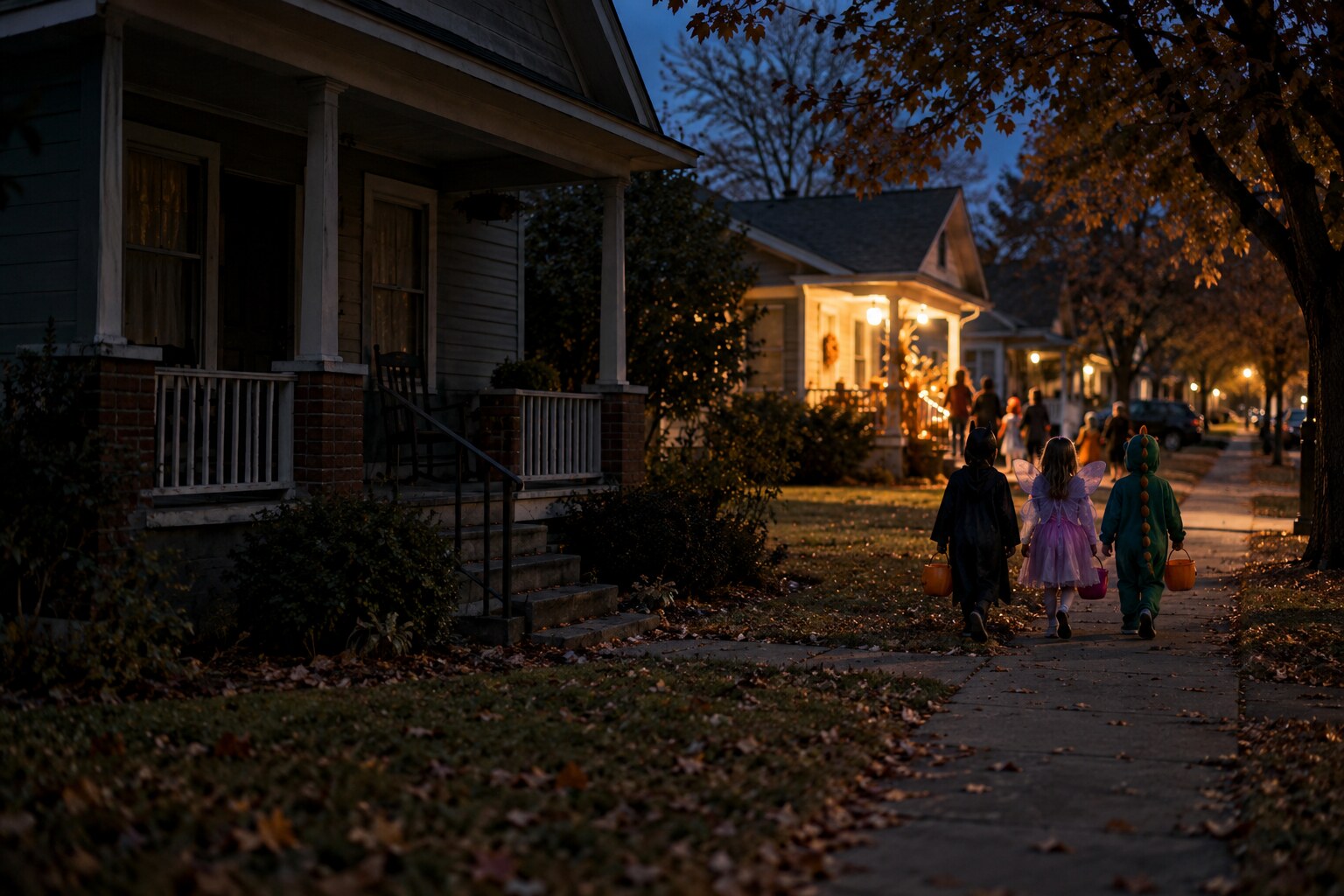
Costumed children walk toward a warmly lit front porch on Halloween evening.

Adults are not always as honest with one another.

We say we want closer relationships while making ourselves difficult to reach. We say our door is always open while answering every interruption with a sigh. We tell our children they can talk to us about anything, then begin correcting them before they finish the first sentence.

The words say welcome.

The porch is dark.

I know something about living that way. After enough disappointment, distance begins to feel like wisdom. If nobody gets close, nobody can leave a hole when they go. You can call it independence, caution, maturity, or peace.

Sometimes it is just loneliness with excellent security.

I’ve wanted people to notice I was inside while doing everything possible to make the house look empty. I’ve hoped someone would knock while giving them every reasonable indication that knocking would be unwelcome.

Then I’ve wondered why the evening was quiet.

Costumed children pass a dark porch and walk toward a brightly lit house.

The people around us read more than what we say.

Children study our faces when they bring home a mistake. Employees watch what happens to the first person who delivers bad news. Friends remember whether their last honest confession became ammunition. A person may hear “You can tell me anything,” but he believes what happened the last time he tried.

That doesn’t mean everyone is entitled to unlimited access.

A porch light is not an unlocked front door. It doesn’t give every passing stranger the right to walk into the living room, eat dinner, and leave with the entire bowl of Reese’s Cups. Welcome and access are not the same thing.

Boundaries still matter. Some people belong at the curb. Some conversations need to happen at a better time. Some relationships have earned a locked door.

The light simply says an approach will not be punished.

That distinction matters in fatherhood. A child doesn’t need a father without standards. He needs one whose standards don’t make honesty dangerous. If every mistake produces anger before understanding, the child may not improve his behavior. He may simply improve his hiding.

It matters in leadership too.

An open-door policy means very little if the manager’s expression says, “You’ve made a serious error by walking through it.” Employees usually bring small problems before they bring large ones. How the small problem is received helps determine whether the large one arrives while it can still be solved.

A father listens closely to his costumed child beneath a warm porch light.

The porch light is built through repetition.

It’s the phone placed facedown when someone starts talking. It’s the question asked without rushing toward an answer. It’s the apology that proves pride does not own the house. It’s responding to an inconvenient truth in a way that makes another truth possible later.

None of this guarantees that anyone will come.

That’s the difficult part.

You can become more available and still spend an evening alone. People may not trust the light yet. They may remember when it was dark. They may have learned another route home. Invitation is not control, and vulnerability doesn’t create a debt somebody else must repay.

But we are responsible for the signal we send.

On Halloween night, children don’t examine the intentions of the people sitting behind closed curtains. They look at the house. The light is either on or it isn’t, and they make their decision from the road.

The people we love often do the same.

The porch light can’t make anyone knock. It can only keep the darkness from answering for you.

You Can Put Down the Weight Without Reopening the Door

For years, I wanted one answer from my biological father.

Why?

Why did he leave? Why did he stay gone? Why was I not enough reason to come back?

The older I became, the more sophisticated the questions sounded, but underneath them was still a little boy trying to understand an adult decision as a verdict about himself.

Eventually I had to admit something uncomfortable: I could imagine no answer that would satisfy me.

There might have been an explanation that added context. There might have been facts I did not know. But there was no sentence capable of returning the childhood I did not have with him.

If no answer could repair the past, how long was I willing to make my future wait for one?

That question changed the way I think about forgiveness.

We often talk about forgiveness as if it requires a grand reopening. The offense is forgiven, the music swells, the door opens and everybody walks back into the same relationship with cleaner clothes and better lighting.

Real life is rarely that cooperative.

Forgiveness is not approval. It does not make abandonment acceptable, betrayal harmless or a lie true.

Forgiveness is not trust. Trust is built with evidence, and evidence may say that someone is still unsafe, unreliable or unwilling to change.

Forgiveness is not reconciliation. Reconciliation requires participation from both people. Sometimes it is possible. Sometimes it is beautiful. Sometimes it would be foolish.

And forgiveness is not renewed access.

You can release hatred and still block the number. You can forgive a relative and maintain a boundary. You can stop rehearsing an old argument without inviting the other person back into the room.

That is not bitterness.

Sometimes it is pattern recognition.

I do not say this casually. “You just need to forgive” can be an awfully cheap sentence when spoken by someone who did not pay for the wound. Some harm runs far deeper than the examples I can offer, and nobody else gets to set a deadline for another person’s healing.

But I have learned that there is a difference between honoring the truth and building a permanent home inside it.

Resentment is expensive. The person may have hurt us once, but resentment can keep charging us long after they stop participating. It takes attention, energy, trust, possibility and present moments. The original offender may be eating tacos with no idea that court is still in session inside our head.

Meanwhile, we keep arguing the case.

Something shifted for me through baseball, of all things.

My biological father was from Chicago, and when I was a child I grabbed onto the Cubs as a connection to a man I barely knew. He sent me Cubs things. I watched games on WGN. The team became partly mine because it was his.

Years later, I sat in a stadium with my own sons and watched the Cubs play. I was giving them a memory I had once wanted him to give me.

The facts did not change. He still left.

But I had moved.

I could not rewrite the father I had. I could become the father I wanted.

That was more useful than winning another imaginary argument.

The chapter about resentment in A Nobody’s Guide to Self-Help became one of the hardest for me to write because it would have been easy to make myself the innocent victim in every paragraph. That version contained some truth, but not enough of it.

Other people wounded me. I have wounded people too. I have needed forgiveness, boundaries and second chances. I have also needed consequences.

The goal is not to erase the past or pretend every relationship can be restored. The goal is to stop requiring yesterday’s permission to live tomorrow.

Sometimes putting down the weight means repairing what can be repaired.

Sometimes it means accepting the apology.

Sometimes it means giving one.

Sometimes it means grieving the apology that will never come.

And sometimes it means closing the door without standing behind it for the rest of your life.

Who or what are you still waiting on before you give yourself permission to move?