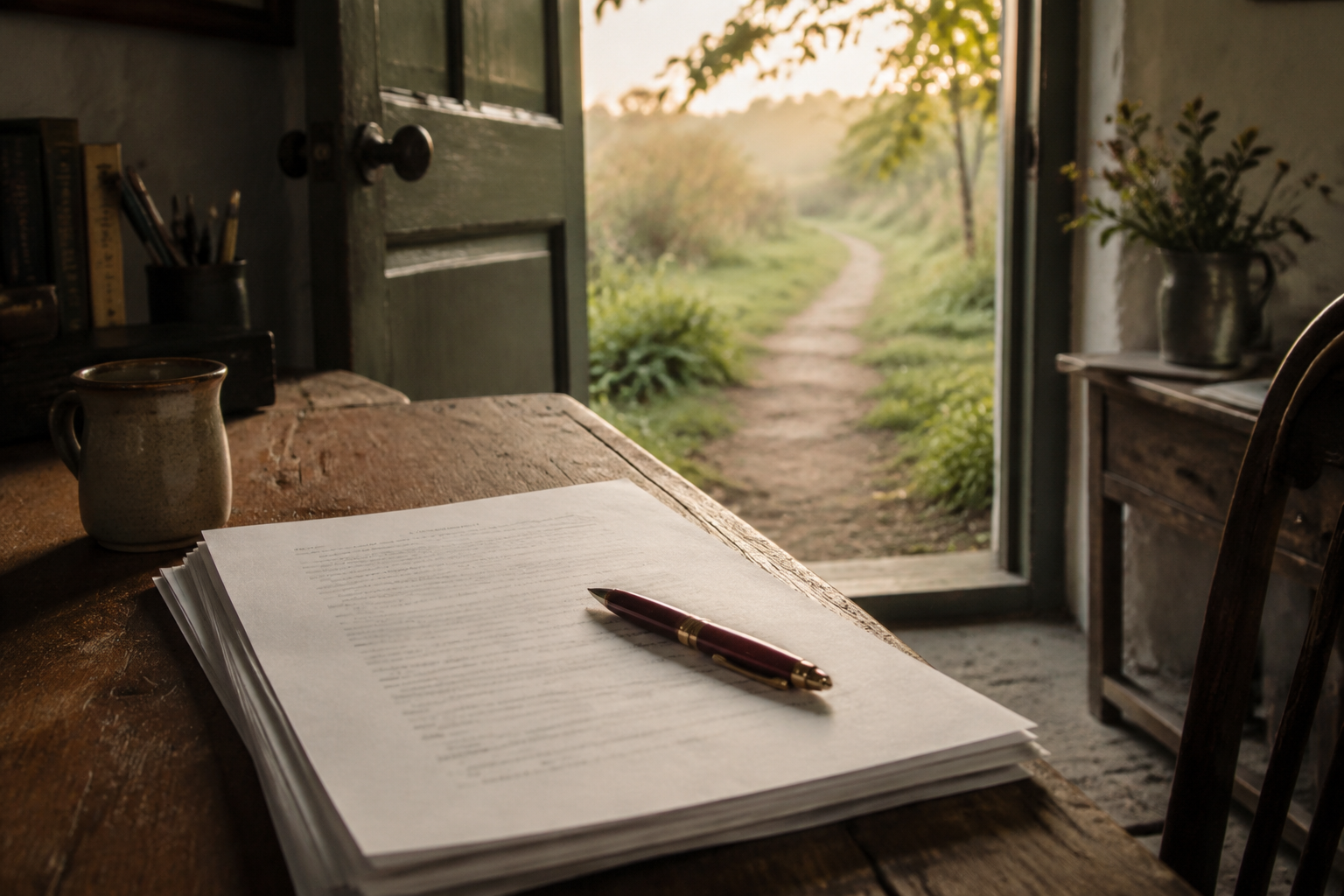
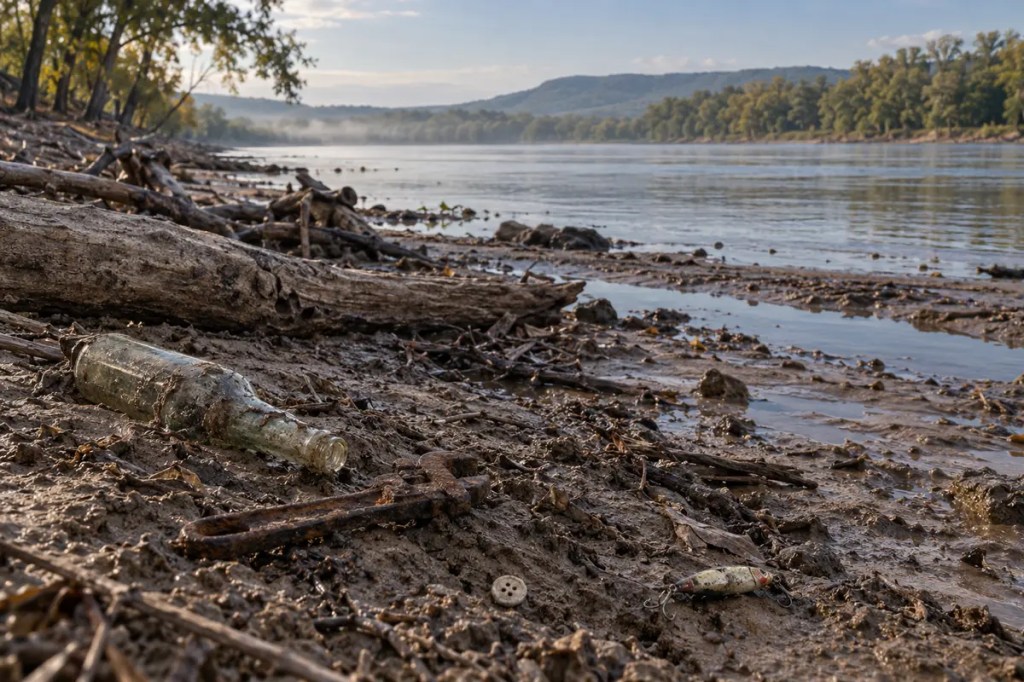
After the water level falls, a riverbank can look like a drawer somebody pulled open and forgot to close.
Mud gives back pieces of bottles, rusted metal, buttons, tools, fishing line, and things too worn to name. Some were lost. Some were thrown away. Most entered the water without ceremony because the person holding them had no reason to imagine a stranger studying them generations later.
Time changes the category.
An object can spend two hundred years as trash and become history the moment another hand lifts it from the mud.
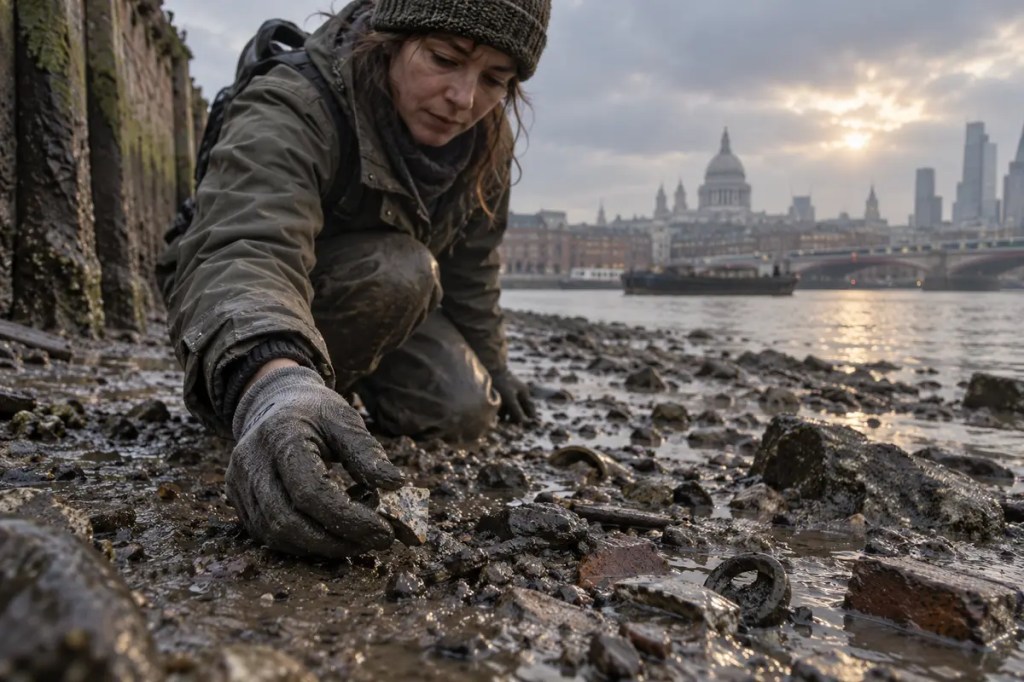
The Wall Street Journal recently reported that roughly 10,000 people are waiting for permits to search the River Thames. At low tide, mudlarks move through layers of ordinary London life accumulated across centuries. Roman pottery may rest near a modern vape. A coin, buckle, pipe stem, or broken piece of tableware becomes evidence that somebody once stood there, worked there, ate there, or dropped something he assumed was gone.
The river did not preserve any of it because it understood its importance.
A river doesn’t curate. It doesn’t separate heirloom from garbage, tragedy from routine, or the final possession of a dead man from something tossed aside after lunch. It carries, buries, breaks, and exposes. Some debris is only debris. Some of it poisons the water. The river remains indifferent to every meaning we eventually place upon it.
That may be what makes the lesson honest.
The Arkansas River moves past Dardanelle without announcing which parts of our lives will matter later. History is happening in kitchens, fields, sheds, boats, church foyers, and front seats while everyone involved still calls it an ordinary day.
We are poor judges of what an absence will make valuable.
My mother died at sixty. Grief changed the weight of ordinary things. An old photograph could knock the breath out of me, not because the paper had changed, but because the world around it had. The image became a place where someone could still be found.
That happens with more than photographs.
A phrase repeated so often that nobody bothered to record it can become the sentence everyone strains to remember. A tool is just a tool until the hands that used it are gone. A familiar drive, an unnoticed laugh, or an afternoon spent doing nothing special can become precious only after repetition is no longer possible.
We usually preserve the ceremonies. We photograph birthdays, graduations, weddings, and holidays. We assume Tuesday will take care of itself.
But much of what grief asks us to recover was hidden inside Tuesdays.
This is also the problem facing anyone who tries to preserve family or local history. We search for the dramatic story and overlook the ordinary instructions packed inside a saying, the name written on the back of a picture, the reason a certain road was avoided, or the small object nobody has thrown away because it still feels connected to a person.
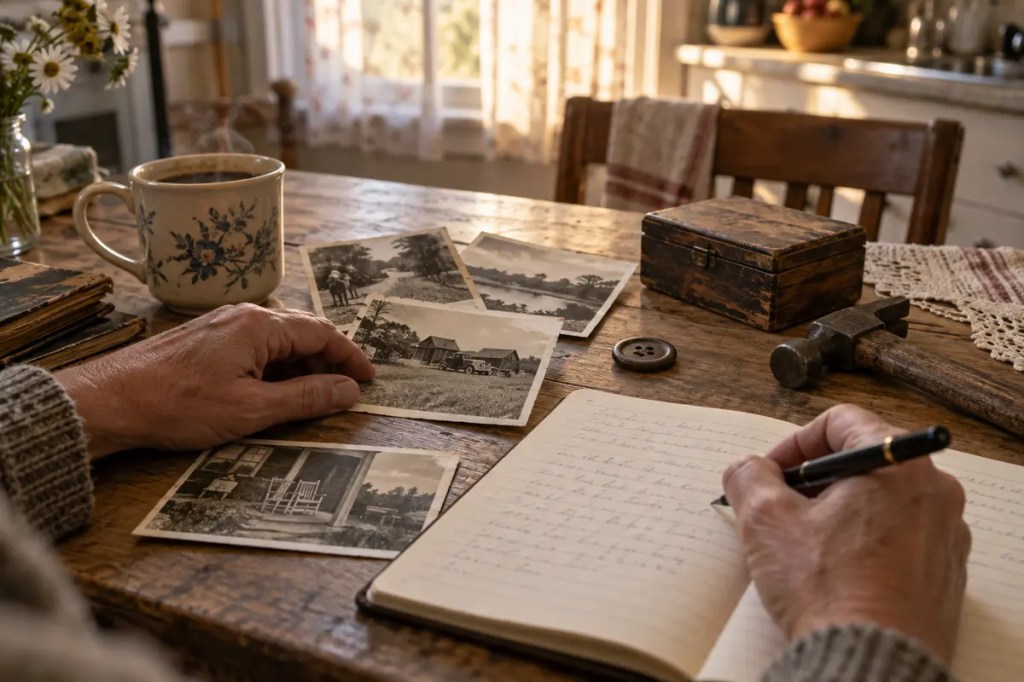
We cannot save everything. We shouldn’t even try. A life can’t become a storage unit where every receipt and broken object demands reverence. Attention is not the same as accumulation.
Still, we could become better witnesses to the life in front of us. We could ask the question while the person who knows the answer is still sitting nearby. We could write the name on the photograph. We could listen once more to the story we think we already know.
The mudlark looks at what another person discarded and sees evidence. Grief often does the same thing. It teaches us, too late, that the mundane was carrying more life than we noticed.
Maybe what we call history is often the present, rescued too late from our inattention.
Sources: Wall Street Journal: “Why 10K People Are Waiting to Search the Thames”; Wall Street Journal: “Why 10,000 People Are Clamoring to Dig in London Mud”