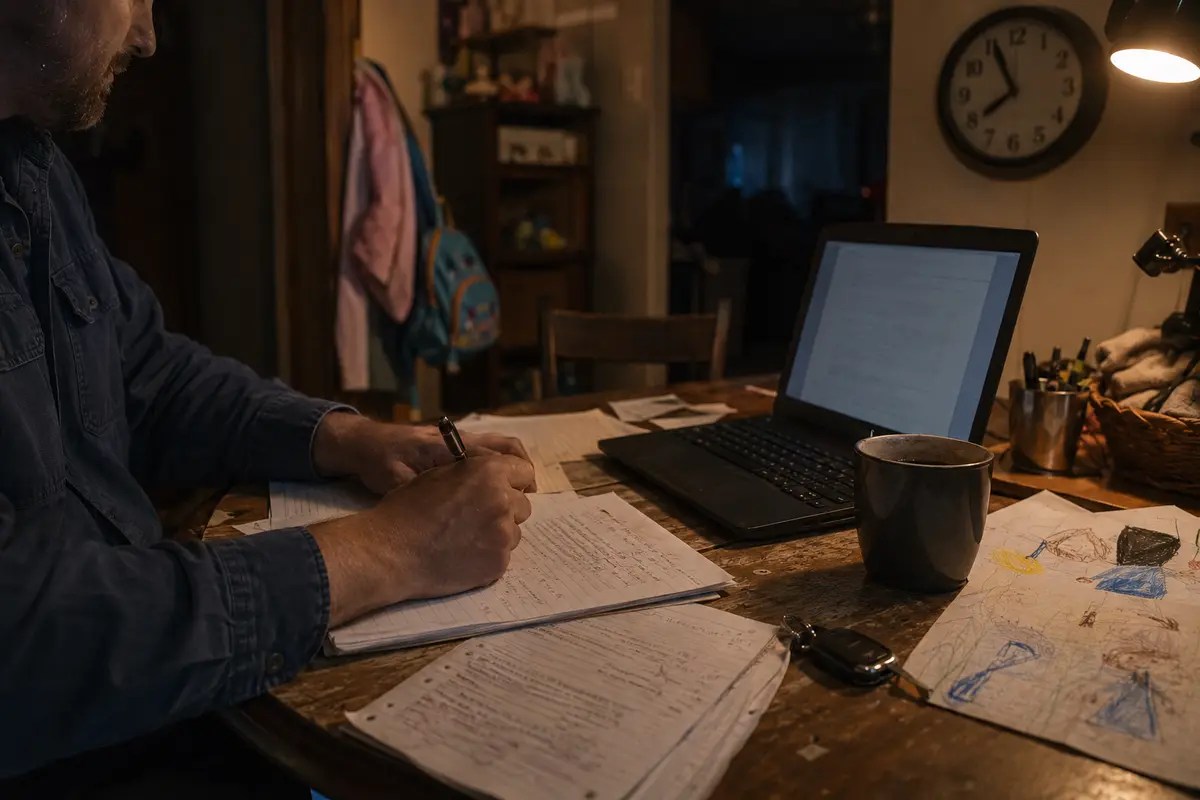
Two men live almost the same week.
Both wake up to an alarm, put on work clothes, answer messages before breakfast, get children where they need to go, and spend the day solving problems that didn’t exist when they left home. Both stop for groceries, help with homework, load the dishwasher, and collapse into bed carrying tomorrow in their heads.
If you watched their 112 waking hours from a distance, you might have trouble telling them apart.
But several times a week, after the house settles or before it wakes, one of them opens a document and writes. The other waits for a different season of life—one with fewer demands, more energy, and a clean stretch of time that nobody else needs.
Months later, one man has a manuscript. The other still has a reason.
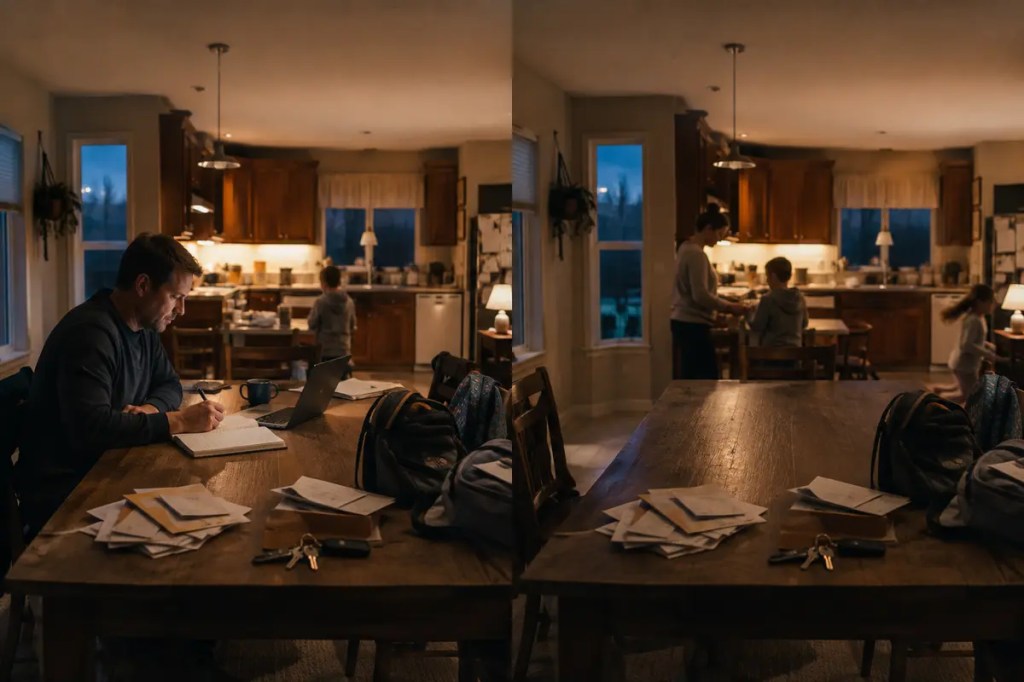
In a recent 3-2-1 newsletter, James Clear shared an observation from writer and illustrator Tim Urban. Someone who writes three hours a day, five days a week, can have a book after forty weeks. The prolific writer and the person who never writes may spend six-sevenths of their waking lives almost identically. The life-changing difference is the fraction one of them defended.
We tend to imagine people who finish things as a different species. The writer wakes up inspired, lives in a quiet house, and spends whole days arranging beautiful sentences while coffee steams beside a sunlit window. That picture is convenient. If writing requires a monastery, then the rest of us are excused.
Most callings do not need your entire life. They need a part of it that the rest of your life is not allowed to take.
I wrote A Nobody’s Guide to Self-Help while managing a dealership and raising three children. That sentence makes the process sound much cleaner than it was. There was no cabin, no sabbatical, and very little evidence of genius. Some sessions produced pages I later cut. Some were spent repairing a paragraph that still wasn’t very good when I went to bed. Other times, I reread what I had written, changed three words, and wondered whether that counted.
It counted.
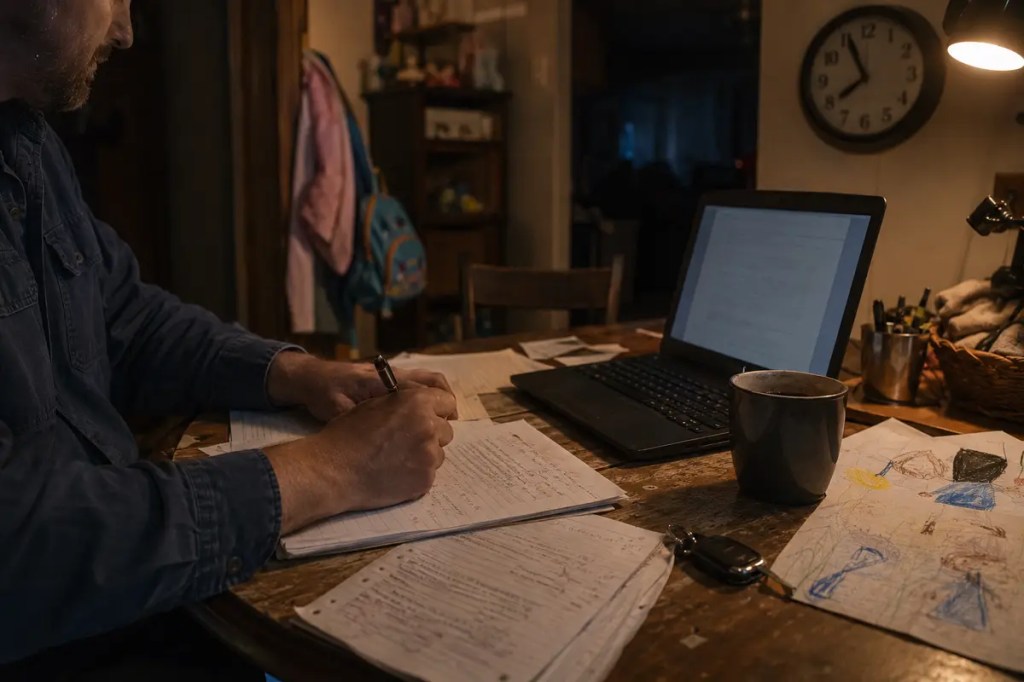
The book was built during sessions that rarely felt important while they were happening. A child needed something. Work followed me home. My attention arrived late and left early. I didn’t usually feel like an author. I felt like a tired man trying to move one sentence a little closer to the truth.
This isn’t a victory lap. Finishing a book didn’t turn me into a model of discipline. If anything, it exposed how many other things I have postponed while waiting for the right mood or the right version of my life. We all have a small graveyard of intentions labeled “when things settle down.”
Things rarely settle down. They just change what they are loud about.
Fifteen hours a week isn’t easy when work is demanding and children are growing up in real time. And quantity does not guarantee quality. Consistency cannot replace judgment, revision, or honesty. It simply gives those things something to work on. Zero produces nothing to revise.
We often say we don’t have time when we mean we do not have time that arrives preapproved—free of guilt, interruption, or sacrifice. Protected time seldom presents itself. It has to be claimed from a phone, a television, another chore, or the endless appetite of other people’s urgency.
The goal isn’t to become consumed by the work. It’s to stop requiring the work to consume you before you take it seriously.

At the end of one week, the protected fraction may look almost meaningless: a few hundred words, a rough page, one idea you aren’t sure you can use. At the end of forty weeks, it may be the only part of the year you can hold in your hands.
A life doesn’t always change because you found more time. Sometimes it changes because you stopped letting one small piece of it belong to everything else.


