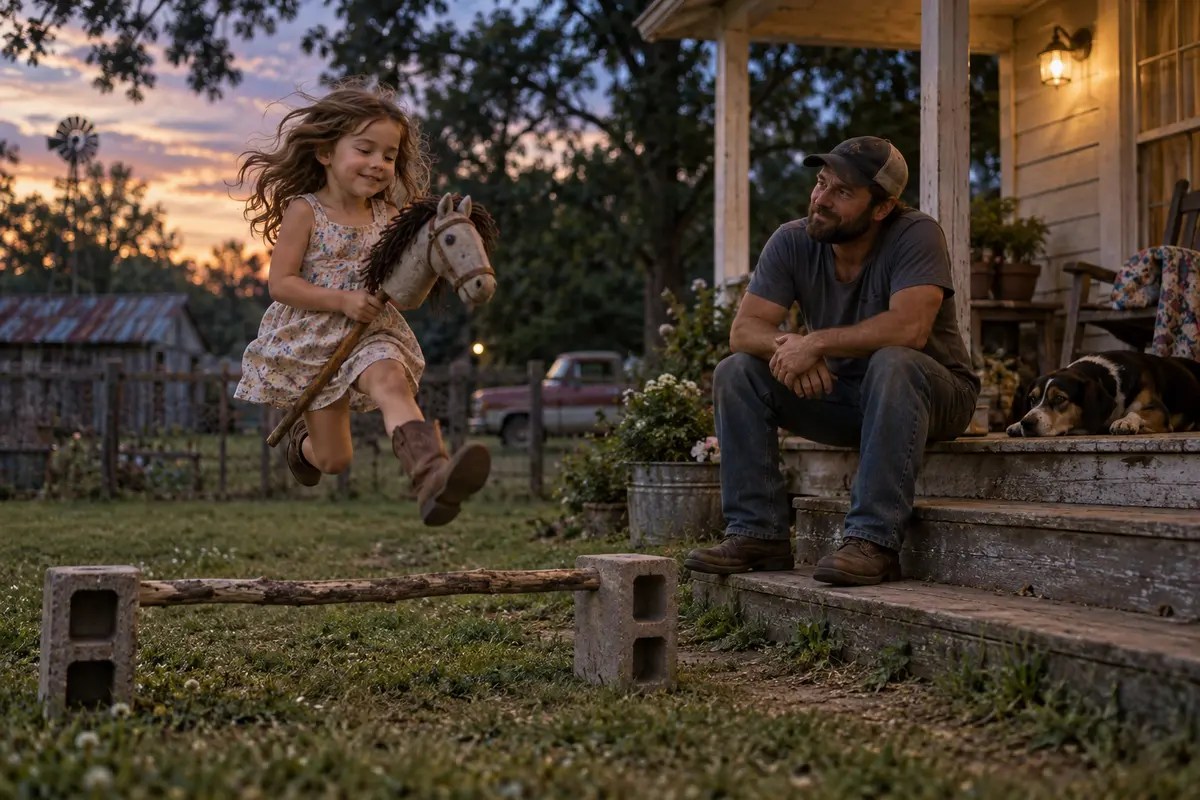
The phrase “hobby-horse championship” practically arrives with its own smirk.
For an adult who has forgotten how seriously children can take play, the picture is easy: kids running around a gym with stuffed horse heads on sticks. Cute. Strange. Something to watch for thirty seconds before moving on.
But stay a little longer.
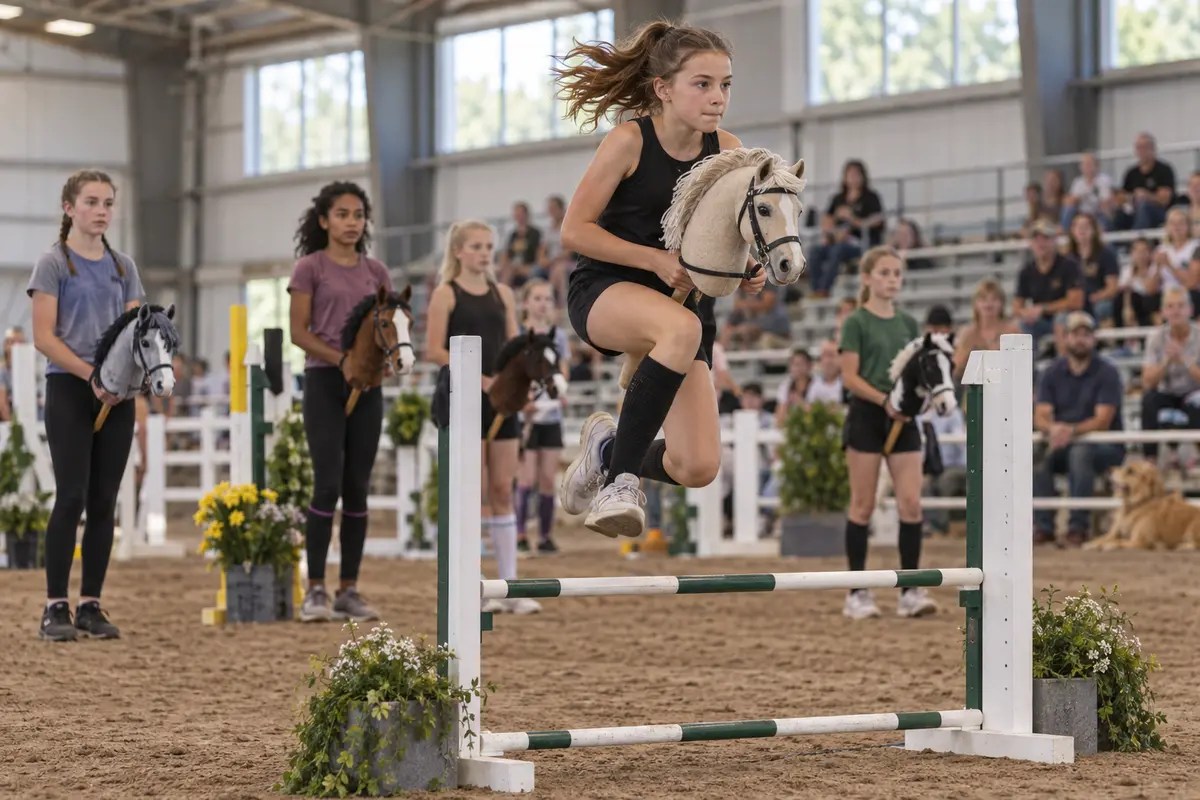
This summer, 400 registered competitors gathered in Brighton, Michigan, for the U.S. Hobby Horse Championships. They ran jumping courses, performed dressage, and competed in rodeo-style events. Most were young girls. Many had designed and made their own horses and tack.
The championship itself began with four young athletes who met online in 2023. They didn’t wait for a school, league, or grown-up institution to decide their interest was legitimate. They built the competition they wished existed.
Stay long enough, and the smirk starts to lose its footing.
There is athleticism in the jump. Craftsmanship in the horse. Courage in performing something you love while knowing other people may laugh. There is friendship, practice, imagination, and the stubborn human need to find people who understand why a thing matters.
Adults are good at respecting a child’s interest after it becomes useful.
If it earns a scholarship, we call it dedication. If it makes money, we call it talent. If it fits neatly on a résumé, we call it well-rounded. But before any of that—especially when the interest looks odd—we often ask joy to explain itself.
Where is this going?
Can you make a living doing that?
What will people think?
We ask childhood to produce a business plan.
Fatherhood has shown me how easily anxiety can dress itself up as wisdom. We know the world can be cruel, so we try to protect our children from being embarrassed. Sometimes, though, our version of protection is to teach them embarrassment first. We offer the first small laugh. We suggest a more respectable interest. We make them feel foolish at home before somebody else can do it in public.
My children have brought me songs, drawings, games, sports, and ideas that did not arrive with a clear destination. Sometimes I understood the appeal immediately. Sometimes I had to resist grading the interest by whether I could picture it becoming a career.
That’s harder than it sounds.
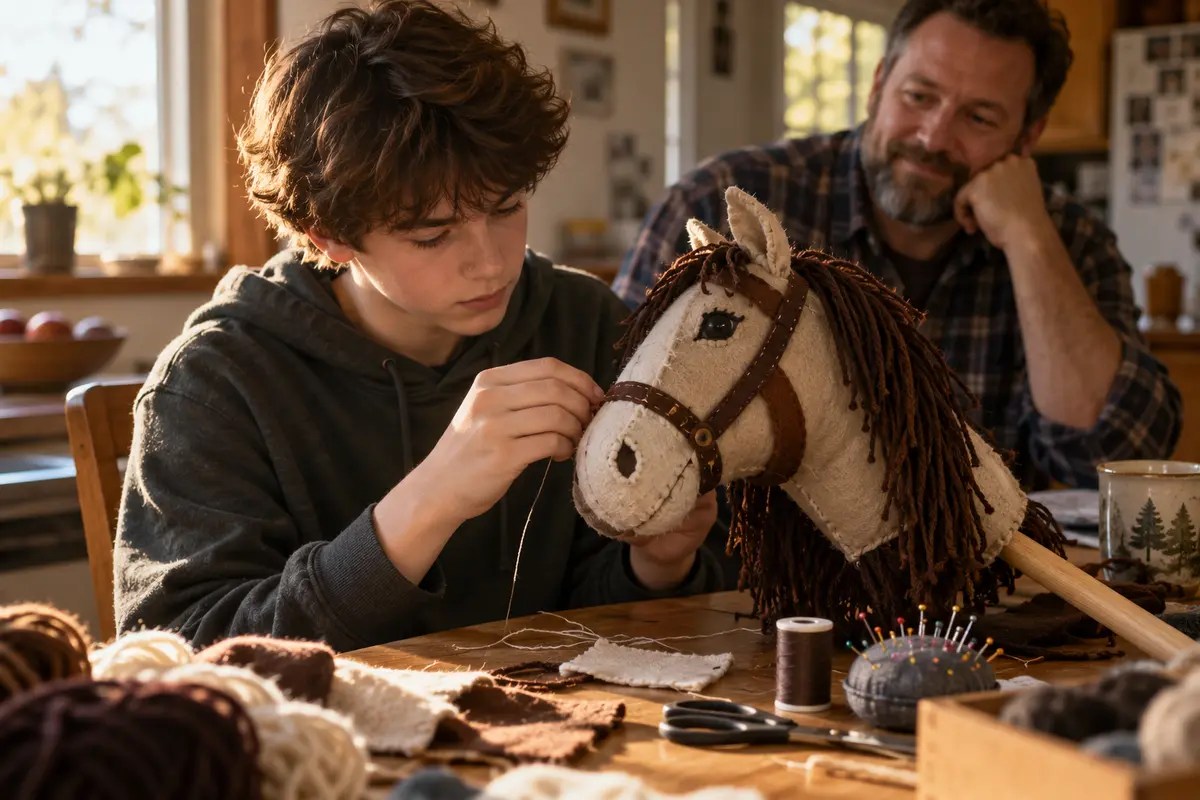
We’ve been trained to look for proof. Yet some forms of intelligence announce themselves on report cards, while others appear when a child memorizes every detail of an imaginary world, edits the same song for the twentieth time, learns to stitch a bridle, or practices one jump until the body finally does what the mind can already see.
The child who seems ordinary inside an assigned format may come alive inside a chosen one.
That’s not a guarantee. It’s a clue.
Of course, honoring joy doesn’t mean funding every interest without limit or surrendering every boundary in the house. Parents still have to say no. Money is real. Time is real. Responsibilities are real. But there’s a difference between saying, “We cannot buy that,” and saying, “What you love is ridiculous.”
One sets a limit. The other turns a light down.
The interest may fade. Many do. The stick horse may end up in a closet beside some other season of childhood. That doesn’t make the joy wasted. A child may have learned to make something, practice something, risk being seen, and find a community. More importantly, the child might have learned whether the people at home made room for the parts of them the rest of the world hadn’t learned to value yet.
We don’t have to understand every enthusiasm our children bring us. We don’t have to pretend everything they make is excellent. Unconditional belonging is not the same as automatic approval.
But attention is not the same as approval either. Sometimes attention simply says: I see that this makes you more alive, and I will not make you ashamed of that.
A parent doesn’t have to understand the horse to recognize that the light in the child is real.
Sources: Morning Brew, “Youth Sports Brew” and Young Rider, “US Hobby Horse Championships Returns August 1, 2026 to Brighton, Michigan”.


