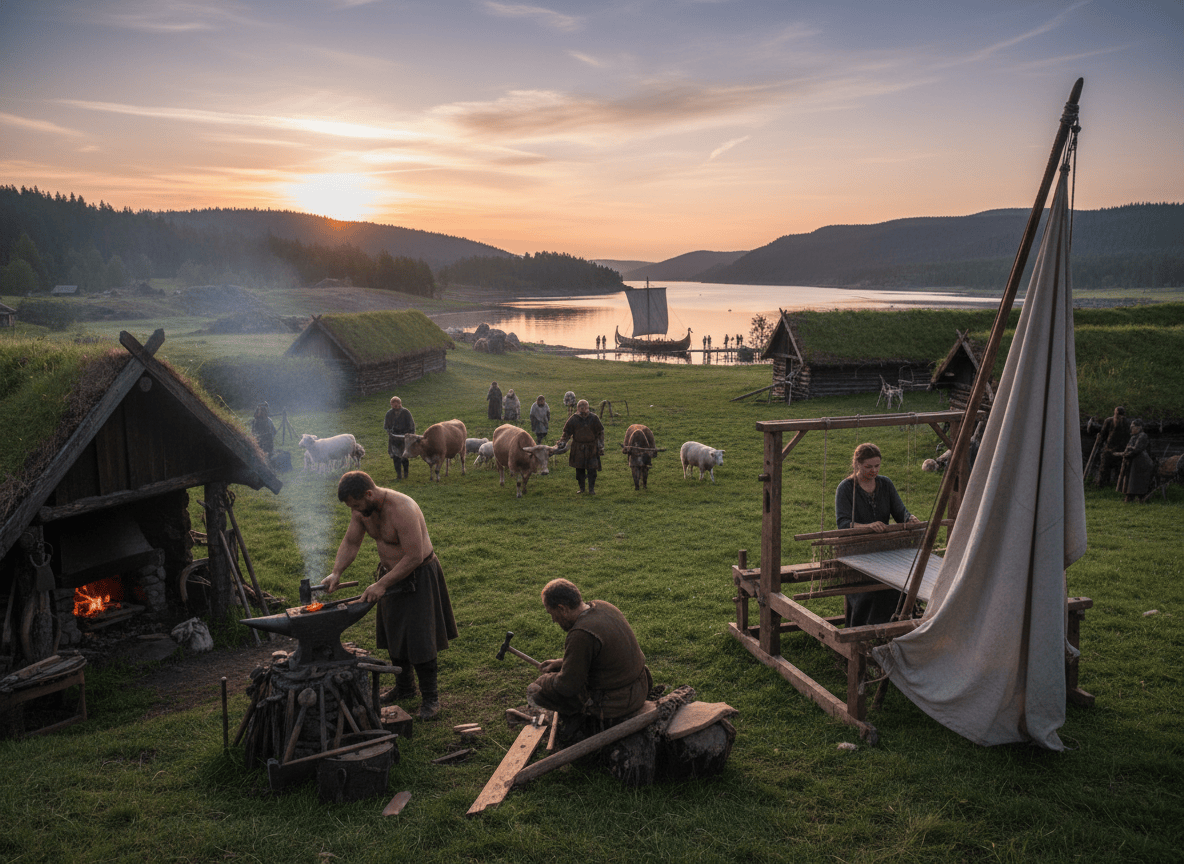
Most of us carry roughly the same Viking around in our imagination.
He comes through the fog in a longship. He has a sword, a beard, and bad intentions. He raids a village, crosses an ocean, or takes something that didn’t belong to him. History remembers him because violence leaves a cleaner headline than winter preparation.
But the man holding the sword was surrounded—and sustained—by people doing work that rarely made it into the legend.
Farmers raised livestock and grew barley. Fishermen supplied food. Bakers made bread. Weavers produced clothing and sails. Blacksmiths made weapons, but they also made the tools required to build and survive. Leatherworkers, potters, jewelers, navigators, and shipbuilders kept ordinary life moving.
The raider may have held the sword. He didn’t grow the grain, bake the bread, weave the sail, forge the blade, and build the ship before breakfast.
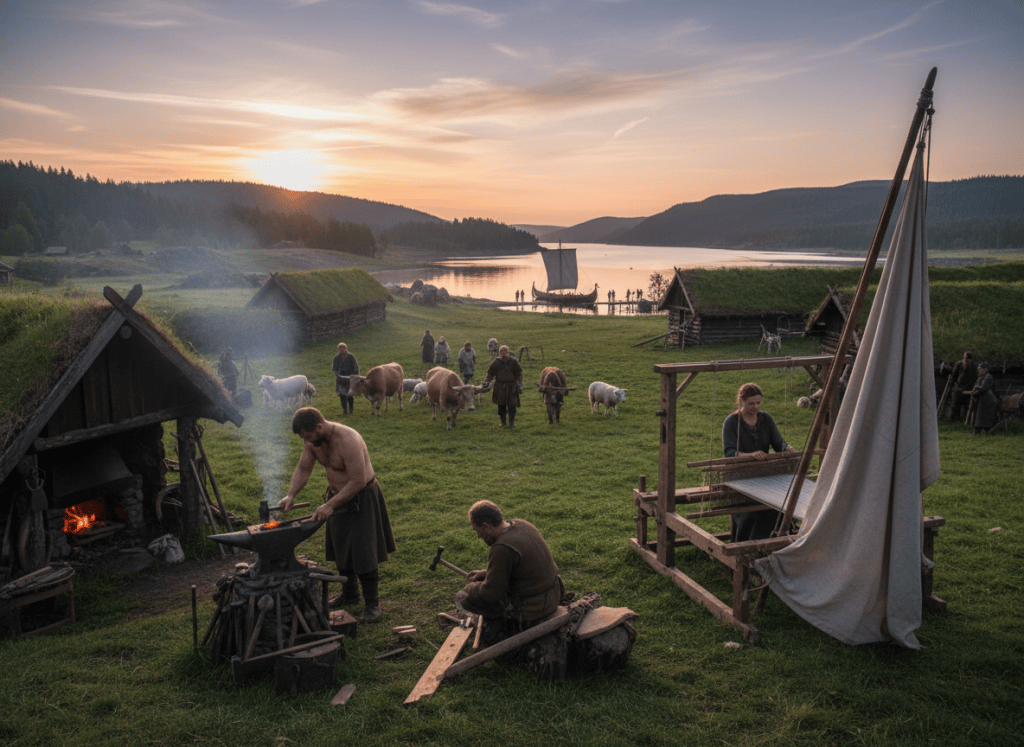
We mistake drama for importance because drama is easier to see.
A dealership has its own version of the longship arriving on shore. The customer takes a delivery photo. The salesperson hands over the keys. Everybody smiles beside the vehicle. It’s a good moment, and the salesperson deserves credit for getting there.
But the picture can’t show everything that made the picture possible.
Someone found the vehicle. Someone took the photographs, answered the phone, checked the trade, inspected the tires, cleaned the interior, corrected the paperwork, worked with the lender, handled the title, fueled the tank, and caught the small mistake before it became a large problem.
The deal closed in public. Much of it was built in private.

This is not an argument that visible people receive too much recognition. It is an argument that our field of vision is usually too narrow.
Good leadership notices the work that only becomes visible when it stops happening.
We tend to discover the value of preparation after nobody prepared. We appreciate the person who fixes paperwork after an error reaches the customer. We notice maintenance when the equipment breaks, safety when someone gets hurt, and trust when it has already been damaged.
Invisible work doesn’t become less important because it did not create a story.
Families run on the same arrangement.
We remember the birthday surprise, the winning hit, the Christmas morning, or the child walking across a stage. Those moments deserve to be remembered. But they were carried there by hundreds of acts too ordinary to photograph.
Lunches packed. Tires checked. Uniforms washed. Forms signed. Rides given. Medicine measured. Promises kept when nobody was in the mood to keep them.
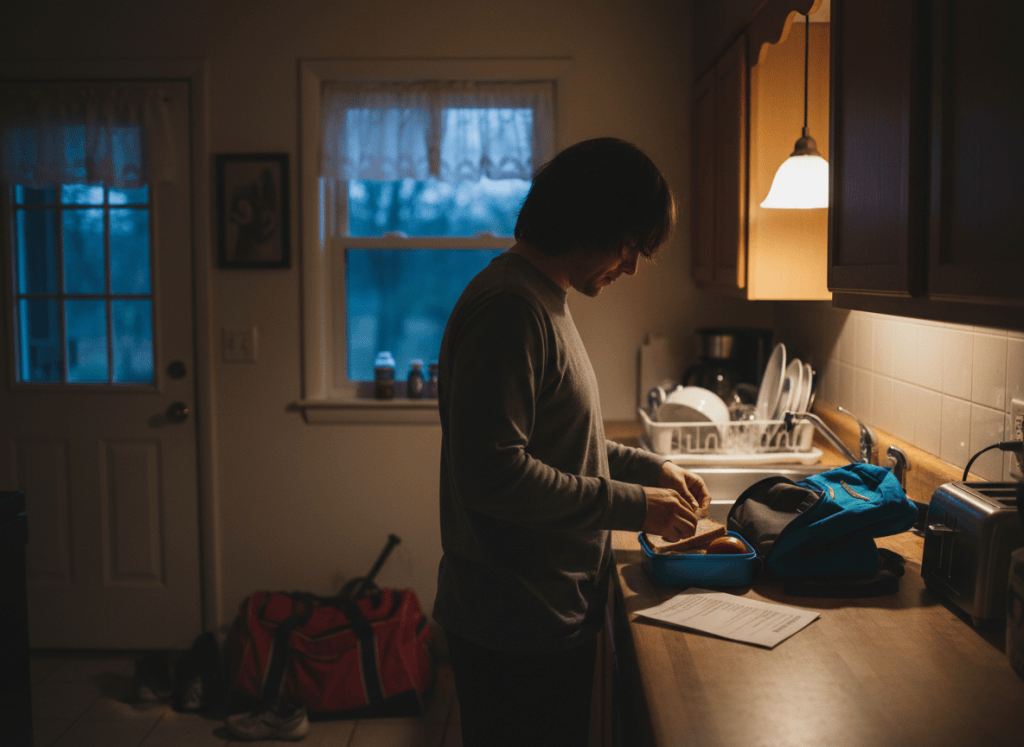
Grand gestures become stories. Ordinary responsibility becomes the atmosphere a child grows up breathing.
That may be the deeper connection between heroes and the people behind them. Heroism is rarely a solo achievement. Sometimes a person does the brave thing because someone else taught him what bravery looked like. Sometimes she performs under pressure because somebody made sure she arrived prepared. Sometimes the person standing in the spotlight can stand there only because another person stayed late, woke up early, repaired what broke, or quietly said, “I’ve got you.”
Recognizing that does not diminish the hero. It widens the frame.
History has poor eyesight. It sees the ships on the horizon and misses the field that fed the crew. It remembers the battle and forgets the hands that stitched the sail. It records the name at the top and reduces everyone underneath to background.
Life is not obligated to make the same mistake.
We can thank the person who caught the error. Name the one who made the hard day easier. Teach our children that support is not lesser work. Remember that reliability is a form of love, even when it never becomes a dramatic scene.
The raider made the legend. The farmer made the winter survivable.
And behind almost every person history calls heroic is someone who never made the legend but made the legend possible.
Source note: Inspired by Paul Anthony Jones’s “10 Most Common Jobs in the Viking Age,” published by Mental Floss on September 12, 2026.


