One World Trade Center gets photographed from almost every angle human beings can think of, including several we probably didn’t need. The glass catches the sky. The spire carries the symbolism. The height gets printed in guidebooks.
Underneath all that attention is enough concrete to pave more than 4,000 New York City blocks.
The concrete makes up the tower’s core, foundation, and floor slabs. It holds the building in place while the more photogenic parts collect compliments. Nobody visits Manhattan, points toward the ground, and says, “Look at that magnificent footing.”
Concrete is the second-most-used material on Earth after water, which is a remarkable career for something most of us notice only when we trip over it. John Wilson’s new film, The History of Concrete, considers the material beneath our buildings, sidewalks, garages, and roads—the substance carrying modern life while blending almost completely into the background.

That made me think about Lorraine.
In A Love Song for Bobby Long, Lorraine Will never appears. We don’t hear her version of events. We don’t even get a photograph. Yet she may be the most important character in the movie. Pursy’s return, Bobby’s collapse, Lawson’s history, the house, the secrets, the resentment, and much of the love all exist in the shape of her absence.
She’s the concrete of the story. Everyone else gets the dialogue, but they are standing on what she left behind.
Real life is full of people like that.
At a dealership, the delivery photograph usually shows a smiling customer, a salesperson, and a clean vehicle. It can look as though the salesperson personally mined the metal, assembled the truck, arranged the financing, and buffed the tires with his own shirt.
Outside the frame are the people who stocked the vehicle, found the keys, corrected the paperwork, cleaned what somebody else missed, answered the phone, handled the title, fixed the warning light, and caught the mistake before it became the customer’s problem. Their best work often produces no story at all. The emergency never happens, so nobody knows who prevented it.

Fatherhood can be invisible in the same way. Children remember the vacation, the birthday, or the Christmas gift. They may not remember who checked the tires before the trip, stayed awake listening for the door, kept the insurance paid, or carried private worry without making it the household weather.
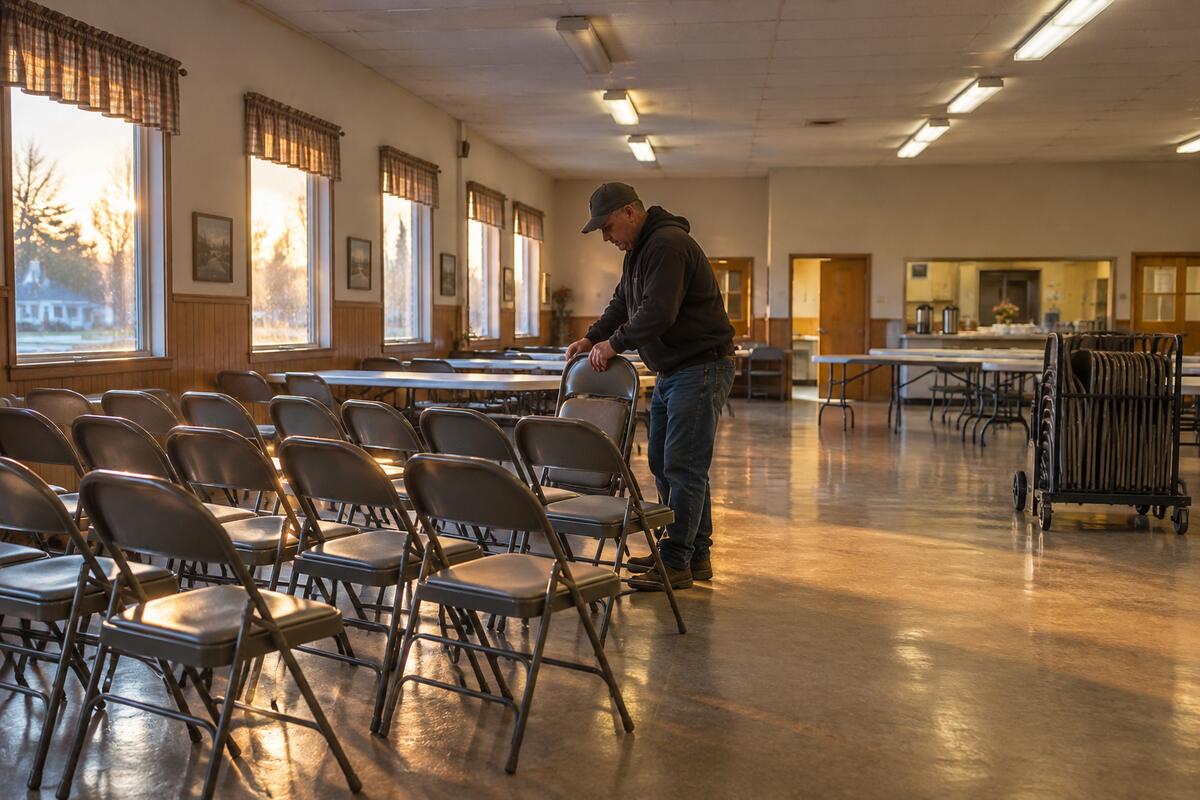
Small towns are held together by similar people: the maintenance worker who arrives before the building opens, the church member who somehow knows where every folding table lives, the school secretary who can solve six problems before the rest of us finish explaining the first one. Their reliability becomes so familiar that we stop seeing it as labor.
That’s the strange penalty for making stability look ordinary.
This is not simply an argument that dependable people deserve more applause. Most foundations aren’t asking for a parade, and concrete would probably be uncomfortable with the attention. The deeper problem is that invisible support is often treated as unlimited support.
We keep adding floors because the building hasn’t fallen yet.
Then the dependable employee burns out. The quiet spouse stops compensating. The father who always handles it admits that he can’t. The institution everyone assumed would remain begins to crack. Only then do we study the structure and act surprised by how much weight it had been carrying.
Maybe appreciation matters most before the failure—not as praise, but as relief. Share the load. Learn the process. Notice what keeps working and ask who is making that possible. Foundations need inspection, maintenance, and occasionally somebody willing to stop building long enough to protect what is already holding the place up.
We photograph the skyline because it’s beautiful. We should.
But every skyline is standing on something it forgot to thank.


