The Science, no, Art of Letting Go 

Fall is here, and with it comes the clichés of starting over, shedding baggage, and embracing change. I usually shudder when I see something like that, yet here I am, clutching the moment and coming to realizations that are a long time in the making. Maybe there actually is something unique to the archetypical, long-standing arrangement between the 4 seasons.  

https://onlyinark.com/culture/top-8-fall-color-road-trips-in-arkansas/

For as long as I can remember, I have always felt like an analytical person. I usually perform best in structured environments where I know what to expect. If A, then B. Give me a checklist and what you expect from me, and you can almost bet I’ll produce. I really liked Math in school—once you figure out how to do it, you can always arrive at the correct answer.  

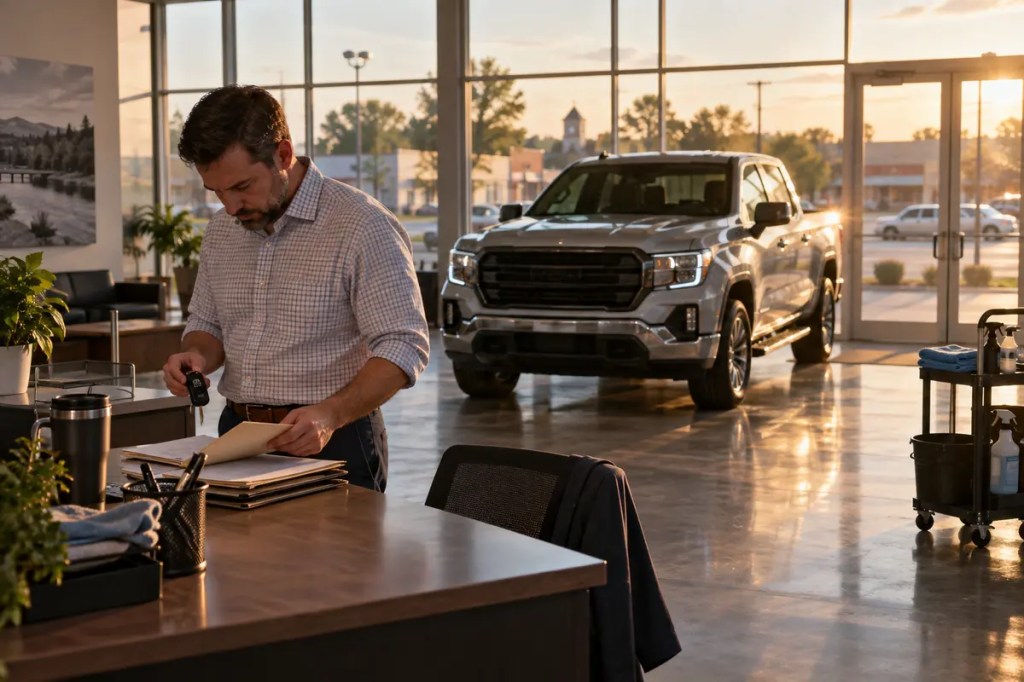
I realized a trend recently in my life. It seems as though I like the challenge of trying to figure out a way to apply structure and rigidity to things that don’t usually fit inside of a box. I tried this with the car business. No two people are the same, and no two car deals play out the same, either. I tried to eliminate all of the variables and create a process that worked the same every time. This isn’t a new thing in the industry, but I think I did it pretty well, and it was definitely my favorite aspect of the business.  

https://insights.dice.com/2019/09/20/mathematicians-list-hottest-job-titles/

I tried to do the same thing in my marriage. If I do this, this, and this, then surely that, that, and that will follow. It’s an excellent way to keep things predictable and stable for a short bit of time, but I don’t think that strategy would work in any marriage over the long haul.  

This year I have had to let go quite a bit—more than any other year to date. And, like most other things I have encountered in life, I subconsciously tried to deal with it from a scientific, or analytical, frame of mind. What I’ve learned is that letting go is no science at all. It is the art of all arts. 

https://www.insightsassociation.org/article/art-vs-science-market-research-battle-we-can-win-win

I never will forget a conversation I had with my dad while my mom was dying. We were near the end of her stint in a long-term rehab center, and I was frustrated because no one was giving me answers. I tried to get the doctor to call me for days and kept getting the run around from the nurses. Dad had mentioned something about them recommending hospice care, and the tone of his voice made me realize that he had seen the writing on the wall. This was the first time I had considered that my mom could die and probably was dying. He later told me something along the lines of, “I was wondering when you were going to accept that she was dying.”  

That only began the process of letting go of mom. I had spent months watching her health decline but always believed something would change and she would end up being okay. I always thought she would walk again. When we moved her to hospice, I had to change my whole frame of mind. A friend at work suggested that I “release her.” That I tell her that it’s okay for her to leave. So, I did. 

https://www.ewellnessmag.com/article/giving-the-final-gift-eleven-ways-to-help-a-dying-person-let-go

The night before she died, I kissed her on her forehead and told her how much I loved her. I brought the kids in one by one to say goodbye. I prayed with her and played her favorite song on the phone. She knew about the problems I was having in my marriage, so I assured her that whatever happened, I would be fine. I let her go. And then she died the following day.  

There was no scientific way to get there—just some advice from a good friend and a leap of faith. Letting her go lifted an emotional burden off my shoulders and I’m convinced it helped mom let go of her earthly body. It helped her end her suffering and enabled me to start the grieving process.  

I’ve also had to let go of marriage this year.  

https://www.powerofpositivity.com/marriage-worth-saving-or-time-to-let-go/

I felt like I had done everything on the checklist the right way. I thought I had killed all the baby dragons before they became big enough to come to burn down our home. I had sacrificed some happiness, emotional health, and a whole lot of time in exchange for stability and security. The only problem was I didn’t ask for any help when I made the checklist, and she had one of her own that I wasn’t taking care of. 

My analytical mind had told me that if I kept battling forward, eventually, the dam would break. Every time someone looking in from the outside told me that I needed to be done, it fueled me to keep trying that much harder. The harder I pushed, the further away from the prize I found myself. In the scientific world, force x speed = power. But in the realm of emotions, force x speed = distance created.

https://slidetodoc.com/lesson-5-4-power-essential-question-how-do/

I fought for a long time, too, man. I fought so much that I’m pretty sure I actually lost focus of what I was fighting for. I held on to principles, memories, and images of what I had envisioned for my life. I battled and battled because I felt like the kids deserved for us to be together. If I had gotten what I wanted, odds are we wouldn’t have been able to make it work anyway. Regardless, I fought hard—even though it was too late. At some point, I realized that I was only fighting for the sake of fighting. And the moment that crossed my mind, I let go.  

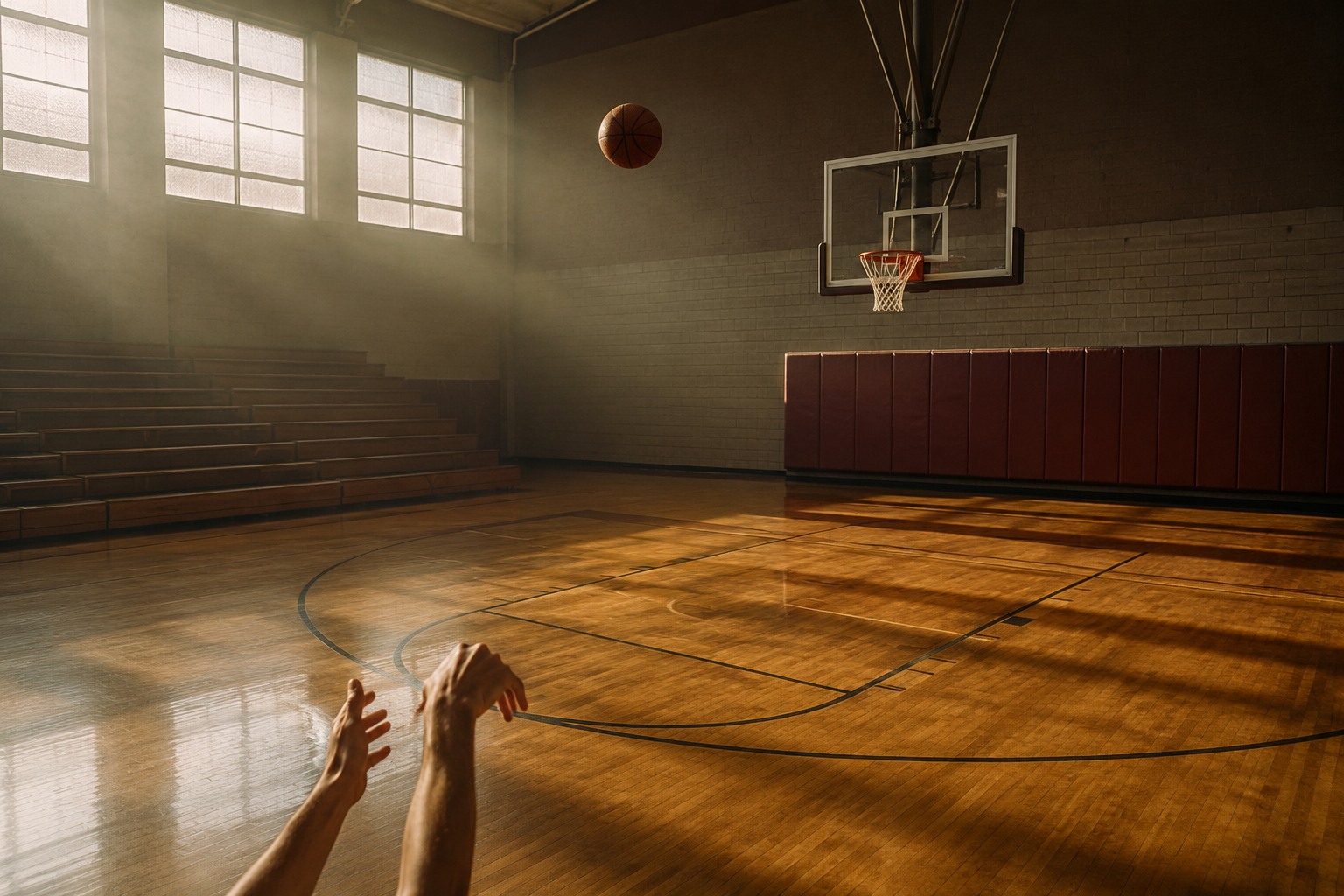
I don’t regret fighting. I can live with what happened, and the experiences learned will make me such a better partner the next time around. I left it all on the court, and even after the buzzer sounded, I stayed around and kept shooting. I was still there after the lights went out and the crowd emptied the building. It sharpened my skills and made me better, but eventually, you have to jump back into a new game.  

https://identity-mag.com/this-one-is-for-all-the-basketball-players-out-there/

For 38 years, I viewed “letting go” as if I were hanging from the side of a cliff, and to “let go” would mean a plummet straight toward the ground. Letting go is hard, and if you look at it through that lens, it is also scary and intimidating—free falling to your imminent death. 

But what I’ve learned this year, I hope everyone reading this will take away with them. Sometimes, what you are holding on to isn’t as sturdy as you think. When you let go, you take a burden off what you are holding on to—like my mom and my marriage. And sometimes, that fall doesn’t always mean certain death. While you’re falling, you can see the world around you from a different perspective. New possibilities bring themselves to light. New pathways provide highways for new journeys. You meet other people who have let go as well, and you can fall together. If you embrace the fall, it can become a beautiful experience. 

And maybe, if you’re lucky, you’ll even land on your feet. 

https://identity-mag.com/this-one-is-for-all-the-basketball-players-out-there/

A Social Idiot Analyzes Social Media: Part One

“Is this real life, or is this just a fantasy?” Social media wasn’t around when Freddy Mercury and Queen recorded Bohemian Rhapsody. Still, those words ring loud and clear some 35 years later. Has social media become prevalent enough to be considered “real life?” Or, is it still just a hobby and time-waster that shouldn’t be taken seriously?

https://www.bbc.com/news/entertainment-arts-34651067

According to a study found on Statista, over 70 percent of the US population uses social media. 70 percent is enough to win a two-thirds majority, would be a passing grade in school, and would make you feel comfortable that you wouldn’t have to plug in your iPhone for quite some time. The same site also posts a survey that found only 62 percent of the population was employed.

Aside from the overt data tracking and targeted advertising on all of the most popular platforms, the concept of social media on a grand scale is also still a very new idea. (Remember when Facebook at least TRIED to hide the fact that they were tracking you?)

https://newstyledigital.com/is-facebook-spying-on-your-conversations/

As far as long-term implications are concerned, we have no idea what to expect. Some may consider it the grandest social experiment the world has ever known.

Statista also reports that the average time spent per day on social media is 145 minutes. The keyword there is average. So for two and a half hours a day, the average person scrolls other people’s feeds, shares news articles, looks at photos and videos, or creates status updates for their circle sphere of influence. But if you consider the “light users,” that means many people spend considerably more time a day doing those things.

Take a few liberties and assume an average workday of 8 hours and an average of 8 hours of sleep at night. That leaves 8 more hours each day to fill your time with other activities. Some of that would be spent eating, grooming, and doing the daily humdrum routines we are used to. But on average, 70% of the population use over 31% of their free time accessing social media.

Disclaimer: This is not a scientific study, just an observation based on loose assumptions. I also realize part of the workday could be spent on social media, and I have not accounted for weekends either.

https://www.bcheights.com/2015/11/18/consuming-social-media-in-small-doses/

So what does this mean? Well, for the 30% of the population that doesn’t use social media, it can’t be “real life,” right? And the light users who only use it sporadically would probably fit into that category as well. But, I would say it is very much “real life” to people who use it consistently. If this is true, then that means these different types of social media users will see and process the world entirely differently than each other. How does this affect the way they interact together? How has the world around us changed to cater to each different group? What can we expect in 20 years?

We’ll look at some of the questions and more in Part 2. Thanks for reading!

The Two Paths of Decision-Making

There is an infinite number of rabbit holes a person can find while using the internet. Some are dark and creepy. Others are light-hearted and funny. Many of them will find you wishing you had the time spent back, and a few of them may help you be more productive. One of my recent rabbit hole dives led me to The Knowledge Project, a podcast hosted by Shane Parrish. From that podcast, I found his website, The Farnam Street Blog, which provides articles and exposes that center on how and why we handle the process of decision making.

There are some fascinating articles on the blog and some fantastic interviews on the podcast. I would suggest checking either or both of them out. But one theme that pops up now and then is the idea of making decisions based on the probable outcome. More specifically, do you make decisions based on the best possible ending or eliminating the worst-case scenario?

fs.blog

Most people would probably pick like me and say the former rather than the latter before they put a lot of thought into it. On the surface, who wouldn’t want the “best possible outcome?” But when you look back on your life and analyze some of your decisions, is that what you did? And if not, do you regret it? Will you change the way you make your decisions going forward? Let’s look at two different scenarios and then think about how you handled or will handle them in your life.

Love

If you could see fifty years into the future when choosing who you will spend your life with, how does your ideal scenario play out? For me, it would be a lifelong love affair with someone I connect with on the deepest level. It would be hills and valleys but having them right there by my side the whole time. They would be by my side for the suffering and the joy, and we would share our experiences every step of the way. I’m sure everyone’s answer is a little different, but that’s what it would look like for me. On the flip side, though, what kind of roadblocks would you have to stumble over if you made your choice like that? How much would you overlook, and how far would you let it go?

But what if I decided to eliminate the worst-case scenario? I would probably settle down with someone financially secure who had good genes to pass down to our children. And, we would take those pictures in the fall with the trees in the background (to make sure the grandparents were pleased). I would probably even sacrifice passion and attraction for security and acceptance.

Now I’m not saying that you can’t have both, by the way. And, I’m not saying you’re wrong if you choose to go with the more safe and secure path. I think it’s interesting how we shape our lives by eliminating some of the variables that could leave us vulnerable in the end–nothing more and nothing less.

Career

The best-case scenario in your career would be sticking to the adage, “Find something you love to do, and you’ll never work a day in your life.” If you can take a passion, skill, or gift and find a way to monetize it over the long term, you will probably end up very fulfilled and satisfied when it is time to retire. But there are apparent risks while traveling down this path. How long do you have to wait before your passion becomes lucrative? How many times do you have to fail until you get it right? How does that affect your health and your family?

In this situation, the worst-case scenario is finding yourself broke and not providing for your family. How do you eliminate that? Most people decide to find a place that will pay them regularly, and they trade out that paycheck for 40 hours or more a week. There’s not much risk involved as most jobs won’t require a financial investment. If you can handle the workload and hours, you will have some change in your pocket at the end of the week after making enough money to provide for your family.

Again, there is nothing wrong with either one of these options. One is more romantic and risky, and the other is safe and secure. It just goes to show you how our decision-making process can shape the way our lives play out. The examples I mentioned above would be considered “major choices” in the long run. Still, we make these same kinds of differentiation in almost every micro decision we make daily.

How did it affect your most recent car purchase? What about your interaction with the person in line in front of you at the bank? Even when picking out what music to listen to on the road home or where to pick up takeout, we are constantly weighing the option of “best possible outcome” or “eliminating the worst-case scenario.”

I believe the key to living a satisfying life is finding the harmonious balance between these two ways of making decisions. After all, we are only the sum of our choices. Choose wisely, my friends! Too much risk may find us in the shower biting our knees in agony, but not enough of it may leave us cold and unfilled.

Resentment is a Dead End Road

I like putting dictionary definitions in my blog posts. Sometimes I even look up familiar words on my own to get some bonus context from them. I’ll get these out of the way quickly:

resentment; noun
the feeling of displeasure or indignation at some act, remark, person, etc.

indignation; noun
strong displeasure at something considered unjust, offensive, insulting, or base

unjust; adjective
not just; lacking in justice or fairness

My simplified definition of resentment would have to be “the feeling of displeasure at an unfair act or person.” Of all the emotions I have ever experienced, this is the one that seems to do the most damage to relationships. I’ve seen it happen to others and have also witnessed it within myself. When I try to visualize what resentment would look like, I see a monstrous beast that sets its hook-like appendages into your heart. Once those hooks get placed, it’s challenging to be set free from its grasp.

I think there are many causes for resentment, but I’m going to narrow it down to three for this blog post. These are solely based on my experience, and, like always, I should note that I am not an expert on the matter—just a guy who has experienced some things and likes to share. I’m going to list the prominent three causes of resentment and offer ways in which you may be able to free yourself from it.

Unrealistic Expectations
Unless otherwise provoked, I believe most of us start any interaction with good intentions. My pastor, Mark Lykins, said something from the pulpit years ago that stuck—“Humans are bad judges by nature because we judge other people by their actions, but we judge ourselves by our intent.” I had never thought about it that way, but it makes a ton of logical sense. Removing our ego can help improve our interactions and relationships as well.

Try to imagine that everyone possesses a constantly changing hierarchical pyramid that controls their interactions. The tip of this pyramid would be the highest valued person, principle, or result at any given time. There may be scenarios in which you feel like your presence or your idea should be at the top of someone’s pyramid when something or someone supersedes it by no fault of their own. It would be arrogant for any of us to believe that we should be at the top of every pyramid all the time. But, if we feel like we should be a higher priority but get treated like we are not, resentment will almost surely set in.

So, how can we navigate this? Be aware of your ability to not live up to other people’s standards and make concessions for people who don’t live up to yours. Understand that life is complex and has many layers, and, as lovely as it would be, things don’t always line up in the way you want them to. Manage your expectations of others while demanding more of yourself.

Not Being Heard/Not Being Able to Speak

Have you ever been around a new mother when they hear their baby start to cry? Something innate in us causes us to cry out when we need something or feel unpleasant. There is also something deep inside that compels us to respond when we hear someone crying out. There are very few people who could walk away from a crying baby without batting an eye.

Most of us (hopefully) grow out of that stage where we wail at the top of our lungs until someone comes to our aid. But, that instinctual feeling to be heard never goes away. On the flip side, we tend to lose the empathetic nature we have for other people as they get older.

Babies aren’t emotionally mature enough to harbor resentment, but you don’t need me to tell you how damaging it can be to them when someone repeatedly ignores their cries. As we get older and develop our emotions and personalities, having someone shut you out can feel unjust and eventually strain relationships.

Similarly, feeling like you are unable to speak has the same effect. Maybe you don’t feel like you are qualified to vocalize your thoughts on a particular topic. Perhaps you are in an emotionally abusive relationship and feel like your opinion or idea doesn’t matter. Or maybe you are even paralyzed by the fear that what you say or how you say it may come across in an unintended manner. One thing is for sure—if you don’t say it, then they won’t hear it.

So how can you make sure these things don’t cause resentment to sink its ugly teeth in your heart? Firstly, you need to think about whether the things you are saying are essential enough to vocalize or if remaining silent may be a better option. A lot like managing your expectations, it can be arrogant to think that your voice holds more weight than anyone else’s. But, if you have decided that you must express your concern, then the pathway is simple—speak. If the other person refuses to hear you, firmly let them know that what you are saying is important and you need them to listen to you. It may be nerve-racking, but it beats the alternative.

Someone Taking Advantage of You

This one is tough for a couple of reasons. No one likes to be taken advantage of, especially when the person doing it is someone you care dear to you. It can be complicated to distinguish between someone consciously taking advantage of you and someone who may not realize they are doing anything at all. Either way, it is not a comfortable situation.

The unfortunate truth is that there are probably people in your circle who are so self-centered they will knowingly sacrifice their good relationship with you to further their agenda. I can’t speak for everyone, but I know I have dealt with those people in different parts of my life. Typically people like this are trained in the art of manipulation, and they can be hard to spot. Once spotted, though, it is usually an easy decision to create some distance between your life and theirs.

The other type is a lot harder to identify because they don’t even realize they are taking advantage of you and are ignorant of its impact on your relationship with them. It can also be intimidating when you think about confronting the person because often, they can be in your closest inner circle. And, if truth be told, part of the reason they get away with it is that you have enabled that kind of behavior for quite some time.

To me, this is the hardest of the bunch to nip in the bud before resentment takes hold. It is vital to voice your concerns to the other party, no matter how uncomfortable the situation may become. After all, most everyone would trade some minor discomfort to salvage a close relationship. After you speak to them about the issue, set some firm standards and boundaries for behavior that you feel is acceptable and not acceptable. Finally, make sure to be clear with the other party of the limits of your boundaries so you can both be on the same page.

When I make a post like this, I always feel the need to mention several times that I am not a professional. Please consult a therapist if you think resentment may be on the verge of costing you a special relationship. A year ago, I would have never dreamt that I would set foot in a psychiatrists’ office, but after many sessions, I can tell you that there is great value in talking to someone about your issues. The only thing I can tell you with certainty is that resentment and bitterness are hazardous emotions, and they can eat away at you from the inside out. It may start with the loss of a close friend or family member, but it has the potential to change your whole character and personality. I hope this helps someone!

Mitakpa–Impermanence

I recently read a book entitled “The Comfort Crisis” by Michael Easter. You can pick it up here if you are interested. It is a phenomenal read and beautifully puts into perspective the relative ease of our current lifestyles and the somewhat shocking problems that derive from it. It is overflowing with ideas to research outside of its covers and I’m sure this won’t be the only blog post I write thanks to the abundance of interesting topics it covers. But one topic, more than anything, really resounded with me, and that was the idea of mitakpa.

Mitakpa is a Tibetan word that roughly translates to impermanence in English. When I thought about it, I realized that I was almost certain I had ever used that word and wasn’t sure if I had ever seen it come up in text or conversation. I had a feeling I knew the jest of it, but I looked up the Dictionary.com definition of it just to be sure.

 noun

the fact or quality of being temporary or short-lived:

As taught by Buddhists, the idea of mitakpa is that everything born is subject to death and decay. They practice the concept by deliberately thinking about death and the dying process 3 times daily—once each in the morning, midday, and evening. You may be thinking what I was thinking when I read that. “Wow, what a miserable thing to do.” But when I learned how they expounded on that, it made a lot of sense both practically and philosophically.

They look at life as a journey towards a cliff in which everyone, inevitably, will walk off one day. It may be tomorrow, or it may be in 80 years, but one day it will happen. We have two choices regarding that cliff. We can either act like it isn’t there and be surprised when we find it, or we can acknowledge its existence and plan our course accordingly. It has real “one life to live” vibes but it hit me on a completely different level.

You can live a complete life without ever thinking about the cliff but imagine how differently you would chart your course if you made peace with the destination. I thought about who I was walking with, what we did along the way, and all the flowers I would regret not stopping and smelling on the way when I saw the cliff come into view.

I also thought about the people that chose to walk with me. Would they come to the end of their journey and wish they had walked with someone else? Was there something they wanted to stop and do along the way that I ignored while placing a higher priority on someone else? Good grief when you think about it, what an honor it would be for someone to choose to walk to the edge of that cliff with you. Am I doing everything imaginable to make their journey just as fulfilling as mine?

One great thing about youth is that, if you’re lucky, you don’t have to think about death very often. If luck continues to be on your side, you won’t have to deal with it much at all until you get older, more mature, and better capable of dealing with it properly. I was lucky on both counts but it seems as though my luck has finally caught up with me. I’ve now lost all my grandparents and recently just laid to rest my mother, who was 60.

My mom was still alive while I was reading “The Comfort Crisis,” but she wasn’t doing very well, and the thought of her potentially dying had begun to creep into my mind from time to time. I thought about her journey to the edge of the cliff and wondered if she had a fulfilling trip. I hoped she hadn’t experienced too many regrets and I prayed the time she spent with me was something that made her trip a little more enjoyable. I was also curious as to whether she could see the end or not and if she could, had she made peace with her journey? It comforts me to think that she did.

I don’t think about death 3 times a day as the monks do, but I do try to make a point to think about it from time to time. It takes me out of my comfort zone a little bit and helps keep me centered on the truly important things. I’m not an expert by any stretch of the imagination, but I do feel certain about one thing–life is a tremendous blessing and should be treated as such. I feel fortunate to be alive and healthy with no sign of my cliff in sight for the moment. When it finally does enter my horizon, I hope to greet it with a smile and walk off it with no regrets.

A Tribute to My Momma

This is what I wrote out prior to giving my mother’s tribute at her funeral. I had some people ask me to share it here.

My mom was so hard-headed and steadfast that I never thought I would find myself in this situation, and I definitely didn’t think it would be this early in my life. You see, if you want to figure out the recipe for strong willed and stubborn, I’ll let you in on the secret. You take equal parts Adams and Wallace, mix them with an unshakeable Faith, dash in a few life experiences and top off with a generous portion of Stone. Disclaimer: This recipe is not recommended for beginners.


For those of you who don’t know our family’s story, let me give you some background. My biological father signed away his rights to me at an early age. God must have thought that mom needed an upgrade and she found true happiness and got remarried. When I was in second grade, that selfless and amazing man adopted me as his own and gave me his last name. Along with a real dad, I was blessed with 2 sisters, twins, and only 4 months older than me, which they remind me of often. Just as my dad treated me like one of his own, my mom treated Tanya and Tonya like they were her flesh and blood. She never called them her step daughters. To her, they were a central part of the family that just happened to come along a little later in life.  


It’s unfortunate for all of you that you didn’t get to see my mom through the same lens I did. You see, we butted heads a lot. And I mean a lot. There was a time when we only saw eye to eye when we met each other going up and down on the see saw. Of course, as we get older we learn that the parents were right most of the time. And, while I know any good relationship has battle scars, I can look back and know with 100% confidence that she ALWAYS had my best interest at heart.  


She never gave up on me and she always wanted me to do the right thing. And I don’t mean that loosely. Her and dad raised me in a way that to this very day if I am having a hard time making a decision, I find myself asking what mom would do. And I’m sure that will never change.


As a mother she always went above and beyond, sacrificing her time and energy for opportunities for me. She always made sure I was at all my practices and games (unless they interfered with church), and we NEVER missed church. She held down a full-time job until her back got the best of her, but that didn’t slow her down a bit. I remember in junior high she would get up early and we would go pick up Rod and Jason Lowe to go workout and shoot free throws at the gym before school started.  


A few years ago on Valentine’s Day, I got a message on Facebook out of the blue from a girl who went to school with us in 2nd and 3rd grade. She was a Jehovah’s Witness and I know it much have been tough on her growing up. Her family didn’t celebrate holidays like the rest of us did and she was always left out during those activities. She told me that every Valentine’s Day she thought of us because my mom made her a special “friendship” card so that she could get something and take it home. It touched her so much that she’ll never forget it. That’s the kind of person Kim Stone was—always thinking about someone else.  


And then came the grandkids. And if I was ever unsure what my mom’s purpose in life was before, when Dakota was born it became clear that she was put on this earth to be Nana. Then came Aubrey. And Keegan. Then Hayden, Jaxson, Levi, Ben and Naomi. Each one carved out their own little unique place in her heart and she cherished them more than anything else in this world. In fact, many of you were probably late for a meeting or had to miss a phone call because mom wouldn’t stop talking about them.  


The last 2 years of her life were spent in a tremendous amount of physical pain. When she lost the ability to walk that physical pain was paired with sadness and heartache. Mom was an extrovert and she was energized by interactions with people. With Covid sweeping over the world and her extended stays in Little Rock, Conway, and Searcy, those cherished interactions were ripped from her life and caused her to go into a deep depression. For months she had been telling dad and I that her mom and dad had been coming to visit her. She was dreaming of Heaven and spending time with her family that had gone on before. I know she is where she needs to be and I know she’s with people that have loved her dearly, but that sure doesn’t make things any easier on us down here.

 
I’m forever thankful that we got her back to town in time for her to be comfortable physically and to have the opportunity for people to say goodbye. Even though she wasn’t externally responsive, I know she could feel the warmth and love on the inside. She took her last breath while she was surrounded by 3 of her classmates, and that has provided our family with a great deal of peace.


But I won’t remember my mom that way. For me, I’ll always be the little boy sitting on the church pew at 3rd and Harrison next to my grandma, watching my beautiful mother bang away on the piano keys like it was an extension of her body. I’ll remember how she would look over to me every now and then and smile so big like she was just so proud of me. I’ll watch her walk across the stage to the organ, without needing anyone or anything to help her, and I”ll close my eyes and listen to her play “When They Ring Those Golden Bells.”  Then I’ll open my eyes and see the tears on the faces of the congregation and know that so many other people will remember her the same way.  


When I first started selling cars almost 15 years ago, one of the first things I learned was the importance of quickly finding common ground with the customer. I found that the easiest way to do this was to figure out if we knew any of the same people. To this day, this is still one of my favorite things to do in any conversation and I highly suggest you trying it out, too.  


The look on someone’s face when they do know the person you are asking about actually tells you more about the person in question than it does the person you are talking to. For a brief second you get to see that person’s natural and unfiltered opinion of the other.  


In a town this size, and with a mom like mine, I got to experience this quite often. It would usually go like this: “You probably know my mom, Kim Stone.” First would come the sparkle in the eye, and then the smile would curl up on their lips, and it would usually be followed with an almost peaceful sigh and, “Oh I know your momma.”  


As we move on through life and the pain slowly starts to fade maybe one day I’ll get used to people saying “I KNEW your momma.”  

Kimberly Lee Stone

May 5th, 1961 to July 27th, 2021

Your Straw is in the Bag

I was on a late evening chicken nugget run for the kids and decided to go through the drive-thru at one of the fast-food joints in town. I ordered, drove around, and paid for the food like a normal tax-paying citizen. When the young lady handed me the food she said, “Thank you. Your straw is in the bag.” I thanked her and proceeded to drive out of the parking lot. But then I realized something—I didn’t order a drink.


I opened the sack and, sure enough, there was a straw laying right there amid all the chicken nuggets and sweet and sour sauce packets. But, why? We went on to the house, ate dinner, and carried on with the rest of the night, but for some reason, I could not get that poor lost straw out of my mind.


After spending way too much time thinking about it, I concluded that the woman at the drive-thru window was so accustomed to handing customers a drink before or after their food that it was simply a habit for her to put the straw in the bag and let the customer know it was in there. It may even be company policy. Possibly, it is just something she decided to do after repeating the scenario thousands of times.


Whatever the reason, it made me reflect on my behavior and how I could potentially fall victim to making the same mistake with my interactions with people on any given day. One thing I have noticed about soul searching or doing a “check-up from the neck up” is that, if you REALLY do it the right way, you often won’t like the results. This time was no different.


How many times had I kissed my wife or told her that I love her purely out of habit? Did I even think about the action or the words at all? I wonder if she could tell the difference. How many times have my children wanted to tell me something and I just halfway listen to them? Their youthful enthusiasm will only last so long. Did I give their conversation the attention it deserved?


Have I had a friend who needed someone to talk to or a bit of advice? Were they using small talk to help build up the nerve to ask a question that might be hard for them to ask? I hope my indifferent or un-attentive attitude didn’t deter them from trusting our friendship enough to speak freely. Am I doing the best I can at work, or have I been on cruise control? Are there people or causes that I could have helped along the way if I hadn’t been for going through the motions nonchalantly?


I got some marriage advice from a man once that has stuck with me for a long time. To paraphrase, he told me that marriage was like traveling down a river in a 2-person canoe. If no one paddles the canoe, then it just goes wherever the river takes it. To get where you are doing, both people must be paddling in the same direction. I think this advice is not only great for marriage but also can be applied to life in general. If nothing else, just to remember that you are “on the river in a canoe” may help us be more deliberate with our behavior and how it relates to other people.


Being “deliberate”—I really like that term and I wish I could take credit for it. In my opinion, it is the best word to use when describing how we can keep from getting stuck in our behavioral ruts. I’ve tried this in my daily life and, let me tell you, it’s not as easy as it sounds. For others, it may look different, but for me it means putting the phone away for hours at a time, turning the TV off unless I am actively watching it, looking people in the eye when they are talking, planning my day, taking a moment to step back and look at what is truly important in my life RIGHT NOW, and sincerely thinking about what I think a good life would look in the near and distant future.


I’m not a psychologist, counselor, or guru, so maybe what I’m saying doesn’t relate to you at all. But, I can tell you that after a short time of making it a point to “be deliberate about being deliberate,” I can see some immediate positive impact in my personal life. I’d wager a hefty bet that the long-term benefits will be numerous as well. The young lady at the drive-thru window changed my perspective in a way in which very few people have done before. Maybe she DID know what she was doing. Either way, I’d like to thank her for putting that straw in my bag.

We Could All Use a Little Perspective

I was taking my daughter to preschool a few months ago and, like nearly every other morning, she was gearing up to conquer her day in an energetic and rambunctious way. She was singing random songs, quoting odd facts, and asking aimless questions. We took the same route we have always taken and we were at a particularly mundane section of the drive when one of her random thoughts hit me like a sack of bricks.

We were traveling north and the sun was at just the perfect spot in the sky to be obstructed periodically by the small buildings on the east side of the road. “Bye-bye sun! Hello, sun! Bye-bye sun! Hello, sun!” she would yell as the buildings blocked the light as we traveled on the highway. I’m not sure what it was about that particular morning that made me pause, but a thought came to my mind that I felt like I needed to share.

That big ball of gas has a radius of over 400,000 miles and is floating out in space more than 94 million miles away from our planet. It is so massive that its force causes 9 planets (or 10 for you Pluto purists) to orbit around it. It is the center of a solar system for crying out loud. So how is it even possible that it can be obstructed by a 1-story antique mall between Dardanelle and Russellville?

Well, it’s all about perspective. One definition provided by dictionary.com for that word is, “the state of existing in space before the eye.” We don’t have to be physicists to realize that where we are in relation to an object is just as much of a factor as size or distance from that object in terms of how we view it. We don’t think about it every day, but we just know. For instance, objects appear to be larger when you view them up close than they do from a further distance.

But, another definition provided for perspective is, “the state of one’s ideas, the facts known to one, etc., in having a meaningful interrelationship.” All of this made me think of something that I remember hearing on a youth group trip to St. Louis when I was no more than 12 years old. If it caught my attention at that age enough to stick, it’s probably worth repeating.

We were sitting in a Mcdonald’s that overlooked the freeway. It was late in the evening and all of the cars passing by looked like darting streams of light that were here one second and gone just as quickly. One of the adults at the table said, “You see all of those balls of light flickering down there? Every one of them has a person or family in it that has its own set of unique problems. Some of them may be dealing with the death of a child. Others may have just been fired from work. There may be someone who was recently diagnosed with cancer. Some have already lost hope and others may not even realize the blessings they have been given.”

I don’t think about that story as often as I used to, but I am grateful that my daughter’s dance with the sun brought it back to the front of my mind for a moment. The last 2 years have been hard on my family and there have been plenty of times that I sat around and felt sorry for myself. I’ve felt unloved, unappreciated, and even invisible at times. But one thing I’ve learned through it all is that the best weapon to fight an enemy like that is thankfulness.

I don’t know if anyone will read this or if anyone who happens to read this needs to hear it, but if there is someone out there looking for unsolicited advice, let me offer a thought that has helped me through the rough patches. When things feel like they can’t get any worse, look around at who and what you have in your life and be grateful for everything. Some of the things you take for granted would be tremendous blessings to those who don’t have them. A little bit of change in perspective can go a long way in easing the pain in your life. You may even be able to turn something bleak and dreary into something beautiful and fulfilling.

Seasons and Stages: Learning to Embrace Your Current Spot

Gradual changes over long periods of time have always been one of those things that just screws with my head. I remember being able to hold each of my kids in one arm and feeding them by bottle. Night after night I was not able to see them growing, but one day I wasn’t able to hold them like that anymore. When I look back on it, I can’t put my finger on the exact time in which it happened. But it certainly did happen.

As I have gotten older and experienced more people close to me dying, I’ve noticed that people who are old or sick seem to be at peace with leaving their earthly bodies. I’m convinced that when you get to a certain point in your journey, something in your soul changes and you just become okay with the prospect of death. Some people even seem to embrace it.

Muhammad Ali once said, “The man who views the world at 50 the same as he did at 20 has wasted 30 years of his life.” The first time I read that I thought it was kind of silly. Everyone always tells you that the secret to life is to never grow up. You must maintain that childlike spirit even as you age. If you do that, you will never get old.

But when I thought about how that applied to my life, it made total sense. I’ve just recently moved into a new “season” of my life. Just like feeding the babies, I can’t tell you exactly when it happened, but it hit me like a rock when it did. Ali wasn’t urging us to lose our youthful nature, but he was telling us that each stage of life Is unique and brings about its own challenges and joys.

I work with a couple of young guys who are just starting to build their stories. Their wives are pregnant with their first child and they are settling in with their first big purchases while anxiously waiting to see how their lives are going to be changed forever. I’ve been giving a ton of unsolicited advice and feel like some of the annoying older people who did the same thing to me all those years ago.

But more than anything, I have been reflecting on that previous season of my life. The glowing wife, the stack of bills, the unknown future, the restless delivery room, those first few months of terror and sleepless nights. My wife and I are not having anymore children, so I’ll never experience these things again. Every day my kids get a little bit further from their beginnings and closer to sprouting into their own skin.

My first emotion was a deep sadness. I don’t remember enjoying the lack of sleep on that sofa the nights our children were born. I remember some of the little things that use to be annoying realities of having a newborn. But all of a sudden, I was sad, and I missed those things. But I quickly realized that those things aren’t for us to experience forever. And now I understand what those annoying “old people” meant when the said, “Don’t blink, bud.”

So, I am embracing this new season in my life. I’m going to continue to help my kids develop into the best humans they can be, take steps to become a better husband to my wife, enjoy my time with loved ones while they are still here, and spew tons of advice to the younger kids while playing my part as the annoying old man.

With all the division we have in the world right now, it is comforting to know that for ages and ages, people really have always been about the same. Through war and famine and plague, the game keeps going on and on, even if the players shuffle positions every few years.

The Faith of Our Fathers (and Grandmas)

Every now and then I get an itch to listen to some good ole Southern Gospel music. It takes me back to when I was a child at the Assembly of God church in Dardanelle. Sometimes those old hymns can hit me in a place that modern music just can’t touch. Power in the Blood, Victory in Jesus, I Surrender All, Blessed Assurance–you know the ones.

I spent a lot of time going through those old hymnals, but never while everyone was singing. I knew them all by heart at an early age and song time was spent humming or singing to myself while I played on, under, and on top and with the pews. My mom was the pianist, so I sat with my grandma and her crew during “song service.” When I was able to sit still I would watch the choir and the song leader. I’d hear John Parker say, “Page 106–Heaven’s Jubilee.” He’d step back away from the microphone and sing, moving his fingers in the air like he was directing the Tabernacle Choir.

But on this particular drive home, a song came on that struck me so hard I felt like I had been transported back in time to the mid 1980’s. I could see everything so vividly–the maroon carpet, the wooden pews, my grandma’s light blue dress, my mom sitting upright at the piano. I could smell the old church and the mix of perfumes that had been sprayed on before walking out the door. I could walk in that old building right now and tell you where nearly every person sat during service. That song was “Leaning on the Everlasting Arms.”

If you’ve never heard it and don’t want to watch the video, here are the lyrics:

What a fellowship, what a joy divine
Leaning on the everlasting arms
What a blessedness, what a peace is mine
Leaning on the everlasting arms

Leaning, leaning
Safe and secure from all alarms
Leaning, leaning
Leaning on the everlasting arms

What have I to dread, what have I to fear
Leaning on the everlasting arms?
I have blessed peace with my Lord so near
Leaning on the everlasting arms

Leaning, leaning
Safe and secure from all alarms
Leaning, leaning
Leaning on the everlasting arms

I’ve heard it a thousands times in my life, but I had only thought about the lyrics some of the time, and never since my grandma’s death. I could see her sweet face as clear as day–eyes closed, hands raised in the air, body swaying to the beat of the music, and hitting every word on cue. She wasn’t just singing that song, she believed every word.

And I don’t remember a time when she didn’t live every word. Good parents and grandparents don’t let their young children feel the stressors that the outside world bring down on them. When my mom and I had no place to go, they opened up their house to us. They weren’t well off, but she leaned on Jesus. When my grandpa quit going to church, she didn’t lose faith in him–she leaned on Jesus. She leaned on Jesus when their daycare couldn’t stay open any longer. She kept leaning when my grandpa got Alzheimer’s and couldn’t remember who she was. She leaned on Jesus through her own bout with that disease and never stopped until her life ended and he took her in his everlasting arms for good.

I know as we get older we idolize our parents and grandparents. Sometimes it takes too long for us to realize their worth. I know she wasn’t perfect, and I’m sure there are things she thought, said, or did that she regretted. But, like many others her age, she grew up picking cotton in the Bottoms before she was 10. Her mother died young, putting the burden of raising a large family on her older sister. Her husband lost an eye getting ready to fight in Vietnam. This life wasn’t particularly or uniquely hard, but it wasn’t a stroll down Easy Street either. There were plenty of times she could have abandoned her faith. I’m not sure she ever even questioned it.

Undoubtedly, there are thousands of other people who can tell the same stories. Many had exponentially tougher lives and maintained the faith. The ultimate example is the archetypical story of Job in the Old Testament. But, I’m thankful I have a personal example which I can cling to and remember. Even though my mom and dad have always remained faithful, it is my grandma that I always come back to when I stray away from the Lord. Her devotion and unwavering commitment to her God and her family have always been the anchor which keeps me from going too far.

The reason I am writing this blog post is so that I can unpack some of these feelings in my heart and mind. I don’t talk about it much, but those close to me know that I have always struggled with the concept of faith. If you remain steadfast and strong while trusting and believing in God, you give him praise when the “good things” happen. You do the same and explain it away as God’s will when the “bad things” happen (or the good things don’t). I’ve always felt that is a built in kill-switch. Things happen the way they happen whether you have faith or not.

That’s a post for another day. I’ve spent a lot of my adult life trying to figure out the why. It’s something we all think about from time to time. Why does an all loving God allow so many bad things to have? Why doesn’t an all powerful God use his power to keep people from suffering? What makes a relationship with God unique if every person can have it? I’ve stopped thinking about the why. “Farther along, we’ll know all about it.” What I’ve been struggling with lately is the how.

How do so many people rely completely on faith? When things are looking dark and dreary, how do you face those burdens and “let go and let God?” Our instinct is to pull ourselves up by the bootstraps and tread through problems when they come our way. We stress and worry but in the end we keep going. How do Christians face their problems head on and give God all the praise when things work out? How do they keep believing when God’s will seems to be continued suffering?

It may sound like I’m not a Believer, but that couldn’t be further from the truth. I’m a work in progress and I believe God’s grace and mercy allows for us to ask questions and try to make sense of his supernatural existence. I believe the unique relationship between us and our Savior doesn’t have to be rosy and tidy. I’m sure I’ll never find the answers to these questions as long as I’m on Earth, but I’m hoping to one day learn how to deal with the why.

If it wasn’t for the reckless and unbridled faith of a little lady named Betty Sue Adams, I would have lost all hope a long time ago. And for her, I am blessed and thankful.